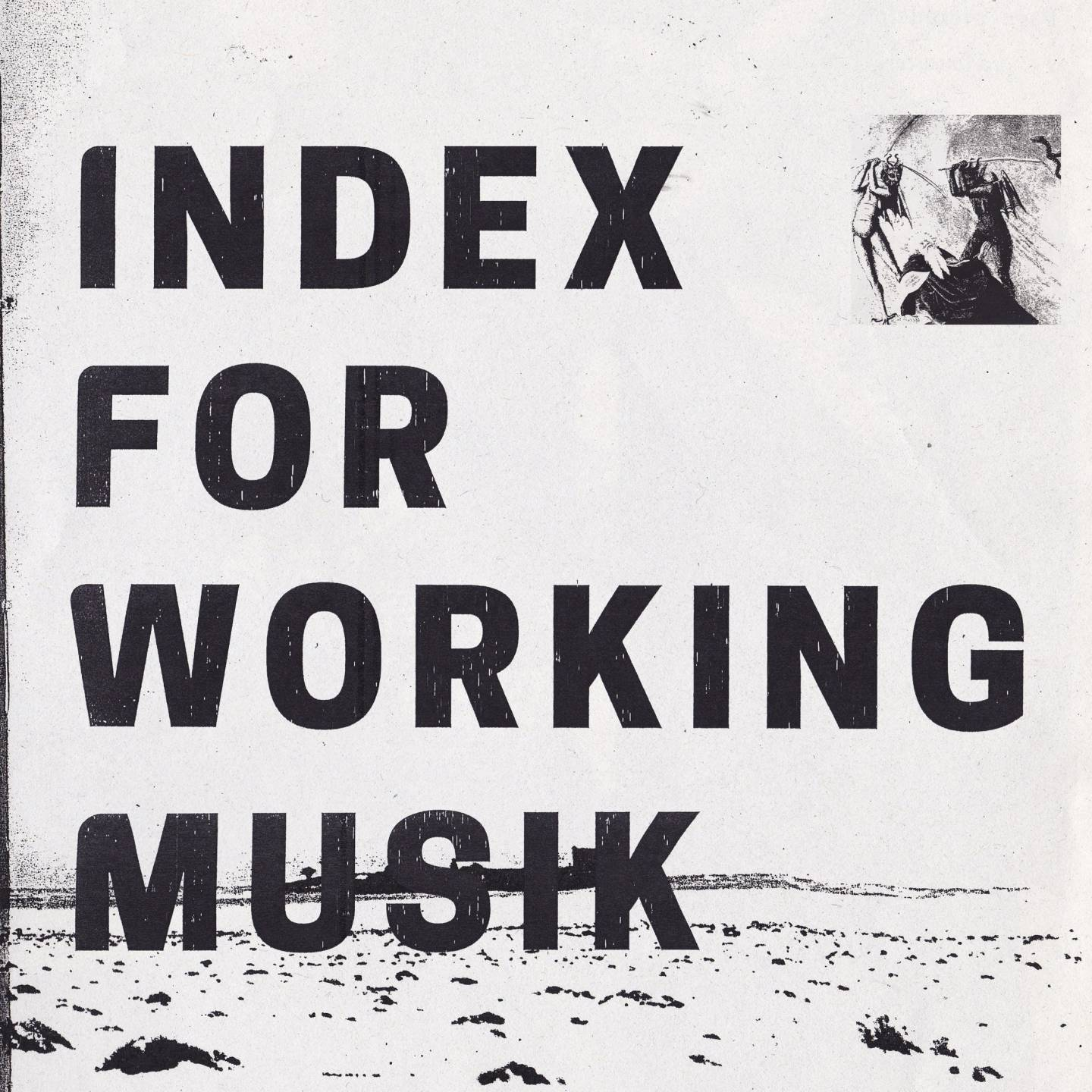
Among Britain’s most exciting breakthrough band of recent years, Sports Team, are about to release their second studio album “Gulp!”Sports Team are Alex Rice (lead vocals), Rob Knaggs (rhythm guitar and vocals), Henry Young (lead guitar), Oli Dewdney (bass), Al Greenwood (drums) and Ben Mack (keyboard + percussion). Formed in 2016, the band released two EPs — “Winter Nets” and “Keep Walking!” — before sharing their debut album “Deep Down Happy” in June 2020 to widespread critical acclaim. Sports Team’s vivid vignettes of modern Britain and inspections of the follies, foibles and frustrations of youth have earned them an impassioned fanbase, a real community who come together at the band’s infamously electrifying live shows.
The first taste of “Gulp!” came as Clara Amfo premiered the band’s new single ‘R Entertainment’ as her Hottest Record in the World on BBC Radio 1. “Gulp!” follows Sports Team’s 2020 Mercury Prize nominated debut album “Deep Down Happy“, which charted at #2 in the UK’s Official Charts, achieving the biggest vinyl sales for a debut British artist in 2020.
Signposting a bold and ambitious new era for the band, Sports Team explain that ‘R Entertainment’ explores “The packaging down of all human experience into entertainment, prompted by the infinite scroll through social feeds and the manic formlessness of the images we are hit with every day. Graphic news interrupted by ads for season 17 of The Bodyguard, news as a rubbernecking, passively waiting for the next drop of horror as we flick through recipes.”
A Grateful Dead Show could feel like a world apart too, an improbable, thriving anomaly in a music business hub and all-night-every-night live scene addicted to the new and next in punk, experimental rock, dance music, and hip-hop. Two nights before the Dead hit the Garden in March 1981, a young Irish band, U2, performed virtually all of their debut album, “BOY”, at the Ritz, a downtown ballroom—some songs twice because that’s all the material they had. The night after the Dead left town,
Garcia argued in a 1981 confrontation with Britain’s punk-obsessed New Musical Express, “We’re no more nailed to the Sixties than anybody else. We’re not celebrating an era that no longer exists. We’re here and now, partaking in what’s going on.”
We can now see how that traffic went both ways in New York. As The Clash were up at Bond’s in June 1981, the avant-rock band Sonic Youth played their first dates downtown—cofounded by a guitarist, Lee Ranaldo, who had followed the Grateful Dead in high school, hitting shows in 1972 and ’73, one of them Watkins Glen. Ranaldo, in turn, did not know that singer-guitarist Ira Kaplan—a critic for New York Rocker and The Village Voice who started the indie-rock group Yo La Tengo in 1984—was a fellow Dead Head (with 80 shows under his belt) until they were invited to play at the same after-party during the 2015 Fare Thee Well concerts in Chicago. “We played ‘Dark Star’ together,” Ranaldo said later. “It was a pretty good version, I have to say.”
“It’s one of the big myths about the Dead—the idea that punks hated the hippies,” said guitarist Bryce Dessner of the Brooklyn-born band The National when we spoke in 2016 about Day Of The Dead, a benefit compilation he coproduced with his twin brother-guitarist Aaron featuring 59 new recordings of Dead songs by modern-rock artists including Ranaldo and Kaplan. “Think of that long-form jamming of Sonic Youth, the edgiest of those post-punk bands,” Bryce said, then pointed to The Flaming Lips—a prolific, psychedelic institution formed in Oklahoma in 1983 (they covered “Dark Star” on Day Of The Dead)—as “a great example” of the “bands that exist in the Dead’s diaspora.” – David Fricke, “In And Out Of The Garden”Madison Square Garden ’81, ’82, ’83
“We’re just now starting to loosen up to the point where we were, say, back in 1970, ’72, where we can start drifting from key to key, from rhythm to rhythm, and in the jams, some interesting stuff has come up. Once again, we’re tending to go new places every night.” – Bob Weir, Rolling Stone, 1980
3/9/81 at Madison Square Garden delivers all that. It’s got colour and texture and freshness, keyboardist Brent Mydland’s Hammond organ painting a new layer for the Dead to dabble on. And dabble they did, from the “shot out of a cannon” opener of “Feel Like A Stranger” to the “fleeting romance of ‘Althea” to the high-gloss 80s blues of the first set to the second set, both intense “China Rider”, “Samson And Delilah,” “Estimated Prophet” and dramatic “Ship Of Fools,” “Stella Blue” in its ability wrap you up its spirals and accents. It’s all undergone Plangent Processes tape restoration and speed correction, with mastering by Jeffrey Norman.
47 minutes of MSG 1983 by-and-by for my-oh-my! Night One (10/11/83) has us floating along from a dreamy “Bird Song” to twinkly “St. Stephen” into a slow and funky “Wang Dang Doodle” But don’t even think of putting away those dancing shoes – Night Two (10/12/83) will have you dosey-doeing through the “Cumberland Blues” into The Beatles’ “Revolution,” before gently setting you back down with “My Brother Esau”.
Welcome to this unique, enduring phenomenon of the Grateful Dead in New York City, a mutual devotion, forged in concert, that ran for nearly as long as the band itself—from June 1st, 1967, a free show in Tompkins Square Park on the Lower East Side (ahead of the band’s official, local bow at the Cafe Au Go Go), to the Dead’s last Garden run, six nights in October 1994…the Grateful Dead’s affinity for New York City…was instant and arguably their most profound with any city aside from San Francisco.” – David Fricke
They got on the bus to the Port Authority, rode in on the Long Island Railroad and the New Jersey Transit line. They traveled North, South, and West on the 1, 2, and 3 subway lines, their numbers growing as they descended upon Penn Station. Some rolled up in those iconic New York yellows. Some walked excitedly through the bright lights of Broadway and Times Square, meeting up with old friends on the way and picking up a few new ones too as they ascended The Garden’s stairs. Maybe you were among them – lightly buzzed on the way in, fully aglow on the way home. New York City was in its prime and damn if the Grateful Dead wasn’t going to rise up to meet it! If you were there, we call on you to join us as we recapture that MSG magic and if you weren’t, we invite you along on the epic journey that is “In And Out Of The Garden”Madison Square Garden ’81 ’82 ’83.
Numbered and limited to 12,500, this 17CD set celebrates the band’s rich history at “the world’s most famous arena,” introducing six previously unreleased shows recorded at MSG between 1981 and 1983. It offers a front-row seat to The Grateful Dead in the early 1980s, an overlooked and underestimated era of rebirth for the band. At the time of the recordings, the group featured Brent Mydland. Mydland’s vocal power and colourful keyboard palette energized the band, invigorating older material like “The Wheel,” “Truckin’” and “Eyes of The World.” He also gave the band more musical flexibility, which encouraged them to dust off rarely aired treasures like “Dupree’s Diamond Blues” and “Crazy Fingers.”
“In And Out Of The Garden” touches on the three-year period after 1980’s “Go To Heaven” was released, a time when the Dead were constantly on the road, playing more than 200 dates. While they were in no rush to return to the studio during this time, they continued to write new music. In 1982 and ’83, the band performed most of the songs that would appear on 1987’s “In The Dark”. The new collection includes performances of four songs from that album – “Touch Of Grey,” “Hell In A Bucket,” “Throwing Stones,” and “West L.A. Fadeaway” – plus the B-side, “My Brother Esau.”
Due September 23rd, “In And Out Of The Garden” comes in a custom box featuring new artwork by Dave Van Patten celebrating the band’s eclectic fanbase, with a cavalcade of illustrated Dead Heads. The collection also includes detailed liner notes by award-winning music journalist David Fricke, who explores the band’s connection to the Big Apple. It features newly restored and speed-corrected audio by Plangent Processes, mastered by Jeffrey Norman.
Canadian indie-rock institution By Divine Right return with a new album, “Otto Motto”, a disc whose 14 tracks display their haunting, psychedelic pop sound. By Divine Right’s perennial driving force, Jose Contreras says: “We were on a roll from 2014 to 2016. After 25 years, By Divine Right suddenly seemed unstoppable. Everything was easy and we wanted to make a record that was ‘us.’ The LP was to be called “Onomatopoeia”, the sound of us, but stuff happened. It wasn’t until 2021 that it was finished, mixed, and mastered. Some songs grew and evolved, some got forgotten, and some new ones showed up. “Onomatopoeia” turned into “Otto Motto“. We had more than an album’s worth of songs, but it had been so long since we’d been able to function as a band, we simply forgot to think about anything. But at least we made it into the garage. We recorded it ourselves with the help of a couple old pals. We played it all how it came out. We did almost no editing; the songs are long and take their time. Fourteen songs in an hour, and a double vinyl sounded romantic — like the re-issue of a ’90s CD on vinyl.”
I didn’t remember writing this song, til I came across it, then I was like oh yeah!..this thing It came out almost complete as is “Never playing this song for any one,” I thought More like I thought I thought Cuz as the world got weirder and weirder, this song got easier and easier to sing. We tracked it at the end of our session In the middle of the night Very quietly Levitating Really, the story of the song, Its an amalgam of the invisible people we see everyday My Toronto always has had spirit people living in it The people no one talks to The people that don’t go into stores The people you see day after day and no one knows
“Senses Out of Control”, the new Buzzcocks album, is finally unveiled — their first new studio offering since “The Way” in 2014! The legendary Manchester punk band need little introduction. Back in 1977, they gave birth to a generation of independent labels with their debut EP “Spiral Scratch”. Thereafter, their melodic punk-pop proved irresistible, leading to hit singles and three landmark albums. They broke up in 1981 but reunited in 1989 and have been going steady ever since. Sadly, singer Pete Shelley passed away in 2018, but founder member and the band’s other singer/songwriter Steve Diggle has kept the flag flying.
During the COVID pandemic, Steve and co. (Chris Remington on bass, Danny Farrant on drums) busied themselves with recording “Sonics In The Soul”. Recorded at Studio 7 in London, the album was co- produced by Steve himself with Laurence Loveless.”
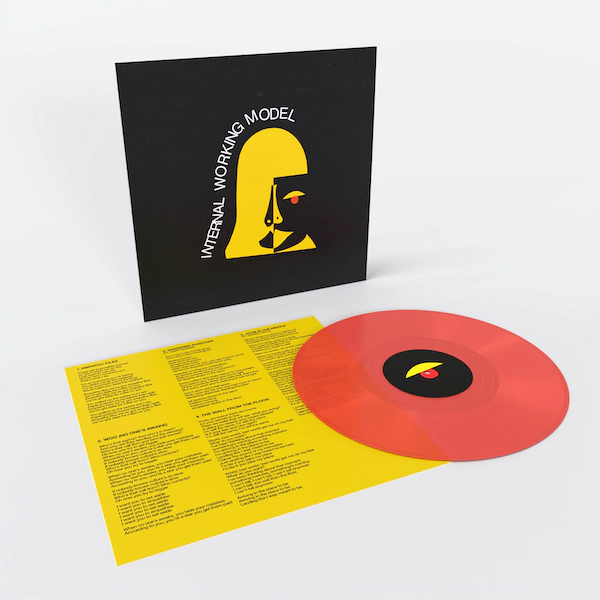
Working Men’s Club is about the music, the vibe, and that feeling, forcing you to move. Anyone can join”
Songs created in the shadow of terror and loss, but that crackle and pop with defiance “Fear Fear” is a record made for agitating and dancing, for heart and soul, for here, now and tomorrow. It’s a record that explores juxtaposition; that of life and death, acceptance and isolation, environment and humanity, hope and despair, the real world and the digital world. That top to bottom rigour, the complete vision is what makes the second album from Working Men’s Club such a stunning and unique achievement.
Their critically acclaimed self-titled debut album, released in summer 2020, was the sound of singer and songwriter Syd Minsky-Sargeant processing a teenage life in Todmorden in the Upper Calder Valley. He was 16 when he wrote some of those songs, now 20, he had to get up and out of the Valley. “The first album was mostly a personal documentation lyrically, this is a blur between personal and a third-person perspective of what was going on.”
“Fear Fear” documents the last two years. Yes, there is bleakness – but there is also hope and empathy. “I like the contrast of it being happy, uplifting music and really dark lyrics. It’s not a minimal record, certainly compared to the first one. That’s because there’s been a lot more going on that needed to be said.
Making the busy feel finessed and the dreadful feel magical – “Fear Fear” manages those feats, and then some. Or, as Syd Minksy-Sargeant puts it: “We just set out to make the best-sounding album we could.”
Tim Burgess – as self-effacing a band leader, solo star, label runner, repeat memoirist and all-round caffeinated can-do kid as you’ll find – would certainly shrink from the latter accolade. “A hero??” he’d likely mutter with a shake of his boyish mop. “For playing some records?” Over the first year of the pandemic, Tim Burgess’sTwitter Listening Parties were a lifeline to many. At a time when the world shut down, we all retreated indoors, alone, and cancelled gigs were the least of our worries, the North Country Boy’s idea of utilising social media to unite us round a digital turntable was inspired.
Meanwhile, Burgess was writing. And writing. And writing. From September 2020 to summer 2021, ideas poured out of Burgess. He’d been encouraged by Simon Raymonde, boss of his record label Bella Union (and, of course, a former Cocteau Twin). He applied a musician’s logic: if you can’t tour your last album, write a new one. Then, when you can tour again, you’ll have two albums’ worth of songs to play. Well, now, arguably, Burgess has three albums’ worth of songs to perform live. “Typical Music” is a 22-track double, a blockbuster set of songs that are as expansive and diverse as they are rich. As fun as they are funky. That embrace heartache and love.
That run the gamut from ABBA (in the shape of guest vocalist Pearl Charles, whose own brilliant Magic Mirror album is the sound of the magic Swedes doin’ disco) to Zappa (free-form studio experimentation is go!).”
Taken from Tim Burgess forthcoming album ‘Typical Music’ which will be released via Bella Union on September 23rd.
Little Feat recorded at The Bottom Line in New York on September 17th, 1974 This was the first of two nights the band performed at The Bottom Line This show was Broadcast on 92.7 WLIR two days before the famous WLIR Ultrasonic Studios broadcast on September 19th,1974. This recording courtesy of Matthew Kushner
The Band: Lowell George – Vocals and Slide Guitar Paul Barrère – Vocals and Guitar Bill Payne – Vocals, Piano, Organ, and Keys Kenny Gradney – Bass Sam Clayton – Percussion and Backing Vocals Richie Hayward – Drums and Backing Vocals
Smut are a band from Chicago, based around the song writing of Taylor Roebuck. Following the death of her sister in 2017, Taylor turned to writing to try and find a way through the “moment in which my life was destroyed permanently”. Stepping up to help her in her hour of need, her band mates ploughed on with making music to accompany her words, and in 2020 they released the acclaimed EP, “Power Fantasy”.
The band are now building towards the release of their new album, “How The Light Felt”, out this November via Bayonet Records. This week the band shared the record’s debut single, “After Silver Leaves”.
Written about a former toxic relationship, the song exists with almost deliberate contrasts, as Taylor explains, “the song sounds so happy, but I’m talking about driving someone to a hospital when they’ve overdosed. And having to detach myself and realize that maybe it’s not my job as a teenage girl to save some sad sack of a guy. I think a lot of young women will relate to that, unfortunately”. This dark tale is set to a soaring retro dream-pop backing, nodding to the likes of The Sundays as ice-cold vocals are drenched in glistening shoe-gazey guitars and shimmering New-Wave synth. “After Silver Leaves” feels like the perfect introduction to where Smut are right now.
Smut is Taylor Roebuck, Sam Ruschman, Andrew Min, Bell Cenower, Aidan O’Connor
“How The Light Felt” is out November 11th on Bayonet Records.
Long awaited new album from The House Of Love. The sequel to 2013’s “She Paints Words In Red”, “A State Of Grace” was written and recorded by the band’s lynchpin Guy Chadwick between COVID lockdowns.
Guy says: “It is the best set of songs I have written for years and the pandemic ironically gave me the time and space to develop and arrange the songs.” The album was recorded with a new line-up, originally put together for an American 30th Anniversary tour, now rescheduled for October. In the current line-up, Guy (lead vocals/guitar) is joined by Keith Osborne (lead guitar), Hugo Degenhardt (drums) and HarryOsborne (bass).
“A State Of Grace” is an eclectic collection of tracks, from the driving, grungy ‘Clouds’ to the eerie, atmospheric groove of ‘Sweet Loser’, the riffy powerful ballad ‘In My Mind’ and the folksy finale, ‘Just One More Song’. This is the first time the band’s recordings have featured instruments such as harp, pedal and lap steel guitar, banjo and violin, all adding to the unique guitar sounds we’ve come to know and love from The House of Love.
The album was recorded at Pett Sounds and mixed by Babe Rainbow’s Warne Livesey. Keeping it in the family, a promo 16mm video has been filmed by Guy’s nephew and Godson, George Moore-Chadwick.
Released on Cherry Red Records“The State Of Grace”, 16th September 2022.
Often labelled “the only band that mattered”, The Clash were largely seen as one of the pivotal players in the punk scene, with many saying that the aforementioned phrase, arriving when the group signed a major deal with CBS, was the signal for the genre’s demise.
Of course, The Clash would go on to have a career that transcended any subculture and, instead, helped to define an entire generation and beyond. However, like all world-conquering groups, they had to start somewhere.
A special moment for Joe Strummer, Mick Jones, Paul Simonon and Topper Heddon as they open up a 1977 show in Munich with their inflammatory jam ‘London’s Burning’. Watching the band in action, it’s easy to see how The Clash became the giants of anti-establishment music they were.
On October 4th, 1977, the crowd in Munich must have been a little wary of what they were about to witness. By this time, the term “punk” was being widely used by both British and US media, and the bands that had been born under the moniker were still just as happy to trash a stage and spit in your face as they were to sit and talk it out on a music TV show. It was a time when punk was becoming mainstream. It makes sense then that Strummer, clearly aware of the fading nature of such a fad-led term, proclaimed to the crowd: “This is rock and roll!”
The Clash had released their self-titled debut earlier that year and had gathered a good deal of great press for it. Even as early as their first record, The Clash set out their stall, It wasn’t all about attention-grabbing stunts but using one’s platform for good and moving the spotlight onto the societal issues that swirled around the entire globe.
“It’s fucking horrible,” Mick Jones proclaimed. “I never want to come back here again. It stinks.” While that’s no the best review of Munich, it did reflect the plight of many punk bands on the road outside of Britain. Punk had been widely accepted and accelerated in the UK. Having boasted the toast of the rock and roll set in the sixties, it was clear that London was happy to once again be in the musical limelight.
Paul Simonon shared a similarly guarded sentiment when he talked to Wolfgang Buld, who was filming the performance for his documentary “Punk in London”. “The police came around and dragged us out from the hotel,” explained to the bassist when noting Jones’ dissatisfaction. “We really want to like Germany. Well, I do, anyway.”
With such clear national divisions, one can’t help but make assumptions that the choice to open the evening’s proceedings with their song ‘London’s Burning’ was perhaps a little contrived. However, the reality is more likely that the song is a perfect opener. It powers out of the gate as soon as Strummer belts out the first lines of the song. It would lead the way for most of The Clash’s debut album to be played, closing the show with ‘Garageland’.
In the 18-minute clip, we not only get a sense of the kind of power The Clash had in their mist – with a hometown crowd or not – but we also get a reminder of just how incendiary their songs were and how deeply shocking their new sound would have been to such a naive audience.
Excerpt from the 1977 documentary “Punk in London.”
Tracks: 0:20 London’s Burning 2:25 Complete Control 4:15 Hate & War 6:39 Police & Thieves 11:05 The Prisoner 13:01 Janie Jones 15:03 Garageland (unavailable)