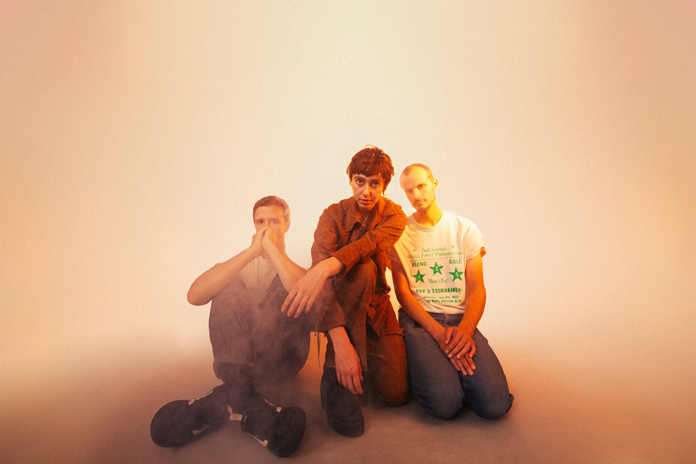
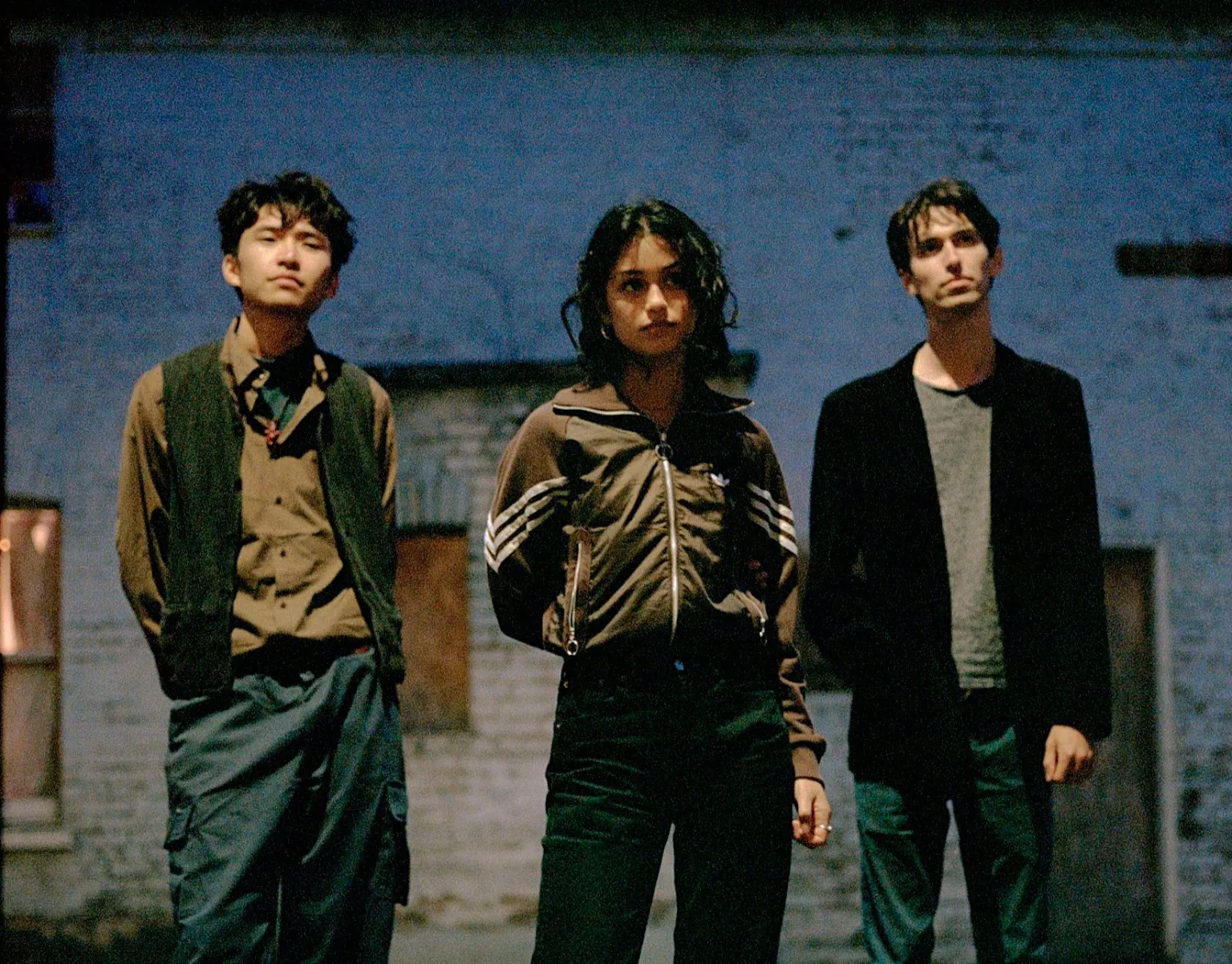
Montreal experimental pop trio Braids have announced a new album, “Euphoric Recall”, and shared a new song from it, “Evolution,” via a music video.“Euphoric Recall”is due out April 28th via Secret City. Nima Navab directed the “Evolution” video.
Singer/guitarist Raphaelle Standell-Preston had this to say about the new single in a press release: “Evolution” in and of itself is a patient act. Our pursuit of the individual self, which comprises all realms of human emotion, is sweetened with the intention and act of patience from ourselves, from those that we love and those who love us.”
The press release describes the new album in greater detail: “A freer and wholly anew effort, their fifth studio album finds the trio abandoning strategy, burning it down, and realizing their love record. Love, all of it; the unbound bliss, the budding impulses, and the messy imperfections, a supernova swirled up in a suite of bold, melodic, symphonic pop songs surrendered to the present.”
Standell-Preston adds: “How you cultivate your heart space is extremely important to the outcome of what you are pursuing. I think that when we are operating from a place of safety and feeling loved and have intentions of loving, we can access really interesting places.”
The band wrote, recorded, self-produced, and mixed “Euphoric Recall” at Studio Toute Garnie, their Montréal studio. The band also features Austin Tufts and Taylor Smith.
Last August, the band shared the album’s first single, “Retriever,”
“Euphoric Recall” Due Out April 28 via Secret City
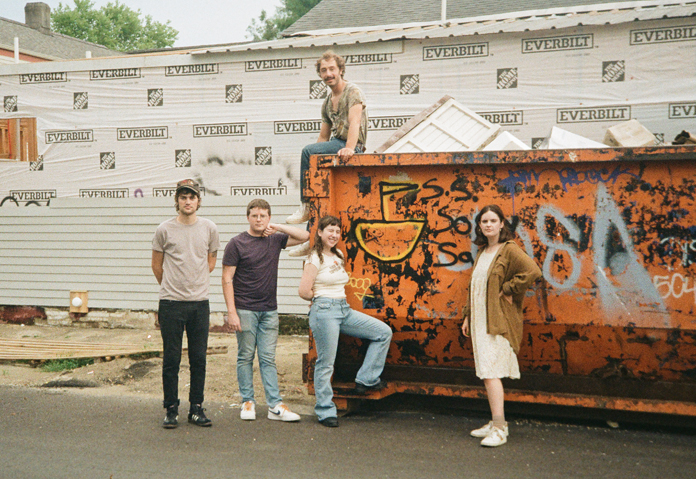
Asheville rock band Wednesday have announced a new album, “Rat Saw God”, and shared a new song from it, “Chosen to Deserve,” via a music video. They’ve also announced some tour dates. “Rat Saw God” is due out April 7th via Dead Oceans (their first for the label). Spencer Kelly directed the “Chosen to Deserve” video.
Singer Karly Hartzman had this to say about the new single in a press release: “‘Chosen to Deserve’ is a writing exercise I gave myself to try to recreate the iconic song by Drive-By Truckers ‘Let There Be Rock’ but with my own experiences from growing up and fucking around and getting into stupid shit. The video directed by Spencer Kelly shows the setting of my upbringing and antics: my parents’ neighborhood in Greensboro, NC and Lake Myers RV Resort.”
The band also features MJ Lenderman, Alan Miller, and Xandy Chelmis.
Last October, Wednesday shared the album’s eight-and-a-half minute long “Bull Believer,” in addition to announcing that they had signed to Dead Oceans.
In 2022, Wednesday released the covers album “Mowing the Leaves Instead of Piling ‘em Up”. The band’s last album of original songs was 2021’s “Twin Plagues”. Wednesday wrote “Rat Saw God” in the months soon after following “TwinPlagues’ completion. They recorded at Asheville’s Drop of Sun studio over the course of a week.
“I really jumped that hurdle with “Twin Plagues” where I was not worrying at all really about being vulnerable—I was finally comfortable with it, and I really wanna stay in that zone,” says Hartzman.
The songs on “Rat Saw God” tackle everyday life, rather than big issues. “Everyone’s story is worthy,” says Hartzman. “Literally every life story is worth writing down, because people are so fascinating.”
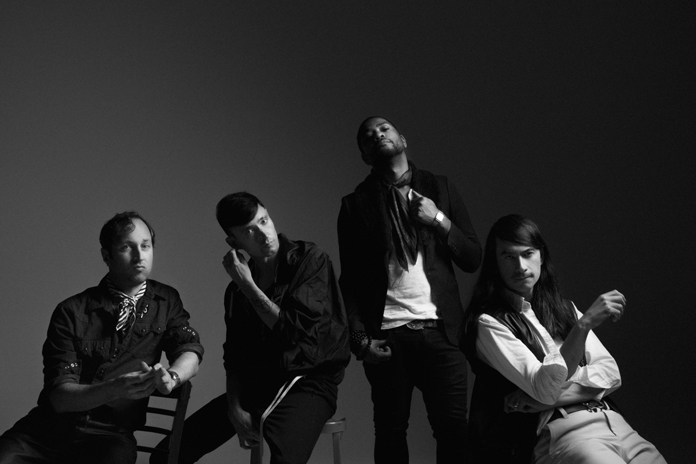
Atlanta band Algiers are releasing a new album, “Shook”, on February 24th via Matador. Now they have shared the album’s third single, “I Can’t Stand It,” which features Future Islands’frontman Samuel T. Herring and Boy Harsher’s Jae Matthews. It also samples “What You Don’t Want Me to Be,” a 1971 song by fellow Atlanta artist Lee Moses.
Algiers’ frontman Franklin James Fisher, who wrote and produced the song, had this to say in a press release: “It’s a very personal song about a devastating loss of someone I believed to be the love of my life which nearly ended in my suicide. I think the song’s narrative arc reflects the sense of dread and the path that led me to that moment. She put on ‘What You Don’t Want Me to Be’ the first time I heard it and I knew immediately that I was going to sample it—I just couldn’t have known the result would be a song about our own end. But every time I sing that song now it feels like I heal a little bit more.”
Matthews had this to add: “I wanted to give Algiers not so much a narrative, but a recollection of a feeling. That abstract evocation that comes when you think about someone who broke yr heart and how that pain still tethers you.”
In September, Algiers shared the album track “Bite Back,” which features Billy Woods and Backxwash. Upon announcement of the album, they shared the song “Irreversible Damage” featuring Zack de la Rocha,
Algiers’ last album, “There Is No Year”, came out in early 2020 via Matador Records.
Ron Gallo the chameleonic singer-songwriter-bandleader ended a five-year run in Music City by quietly returning to his native Philadelphia. Chiara D’Anzieri, his wife and sometime bandmate, went with him. She hails from Turin in Northern Italy and is soon to release her debut solo album in English as Chickpee.
“Back for good, at least at the moment,” says Gallo. “Being in the house all last year, questioning existential crises — questioning everything — we ultimately decided we missed family, missed Philly, and that the Northeast was much more suited for an Italian relocating across the world.”
The artist has released a series of singles throughout the year, pairing up with fellow indie artist Boyo to create “Hide (Myself Behind You)”. This song’s haziness and distortion are right on trend for the era of bedroom pop and lo-fi production.
Gallo, who has family roots in Salerno and Sicily, met D’Anzieri on a 2018 summer tour of Europe that went through his ancestral homeland. “It was crazy!” he recalls. “I saw this girl across the way — it was almost like slow motion. I ended up talking to her. She spoke a little bit of English. And we’ve been together ever since.”
The Nashville chapter “was life-changing in a lot of ways” for Gallo. This creatively fruitful period yielded an EP and two LPs — three if you count the Stones-y album “Heavy Meta”, the follow-up to 2014’s self-released “Ronny”. “Heavy Meta” was recorded in the City of Brotherly Love and issued as Gallo’s debut for Music City-based New West Records in 2017. “Peacemeal”, is his latest full-length.
“I have to admit, I know I got dealt a pretty good hand,” Gallo says. “I moved here, met the people at New West, signed the deal, went right out on tour. I made a lot of lifelong friends those first few years. But a lot of them moved. And when everyone’s gone all the time, friendship can be fleeting.”
Being away on tour for most of 2017 and 2018 made Gallo’s stints at home increasingly antisocial — agoraphobic, even. Running errands around town, he came to dread talking shop with casual music-scene acquaintances so much he made two songs about it. There’s the spoken-word “The East Nashville Kroger Conversation,” from 2018’s odds-and-sods “Really Nice Guys” EP, and “Can We Still Be Friends?” a standout from “Peacemeal”. “Can we still be friends,” the latter tune asks, “now that I can’t help you?” When Gallo, bassist Joe Bisirri and drummer Dylan Sevey returned home from touring their second New West album “Stardust Birthday Party”, Gallo found himself struggling on both a personal and a musical level.
“I needed to take a break,” he explains. “I started to notice a lot of the friendships I had that I thought were genuine, weren’t. I know any place with a music industry is going to have its opportunists, but that plastic-gentle approach sometimes made me uncomfortable. I just want to hang out, have a human connection — not talk about your business, or how many tickets you’ve sold.”
Gallo and D’Anzieri married in 2019, and he’d intended to spend much of that year in Italy relaxing and recharging. Instead, visa issues got him barred from the country for three months. “I was back in Nashville, and it felt surreal,” he remembers. “It was just me, alone, in the house. And that’s when I wrote “Peacemeal.”
Gallo played nearly every instrument on the 12-song LP, though you do hear some bass, guitar and vocal contributions from D’Anzieri. Equal parts contemporary bedroom psych-pop and optimistic classic hip-hop, its laid-back sound is a total 180 from the full-band “Stardust’s” shouty post-punk philosophizing. On the 2018 album, Gallo raved zealously on the importance of living life solely in the present moment — past or future be damned — in a manner seemingly devoid of irony or sarcasm.
Of course you can never be 100 percent certain about how to take the deadpan Gallo, who calls the late Andy Kaufman “an influence on everything I’ve done so far, especially the live show.” He cites Iggy Pop and Tyler the Creator as musical touchstones: “I’ve always been drawn to weirdos, people who live in their own universe.” On “Peacemeal”, Gallo delights in blurring the lines between music and comedy, spoken word and performance art, improvised and planned, sincere and satirical, pop songcraft and music-scene punditry. Nearly every song seems parodic or nonsensical on first listen, then burrows itself into your head before you even realize it — usually within the span of three minutes. It’s a direct line to Gallo’s mind as he navigates a transitional time in his life and career.
“I’m an overthinker in daily life, but when it comes to music I try to be a first-off, best-off person, keep my head out of it,” says Gallo. “Stream-of-consciousness, breaking the fourth wall with the listener — that’s what I love to hear. So that’s what I try and make: music that feels almost like you’re witnessing someone’s thoughts happening in their head in real time.”
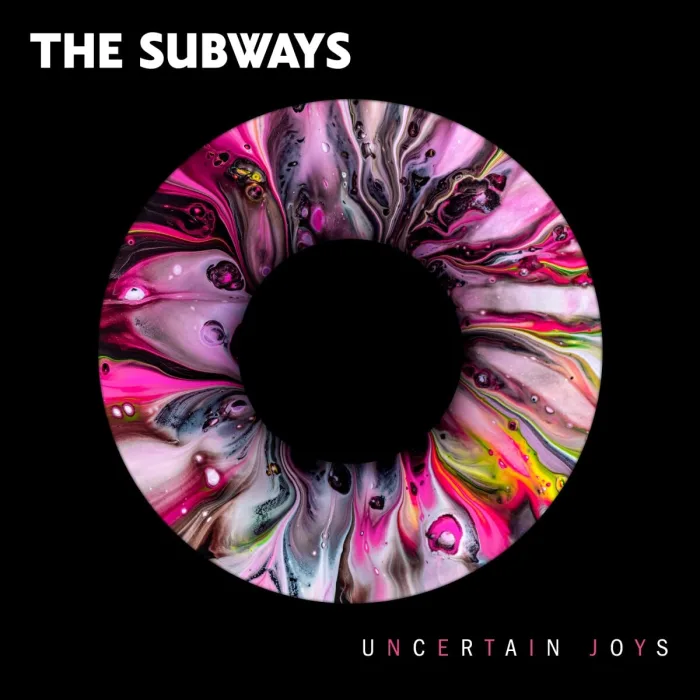
“Uncertain Joys” is the fifth studio album by The Subways, and their first without longtime drummer Josh Morgan. Drummer Camille Phillips now rounds out the trio that also includes guitarist/vocalist Billy Lunn and bassist/vocalist Charlotte Cooper.
The keyboards in the album’s title track give the song an ‘80’s synth-pop vibe. Cooper’s bass provides the foundation, and there is some good vocal interplay between Lunn and Cooper in the song’s midsection. “Lavender Amelie” is acoustic based and has a lighter touch than most of the other material on the album. There is a brief clip of studio banter at the start of the song. Lunn’s vocal on the track is quite good. The rocker “Influencer Killed The Rock Star” features a tight performance by the band, solid drumming by Phillips and terrific vocals by Lunn and Cooper. “Fight,” the first song that the band recorded without Morgan on drums, is a very political song that was inspired by the Black Lives Matter movement. It’s a heavy track on which Lunn delivers the lead vocal in rapid-fire style.
“You Kill My Cool” features a slightly distorted vocal by Lunn and is a rocker that should go over very well in live performances. “Love Waiting On You” is a good power-pop tune that has the feel of a tune that you might hear on AM radio in the 1970s. Cooper’s backing vocals on the track are quite good. “Incantation” is a powerful tune that has the band firing on all cylinders, and it has great vocals by Lunn and Cooper throughout.
In the rocking “Black Wax,” Lunn namechecks several artists, including Kurt Cobain, Jimi Hendrix, Madonna, Fiona Apple and Aretha Franklin, in the song’s midsection. Phillips’ drumming propels the heavy “Swanky Al.”
The album closer “Futures” is a bit of a wild card. It starts out heavy with rock-solid drumming, good guitar and bass and a strong vocal performance by Lunn. About three minutes in, it downshifts into a keyboard-driven section that provides a synth-pop mood. It then morphs back into a heavy rocker. Toward the song’s conclusion, it shifts once again to light keyboards with distorted spoken-word vocals.
“Uncertain Joys” is a 12-track album that would have been better served with 10 tracks. The weaker tracks hurt the album and seem like padding. While the album lacks a breakout single like their 2005 hit “Rock & Roll Queen,” it is a worthwhile release that the fans should enjoy. And it will provide some powerhouse songs to the band’s concert setlists.
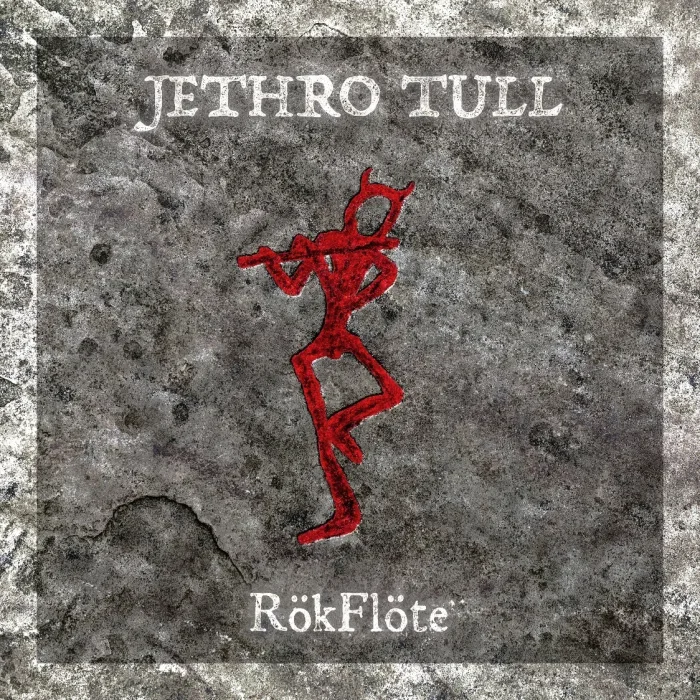
Jethro Tull launch first single “Ginnungagap.” taken from their 23rd studio album, ‘RökFlöte’, which is set for release on April 21st, 2023 via InsideOutMusic. Following 2022’s ‘The Zealot Gene’, the band’s first album in two decades, Ian Anderson and the band are returning with a 12-track record based on the characters and roles of some of the principle gods of the old Norse paganism, and at the same time exploring the ‘RökFlöte’ — rock flute -which Jethro Tull has made iconic.
Today also sees the launch of the first single from the album, and you can watch the stunning animated video for ‘Ginnungagap’
The track takes inspiration from the god Ymir, the proto-being, a primeval being, who was born from venom that dripped from the icy rivers called the Élivágar and lived in the grassless void of Ginnungagap.
Ian explains the album’s title & theme in more detail: “The title of this offering went through a little change or two along the way. I started with the idea of a predominantly instrumental album for rock flute – as in rock music. When the subject material of the album presented itself, I was drawn to the term Ragnarök from Norse mythology – their version of apocalyptic end times or Biblical Armageddon. The “final showdown” scenario is ubiquitous and inherent in Hinduism, Christianity and Islam, for example. Ragnarök translates as “destiny of the Gods”, the rök part meaning destiny, course, direction. With umlaut firmly in place, courtesy of the Germanic origins of Old Norse, Flute became Flöte in keeping with the spelling. With me so far? I just can’t miss the glorious opportunity for a good and legitimate umlaut.”
With more than 30 albums to their credit and sales totalling more than 50 million, Jethro Tull are one of the most successful rock bands of all-time with a catalogue that contains classics that still resonate today. Led by Ian Anderson, Tull still continue to tour throughout the world
‘RökFlöte’ will be available on several different formats, including two limited deluxe formats that include bonus demo material, extensive liner notes & a blu-ray featuring Dolby Atmos, 5.1 surround sound, alternative stereo mixes by Bruce Soord (The Pineapple Thief), as well as a bonus track and in-depth interview with Ian Anderson. The album will also be available digitally in the spatial audio formats Dolby Atmos & Sony 360 RA.
When Sophie Allison says to our friends and coworkers assembled around the desk, “We’re finally doin’ it,” she really means it. A little less than exactly three years ago, Allison had just released the wonderful “Colour Theory” as Soccer Mommy; it’s an album that marked significant strides in her songwriting and production. A big year was doubtless in store for her and her bandmates… and we all know how that went. The band’s visit to the Tiny Desk, scheduled for March 30, 2020, was the first of many to be canceled due to the pandemic.
That time in history required a lot of lemonade-making from all of us; we at NPR Music and beyond were lucky that, not too long after lockdown had sunk its teeth in, Soccer Mommy was the first to record a Tiny Desk (Home) performance for us. It was an early, much-needed sign that life might still be waiting for us on the other end. But, as we’ve learned well, there’s no replacement for proximity.
With all of that indelibly in mind, it was particularly lovely and emotional welcoming Sophie, guitarist Julian Powell, keyboard player Rodrigo Avendano, bassist Nickolas Widener and percussionist Rollum Haas, finally, to the Tiny Desk. Their four-song set, with work from each era of Soccer Mommy’s catalogue, is beautifully performed and contoured.
SET LIST “Shotgun” “circle the drain” “newdemo” “Still Clean”
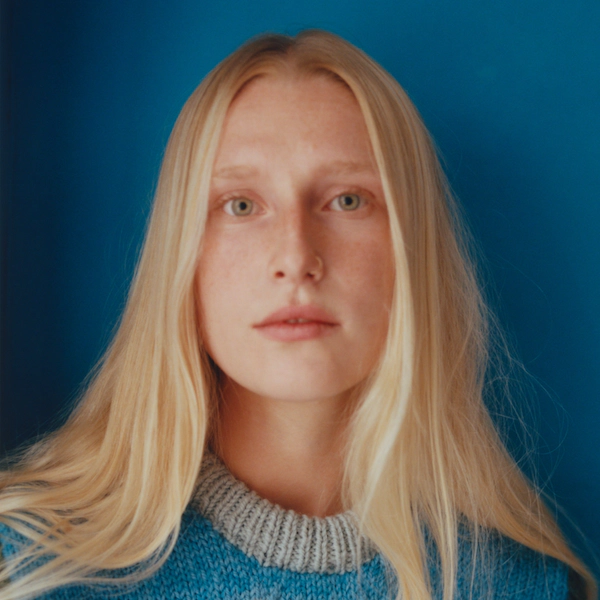
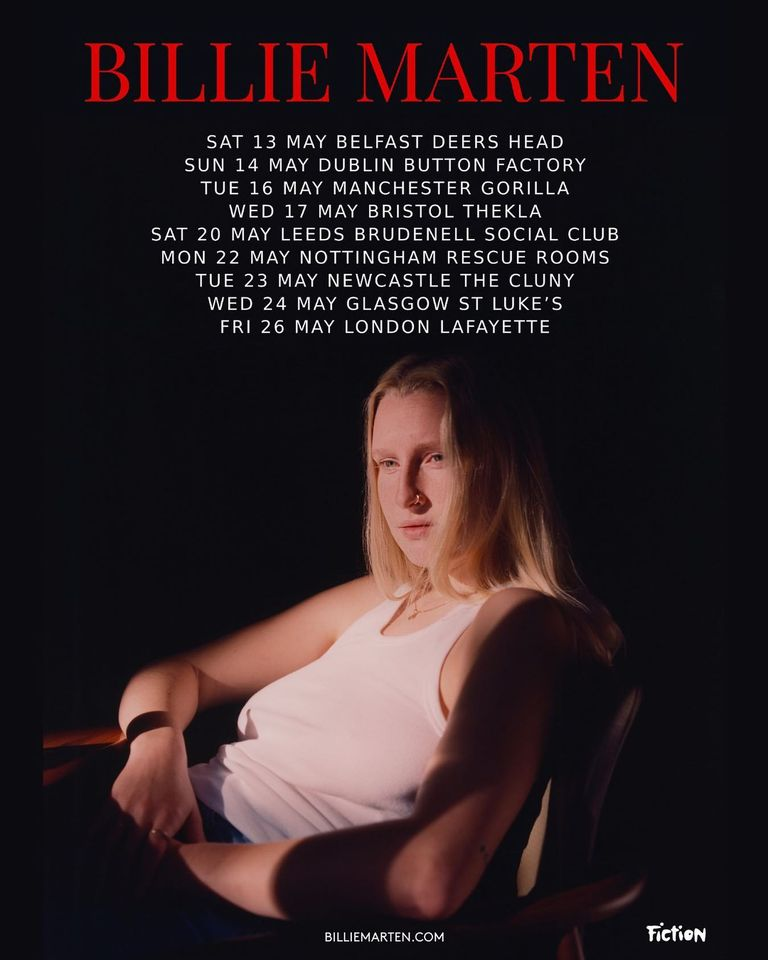
Billie Marten releases her fourth record “Drop Cherries” via Fiction Records. Recorded entirely on tape in Somerset and Wales late last summer, “Drop Cherries” marks the very first time that Billie Marten has both written and co-produced (with DomMonks) one of her records; following critically-lauded 2021 album “Flora Fauna, Feeding Seahorses by Hand” (2019) and “Writing of Blues and Yellows” (2016).
The title is taken from a tale she heard from a friend just before she was starting to create songs for the album, and the title track came soon after. It’s a metaphor where the gift of cherries stands for offering someone your love; doing anything you can to make them happy. “Dropping cherries,” she begins, “is such a strong, visceral image that I tried to channel throughout recording in Somerset and Wales, to capture the vibrancy, unpredictability, and occasional chaos one experiences within a relationship
And so it has arrived. 2023. And just like that our fourth album, “Pedestrian Verse” turns 10 years old. This has always been the album we were most proud of as a band. It was written collectively and I think was the best and most mature example of Scott’s songwriting.
To celebrate the 10th Anniversary of Frightened Rabbit’s critically acclaimed Pedestrian Verse album, this special edition release contains the original 12 track album with an additional 11 bonus tracks.
“Pedestrian Verse” was the bands fourth studio album by Frightened Rabbit, originally released on 4th February 2013 on Atlantic Records. Produced by Leo Abrahams and the band itself, it is the only studio album to feature guitarist and keyboardist Gordon Skene, who departed from Frightened Rabbit following the album’s accompanying tour. Partly inspired by a break-up, the album features increased song writing contributions from each member of the band
On marking the 10 year Anniversary of the album, we wanted people to see his lyric notes and get an insight in to how he works on a song from start to finish. We’re immensely proud of this album and will be forever grateful for where it took us.
Disc 1 is pressed on clear vinyl and disc 2 is pressed on black vinyl. The records are housed in a gatefold outer sleeve with a gold foiled motif on the front cover and printed inner sleeves containing album lyrics. Celebrate its 10-year birthday with us and raise a dram. It’s appropriate to drink at a 10th birthday party right?!
“Pedestrian Verse” 10th Anniversary Edition is out 17th March
With their highly anticipated debut album due out later next month, Honeyglaze have shared new single “Female Lead” and announced new shows, including Wet Leg dates followed by their own headline tour in May, and numerous festivals this summer.
Their Dan Carey-produced, self-titled debut album will be released on 29th April 2022 via Speedy Wunderground.
The South London based, haiku-loving trio formed just before the first lockdown, and a combination of compelling live performances and early singles “Shadows“, “Creative Jealousy” and “Burglar” has seen their profile rise rapidly and garner support from a plethora of early fans including Steve Lamacq, Matt Wilkinson and Wet Leg – who have all declared themselves in love with their intoxicating brand of poetic lyrics and impressive musicianship. Today they also share new single, “Female Lead“, with accompanying video directed by James Ogram and the band’s Anouska Sokolow, and featuring Jojo Macari, one of the stars of Netflix’s Sex Education.
“I was overwhelmed by the state of the world during the first lockdown and constantly being surrounded by bad news,” Anouska says of “Female Lead”. “It was a time when people were playing with changing their appearance and I felt incapable of writing anything of any actual importance so I decided to write about something as completely arbitrary as dying my hair. I was inspired by the song ‘Leader of the Pack’ by the Shangri-las and the narrative heavy pop songs that were coming out of the Brill building during the 60s.”
Of the video she adds, “Given that the song itself is so narrative heavy, we knew we wanted to make something with its own separate story. It started off with some ideas about duality and stolen identity. I had recently watched Casablanca that’s where we got the idea of this movie character coming to life and we ended up writing a full scene for a made-up, 50s adventure romance. The rest was kind of influenced by films like Mullholland Drive and Purple Rose of Cairo.”