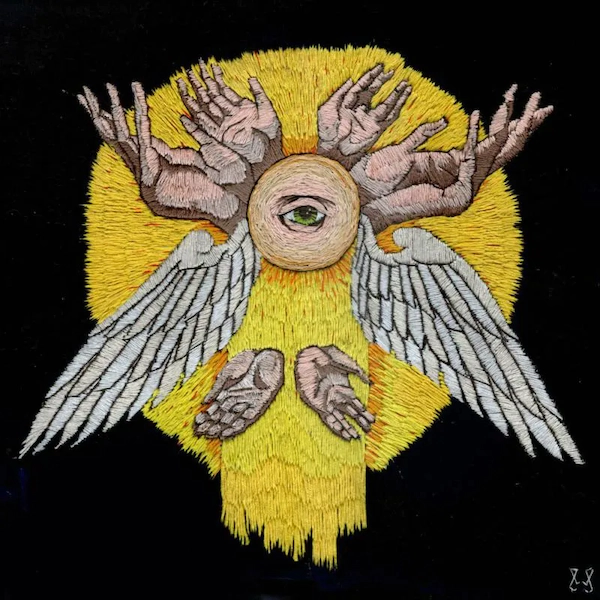
“The Unstruck Bell” is the first new Pines of Rome album in two decades. The Rhode Island slowcore band comprises Songs:Ohia’s Matthew Derby on vocals and guitar, High Aura’d guitarist John Kolodij, drummer Rick Prior, and bassist Steven Kimura. The quartet announced the new LP with lead single “Slick Enhancer” back in March and has since shared the scuzzy rock cut “Redacted.”
The Pines of Rome is a slowcore band from Providence, Rhode Island, who’ve been exploring the frontiers of Cosmic American Music on and off for the past 25 years, dialling down the tempo and turning up the volume to create tidal walls of sound that surge and break like the turbulent Atlantic waves that batter the shores of the smallest state in the Union.
“The Unstruck Bell” is the newest offering from John Kolodij (guitar), Matthew Derby (guitar/vocals), and Rick Prior (drums) since playing their last show over 20 years ago. Recorded by Seth Manchester at Machines With Magnets, it is the result of a year of unbridled creativity for the band during an era of unprecedented crisis. “If you think about a bell as an alarm, and all of its tolls are stored as potential energy in its atoms…that just feels like the time we’re living through right now,” Derby says of the album. It is a record of caution and hope, a hymn for the future that contains the band’s strongest-ever work.
We’ve played with Songs:Ohia/Magnolia Electric Co.,Richard Buckner, Bonnie Prince Billy, June of ’44, Shipping News, Lullaby for the Working Class, the Promise Ring, Jets To Brasil, Rainer Maria,Joan of Arc,Silkworm, Bright Eyes..
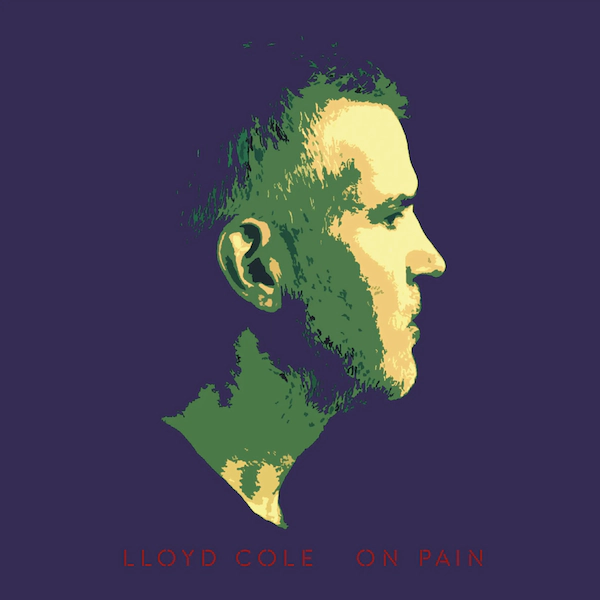
“Through both his work being the front man of The Commotions and his solo career, Lloyd Cole established himself as one of the most articulate and acute songwriters of the post-punk era. Undergoing several artistic shifts, from minimalistic to folk-rock-inspired to electronic, Cole’s work never compromised the high creative value that he has proven to provide over his distinguished career. His artistic integrity and proven divergence make him one of the most capable and remarkable songwriters to this day. Cole’s latest work On Pain — his 13th solo album consists mainly of electronic sounds. Once Cole had formulated a sonic picture of the record he wanted to make, the arrival of each new song gradually brought that picture into focus.
His distinguishable voice and sophisticated lyricism invite the listener into the mindset of someone who has reached old age and is coming to terms with this. At times, the experience of listening to “On Pain” is akin to sitting in a sleek, state-of-the-art departure lounge, unsure of quite where you’re waiting to go.”
Brooklyn quintet Geese’s sophomore album “3D Country” was co-produced by the band and James Ford (Arctic Monkeys, Depeche Mode, Shame). The album’s 11 tracks are an explosion in both scope and vision for the group. In the summer of 2021, Geese emerged from out of nowhere, sparking a hype cycle unlike anything that had been seen for a young American rock band in recent memory.
Suddenly a band that had previously planned to release some music, break up, and go away to college was touring the world. And during this entire process, that very same band everyone was getting to know ceased to exist. On a practical level, Geese are still the group we were introduced to in 2021: Vocalist Cameron Winter, guitarist Gus Green, guitarist Foster Hudson, bassist Dom DiGesu and drummer Max Bassin. But spiritually, Geese have returned as an entirely different prospect.
I liked their first album a lot but I have a feeling “3D Country” is gonna propel them to new heights. So far in the two singles you can hear a lot of maturing from this band in songwriting and technique, especially Cameron’s singing, which sounds possessed compared to the first album
“3D Country” is the sound of a restless, adventurous band redefining themselves.” The new album “3DCountry” out June 23rd, 2023 on Partisan Records and Play It Again Sam.
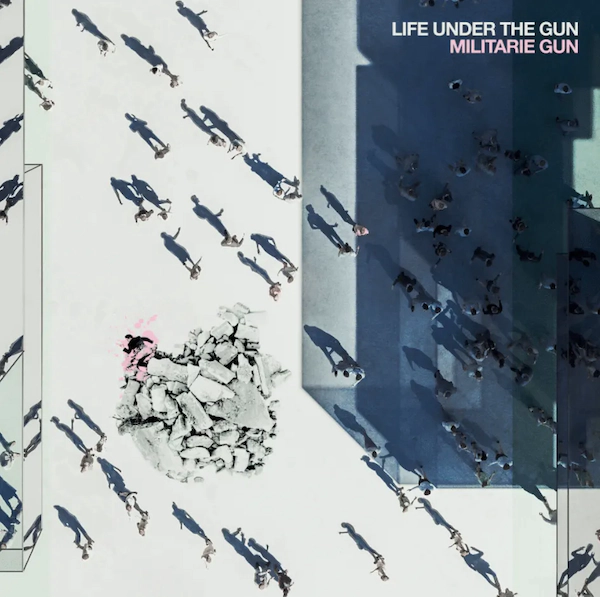
Militarie Gun are a truly uncategorizable band. Led by vocalist Ian Shelton, the band’s debut full-length album“Life Under The Gun” is almost impossible to describe without bouncing between contradictions. Is it abnormally aggressive pop music or is it unusually catchy hardcore? Is it deeply intellectual or is it satisfyingly primal? Is it a vulnerable attempt to unpack lifelong cycles of hurt, or is it a collection of world-beating, absurdist punk anthems? In the end, the answer is obvious: it’s all of it. It’s Militarie Gun. Since forming in 2020, the group have been releasing music and touring at a startling rate, and “Life Under The Gun” feels like a culmination of this recent hard-earned momentum. The album’s 12 tracks take all of the best parts of Militarie Gun’s earlier work and amps them up to the highest possible degree.
It sounds massive without sacrificing the punk spark–full of driving drums, distorted bass lines, and of course Shelton’s instantly recognizable roar–only this time everything is bigger and even catchier. “This is what I thought we sounded like all along,” Shelton laughs. “It’s always felt like a melody-forward band to me, but I think now we’re finally achieving what I was always setting out to do.”
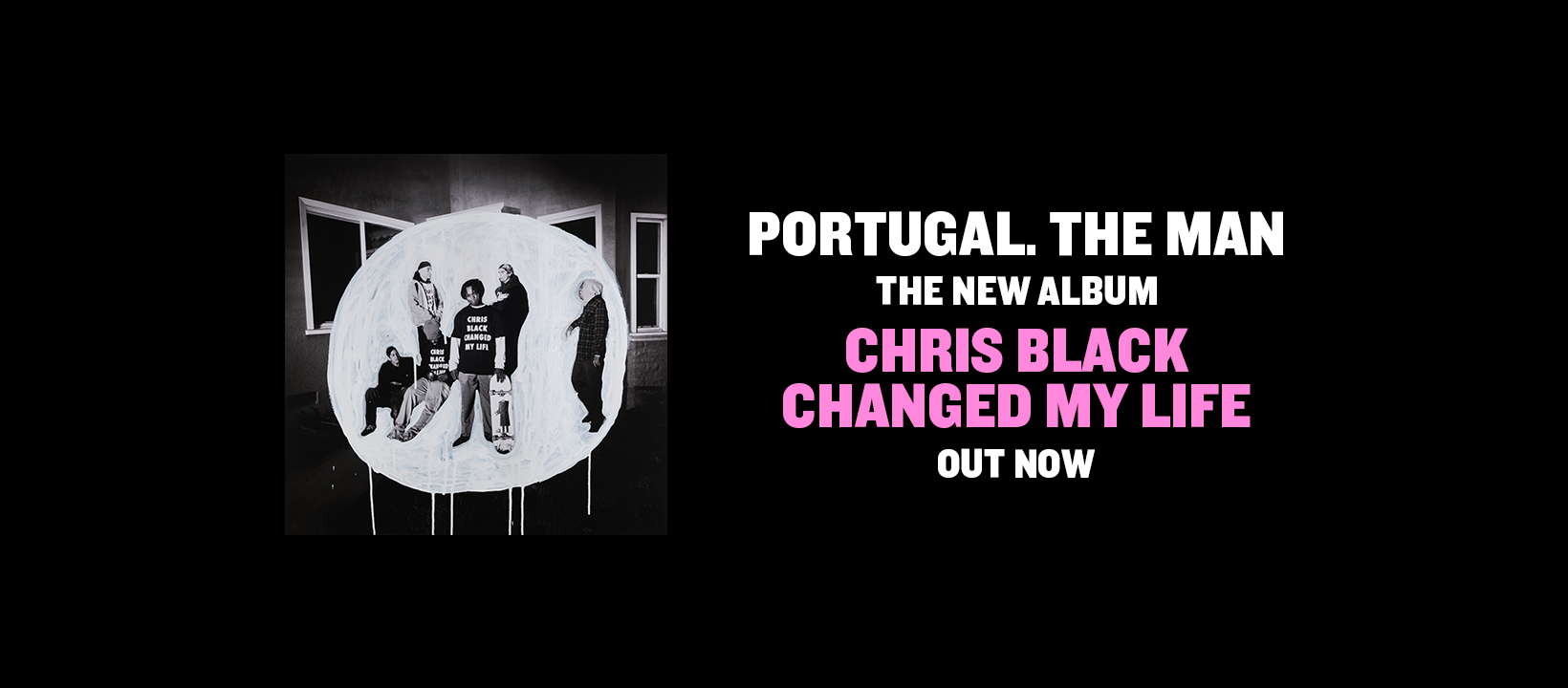
Over the past decade, Portugal. The Man have established themselves as one of rock’s most prized possessions and a live phenomenon, with over 1,600 shows under their belts and a storied reputation as festival favorites. Originally heralding from Alaska, the now Portland-based band soared to new heights in 2017 with the release of their platinum album “Woodstock”. The album was marked by the astounding success of their infectious single “Feel It Still”, which earned the group a plethora of new accolades — including a Grammy for Best Pop Duo/Group Performance, a seven-times platinum certification, a record setting 20-week residency at No. 1 on alternative radio, and an inescapable presence on the Top 40 airwaves. “Chris Black Changed My Life” is the band’s first full length album since “Woodstock”.
Our new album “Chris Black Changed My Life” coming June 23rd, The album is dedicated to the band’s late friend and honourary band member Chris Black.
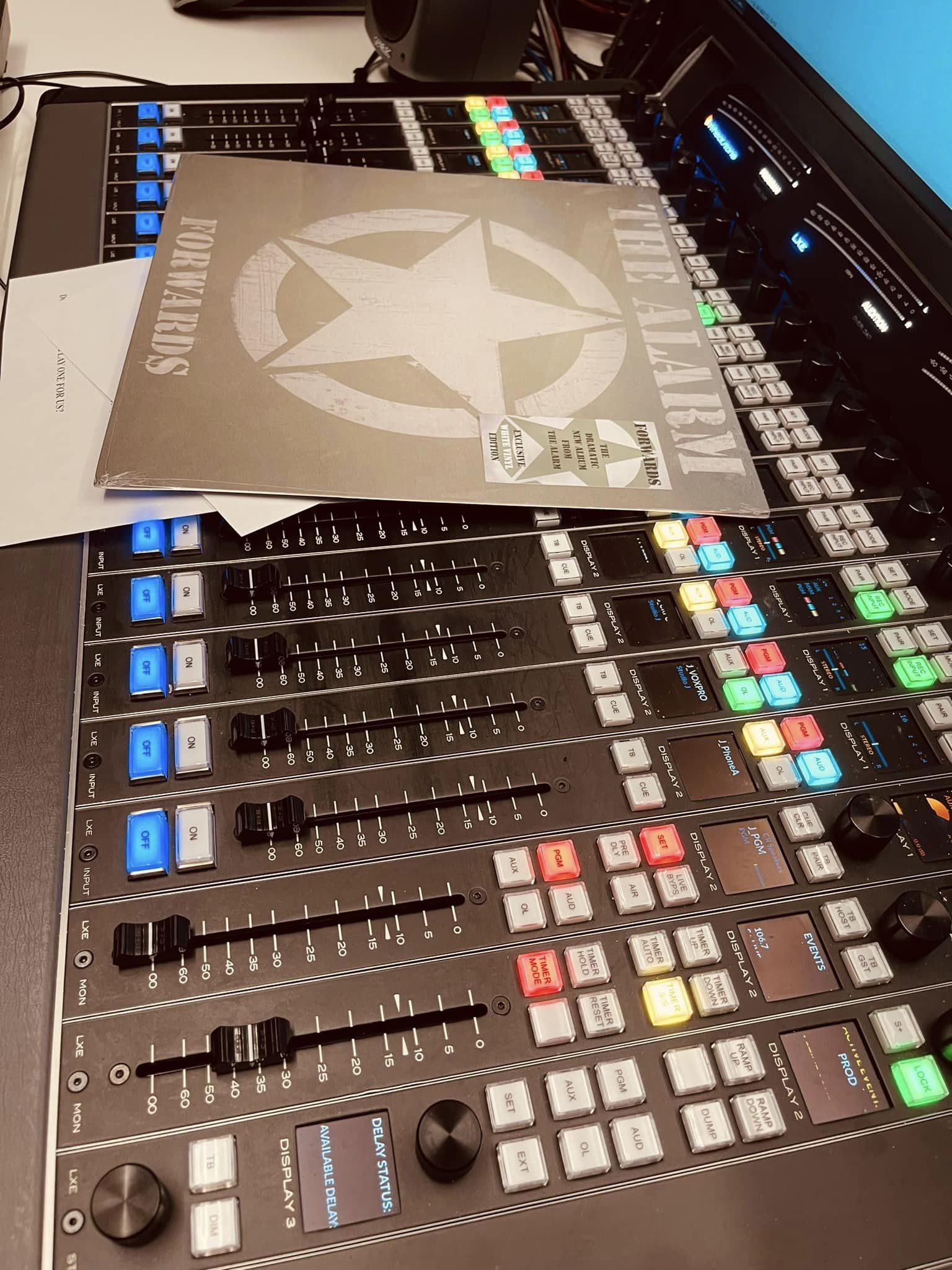
The Alarm’s 21st studio album, “Forwards”, is out now on their own The Twenty First Century Recording Company label. The Welsh punk survivors have released “Forwards”, which follows last year’s “Omega”, which had been written and recorded over 50 days in early 2021 during the pandemic. With a dark irony, “Omega” could well have been their last following sole original member Mike Peters’ well-publicised battle with pneumonia and a serious leukaemia relapse during 2022; a condition which has first been diagnosed in 1995.
Thankfully that wasn’t to be the case, and we now have the optimistic, life-affirming “Forwards”, written while the artist was receiving treatment at Ysbyty Glan Clwyd Hospital in Rhyl. “I literally took my guitar into hospital with me,” says Peters.“I was on the ward for such a long time, I started writing the songs for “Forwards” in between IV sessions and the first people to hear the music were, literally, the very people who were trying to keep me alive.” The album was recorded in between hospitalisation periods, the singer taking the band into the recording studio with producer George Williams, despite barely being able to speak due to the debilitating effects of chronic illness.
He says, “I’ve been to places only deep suffering can take the human spirit and, in the darkness, I clung onto every piece of light I could find to work my way back to life. This was the energy that drove me to write and record “Forwards.”
Before we go forwards (sorry, bad pun) let’s take stock. The Alarm, since the early 1980s had 17 Top 50 UK singles, including the magnificent “68 Guns; Spirit of 76” and “Rain In The Summertime” and have sold over six million albums worldwide. The band split in 1991, however Peters performed as a solo artist, with projects such as Coloursound with Billy Duffy and returned to the ‘Alarm’ name in the early 2000s. I’ll be honest I’m not qualified to summarise the artists lengthy career, but what I will say is the bands website is one of the best I’ve ever seen with clearly a lot of time and attention paid to it, with interviews and documents dating back to early days as The Toilets and also Seventeen.
The other thing that jumps out from the site is what a bloody great bloke Mike Peters is. Whilst he’s been knocked down on occasions, he’s got up again. As well as a savvy operator, arguably one of the first artists to set up his own label to release his music and control his catalogue, he’s also constantly in touch with his fans. Since the lockdowns, his Big Night In online broadcasts (via YouTube) have attracted thousands of views from all corners of the Earth. The love for the artist and his music has also been celebrated at ‘The Gathering’ each year. This year it celebrates its 30th anniversary attracting fans to North Wales, and next week Peters is flying out to New York to perform, chat, and meet and greet for 4 sold-out days, from June 22nd to 25th. As well as being a bloody great bloke he seems to be a very humble one too. How many readers are aware of the amazing charity work (with wife Jules) via their Love Hope Strength Foundation which promotes innovative, music-related, outreach and awareness programmes for leukaemia and cancer sufferers, survivors and their families?
Truth be told I am lapsed Alarm fan myself, The albums “Eye Of The Hurricane” and “Electric FolkloreLive” The dynamics of the tracks always grab the attention as Mike Peters soulful yet occasionally coarse vocals carry you along.
“Forwards” hits you with an urgency and pent-up restless energy from the off. The opening title track sets the tone for the album, which offers reflections balanced with a desire to live throughout. The first track fades in as if you’re returning from the darkness into the light of hope. Peters explains the track was, “Written for, and in the moment that I found myself trying to stay alive. I was in hospital and searching my heart and soul for clues to how I could survive. My instincts told me that whenever I had a moment in between IV sessions I should not stay still and at least try and walk some steps along the corridors of the hospital. This was generally at night when the place was deserted and the lyrics are informed by all the fleeting glimpses I would get from seeing other people on my route down the long corridors sometimes stricken with grief or like myself, clinging to life itself. I was looking for the way forwards and when I decided to go public and post the news about what was happening to me on the Alarm website, I signed my message off with the single word ‘Forwards’. I knew right away that was going to be a song and an album title”. It’s a call to arms and a hook which will pull you in.
“Forwards” is naturally dominated by the artist’s experiences over the last year, with key themes of love, hope and strength throughout. After a few listens some of those stand out, such as the opening line of “The Returning“, a track written for Jules and his sons Dylan and Evan, “Dream out loud if you want to stay alive,” or the defiant “Whatever’s trying to kill me…. makes me feel alive” in previous single and “Next” which closes side one of the album.
“Another Way” gives you an insight into the working of the writer’s mind, and also his resolve. “There’s always another way; is a mantra and a phrase that has proved itself to me time and time again. Even in the most simple phases of life when a door seems closed, or life impacts on your direction of travel, I’m a believer that there is always a solution,” which seems to pay off on the following track, “Love And Forgiveness“, the singer commenting, “I’m always amazed when I find myself on the other side of life’s challenges, grateful to be alive and to have received the love and forgiveness to continue…” This is possibly my favourite track on the album, it’s a mid-tempo piece, almost Dylan-esque.
The opening track on the second, “Whatever”, was born out of John Lennon’s Whatever Gets You Thru The Night being played on hospital radio one day, Peters took his idea of getting through one night, and applied it to a longer intent Whatever Gets You Through Life? He remembers, “When I was in Ward 11 with a drain attached (through my back), into my lung, I had to lie still and on one side for 7 days while 5 litres of blood was extracted from my partially collapsed lungs. To stay sane I started to imagine what a new Alarm record would sound like and what kind of songs I would need to populate the space between the record cover and also get me through this predicament. As soon as I was out of hospital, I set up my recording gear and the songs burst forth from my imagination. It was as if they were writing themselves, and I knew the music had got me through and back to a place where I could begin to live again”.
“Transition” is perhaps the most open, raw and brutal song on the album, written at a point, “literally in a place of transition between life and death.” The opening verse makes it clear. ‘There’s a line / I have to cross tonight / If I want to stay alive / Live for a second time’. Midway through it musically lightens and you get a sense of hope on the horizon, especially when the guitar riff kicks in which at one point sounds not unlike I Will Follow.
“Love Disappearing” is the oldest piece on the album, written before hospitalisation but recorded after. It’s got a bit of everything. The open section making having a Spanish feel to it before turning into a tub-thumper, “Its content is easily explained, especially as the concerns about global warming are all around us and everywhere. Here in my small Welsh village, it seems as if life has taken a turn and the summers are not how I remember them as a child growing up, with winter becoming more severe with every passing year.”
The penultimate, “New Standards” is looking to the future, a song ‘about changing attitudes to life, the impact of social media and the dynamic between society and authority’. After charting the trauma of his time in hospital it’s positive that Peters can focus on what happens next. He says of the track, “Humanity is setting new standards every day, and I hope we can all learn to live with and by them, together”. Closing with the track X, it’s up to the listener to make of it what you will. “I wrote the lyrics in one pass and it was all there. I had no title but called it X as it was the last song on a ten-track record”.
Many may come to “Forwards” as a result of Mike Peter’s recent battles, it is a great place to return to The Alarm. I’m sure seasoned followers will question where I/we have been, and it’s a fair question, it’s us that have been away, not the band. There’s plenty to catch up on, over 400 songs, and I intend to start now. It seems that that opening line written 40 years ago was prophetic… “and now they’re trying to take my life away…”. ‘They’ did, and are still trying, but thankfully Mike Peters is a survivor and still here to tell the tale.
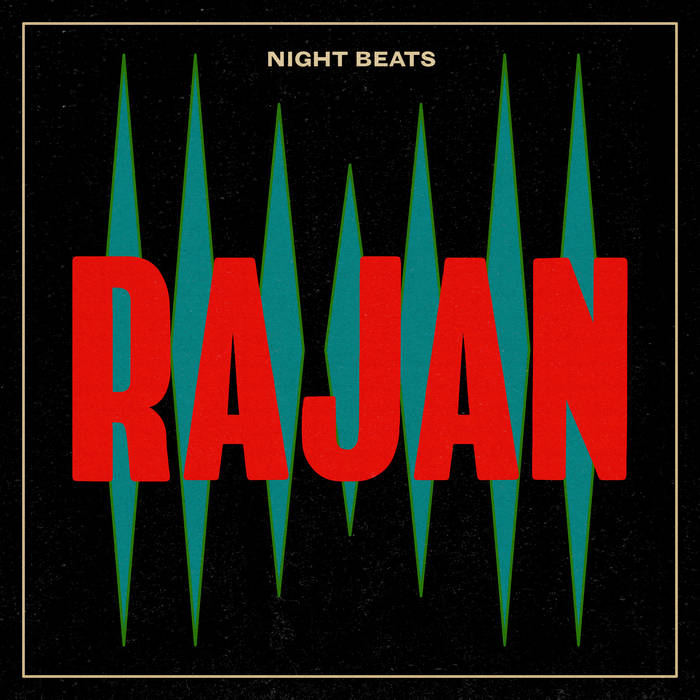
Night Beats have revealed another track from the new LP – check out “Nightmare”, one of our favourites off the album! Danny and his band have always blown us away with his guitar, vocals and songwriting, and this track is pure magic.
The new record “Rajan” is out July 14th. We’ve got a Tri-Tone vinyl dream for your turntable – our Levitation Edition pressing is limited to 300 copies. Following recent singles ‘Thank You’ and ‘Hot Ghee’, Night Beats are dropping their new single and video ‘Nightmare’. A slice of soulful psychedelic R&B, the track is the latest to be lifted from LA-based Danny Lee Blackwell’s sixth Night Beats album,
On ‘Nightmare’, Blackwell writes: “I wanted to hear sounds and cries of unconditional, blind love. I wanted swirling, fitful guitars, speaking in tongues, thrashing around in a chest trying to break free. A call and response to the blood curdling voice of a lost soul, ringing out, pleading for understanding. ‘Rajan’ is laced with distant, layered choral groups, exploring pathways paved by Isley Brothers, David Ruffin, Grace Slick and other psychedelic soul pioneers of the time. I wanted to hear the sounds of service to the ones you love, even being blinded by it. This song creates a circle, if you’re listening. A cascading roadmap through a nightmare. Thunder and lightning, flashing neon blue lights, rhetorical puzzles.
‘Nightmare’ is lifted from Night Beats’ new album, ‘Rajan’, due out July 14th via Fuzz Club and Suicide Squeeze Records.
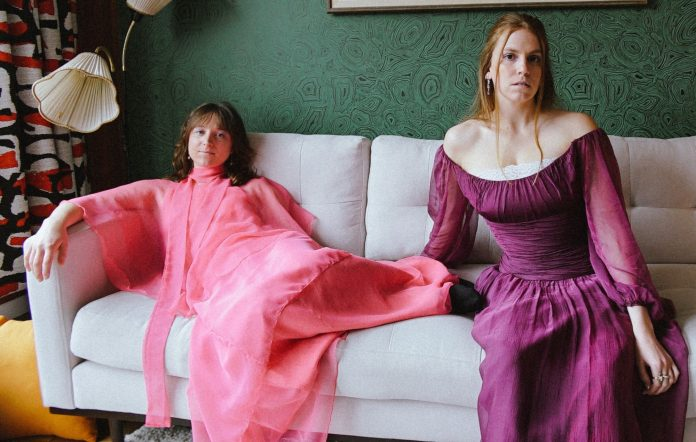
Prima Queen are theTransatlantic duo who may have met by chance, but their connection was surely destined to be. Their story begins with the Chicago-born Kristin McFadden moving to London for a semester abroad to study songwriting. And who happened to be on that course? Her future bandmate and bestfriend Louise Macphail, of course, who’d already decided they’d make music together after seeing a video of McFadden performing online.
A bond formed instantly. Not even McFadden returning to the US for a year could break it, and now six years later, they’re as close as ever and have become the Competition finalists of the Glastonbury Emerging Talent. Prima Queen will be playing many times throught out the festival they will be at The Rabbit Hole on Thursday, The Hive on Friday, and Strummerville Friday:; Croissant Neuf Saturday, BBC Music Introducing – Sunday, Soyou’ve got no end of chances to see this duo over the weekend. Luckily there’s a sweetness to their folk-pop matched with a punky abandon to their lyrics of fucking up and trying again that will see them fit most Worthy Farm scenarios – leaving you itching to check out their glorious recent ‘Not The Baby’ EP,
They complete each other’s melodies, and as both McFadden and Macphail delve into their respective personal dealings lyrically, the other is never too far away, always providing a holding hand.
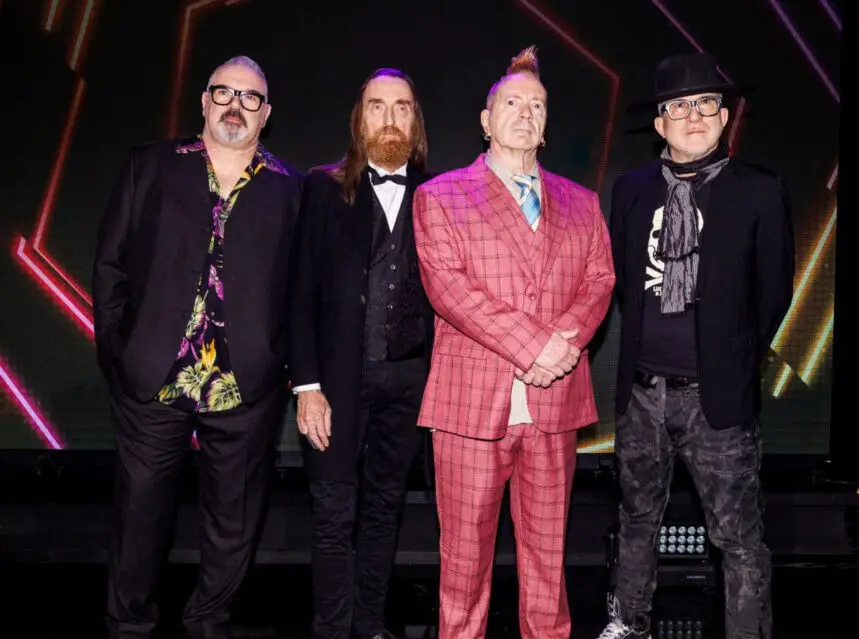
Public Image Ltd. (PiL) share new single “Car Chase,” taken from their forthcoming 11th studio album, and first album in 8 years, “End of World”, due out August 11th, 2023 on PiL Official via Cargo UK Distribution/Redeye U.S. The album release will be followed by a 38-date UK and European Tour.
The video to “Car Chase,” gives an insight into the recording of the new album and features handwritten lyrics by John Lydon. Talking about “Car Chase,” John said, “Typical PiL, unpredictable to the last. It’s a fantastic smash-and-grab of a song. It’s about someone who cleverly breaks out of the mental institution every night, unbeknownst to his owners. It’s based on having to go to shopping malls at night for cigarettes and wine and seeing the vast carpark space and lighting surrounded by a little village and a lot of dark trees and country lanes. It’s a really creepy scenario, what if somebody creeps out of there, like a mad lunatic?”.
Earlier this year, Public Image Ltd. released “Hawaii,” the most personal piece of songwriting and accompanying artwork that John Lydon has ever shared. The song is a love letter to John’s wife Nora, who sadly passed away from Alzheimer’s on Wednesday 5th April. A pensive, personal yet universal love song that has resonated with many since its release in January, the song sees John reflecting on their lifetime well spent and in particular, one of their happiest moments together in Hawaii. John said, “Nora loved the album, she wouldn’t have wanted us to postpone it or change any of our plans.” Previously he has said of “Hawaii“, “It is dedicated to everyone going through tough times on the journey of life, with the person they care for the most.”
They followed “Hawaii” with “Penge,” which John describes as, “something of a mediaeval Viking epic.”
The band began writing and recording “End of World” in 2018, during their 40th anniversary tour. After The Great Pause, the band regrouped in the studio and “there was just this massive explosion of ideas,” Lydon says. The result finds PiL set to release 13 of the best tracks they have ever written.
Celebrating their 40-year anniversary in 2018, Public Image Ltd. is widely regarded as one of the most innovative and influential bands of all time. PiL’s music and vision has earned them 5 UK Top 20 singles and 5 UK Top 20 albums. With a shifting line-up and unique sound – fusing rock, dance, folk, pop and dub – Lydon guided the band from their debut album “First Issue” in 1978 through to 1992’s “That What Is Not”, before a 17-year hiatus. Lydon reactivated PiL in 2009, touring extensively worldwide and releasing two critically acclaimed albums “This is PiL” in 2012 followed by their 10th studio album “What The World Needs Now“… in 2015, which peaked at number 29 in the official UK album charts and picked up fantastic acclaim from both press and public. (The album also peaked at number 3 in the official UK indie charts and number 4 in the official UK vinyl charts). “What The World Needs Now”… was self-funded by PiL and released on their own label ‘PiL Official’ via Cargo UK Distribution. In 2018 PiL celebrated their 40th anniversary with a career-spanning box set and documentary, both called “The Public Image Is Rotten”.
John Lydon, Lu Edmonds, Scott Firth and Bruce Smith continue as PiL. They are the longest stable line-up in the band’s history and continue to challenge and thrive.
New York pop savants Charly Bliss are back with ‘You Don’t Even Know Me Anymore,’ their first new music since 2019’s critically acclaimed album “Young Enough”, and its subsequent “Supermoon” EP. The track, produced by Jake Luppen of Hippo Campus and Caleb Wright, ushers in a new, more playful era for the band.
“I moved to Australia and felt a million miles away from who I had been in New York. Like I had been reborn happy, carefree, and slightly less pale,” explains Eva Hendricks. “I was convinced that I had totally bypassed the ‘wherever you go, there you are’ thing. Lexapro also helped. I think this song is a farewell to how sad and tortured I felt during the “Young Enough” album cycle.
It’s like the ‘fuck it!’ that you earn after burning your entire life down and starting over. Sam sent me the track and it felt exactly as joyous and silly and giddy as I felt inside. It came together quickly and set the tone for a new CB era.”
Charly Bliss is Eva Hendricks, Sam Hendricks, Spencer Fox and Dan Shure.