Archive for the ‘MUSIC’ Category

Public Image Ltd. (PiL) share new single “Car Chase,” taken from their forthcoming 11th studio album, and first album in 8 years, “End of World”, due out August 11th, 2023 on PiL Official via Cargo UK Distribution/Redeye U.S. The album release will be followed by a 38-date UK and European Tour.

The video to “Car Chase,” gives an insight into the recording of the new album and features handwritten lyrics by John Lydon. Talking about “Car Chase,” John said, “Typical PiL, unpredictable to the last. It’s a fantastic smash-and-grab of a song. It’s about someone who cleverly breaks out of the mental institution every night, unbeknownst to his owners. It’s based on having to go to shopping malls at night for cigarettes and wine and seeing the vast carpark space and lighting surrounded by a little village and a lot of dark trees and country lanes. It’s a really creepy scenario, what if somebody creeps out of there, like a mad lunatic?”.

Earlier this year, Public Image Ltd. released “Hawaii,” the most personal piece of songwriting and accompanying artwork that John Lydon has ever shared. The song is a love letter to John’s wife Nora, who sadly passed away from Alzheimer’s on Wednesday 5th April. A pensive, personal yet universal love song that has resonated with many since its release in January, the song sees John reflecting on their lifetime well spent and in particular, one of their happiest moments together in Hawaii. John said, “Nora loved the album, she wouldn’t have wanted us to postpone it or change any of our plans.” Previously he has said of “Hawaii“, “It is dedicated to everyone going through tough times on the journey of life, with the person they care for the most.”

They followed “Hawaii” with “Penge,” which John describes as, “something of a mediaeval Viking epic.”

The band began writing and recording “End of World” in 2018, during their 40th anniversary tour. After The Great Pause, the band regrouped in the studio and “there was just this massive explosion of ideas,” Lydon says. The result finds PiL set to release 13 of the best tracks they have ever written.

Celebrating their 40-year anniversary in 2018, Public Image Ltd. is widely regarded as one of the most innovative and influential bands of all time. PiL’s music and vision has earned them 5 UK Top 20 singles and 5 UK Top 20 albums. With a shifting line-up and unique sound – fusing rock, dance, folk, pop and dub – Lydon guided the band from their debut album “First Issue” in 1978 through to 1992’s “That What Is Not”, before a 17-year hiatus. Lydon reactivated PiL in 2009, touring extensively worldwide and releasing two critically acclaimed albums “This is PiL” in 2012 followed by their 10th studio album “What The World Needs Now“… in 2015, which peaked at number 29 in the official UK album charts and picked up fantastic acclaim from both press and public. (The album also peaked at number 3 in the official UK indie charts and number 4 in the official UK vinyl charts). “What The World Needs Now”… was self-funded by PiL and released on their own label ‘PiL Official’ via Cargo UK Distribution. In 2018 PiL celebrated their 40th anniversary with a career-spanning box set and documentary, both called “The Public Image Is Rotten”.

John Lydon, Lu Edmonds, Scott Firth and Bruce Smith continue as PiL. They are the longest stable line-up in the band’s history and continue to challenge and thrive.

Charly Bliss return with single 'You Don't Even Know Me Anymore'

New York pop savants Charly Bliss are back with ‘You Don’t Even Know Me Anymore,’ their first new music since 2019’s critically acclaimed album “Young Enough”, and its subsequent “Supermoon” EP. The track, produced by Jake Luppen of Hippo Campus and Caleb Wright, ushers in a new, more playful era for the band.

“I moved to Australia and felt a million miles away from who I had been in New York. Like I had been reborn happy, carefree, and slightly less pale,” explains Eva Hendricks. “I was convinced that I had totally bypassed the ‘wherever you go, there you are’ thing. Lexapro also helped. I think this song is a farewell to how sad and tortured I felt during the “Young Enough” album cycle.

It’s like the ‘fuck it!’ that you earn after burning your entire life down and starting over. Sam sent me the track and it felt exactly as joyous and silly and giddy as I felt inside. It came together quickly and set the tone for a new CB era.”

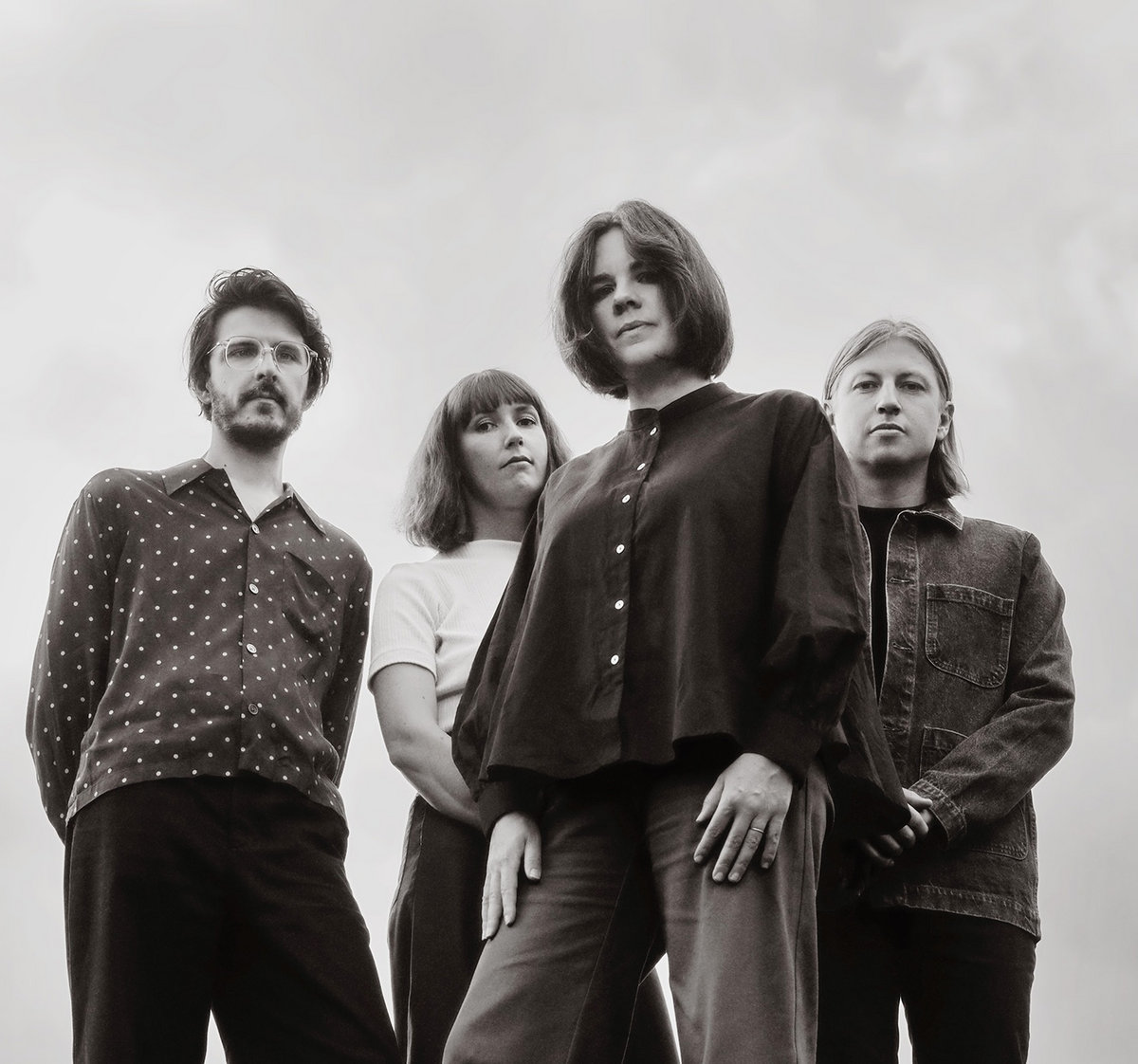
Charly Bliss is Eva Hendricks, Sam Hendricks, Spencer Fox and Dan Shure.

NEKO CASE – ” Blacklisted “

Posted: June 23, 2023 in MUSIC

Neko Case has always had a strong voice and a knack for giving gritty stories an ethereal bent. On “Blacklisted”, her third album, she handled more song writing on her own and put a finer point on both her narratives and her presence as a performer. Her persona and her music remained dark, mysterious, and a little distant with her voice wrapped in reverb as if she were calling out from a vast, empty space. If Tom Waits is the drunken dreamer caught in the gutter, Case is the woman who put him there. And unlike some of her contemporaries, she never gave up on twang as she developed her own voice. It’s hard to argue that songs like “I Missed the Point” and “Runnin’ Out of Fools” aren’t firmly rooted in Patsy Cline country. Still, Case added a few refinements to her arrangements—the nod to bluegrass on “Things That Scare Me,” the subtle rhythmic shifts in “Deep Red Bells.” And her lyrics—like the chorus of “I Wish I Was the Moon” and the imagery of “Deep Red Bells”—are as beautiful as they are provocative.

While the spare and often haunted sound of Neko Case’s home-recorded “Canadian Amp” EP seemed at the time like a late-night detour from alt-country’s leading songbird of the North, listening to Case’s first full-length album following “Canadian Amp” suggests it may have been the first step along a new and different path for her. “Blacklisted” is a considerably darker and more understated affair, its sometimes stark, sometimes elegant 3 a.m. sound as the country & western-slanted melodies of her first two solo albums. Which isn’t to say “Blacklisted” is a total departure for Neko Case; her big, bold, but silky smooth voice is still a thing of beauty, and if anything, she’s still learning more remarkable things she can do with it, with the result being some of her finest and most insightful performances to date. it’s hard to say if hanging out with Nick Cave on tour had much of an influence on her, but this disc sounds a bit like Case’s version of The Boatman’s Call, a personal exploration of the heart and soul that proves sad and beautiful can often walk hand in hand. Highly recommended.

Originally released August 20th, 2002

“Is it recording yet?” a male voice asks at The Dream Syndicate’s first rehearsal. “Yeah,” Kendra Smith dryly replies. “Every gem.” Doubling the length of The Days Of Wine And Roses’ 2001 and 2015 reissues, this collection reconstructs the whole fervid world of the band’s first, short-lived incarnation, from that rehearsal on December 27th, 1981, through early gigs, to the night their debut album was laid down, and onwards to a tape of a forgotten Tucson show where this great, firefly lineup achieve a wild, casual apotheosis.

“The album itself is a small part of this boxset,” Steve Wynn notes, “which is more like a time-capsule of what it was like to be in the band and around us in LA at that time, to see that lineup developing through the year we were together. Defiant’s a good word for us then, when it was us against a world that wasn’t even bothering to pay attention.”

The Dream Syndicate’s reference points, so rebellious at synth-point’s peak, seem less important now, when the Velvets, Stooges and Crazy Horse are classic rock’s lingua franca. “The Days Of Wine And Roses” has sounded like a landmark, not a throwback, for a while. Wynn’s terse songcraft is at the core of a molten sound, carried forward by Smith’s logical, melodic bass and Dennis Duck’s solid beat, but liable to be flayed and sliced by Karl Precoda’s lead guitar, speaking a private language of decorative and deconstructive feedback only his bandmates comprehend. He’s the band’s Brian Jones, splashing on crucial colours, and their Thurston Moore, exploring action painting explosions, and drawing Wynn’s steadier guitar to him in a thrilling embrace. This quartet had mostly just turned 20 years old, and their precocious achievement is the story told here.

As the album’s opener, “Tell Me When It’s Over”, starts its inevitable, looping drive, the guitars’ languid jangle and needling, post-punk edge add to the playful suggestion that we’ve been here before. Wynn’s voice and lyrics are bracingly disaffected, stuck like Dylan in Memphis. It’s a clean-lined statement of intent, its classic chassis freshly painted for ’82. “That’s What You Always Say” is more sinister, a guitar creeping over Smith’s relentless riff ’til the band swagger in and Precoda’s bucking solo dissolves into persistent, primordial feedback sparks. “Halloween” excavates The Velvet Underground in the context of a subsequent world, with its near-motorik groove, both psychedelic and post-punk. Lou Reed and the Ian McCulloch of “Villiers Terrace” similarly shimmer in Wynn’s voice.

That voice is also already his own, with its jittery, embattled cool. Still an English Lit major when the album was recorded, Wynn’s paranoid lyrics peak with “Until Lately”, which seems to view Reaganite suburbia through the queasy prism of HP Lovecraft or Philip K Dick, as a harmonica darkly howls. Wynn, though, sympathised with his driven, conformist characters. “I had connected strongly to writers like Thomas Carlyle and John Stuart Mill,” he reveals, “and the virtue of some perceived sense of hard work and determination. At the time it gave me a much-needed sense of order, and fuelled the lyrics to ‘Tell Me When It’s Over’ and ‘Until Lately’.”

This set also includes the sole, woozy single by Wynn’s proto-Syndicate project 15 Minutes, that first rehearsal and the “Down There” EP, taped three weeks later and almost equalling the album for shuddering, precise noise. Outtakes are mostly familiar, as is the KPFK radio broadcast’s early iteration of “John Coltrane Stereo Blues”, “Open Hour”, with Precoda’s thin, high-wire solo threading through its slow-burn drone and fuzzed thunder. This definitive expression of the band’s jazz-like thinking also appears in a still earlier, until-now forgotten live version as “It’s Gonna Be Alright”, gleaning a rough, abstract groove before the tape cuts out. “I can hear the band’s progression on this collection,” Wynn considers, “getting more confident, and less afraid to rock. But we didn’t want to be a rock band then. We saw ourselves as closer to Ornette Coleman and Sun Ra.”

The discoveries which make this release essential are two unreleased live discs drawn from Duck’s cassette archive. A Halloween gig at a vintage clothes store on a bill with HG Lewis gore movies finds the band in informal, goofy mood, battling sound problems, but adding unhinged aggression to “Until Lately”, where Wynn’s hoarsely shredded voice acts like feedbacking guitar. The song “Halloween” is a sturdy, mutable set-piece, played with delicate guitar tracery at one gig, as Smith states the melody with characteristic wryness and optimism, then as a diseased jangle at Reseda, California’s Country Club.

This whole period finds final expression on a night at the Backstage, Tucson, in 1982. Precoda has been hassled for his long hair, here far from LA, inspiring a martial cover of Johnny Cash’s “Folsom City Blues”. The excitement is enhanced by the tape’s fade and surge, as the band rip through “Definitely Clean”, and this Syndicate swagger with joy, relishing their good fortune. As they plunge and whip through “Some Kinda Itch”, you can hear each musician’s individual, absorbed intensity create their collective impact. Smith would soon leave, then Precoda. This is their sound’s monument.

Fontaines D.C.’s vocalist Grian Chatten made his debut solo appearance on “Later…With Jools Holland” last week (June 17th), Chatten released his first solo single ‘The Score’ in April and took to Jools Holland on the Saturday night to perform follow-up track ‘Fairlies’.

“I wrote ‘Fairlies’ in intense heat,” Chatten explained at the time. “Partly in Jerez, Spain, partly in LA a couple of days before a Fontaines D.C. tour kicked off. It was a quick write, and I believe I celebrated each line with a beer.”

Chatten is set to release his debut solo album ‘Chaos For The Fly’ on June 30th. The album is co-produced by Dan Carey, who has helmed all three of Fontaines D.C.’s albums to date. “Chaos For The Fly” is the debut solo album from Grian Chatten, vocalist of Dublin’s critically-acclaimed band Fontaines D.C.

Rare moments of respite from a relentless touring schedule afforded Chatten the opportunity to start work on something for himself, occupying a completely different headspace from his hugely successful work within Fontaines D.C. the album is arguably the most poetic we’ve heard from Chatten. Each song here has a sweep of colour and textures that breathe life into his lucid tales.

It’s been a tremendous run for Fontaines D.C., debuting at number one in both the UK and Ireland with their third album, the critically acclaimed and Ivor Novello nominated “Skinty Fia”, and taking home the BRIT award for International Group of the Year. It followed 2020’s “A Hero’s Death”, which was nominated for Best Rock Album at the 2021 Grammys, and their debut, 2019’s “Dogrel”, which was nominated for both the Mercury Music Prize and Ireland’s Choice Music Prize.

“The rest of the band are all creative and songwriters in their own right too,” Chatten said. “I didn’t want to go to them and be like, ‘No, every single thing has to be like this.’ I didn’t want to compromise with these songs in that way.”

Over its nine tracks, “Chaos For The Fly” is a record that takes in all of life’s rich emotions, transporting the listener to a place you not only want to visit, but will find yourself returning to again and again.

“The Score” taken from the new album, Chaos For The Fly, out 30 June on Partisan Records

The Coral have shared a new single this week that features actor John Simm, The new song, ‘Drifter’s Prayer’, is the first track to be taken from ‘Holy Joe’s Coral Island Medical Show’, which will be released on September 8th. Another album, ‘Sea Of Mirrors’ will also be released on the same day, and is inspired by ’60s Italian spaghetti western films. 

The latest song release features narration from Simm. James Skelly says of the collaboration with Simm: “Nick had this poem and we thought that we’d do something with, like a murder ballad. He also had this acoustic, country-style riff so we recorded it in the studio and it fitted with the words perfectly but it needed someone to do the narration. “We just messaged John, he’d already been to a few gigs, and he said ‘yes’ straight away. Nailed it perfectly. He’s a pro. It’s great to be able to see someone like that working, someone who is just that good at doing their job.”
Nick Power added: “We were talking about having a spoken word track on the album, but maybe bringing an actor in to voice it. I had the idea of this fairground worker looking back on his life, sort of like a eulogy to the old travelling carnival world and its customs. How those people were their own community, constantly on the move, drifting through England.
“And this person coming to terms with the modern world leaving him behind, in a way. John Simm came in and understood it right away. I think it took about two or three takes.”

Skelly added: “We sort of know John. He came to all our early gigs before we were even signed by Sony. He was an early champion of the band.
“It was one of them where [keyboardist] Nick [Power] had this idea and we said ‘Who could do it?’ And he said ‘I’ll message John Simm, he might do it.’ He said yeah and he came down, did it, just nailed it perfectly and I was like ‘Ah that’s what a professional looks like.’ We just hung out for a bit, lovely fella.”

Windows open into The Coral’s vivid cinematic and broadcast dreamworlds as they announce two albums, both to be released on September 8th 2023. Following the widely-acclaimed 2021 double album, “Coral Island”, the band announce ‘surreal Italian spaghetti western soundtrack’, “Sea Of Mirrors”.

“Sea Of Mirrors” will be available on multiple vinyl formats alongside regular black, numbered Dinked exclusive splattered vinyl with bonus 7”, plus signed print. Band store exclusive metallic gold vinyl, independent retail Tricolour marbled vinyl Rough Trade includes bonus flexi disc plus an HMV exclusive sleeve CD and exclusive bundles on the band’s store. Bridging “Coral Island” and “Sea Of Mirrors“, a second album titled “Holy Joe’s Coral Island Medicine Show“, will also be released on the same day, bringing James and Ian Skelly’s grandad a.k.a The Great Muriarty back into the fold for the narrated post-script to one of The Coral’s most successful albums to date. “Holy Joe’s Coral Island Medicine Show” will have a never to be repeated, one off pressing on black vinyl, CD and cassette.

The Style Council issued “Confessions Of A Pop Group” to mainly scathing reviews. When the album stalled at Number 15 – their previous three all having charted at Number 1 or 2 – it sparked the end of their relationship with their record label Polydor who refused to release its follow up. Give it a listen today though and you’ll hear Paul Weller at his most artistically brave, intimate and socially astute delivering a state of the nation address as fierce as any of his work with The Jam, exposing his inner workings more than any other chart bound pop singer before or since and wilfully shattering notions of high and low art with references to Debussy, Satie, the Swingle Singers, Osiris and erotic pulp fiction. “There was a sense our time was up,” says Paul Weller. “It wouldn’t have mattered what we put out, it would have bombed. So we thought, if this is going to be our last time, we better make sure it counts.”

Weller went into the studio to score his despondency. “Confessions Of A Pop Group” was the result and it rang the death knell on insurrection and hope for a better life in a series of experimental songs mapping his personal fallibility and frailty. These songs were sketched out over a two-week stay at his parents’ house on the south coast, using the grand piano in the family’s front room – “In a creative burst,” he says, “written as poetry then set to music” – and then recorded at London’s Solid Bond Studios with Weller and Talbot sharing production.

The first side, subtitled ‘The Piano Paintings’, pushes the boundaries of what constitutes pop – The Style Council, always anti-rock, here influenced by the Impressionist composers and the French new wave on piano suites with an environmental message featuring harp, string quartet and a coda paying tribute to the Beach Boys. “We were aiming high,” says Weller. “We knew we were being ambitious, doing something new. We knew it might have consequences, might lose our audience but that wasn’t a consideration. We had to do what felt right.”

The rest delves deep into Weller’s psyche. ‘It’s A Very Deep Sea’, full of self doubt and remorse unsettles as he sings, “But no, on I go down into the depths/ Turning things over that are better left/ Dredging up the past that has gone for good/Trying to polish up what is rotting wood.”

‘The Story Of Someone’s Shoe’, a brutal invective about a one-night stand, with its unforgiving lyrics, as grim and graphic as any kitchen sink drama are sharpened further when pinned to an elegant soundtrack of vibraphone and a capella vocals by The Swingle Singers – inspired by The Modern Jazz Quartet’s Place Vendôme and utilising a Style Council trope, placing a gritty subject with musical opulence.

Side two features more self examination – the mournful ‘Why I Went Missing’, the break-up pop of ‘How She Threw It All Away’ [Weller, now 30, married to his co-singer Dee C Lee, and about to become a father, looks back to his first serious girlfriend Gill Price] – and a scornful summary of the late 80s political climate. Out went the We Shall Overcome rejoicing of ‘Shout To The Top’, now there was just pure disdain for Thatcher and her colluders. The album’s lead single ‘Life At A Top People’s Health Farm’ and ‘Iwasadoledadstoyboy’ encapsulate the feelings of a man and country in crisis, dejected, with no answers. The first, a tale of class struggle namedropping Thatcher, Trotsky, Engels and The Archers, what Weller called his updating of Dylan’s ‘Subterranean Homesick Blues’ cloaked in horns, keyboards and drums begins with the sound of a toilet flushing. The second is a direct swipe at The Sun, its title an actual headline printed in the newspaper. “This was how ridiculous it had got, it was just pure propaganda for the Tories,” says Weller.

It’s the title track, however, that captures best the ideological shift from youthful optimism to resignation at the slow moving machinations of party politics. “There was a sense that Santa doesn’t exist anymore,” says Mick Talbot. “How could we have been that naïve?”

Seething with punk vitriol, over blistering electro funk Weller croons soulfully, “Cheap and tacky bullshit land/ Told when to sit don’t know where you stand/ Too busy recreating the past/ To live in the future.” Weller’s critique of the Thatcher/Reagan relationship and the stationing of US cruise missiles on UK soil is powerful stuff. “Their confessions are written in your blood… see no future, hear no lies/ Speak no truth to me or the people I love,” he continues.

“It felt like we were just another state of America. We no longer had our own voice. It didn’t matter what we did or said, nothing would change. The rich would get richer, the poor, poorer, it didn’t matter what you believed in, it wasn’t going to happen,” says Weller.

While “Confessions Of A Pop Group” was heavily castigated at the time, over the years its status has risen and rightly so. It’s Weller’s most honest outpouring and most influential too, sowing the seeds for his solo critical and commercial rebirth

Released over 35 years ago this week, The Style Council released quite possibly their most Mod LP. “Confessions Of A Pop Group” was a mixture of Jazz, Soul, Pop, Classical, vocal and soundtrack music. Lyrically and musically dense, and a record that was generally misunderstood and underrated at the time. It has, and rightly so, become more appreciated as the years have gone by. Paul has been playing the beautiful, “It’s A Very Deep Sea” in his recent live concerts.

There are many incredible songs on this album. I especially find the song “The Story of Someone’s Shoe” with backing vocals by The Swingle Singers of timeless and poignant beauty.

ANDY SHAUF – ” Norm “

Posted: June 23, 2023 in MUSIC

When he started working on his new album, Andy Shauf thought the songs might not even be connected this time; it would be a more conventional collection – normal, even; thus, Norm. It ended up having a lot more in common with his previous albums, sketching out scenes for his characters to figure out how their feelings relate to one another. Partly because of how the songs were conceived, however, and partly due to the influences that he was exposed to, Shauf also found himself exploring new and interesting ideas, both musically and conceptually. Some things are immediately obvious, others take time to sink in. On the surface, the songs are pleasant and hazy, but there’s something much darker lurking underneath. Follow along and you’ll be rewarded with an intimate collection where each storyline ultimately comes together while still leaving things eerily open, like a dream.

In the self-contained world of Andy Shauf’s records, things are rarely what they seem. Albums like 2016’s The Party and 2020’s The Neon Skyline are filled with small moments staged between a specific cast of characters, but listen closely and you might catch a detail that will change your perspective on the entire story. However you choose to invest in them, the Canadian singer-songwriter writes intimate, affecting songs that carefully strike a balance between wistful beauty and humour. As he was working on new ones, Shauf originally thought they might not even be connected this time; it would be a more conventional collection – normal, even – thus, Norm.

Shauf’s latest album, out today via ANTI-, ended up having a lot more in common with his previous albums, sketching out scenes for his characters to figure out how their feelings relate to one another. Partly because of how the songs were conceived, however, and partly due to the influences that he was exposed to, Shauf also explored new and interesting ideas, both musically and conceptually. Some things are immediately obvious, others take time to sink in. On the surface, the songs are pleasant and hazy, but there’s something much darker lurking underneath. I can’t tell you exactly what it’s all about, and neither will he. But follow along and you’ll be rewarded with a sincere and haunting collection where each storyline ultimately comes together while still leaving things eerily open, like a dream.

We caught up with Andy Shauf to talk about the story behind every song on his new album. Read our track-by-track interview and listen to Norm below.


1. Wasted on You

I know that when you started working on the album, there wasn’t necessarily a clear link between the songs. But as you revised and tinkered with them, they started to feel like they existed in the same world. When and why did ‘Wasted on You’ feel like a fitting introduction to that world?

I wanted to include it, so I was trying to figure out how I could make it work. It was sort of a realization that I could use an omniscient narrator, and I thought it would actually be really useful in this story for a perspective to have the perspective of God in the story. Someone who sees everything, someone who knows everything about everyone. It was kind of tricky thinking about how people could come to that conclusion of, “Oh, one of the narrators is God.” For some people who aren’t familiar with like a totally cartoon Christian god, or that concept of just a Christian god, it might still be a stretch, but I thought it was kind of the best way – God just singing about what what he’s created.

I also read that you were listening to vaporwave around the making of the album, and you can hear that in some of the dreamy synth tones on this track. What was it like playing with that sound and bringing it into the universe of Norm?

There was this realization that what I really loved about vaporwave is that it kind of changes the environment that you’re in. You can be walking down the street, but you’re also in an old shopping mall in the early 2000s. What I love about recording is getting sounds, and the way that things are recorded can have such an impact on the way that you perceive that instrument, or you perceive the imagined space that you’re hearing. There’s a point with my recordings where I realized that all I was seeming to do is try to get this old kind of sound. Like on The Party, I really wanted to go for this old, LA recording sound, and then it kept going further where I was trying to get, like, old sounds. And I realized with this record I needed to get back to trying to use sounds to transport your mind to a different place – and not just the past, but kind of somewhere else. Vaporwave was a good reminder of that, and a good example of that.

2. Catch Your Eye

I wanted to bring up the symbols that you’ve put next to each track title in the lyric sheet [*, ~ , and +], which seem to mark the different narrative perspectives. I also noticed that in the lyrics themselves, you use the lowercase “i” for for all songs except those sung from the perspective of this omniscient narrator. “My” is capitalised on ‘Wasted on You’ as well. Is that another hint for the listener?

Yeah, because I was trying to play with the idea of, there’s a divine “I” and a divine “My” or whatever, and the rest is just human.

With this song, you start to hear the sinister element of the story creeping in, even though the details are still unclear. Was that aspect of the song present when you originally came up with it?

When I initially wrote this song, the lyrics were a little bit different, but there was still an eerie element to it. It was kind of early on that I wrote the song ‘Telephone’, and that gave me the idea for this character that could be what ties the record together. But I was writing from the same place of toying with this idea of something sounding really romantic, but there’s this sinister element to it.

3. Telephone

‘Telephone’ clings to the same kind of obsessive yearning, and I thought it was interesting that it follows ‘Catch Your Eye’, but rather than focusing on the gaze, it’s more about hearing the other person’s voice. How close together were the two songs written?

Those songs were written, I’m not sure how close together, but probably pretty close. Even musically, they’re very similar and melody-based. But what I wanted to do with those two songs was just – they are seemingly very romantic, but over the course of those two songs, you maybe realize that something’s a bit off. But if you really listen closely to the whole of those two songs, by the end of them, you’ll know that something’s off.

Like you said, musically, they’re similar, but they also both have have unusual endings. Instead of ending abruptly or in a traditional way, they float around a bit kind of uneasily.

Yeah, it was kind of just playing with the music and trying to make them, not tie together, but continue to flow. There’s the element to ‘Catch Your Eye’ where there’s these pitch-shifted harmonies, and I wanted it to sound really romantic, and then it’s like there’s a serious darkness. It’s a very cartoony demon voice to have this pitch-shifted voice, you have that weird weight to it, and you’re kind of floating through to what might seem to be a romantic place, but it has something wrong with it.

I love the line “I would live on the telephone if I was/ Listening to you talk about your day,” and specifically the phrase “I would live on the telephone,” because it’s just over-the-top enough for you to realize there’s something wrong.

Yeah, it’s desperate. It’s everything, you know – to live is all that you have. It puts way too much importance on something.

4. You Didn’t See

This is the first time that we hear the name Norm, and I love the emphasis that it’s given with the stacked vocals and the melody shifting. Does the name have any particular significance for you in the context of the record?

The reason why I chose the name Norm was because when I started writing the record, my idea was to make a normal record. And I thought I’ll call it norm, and it will just be a totally normal record where there’s twelve unrelated songs or whatever. As I wrote it, when I got to ‘Telephone’, there was the idea that this could be a character, Norm. And I just continued to write it as a normal collection of songs, but eventually I did decide to go that route and make Norm an actual person.

Was it then that that final line on ‘You Didn’t See’ was added? So you had the song and decided that’s a good point to introduce the name?

‘You Didn’t See’ was probably the second last song that I made. I probably had 10 songs total, and I thought I can make this a concept about Norm. I got rid of some ideas that weren’t close enough to tie the lyrics in and added a couple specific ones to help guide the narrative a little bit more closely. So ‘You Didn’t See’ is a very utilitarian song where I needed to have a certain perspective recognizing that things were going sideways, and explain that perspective’s involvement to a certain extent.

Nicholas Olson is credited as a story editor on the album. What was that process like of having an outside perspective helping you organize the songs?

I worked with Nick kind of after I had the full idea of the story and the structure. It was at the end that I wasn’t sure if it was translating from what I’d written to what someone would perceive from it, so it was sending it to Nick and telling him nothing about it at all and asking what he was picking up from it. It was kind of a back-and-forth of a few different times until I thought that he was interpreting it how I wanted it to be interpreted.

5. Paradise Cinema

By this point, it’s clear that Norm is someone who’s enchanted by the possibility of romance. I was wondering if there’s a reason you chose the movie theater as a significant setting in the narrative where that could be pursued.

I don’t know, it just happened naturally. Maybe the the music of it had me kind of picturing a cinema or something. As I was writing the second verse, it was like, “Oh, they’re walking to a theater, and Norm is watching.” But I think it was mostly because of the perspective of a cinema. If you’re going to a movie, you’re watching the screen, and you’re not really aware of what’s happening around you. You’re not really looking around the room and seeing who’s there. It’s something that you experience alone, if you’re going to a movie alone; if you’re going to a movie with friends, you’re also experiencing experiencing it alone because it’s not a social event. So it’s unusual that Norm is sitting three rows behind this person who’s just walked to the theater.

You’ve mentioned David Lynch as being in some way an inspiration to the album. Even if it’s not a direct influence, I think the strange dreaminess of it would still remind me of David Lynch. Can you talk about how non-musical inspirations like that fed into the storytelling aspect of the record?

I think in general, I love when a story has a sort of surreal element to it, and when there is room for interpretation. The actual David Lynch influence on the story was not really from his story, it was from my really coincidental funny interpretation of something that wasn’t intended to happen at all. And it was at a point where I was really struggling with how I was going to tie the story together, and how I was gonna make it clear to the listener what happened. And it’s just a reminder that space in a story is really important. I’m not so familiar with David Lynch, I’ve seen Twin Peaks and Mullholand Drive and maybe some other stuff. But I just love that there’s so much space and room for interpretation, and everything about it is intentional, but it’s not overly spelled out for you. I think that’s really important.

The coincidence you’re referring to is that the screen froze while you were watching one of his films?

Yeah, I watched it frozen for like 5 to 10 minutes, thinking, How did he do this? I thought it was panning in really slowly. And when it crashed I was like, “Oh my god, I’m a moron.” It froze on a key sitting on a table, and it seemed so intentional. I was like, “This is genius.”

I just wanted to confirm that was true. Things in press materials are sometimes exaggerated, so I thought maybe it wasn’t 5 to 10 minutes, maybe it was like one.

It was embarrassingly long. [laughs]

6. Norm

When you came up with ‘Norm’, how did it work with the other songs that you had at the time?

When I initially wrote it, I just had the idea for the album being called Norm. This might have even been before ‘Telephone’. But the song initially was about this person standing in line to buy a sandwich and dropping money, and someone else picked up the money and pocketed it. But I was really unhappy with the chorus of it, so I kept the song to the side for a long time. And then there was a point where I realized that in any good story involving God, there needed to be like an interjection – it’s sort of the point where God is reaching out to Norm, telling him that he’s aware of what’s going on. But at the same time, it’s just Norm being lazy and falling asleep watching TV.

That omniscient perspective isn’t so veiled anymore, especially with the line, “I speak into his dream, ‘Stop these wicked ways and I will lead you to the promised land.’”

Yeah, but I think there’s a haziness to it where, if somebody’s already lost in the narrative and not sure what’s going on, they might just be confused and think Norm’s having like a weird dream, like when you wake up and you think you hear something. That was kind of the the intent, where Norm’s laying sideways and half-dreaming until he’s not sure if he’s dreaming anymore.

7. Halloween Store

Like the movie theater, the Halloween store is another place where horror and fantasy become part of our everyday lives in a strange way. It’s funny how mundane the subject of the song seems to be at first – kind of like what you were describing with the origins of ‘Norm’ – but then it finally has that eerie twist.

Yeah, this song was from a batch of songs where I was trying to make a disco record, and it was horrible. But I had this song, and it was funny at the start, this mundane occurrence in this person’s life. I kept rewriting it and trying to figure out what I was going to do with it, and it just seemed like the perfect place for this chance encounter it to happen. There is that element of, Halloween stores are kind of dark places – for economic reasons, and also they’re kind of scary. When you’re a kid, especially, some of the costumes scare you, but the vibe is just scary in general. It’s like desperate capitalism or something.

You grow up and you realize it’s a different kind of scary.

Yeah, exactly. It’s a very light song, but it’s the beginning of the real darkness of the record.

8. Sunset

This changes our perspective of the narrator again, but the interesting thing to me is that we don’t get the sense that he’s deceiving us or manipulating the listener – even if they’re in a state of delusion, they’re still being earnest. When you were crafting the album, were you conscious of how the listener might relate to the characters and Norm specifically, and how to keep their interest engaged?

It’s interesting because there are songs on the record that are narrated by Norm – the thing that was tricky with it is you need the tone to be consistent. And so a lot of the earlier songs that are narrated by Norm, you’re with him, you can relate to him, there’s a certain darkness to it. But on ‘Sunset’, the darkness goes too far. And so you are with them and you are relating to him, and when things start to go farther than you can relate to, the tone has to say the same. It’s an uncomfortable song, and I think if people are with it and relating to Norm, it’s going to be a part of the story where they go, “I’m out.” Because he is a relatable character, and I think that’s the thing about evil people – they can still be likable.

9. Daylight Dreaming

As the tension heightens and the music gets heavier, we’re introduced to this new voice that’s relaying the scene from a different perspective. What led to that decision at this point in the story?

This was the part of the story that I wasn’t sure how I was going to achieve what I wanted to achieve, which was making the story make sense in general. Because there is an element to this song where the way that character that Norm is pursuing and Norm end up in the same… vehicle? [laughs] I don’t know how specific to be, I guess it’s up to you. But I wasn’t sure how to make it so that it made sense why this person ended up in Norm’s car, essentially. There was a thought that I could show this from the perspective of the first song, but I thought that it would be important to introduce a third perspective, because there is an element of chance to it. And there’s an element of: Life is a lot of moving parts, and everything that happens to you happens to you because a lot of other things happens to other people. It’s not as simple as: I want something, and I get something. It’s: I want something, and it happened that everyone else wanted something, and so I got something.

The event is presented as something that happened serendipitously, but you’re also kind of playing God, as a songwriter, in order to make it work.

Yeah, it’s kind of like, “I have a problem, now I need to solve it.” With this perspective, there’s an element of selfishness, and that was kind of the theme of the record: a one-sided, selfish love where it’s not love, but it’s being called that. It has more to do with what one person wants than what two people have or what many people have. So this song is someone fighting their urge to act impulsively – trying to fight the urge, asking maybe God for help to fight the urge to do this thing that they’ve done before and has never caused harm, but this time it’s both within their control and outside of it, what’s gonna happen.

10. Long Throw

‘Long Throw’ continues the thread of this voice, but I think it’s interesting when you compare it to ‘Telephone’ as well, because it’s describing a similar situation someone is waiting for the phone to ring, but this time we have a better idea of why the other person isn’t responding.

That one went through a lot of lyrical changes, because I’m sure it was written musically around the same time as ‘Telephone’, but it’s a very ambiguous song. Essentially, it’s about a Halloween party, but it’s the other side of ‘Telephone’, in a way. Where ‘Telephone’ is maybe someone longing to be on the telephone, ‘Long Throw’ is someone who is dreading – needing their phone to buzz and show that this person is getting back to them. There’s an element of urgency to it, but also avoidance, where this person is worried and this person is going somewhere to find someone, and they were not invited. Originally, I wrote the song as someone being at this party and wanting the person to arrive and wanting the person to be watching. And as the story went on, it started to sit at the end of the album where the person wants the person to arrive, but the person is so frustrated that they are going to throw their phone or something.

11. Don’t Let It Get to You

I love the synth here, because it almost sounds to me like the character calling from the other side. Do you remember toying with that arrangement?

I have a real history with really concise arrangements and tying things together too much and being too neat, in my opinion. With this song, the synth melody and the way that the filter opens up and closes, it’s probably something that can’t be totally recreated. It was spontaneous and very open and meandering I little bit. And I liked that element of it, where it’s taking up a lot of space, but it’s not even sure what it’s doing, and it’s kind of just doing what it’s doing by chance.

12. All My Love

You mentioned tying things neatly in a musical sense, and I feel like with this song, instead of clearing up the story, you bring all the voices together. That’s signaled by having all the symbols together, and lyrically you’re circling back to the first song, too. What stuck out to me is how it puts the weight of the whole album onto this feeling of regret, or wasted love, which has been at the heart of a lot of your music in the past. How much do you think the characters on Norm have in common with characters you’ve written before, or even with each other? And why do you think it’s that shade of love that’s reinforced in the end?

I think they probably have a lot in common with past characters, and each other as well. A lot of my record The Party is about misplaced love or misplaced affection, and Neon Skyline is an old love where it’s returned and it’s different, and it doesn’t work in the new context, or people change. And this record, I think all the characters are misunderstanding what love is. I think in all of us, there is that tendency to misunderstand that, and to try and understand it and keep it and try to make it work. I don’t know, I write a lot of love-adjacent songs, and these are exploring a different and darker part of that misunderstanding of love. And they all kind of come together in this last song, where it’s the repetition of what they’ve all been asking the whole time.

Bringing out this darker side of it, but also bringing it to a different scale, right? Because you have this omniscient perspective, or God, the question “Was all my love wasted on you?” takes on a whole new resonance. Was there an element of risk to that?

It feels risky in in certain ways. I’m not trying to make a comment on God, necessarily. I think there are a lot of problems with the way that people make God and understand God or understand the concept of God, or put their own spin on belief. It felt risky in a way, including God, because of the way that people will perceive that I’m talking about God, or perceive that I’m talking about their God. And I’m not, necessarily – I’m just talking about, you know, I’ve created a little Norm universe where there is an overseer, and they have an imperfect understanding of this love that they have created. I think it’s the same way in our world, where people believe in a God but don’t have the capacity to understand anything outside of their own perspective, to a certain extent; you’re gonna put on God what you are able to understand can be put on God, or you’re going to make a large, beautiful thing into what you can understand of it. And that is going to be imperfect, and you’re going to spread that. There is a risky feeling to it, but I think writing about big things – you can only really write about small things and put them all together into a bigger concept.

released February 10th, 2023

The triumvirate of Roky Erickson, Tommy Hall and Stacy Sutherland had to feature. Transcendent slower songs (often) don’t feature full band performances – so, no Splash One. The song had to be a band original. So, no Baby Blue. 13 unlucky for some. This compilation launches a new phase in the 13th Floor Elevators catalogue and previews the forthcoming series “THE QUEST FOR PURE SANITY”: the release in optimal quality of all surviving source material for all of the band’s recordings. ’13 OF THE BEST’ has been mastered separately to vinyl, CD, digital and streaming for the best possible sound quality for each format. Each original source has been referenced to the earliest vinyl pressing and meticulously transferred at 96khz 24- bit resolution. Multitrack tapes of the original recording sessions have been newly mixed in strict accordance with the records as first released. ‘You’re Gonna Miss Me’, the band’s seminal single, is presented here for the first time in true stereo. Taken from the original multitrack session tape, the song has been mixed to stereo in accordance with the iconic mono 45 as recorded and engineered by Walt Andrus. ‘Slip Inside This House’ viewed by fans and critics alike as the Elevators’ masterpiece and one of the key psychedelic recordings of the era, is included on the LP as the edited mono single mix so the loudest possible cut can be achieved. The eight-minute stereo version is included on all other formats. ‘Never Another’, ‘Dr Doom’ and ‘Livin’ On’ from the band’s final sessions have been newly mixed but without the overdubs added almost a year after recording. While the session tapes survive, the overdubs do not. ‘Livin’ On’ features Roky Erickson’s original superior vocal performance instead of the overdub used on the ‘Bull Of TheE Woods’ LP. What is uniquely presented here is 100% Elevators as mixed and intended for the LP. No embellishments! ’13 OF THE BEST’ is produced by 13th Floor Elevators official archivist and historian Paul Drummond who has also written sleeve notes with full track-by-track information. The author of ‘Eye Mind’ (2007) the exhaustive and definitive biography of the 13th Floor Elevators and ’13th Floor Elevators: A Visual History’ (2020) Drummond has spent a lifetime documenting every aspect of Elevators history, amassing an unprecedented archive of original material and memorabilia in conjunction with the band members.

Roky Erickson’s The 13th Floor Elevators are one of the most influential groups of all time, whose psychedelic rock journeys influenced other great bands over the decades from Love to King Gizzard & The Lizard Wizard and Osees via Spacemen 3Primal Scream and Butthole Surfers

First-ever officially curated best of “A superior collection of the Texan psych legends.” Jon Savage – MOJO **** 4-stars 13 track LP and CD / serves as both a ‘best of’ and sampler for the forthcoming Quest For Our Sanity,

Each original source has been referenced to the earliest vinyl pressing and meticulously transferred at 96khz 24-bit resolution. Multitrack tapes of the original recording sessions have been newly mixed in strict accordance with the records as first released.

‘13 OF THE BEST’ is produced by 13th Floor Elevators archivist and historian Paul Drummond who has also written sleeve notes with full track-by-track information.

During the London Virtual Weekender in March 2021, we performed a special Heaven is Whenever set during soundcheck. It was a way of reimagining the HIW record as if we had we recorded it with Franz and Steve. It’s not a track by track recreation- it includes some b-sides and other material written around the record, and leaves a few out. Basically, a re-thinking of Heaven is Whenever. Performed live in front of an empty Brooklyn Bowl, we are now offering this special archival release on Bandcamp. We really love how it turned out, we hope you will enjoy. Stay Positive.

On Monday, June 19th, from midnight to midnight PT, we’ll echo Bandcamp by participating in their fourth annual Juneteenth fundraiser, where we’ll also donate 100% of our share of sales to the NAACP Legal Defense Fund, a racial justice organization with a long history of effectively enacting change through litigation, advocacy, and public education.

Released June 19th, 2023

The Hold Steady are: Bobby Drake, Craig Finn, Tad Kubler, Franz Nicolay, Galen Polivka, Steve Selvidge