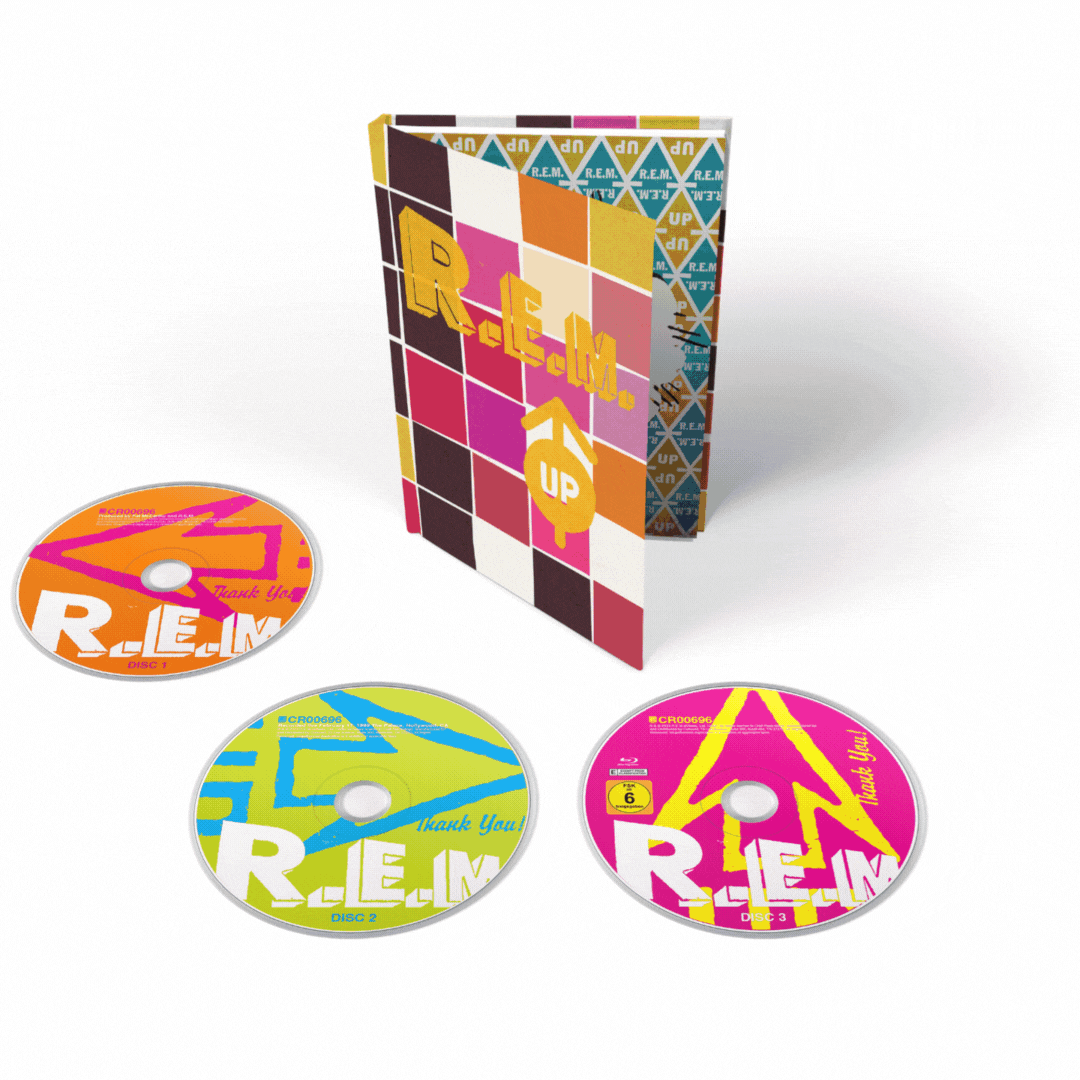
R.E.M.’s album “Up” turns 25 years of age this year, and Craft Records are celebrating with a series of expanded and remastered reissues, out November 10th. The R.E.M. reissue its 1998 album the first following the departure of original drummer Bill Berry, for its 25th anniversary.
“Up” found R.E.M. struggling to overcome the loss of Berry, who left the band in 1997 after suffering a brain aneurysmtwo years earlier on stage in Switzerland. “Bill said that if he was going to be the guy who made R.E.M. break up he would stay and be miserable, but it was clear that wasn’t what he wanted,” frontman Michael Stipe said “We’ve always said R.E.M. was the four of us; now there’s three, so what the hell do we do? We had this intense chemistry that we had to find as a three-piece. It took us the better part of one and a half records. And we fucked it up a lot. With “Up”, I couldn’t even sing because my chest was so tight. I was really in a complete freak-out mode.”
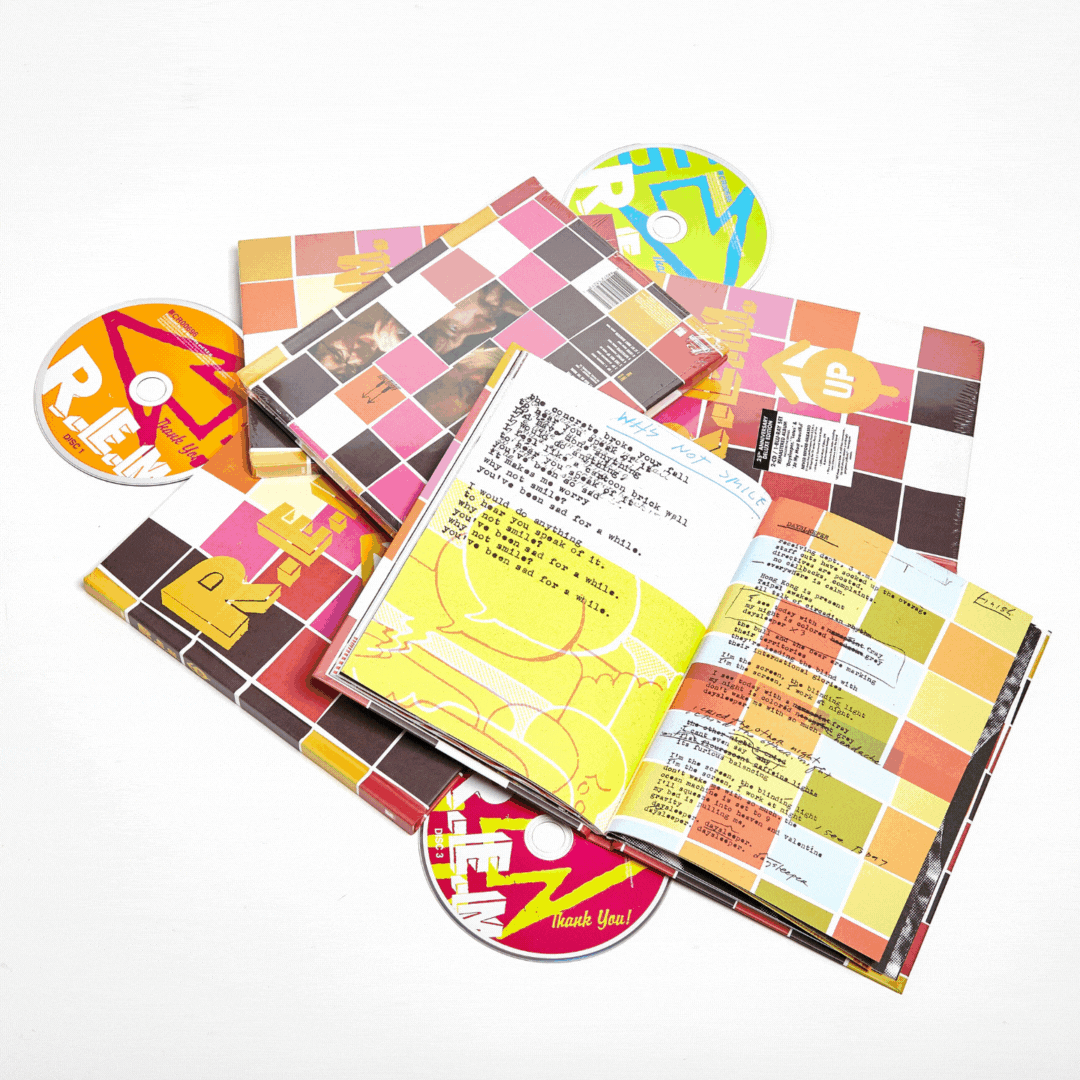
There is a deluxe 2-CD/1 Blu-ray edition is housed in a32-page hardcover book, which includes new linernotesfrom journalist and Talkhouse Executive Editor Josh Modell plus new interviews with the bandmembers. The set features the newly-remastered original album, plus apreviously unreleased 11-song live set from their 1999 appearance on the hit TV series, “Party of Five“.
The accompanying Blu-ray features HD music videos “Daysleeper,” “Lotus,” “At My Most Beautiful”, a six-song performance from the era (titled Uptake), plus the album’s original EPK, all in stunning hi-resolution with 5.1 surround sound audio.
R.E.M.’s appearance on “Party of Five” (which launched the careers of Matthew Fox and Neve Campbell, among others) remains a fond memory. “The intersection of visual and musical art is always interesting, so it was cool to be a part of TV,” recalls Mills.
The intimate concert, recorded at Los Angeles’ Palace Theatre, was populated by R.E.M. fan club members and served as an opportunity for the band to rehearse their latest material—plus beloved hits—ahead of touring. “There are dozens of great R.E.M. live sets out there, but nothing quite like this up-close oddity,” writes Josh Modell. “Loose and happy, the band runs through a good chunk of “Up” in front of a small crowd…Stipe is chatty, telling stories about accidentally ripping off Billy Corgan (and telling Corgan about it), playing with the Human League on a funny stage at that very venue, and more.”
The 25th Anniversary Edition of Up, the band’s 11th studio album, is OUT NOW! The newly-remastered album, featuring favorites “Daysleeper,” “Lotus,” and “At My Most Beautiful,” is available on 2-CD + Blu-ray, 2-LP, 2-CD, digital, and hi-res audio formats.
Additionally, the expanded reissue will be available in 2-CD, digital, and hi-res. The 2-CD includes an exclusive 24” x 24” poster and four collectible postcards, as well as a booklet featuring new liner notes. The 14-track, 2-LP album will be reissued on 180-gram vinyl.
The remastered version of “Daysleeper” and the band’s never-before-released performance of the song from the “Party of Five” can be downloaded now.
The Deluxe 2-CD + Blu-ray set features the remastered original album, plus a previously-unreleased 11-song live performance from the band’s 1999 appearance on Party of Five, while the Blu-ray features HD music videos, a 6-song performance recorded in London, and a 60-minute EPK film (This Way Up), alongside hi-resolution and 5.1 surround-sound audio. It’s all housed in a 32-page hardcover book which includes liner notes from writer Josh Modell and new interviews with Peter, Mike, and Michael.
The remastered original 14-track album is also available on 2-LP vinyl
When a band skillfully covers another artist; ultimately, it comes down to fabricating the illusion that the song was theirs all along, while always paying direct homage to the original by giving it new life.
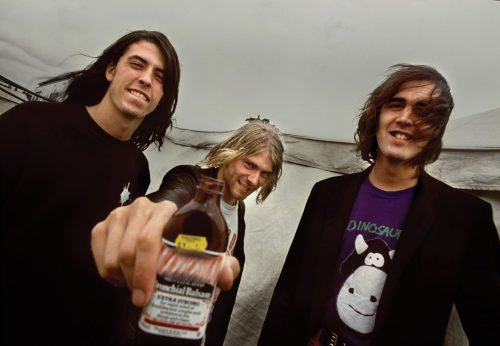
As good as Kurt Cobain was at song writing, he was also a master of interpreting the work of others. His covers were rarely straightforward renditions — they almost always brought something new to the song and were sometimes even better than the originals. Their choice in cover songs were also always as crucial as the performances themselves. Save for a few Zeppelin covers, Nirvana rarely covered songs that were already very popular, and in the rare cases that they did (like one Beatles cover included below), they would change it up significantly.
David Bowie, the Vaselines, Shocking Blue, Devo, and the Velvet Underground are among the many artists Nirvana borrowed from during their short yet prolific career—these names alone showcase a surprisingly eclectic taste that was anything but the norm in most of their punk circles. With the band’s impeccable swan song “In Utero” celebrating its 30th anniversary, let’s look at 10 songs they made their own, and whose influence is evident within the extraordinary patchwork of Nirvana’s musical legacy.
Shocking Blue – “Love Buzz”
And what was that very first Nirvana single? Whaddya know, it was a cover! The band launched their recording careers with “Love Buzz,” originally by Dutch psychedelic-rockers Shocking Blue. Not the most obvious start for the most iconic band of the ’90s (apparently it was Krist’s idea). Already a staple of their raucous live show, “Love Buzz” did represent, according to Sub Pop founder Bruce Pavitt, “an indicator of some of their direction in songwriting.”
The importance of Nirvana’s debut single, “Love Buzz,” has over the years revealed itself to be manifold: While the 1988 release date was subsequently used to justify the band’s 2014 Rock Hall induction, “Love Buzz‘s” obsessive romanticism and in-your-face punkness offer a distinct blueprint for what became the Nirvana sound. Cobain keeps the Arabic scale employed by Dutch psych-rockers Shocking Blue in their 1969 original, but replaces the sitar-heavy riff with a wah-wah pedal and a Boss delay.
The Velvet Underground – “Here She Comes Now”
Part of a 1990 Velvet Underground tribute album and a 1991 split single with the Melvins, Nirvana’s take on the “White Light/White Heat” classic remains exceptionally faithful to the original. (The chord variation at the end of the chorus made it sound like a Cobain composition from the get-go.) Despite the band rarely playing it live, the primitive rawness of “Here She Comes Now” fits like a glove in Nirvana’s grunge repertoire—further confirmation of VU’s indisputable place in the proto-punk pantheon.
In 1990, towards the end of the era with Chad Channing on drums, Nirvana teamed up with their pals the Melvins for a split single of Velvet Underground covers. Melvins did a noisy take on “Venus In Furs” from VU’s 1967 debut “The Velvet Underground & Nico”, and Nirvana took on “Here She Comes Now” from their 1968 LP “White Light/White Heat”. (Nirvana’s cover also appeared on the compilation “Heaven & Hell – A Tribute To The Velvet Underground – Volume One“.) Their version is over twice as long as the original, and though it starts off as one of Nirvana’s more straightforward covers, they eventually turn it into something that sounds like no band in the world besides Nirvana. They apply their trademark loud-quiet-loud formula to the song, with the first more faithful half being “quiet” and the second half very much being “loud.” As the volume increases, Kurt goes off script and starts busting out throat-shredding, off-key screams and dissonant guitar solos, before the whole band just locks into a jam, with some sharp improvised basslines from Krist Novoselic. Considering VU were basically the inventors of atonal, unstructured noise rock, this was a fitting tribute.
Thunder and Roses – “White Lace and Strange”
Philly’s Thunder and Roses released just one album in 1969, “King Of The Black Sunrise”, before calling it quits. Singer/guitarist Chris Bond went on to play with Hall & Oates, but Thunder and Roses remained in obscurity, and they’re still there today. But even if they aren’t a household name, their heavy, psychedelic sound was a clear precedent to a lot of metal, stoner rock, garage rock, etc, and their album’s opening track “White Lace and Strange” found its way into the hands of Nirvana, who covered it during their first radio session for Olympia’s KAOS-FM in 1987, along with some of their own obscure early originals.
The original is more psychedelic and Cream-like, but Nirvana turned it into something that sounded much more like what we now know of as grunge. Even this early on, Kurt’s guitar playing had that swampy, flannel-wearing sound that Nirvana became known for, and it gives the song a much dirtier, heavier vibe than the original. And Kurt’s vocals only slightly hint at the ’60s-style singing of the original. He sings it like he wrote it, with all the angst his own much darker songs had. You could hear the psych-rock influence of songs like this coming through on early Nirvana originals like “Blew” and “Blandest,” and if you didn’t know any better, you might think they wrote “White Lace and Strange” too.
The Vaselines – “Son of a Gun”/”Molly’s Lips”
The Vaselines were one of Kurt Cobain’s favourite bands, and he even wound up naming his own daughter after vocalist Frances McKee. Initially included in the 1992 “Hormoaning” EP and later added to the compilation “Incesticide”, Nirvana’s sunny, slightly pop-punk-ish (description) versions of “Son Of A Gun” and “Molly’s Lips” were an integral part of a BBC Radio 1 Peel Session recorded at Maida Vale Studios in October 1990.
Nirvana’s best Vaselines cover is the one they did of “Molly’s Lips” in a 1990 Peel Session (which was later released on 1992’s “Hormoaning” EP. When Nirvana mixed their trademark sound with their twee-ish indie pop influence, the result kinda sounded like pop punk, and that couldn’t have been more true than when they covered the indie pop song “Molly’s Lips” The original is about as lighthearted and twee as indie pop gets, but Nirvana cranked up the distortion, sped it up, and gave it an angst-ridden vocal performance in place of the more cooing original. It totally worked, and it tricked so many kids into listening to The Vaselines’ songwriting. Frances McKee and Eugene Kelly’s melodic brilliance and effective lyrical simplicity is all there
They later covered the Scottish band once more for their 1993 MTV Unplugged performance “Jesus Doesn’t Want Me For a Sunbeam”.
The Vaselines – “Jesus Doesn’t Want Me For A Sunbeam”
As much as Kurt loved punk, he was possibly the biggest cheerleader for Scottish indie pop band The Vaselines, who broke up before Nirvana hit it big but have been reunited for a while and probably have Nirvana to thank for tons of their fans. Nirvana covered The Vaselines a few times, and one of their most moving covers was the version of “Jesus Wants Me For A Sunbeam” (retitled “Jesus Doesn’t Want Me For A Sunbeam”) that they performed on “MTV Unplugged In New York” in 1993. As the story has been told time and time again, most artists used MTV Unplugged as an opportunity to play stripped-down versions of their biggest hits, but Nirvana turned the corporate television show into a piece of art, constructing a setlist of only the songs that they thought would sound best acoustic (no “Teen Spirit”) and playing covers that were mostly obscure to much of MTV’s audience. The first cover in the set was this gorgeous rendition of this Vaselines classic. The original is among The Vaselines’ slower songs, but Nirvana really leaned into treating this one as a ballad, and the results continue to be stunning today.
As with all of the covers Nirvana did on unplugged, Kurt sang it like he wrote it, filling his voice with as much genuine emotion as possible. It’s just different enough from the original that you need both versions in your life, but it’s similar enough that it would have been immediately obvious to Nirvana fans how much they would also love The Vaselines. It’s the perfect mix of doing a song justice while also rivaling the original.
David Bowie – “The Man Who Sold The World”
Kurt Cobain would frequently rank his favourite albums, shifting some of them around as he came in contact with new things—even if, as Charles R. Cross explains in his bookHeavier Than Heaven, Cobain’s customary infatuations with a particularly niche group often meant that some of the classic artists passed him by unnoticed. This also happened with records, since “The Man Who Sold The World” isn’t David Bowie’s most well-known LP at all; The 1970 album of the same name is one of his most underrated. It’s the closest to hard rock that Bowie ever came, so it makes sense that Nirvana took a liking to this one, yet it would be precisely Nirvana’s magnificent, faithfully nocturnal cover of the title track for “MTV Unplugged” contributing to its retrospective praise almost 25 years after Bowie’s original release.
Led Zeppelin – “Immigrant Song”
Of the many bootlegs circulating among fans, this one has a particularly heartwarming quality, having been recorded during an early Nirvana rehearsal at the home of Krist Novoselic’s mom in Aberdeen. While Cobain’s punk devotion (as seen through this raw, proto-grunge version of the 1970’s classic) would later make him repudiate his hard rock roots, telling Interview in 1991 that he had “sold his Aerosmith and Led Zeppelin collection for twelve dollars,” this wasn’t the only time Nirvana covered the British quartet: A live version of “Heartbreaker” recorded during one of their first shows in March 1987 was later included in the 2004 “With the Lights Out” box set.
Wipers – “D-7”
“D-7” is a song originally performed by The Wipers appearing on their 1980 album “Is This Real?” and is most popularly known for the Nirvana version appearing on their 1992 EP “Hormoaning” and also on the box set “With The Lights Outs”. The song Return of the Rat off the same album (Is This Real?) has also been covered by Nirvana also appearing on the box set “With The Lights Outs”.
Also featured as a B-side on the “Lithium” U.K. CD single, “D-7” was originally recorded during the same John Peel session integrated the “Hormoaning” EP—though the“Live at Reading” rendition arguably reigns as the supreme version. Portland punk act Wipers, whom Michael Hann called “the missing link between the Sonics and Nirvana,” are often recognized for their major influence on the overall grunge sound; Nirvana covered them again for the 1992 tribute compilation “Eight Songs for Greg Sage and the Wipers”, contributing “Return of the Rat.”
Wipers – “Return of the Rat”
Portland punk band Wipers were one of Kurt’s favourite bands he included their first three albums on his top 50 albums of all time list, and it’s not hard to hear how much of an impact they had on Nirvana and grunge in general. In addition to singing their praises, Nirvana covered a couple of Wipers songs back in the day, including “Return of the Rat” for the 1992 Wipers tribute album. The original might pass as “proto-grunge,” but Nirvana’s version is about as grunge as it gets. In place of the revved-up punk guitar strums of the original, Kurt gives a thicker, fuzzier, more muscular performance, and in place of Greg Sage’s nervy vocal delivery, Kurt gives the song his usual, grittier twist. Nothing but love for the original, but Nirvana’s version really rips in a way that Wipers’ doesn’t. It’s as good a representation of Nirvana’s fast punk side as anything.
Meat Puppets – “Lake Of Fire”
Of all the daring moves that Nirvana made during their “MTV Unplugged” performance, bringing on the Meat Puppets was perhaps the most daring. It’s said that MTV were really hoping Nirvana would bring out Pearl Jam or another more famous guest, but Nirvana insisted on bringing out Cris and Curt Kirkwood from the Meat Puppets,
It’s tough to choose from the delightful mini-session with the Kirkwood brothers that had the MTV Unplugged producers pulling their hair out—after all, the performance was supposed to include a selection of Nirvana’s greatest hits, not serve as a platform for other musicians. Though “Plateau” and “Oh Me” are equally fantastic, “Lake Of Fire” gets the final prize for the poetically macabre lyrics filled with religious references that could have easily come from Cobain himself.
Devo – “Turnaround”
It’s pretty well-known now within indie circles that Devo were more than “the band with the silly red hats who wrote ‘Whip it,’” but that wasn’t always obvious, “Turnaround”, a song by Devo, originally released as a B-Side of their single “Whip It Whip It “Whip It” is the title of a 1980 single by the United States Synthpop band Devo. It appears on the album “Freedom ofChoice”. There were two 7″ single releases of “Whip It”, one backed with a remix of the track “Snowball” and one backed with “Turn Around” …. “, later rerecorded by Nirvana.
Nirvana’s 1992 compilation “Incesticide” remains a fan favourite for many reasons for one, it allowed the public to finally own official recordings of songs that had been circulating for ages as low-quality bootlegs or rare B-sides. But the album also provides valuable clues to better understand the extent of Nirvana’s sonic infatuations, notably through this cover of Devo’s “Turnaround.” The new wave synths and overall more plastic atmosphere may have been replaced by Cobain’s trademark fuzz, but the main skeleton was preserved in its entirety.
Lead Belly – “Where Did You Sleep Last Night?”
Nirvana’s take on “In The Pines”—specifically Lead Belly’s version of the traditional folk song—proved the perfect closer for their “MTV Unplugged”performance, with Cobain’s visceral vocal delivery leaving no chance of an encore (though production initially tried to persuade him otherwise). Cobain’s ghostly gaze, confronting the audience with widened eyes just before howling the final words, has often been described as soul-baring and filled with epiphanic clarity and in hindsight, it almost seems to prophesy his premature disappearance less than six months later.
The Beatles – “And I Love Her”
Despite technically being a solo Cobain cover, this stripped-down rendition of the Beatles’ 1964 ballad “And I Love Her” was too stunning to be left off this list. The recording, made famous by Brett Morgan’s 2015 documentary Kurt Cobain: Montage of Heck(and subsequently released on the soundtrack album), celebrates Cobain’s formative years through its pop-doom duality, and it’s also a captivating sneak peek into his intimate universe and creative process.
Their covers were often a way Nirvana used their status as a huge mainstream band to shine a light on the punk and indie bands who influenced them, who hadn’t fully gotten the attention they deserved, like The Vaselines, Meat Puppets, and Wipers. They also covered lesser known deep cuts by David Bowie and Devo, unsung blues legend Lead Belly, obscure proto-metal like Thunder and Roses, and more. A lot of these songs and/or artists got significant boosts after Nirvana covered them, and — with all due respect to the original songwriters — some of these songs are now inseparable from Nirvana. Nirvana’s covers were as crucial to the overall Nirvana story and discography as the band’s best original songs, and it’d be impossible to discuss their legacy without mentioning these songs. The Nirvana recordings of them are truly iconic.
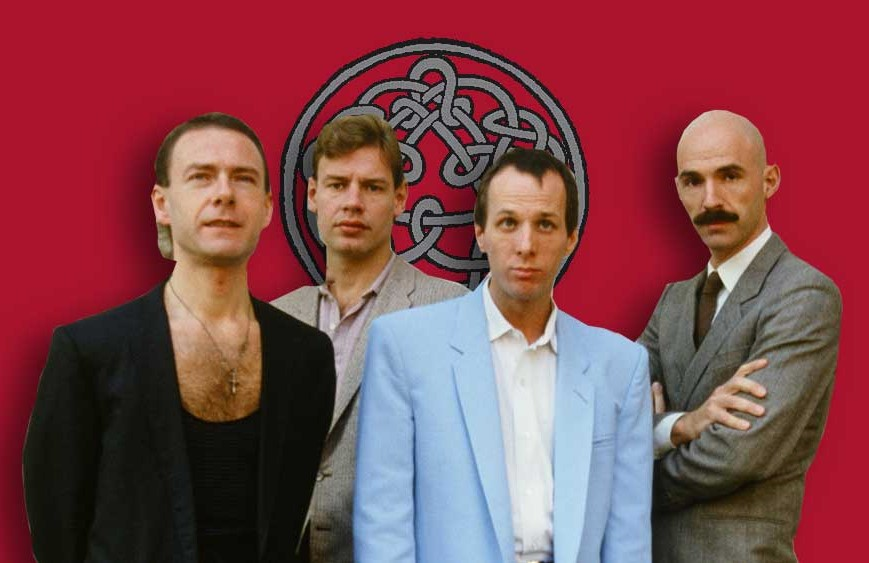
King Crimson“Dicipline” their 1981 album release. King Crimson reinvented after a series of classics from the late 60s and early 70s, with the 1981 release “Discipline”, which was ahead of its time and still sounds remarkably adventurous and urgent Robert Fripp revived his band at the beginning of the 80s and moved in with drummer Bill Bruford, bassist Tony Levin and guitarist and vocalist Adrian Belew have some top players. Roughly speaking, the oeuvre of the legendary band consists of the seven albums that were made between 1969 and 1974, the three albums that date from the 80s and the three albums that were made from the 90s onwards.
King Crimson had delivered a series of classics in the first six years of its existence, because in “The Court Of The Crimson King” (1969), “In The Wake Of Poseidon” (1970), “Lizard” (1970), “Islands” (1971), “Larks’ Tongues in Aspic” (1973), “Starless And Bible Black” (1974) and “Red” (1974) can be called that. These are albums that were labelled among the best symphonic rock or prog rock at the time,
On September 22nd in 1981: UK progressive rock band King Crimson released their 8th studio album, ‘Discipline’, on E.G. Records (UK)/Warner Bros. (US) – their first following a 7-year hiatus; only founder Robert Fripp & later addition Bill Bruford had remained from previous incarnations, joined by AdrianBelew (guitar, lead vocals) & Tony Levin (bass guitar, Chapman Stick, backing vocals); the band displaying a more updated ’80s new wave-oriented sound led by the College Radio & progressive FM hit, “Elephant Talk”, the album served as a gateway for ’80s youth into the King Crimson catalogue.
The still fascinating-sounding “Discipline” is largely determined by the unique guitar work of Adrian Belew who had played with David Bowie and Talking Heads in the years before.
I held King Crimson’s early work in high regard, but I have a little more to do with the three albums the band made during the ’80s, if only because these albums have stood the test of time even better. “Discipline” from 1981, “Beat” from 1982 and “Three Of A Perfect Pair” (1984) are seen as a trilogy and are made in the same composition. It is an album that was light years ahead of its time in 1981 and that still sounds fresh and urgent more than forty years after its release. “Discipline” has a unique sound in every way and it is a sound that is largely determined by the special guitar playing of Robert Fripp and Adrian Belew.
King Crimson’s songs on “Discipline” are often of the inimitable and somewhat nervous kind, but the songs on the album are also full of beautiful moments. This album blew my mind with the individual performanecs of Bill Bruford – the human drum machine for starters – plus the glorious vocals of Adrian Belew – not to mention Robert Fripp’s guitar – the subject matter, Adrian Belew’s vocals occasionally remind “Discipline” of the early work of Talking Heads, but the album also has a unique sound, which would also define King Crimson’s next two albums. The songs on “Discipline” often make a somewhat rushed impression, which is reinforced by the special guitar work on the album, but with Matte Kudasai “Discipline” also contains a particularly atmospheric ballad.
British musician Cleo Sol made one of the very best albums of the year in 2021 entitled “Mother” now with a new release Cleo shows with “Heaven” released this week that she has n awful a lot of talent.
“Mother” came out strong more than two years ago with the more than an hour-long album, which absolutely deserved the title masterpiece. “Heaven”, released just this week is is music of a special beauty, because just like “Mother”, “Heaven” showcases another high-quality album vocally, musically and productionally. “Heaven” is a bit more soberly coloured but it is again a sultry and brooding album that raises the wind chill by many degrees.
In the summer of 2021, “Mother”, was the second album of musician Cleo Sol, was released.
After the twelve tracks and more than an hour of music from “Mother“, it was a bit of a setback that this time we have to do it with nine tracks and only half an hour of music, but of course the quality is more important than the quantity and with that quality it is good again this time. For the production of Heaven, Cleo Sol again called on Inflo, which results in a beautiful sounding album.
Cleo Sol himself was responsible for the instrumentation and vocals and both are of a high level. Compared to the previous two albums, Outside of acoustic guitar and piano you mainly hear some extra bass and drums and here and there some extra layers of vocals. The sound on the album may be relatively sobre, but it’s also a warm sound that wraps around you, especially when the rhythms are a bit more uptempo. It is a mainly acoustic sound, which sounds a bit jazzy, although Cleo Sol has certainly not renounced the influences from soul and R&B.
Whether “Heaven” is as good as the great “Mother” I don’t dare to say yet, but I think Cleo Sol’s new album is getting better and more interesting.
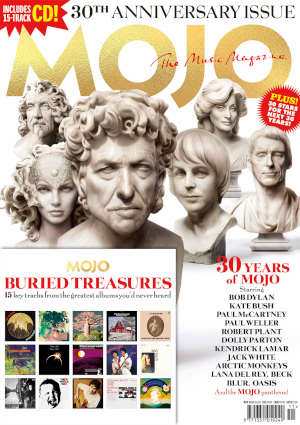
The new issue of MOJO, out now, is a significant one: our 30th anniversary special. It was humbling, as we called up old friends and planned the issue, to be reminded of how much our magazine means to so many of you. Jack White remembered saying to Meg White, “Wouldn’t it be amazing if we could get on the cover of MOJO?” Kamasi Washington and John Grant told us about the validation brought by winning MOJO’s Album Of The Year. Readers all over the world sent pictures of their entire collections of MOJOs, from issue 1.
Such love encouraged us to indulge ourselves a little this month. Hence MOJO 360 contains a star-studded trawl through our musical highlights of the past 30 years, including new interviews with Robert Plant, Blur, Jack White, Beck, Wilco, Bill Callahan, Paul Weller, Arctic Monkeys, Kamasi Washington, Noel Gallagher, Wet Leg, Nile Rodgers, Fleet Foxes and many more.
We’ve also had a speculative punt at the artists who’ll sustain us for the next 30 years, ranked our best CDs, caught up with our first Editor, Paul Du Noyer, and revisited some design cues from MOJO 1. This month’s CD, meanwhile, compiles 15 highlights from some of our favourite Buried Treasure albums – and the good news is that this and all our future CDs will be available worldwide again, wherever you buy MOJO.
In a changing world, and a radically transforming musical landscape, we hope we’ve provided some consolation and stability these past three decades. Incredible music continues to be made, and we’ll be here to celebrate it as long as you are. Thanks again for everything.
Hyperpop provocateurs Frost Children have announced a new album called “Hearth Room” which was written in tandem with their True Panther debut Speed Run released earlier this year, and which serves as its companion release.
Lead single “Lethal” kicks off with layers of electronically manipulated vocals before a number of instruments enter the fray, tuning up like a digital orchestra sent from the future. The track is an almost straightforward alt-rock banger, a curveball from the band who’ve quickly become embraced for their maximalist electronic kitchen-sink compositions.
The project was self-recorded this past spring in a cabin in the Poconos, and mixed by Al Carlson (Oneohtrix Point Never, Jessica Pratt, Laurel Halo) in Brooklyn.
‘Hearth Room’ the new album by Frost Children is out November 17th, 2023
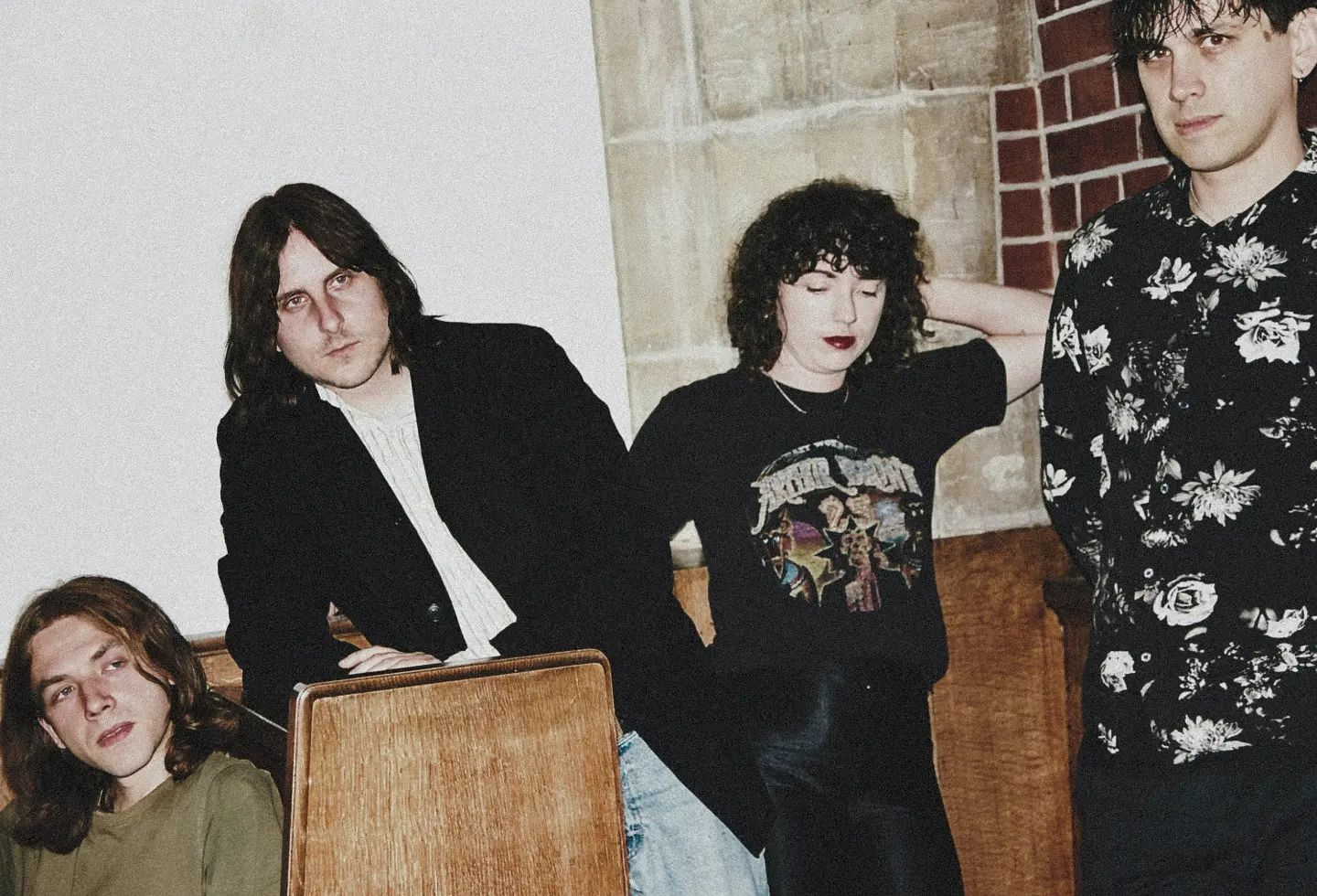
The former Transgressive/ Heavenly Records act return with their fourth studio album in September on Alcopop! Records this year – and it’s definitely their best yet, all raw-throat punk, stoner/doom psych, riffing swagger, and perhaps just the tiniest hint of delicious folk twinkling… Just get it in your ears. It’s glorious. The Wytches continue unabated on Alcopop! with their latest batch of punk and stoner doom psych. Album number four from the Brighton stoners carries on where the other three albums left off all raucous riffs and swagger but this time with just a hint of mellow folk meandering.
The Wytches need very little introduction, but it is with no little excitement that we welcome back Brighton’s purveyors of melody for album number four – all raucous and unruly, yet glistening with jagged edged poetic wistfulness and undeniable emotional clout.
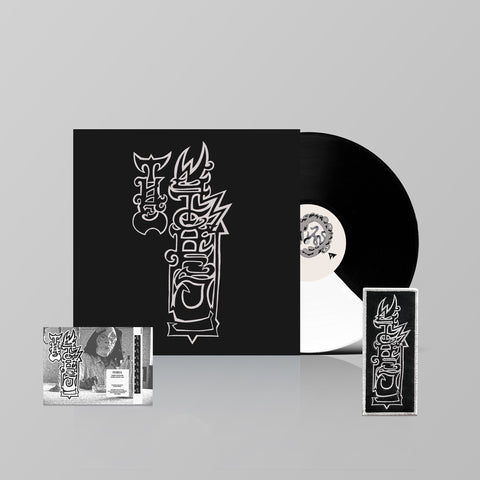
The Brown Acid series is full of rare and obscure hard rock, heavy psych, and proto-metal tracks primarily from the late-60s and early-70s and is the missing link between Nuggets and Killed By Death (or Pebbles and Bloodstains). For the most part, the bands included on Brown Acid, released one 45 back in the day and broke up, never to be heard from again. The archeology of the project has only just begun when the record is discovered. After that, the long and sometimes very arduous process of tracking the surviving band members is where the real work begins. These days, anyone can put together a good playlist. Getting the rights to do it legitimately from the artists themselves is the part of this job that I’m most proud of. Getting to hear the story of the band firsthand and be the first person to offer these people compensation for their mind-blowing contributions to RocknRoll history is priceless.
Here’s more of the nitty gritty on this particular volume:
Lucky number 17? You better believe it. We here at Brown Acid have been scouring the highways and byways of America for even more hidden stashes of psych/garage/proto- punk madness from the so-called Aquarian Age. There’s no flower power here, though—just acid casualties, rock stompers and major freakouts. As always, the songs have been officially licensed, and all the artists get paid.
Kicking off this trip, Grapple’s “Ethereal Genesis” is a heavy psych gem from 1969 written by J. BruceSvoboda, a.k.a. Jay Bruce, formerly of The Hangmen and The Five Canadians (who were actually the same San Antonio band). The latter’s 1966 garage favorite “Writing on the Wall” has been endlessly covered, but Grapple were never heard from again.
With a guitar riff that blatantly rips off Sabbath’s “Black Sabbath,” Image’s mostly instrumental lysergic obscurity “Witchcraft ’71” (originally unveiled that very year) also boasts a horror-movie organ intro, a voodoo drum break and some championship chanting.
Private press heads might recall late Image drummer John Beke from his ’80s reemergence with country rockers Crossfyre. Stone Hedge were a seven-piece rock band out of Michigan that featured three brothers—Joe, Jimmy and Paul Cipcic. “Smokey Bear” is their 1972 tribute to the official mascot of the U.S. Forest Services—not to mention the A side of their sole single—and it recalls the kind of organ-drenched swamp jam that soundtracked many a Burt Reynolds flick back in the day. If you think being a Southern rock band from Milwaukee doesn’t make much sense, that’s probably why Crossfire changed their sound along with their name—to Bad Boy—after signing with United Artists. Bad Boy’s severely underappreciated second album, “Back To Back”, is a 1978 hard rock jewel, but you can hear their boogie-woogie roots on this rare 1975 single.
With a band name like Primevil and song title like “Too Dead To Live,” you probably expect some gnarly proto-metal riffage. Instead, you a get a harmonica-drenched, soul-infused rock rave-up from 1972. Primevil would release their sole LP two years later: Entitled “Smokin’ Bats at Campton’s”, it’s a reference to their trusty singer, harp player (and bat smoker?), Dave Campton. Brown Acid regulars already know Pegasus from their appearance with “The Sorcerer” on our Seventh Trip.
“Ready to Rave” is the flipside to that 1972 single, in which they explain how they like their whiskey cold and their women hot. It’s another killer glimpse of what might have been if these one-and-done Baltimore hard rockers had been able to keep it together.
One of two obscure singles released by Texas musician Bobby Mabe in 1969 (the other appears under the name The Outcasts), “I’m Lonely” delivers a heavy dose of vocal soul to the otherwise psych-garage presentation. Fans of fellow Houstonians the Moving Sidewalks—whom Bobby and his Outcasts may well have gigged with—will especially dig this one.
Cedar Rapids, Iowa, may not be known as a cultural mecca, but they did give us Truth & Janey. This deadly hard rock trio delivered their holy grail full-length, “No Rest for the Wicked”, back in 1976. “Around and Around” is a Chuck Berry cover that originally appeared on a 1973 single the band released under the earlier name Truth.
Originally released in 1973, “High School Letter” is the debut single from San Diego rock squad Glory. This infectious bonehead cruncher features future Beat Farmer Jerry Raney and the original rhythm section of Iron Butterfly in bassist Greg Willis and drummer Jack Pinney. Glory is what they got up to after their former bandmates left for L.A.’s garden of Eden.
“Jack the Ripper” is a mercilessly bootlegged Cleveland classic from 1978 with a serrated punk edge and vocals that recall Mick Blood of Aussie savages the Lime Spiders. Or maybe it’s the other way around—the Lime Spiders formed the year after Strychnine carved off this lethal paean to the infamous Whitechapel slasher of olde.
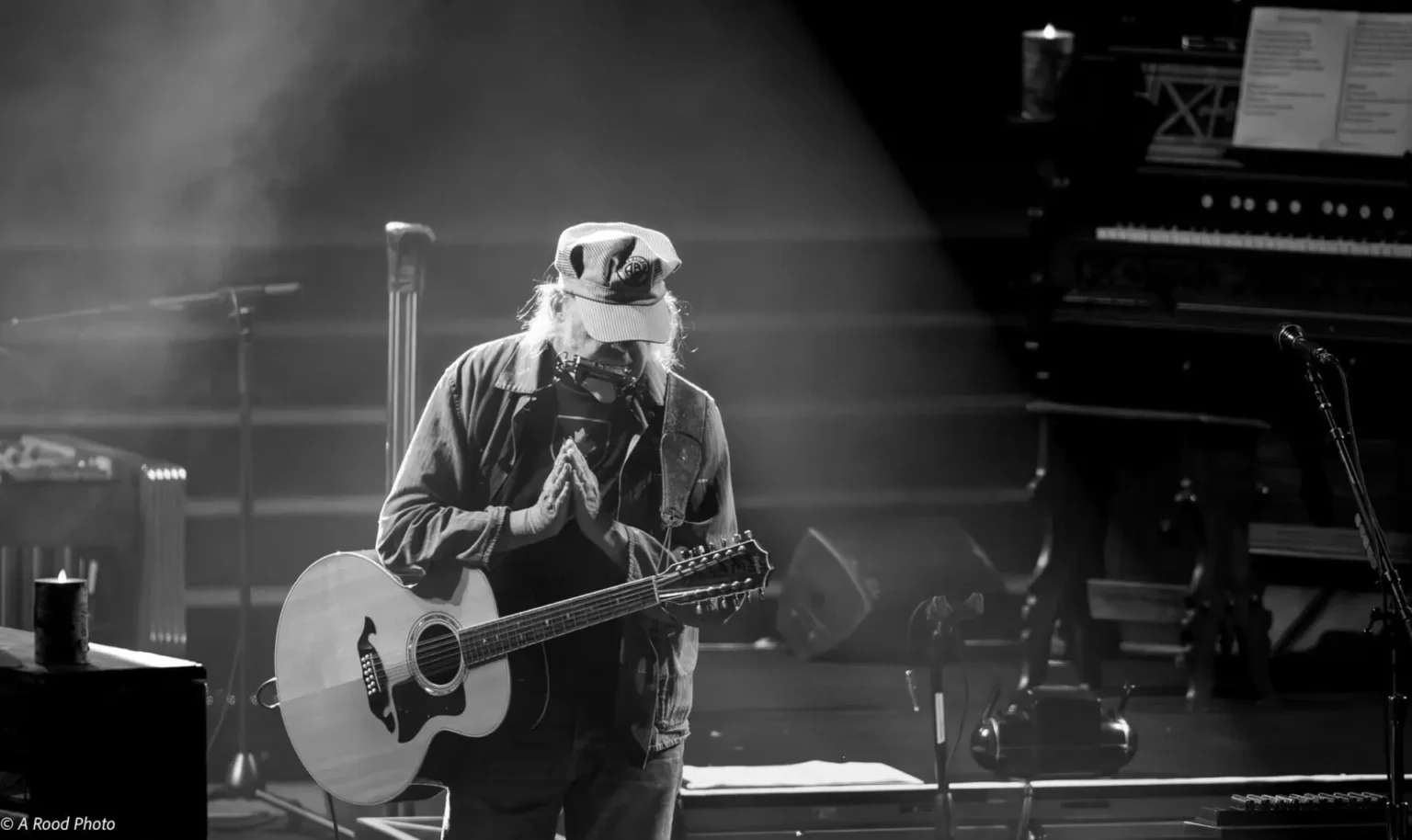
Neil Young returned to his old stomping grounds, The Roxy in West Hollywood, Calif., to celebrate the long-admired venue’s 50th anniversary. Notably, Young and the Santa Monica Flyers served as the opening band during the club’s start, and the original sets were turned into“Roxy: Tonight’s The Night”. Beckoning to their shared history, Young and company returned to the location last night, delivering a complete run-through of two famed studio LPs, “Tonight’s The Night” and “Everybody Knows This IsNowhere”. Most of the musicians who backed Young in 1973 returned for the 50th anniversary show, including drummer Ralph Molina, bassist Billy Talbot and multi-instrumentalist Nils Lofgren, who was originally supposed to be on tour with Bruce Springsteen before the Boss was forced to postpone dates.
Many of the songs Young performed at the Roxy hadn’t been played live in decades, or, in one case, ever at all. Naturally, “Mellow My Mind” unfolded before “Roll Another Number (For the Road)” and “Albuquerque.” The group of rockers landed on “New Mama” and then “Tired Eyes,” ultimately returning to “Tonight’s The Night” to close out the first part of the show.
After working through all the songs on the 1975 release album, Young and the band went back in time, picking 1969’s “Everybody Knows This Is Nowhere” as their follow-up.
The line-up of musicians included Young, Micah Nelson, Nils Lofgren, Billy Talbot, and Ralph Molina. Prior to Wednesday night’s show, Young teased what was to come, adding a brief clip of the band delivering just a snippet of “Down By The River.” The night began with the title track off “Tonight’s TheNight“. It continued to present material in the same order it came on the initial record, leading into “Speakin’ Out” and “World on a String,” followed by “Borrowed Tune” and “Come On Baby Let’s GoDowntown.”
Just as the material appeared in the original song list, “Cinnamon Girl” kicked off the set,” followed by the title track and a special moment with the arrival of “Round & Round (Won’t Be Long),” which represented a debut for this unit of players.
A jammed-out eight-minute rendition of “Down By The River” came before “The Losing End” and “Running Dry (Requiem for the Rockets).” For the night’s final song, the band ran through fan favourite, “Cowgirl in the Sand.”
Neil Young & Crazy Horse The Roxy – Los Angeles
September 20th, 2023
Set:[Tonight’s The Night] Tonight’s The Night, Speakin’ Out, World on a String, Borrowed Tune, Come On Baby Let’s Go Downtown, Mellow My Mind, Roll Another Number (For the Road), Albuquerque, New Mama, Lookout Joe, Tired Eyes, Tonight’s the Night
[Everybody Knows This Is Nowhere] Cinnamon Girl, Everybody Knows This Is Nowhere, Round & Round (I Won’t Be Long)+, Down By The River, The Losing End, Running Dry (Requiem for the Rockets), Cowgirl in the Sand
In an exciting comeback, the Jack Antonoff-led ensemble Bleachers have unveiled their latest musical offering, “Modern Girl.” The release is now available through the band’s new label, Dirty Hit and comes with an accompanying music video. Hours before its release, the song was cryptically teased by Antonoff over three messages on Twitter; he wrote, “ok ready?” followed by “missed you horribly … been waiting so long to say this …..” and finally, “BLEACHERS ARE FUCKING BACK.”
The official announcement for “Modern Girl” offers a glimpse into what lies ahead on the forthcoming Bleachers album, which is currently shrouded in mystery, awaiting its official unveiling.
Notably, the accompanying music video for this track has been masterfully directed by Alex Lockett.
The upcoming release follows Bleachers’ LP, “Take the Sadness Out of Saturday Night”, which was released July 2021. Since then, in recognition of his exceptional musical prowess, Antonoff secured the prestigious Grammy Award for Producer of the Year, Non-Classical, not once but twice.
Additionally, since the debut of Bleachers’ last full-length project, Antonoff has embarked on an impressive journey of collaboration with some of the music industry’s brightest stars. He has graced projects by the likes of Taylor Swift, Lana Del Rey, the 1975, Florence and the Machine, and Maren Morris. Additionally, he also played a pivotal role in crafting the soundtrack for the animated sensation Minions: The Rise of Gru.
BLEACHERS Jack Antonoff Mikey Freedom Hart Evan Smith Michael “Riddles” Riddleberger Sean “Hutch” Hutchinson Azemobo “Zem” Audu