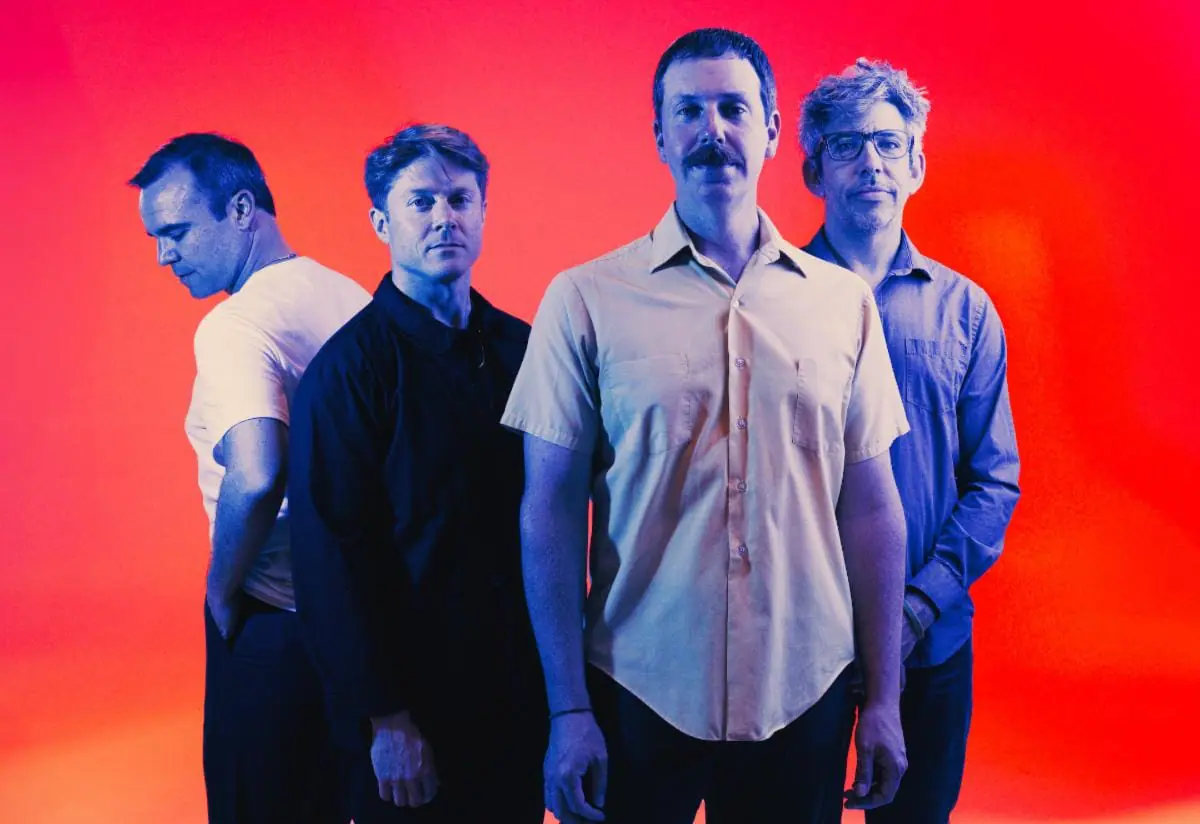
Future Islands announced they’re set to drop their eagerly awaited seventh album, “People Who Aren’t There Anymore”, on January. 26th, 2024. The news comes just two months after concluding their As Long As You Are tour, and they’re ready to unveil a bold new chapter in their musical journey.
Known for their high-energy anthems in the past, Future Islands–comprised of Samuel T. Herring (vocals, lyrics), William Cashion (bass, guitars), Gerrit Welmers (keyboards, programming), and Michael Lowry (drums)–have opted for a more introspective approach. The band has harnessed a newfound intensity, crafting tracks that are both inspiring and heart-wrenching, all by taking their time and making every note, lyric, and cymbal crash count. This album marks a defining moment in the band’s career, proving their evolution as musicians.
In celebration of the album’s announcement, Future Islands have released a new single from “People WhoAren’t There Anymore” titled “The Tower,” accompanied by a captivating music video directed by Jonathan van Tulleken. Notably, this is the second collaboration between van Tulleken and Herring, who previously worked together on Apple TV’s The Changeling. In an interview, van Tulleken expressed his admiration for Herring’s unique stage presence and how it translated into a mesmerizing on-screen performance.
The video for “The Tower” explores the duality of light and darkness, echoing the band’s artistic exploration.
“The Tower” joins previously released singles “Deep In The Night,” “King of Sweden,” and “Peach,” all of which are included in the forthcoming album.
Co-produced by Future Islands and Steve Wright,“People Who Aren’t There Anymore” showcases a collaboration between Wright and Chris Coady. Interestingly, this marks the first time Coady has worked with the band since their 2014 album, “Singles”.
The album will be available in various formats, including digital, CD, cassette, and standard black vinyl. For vinyl enthusiasts, it will also be available in transparent vinyl (indie-retail only) and a unique yellow & black ‘yolk’ vinyl with alternative artwork
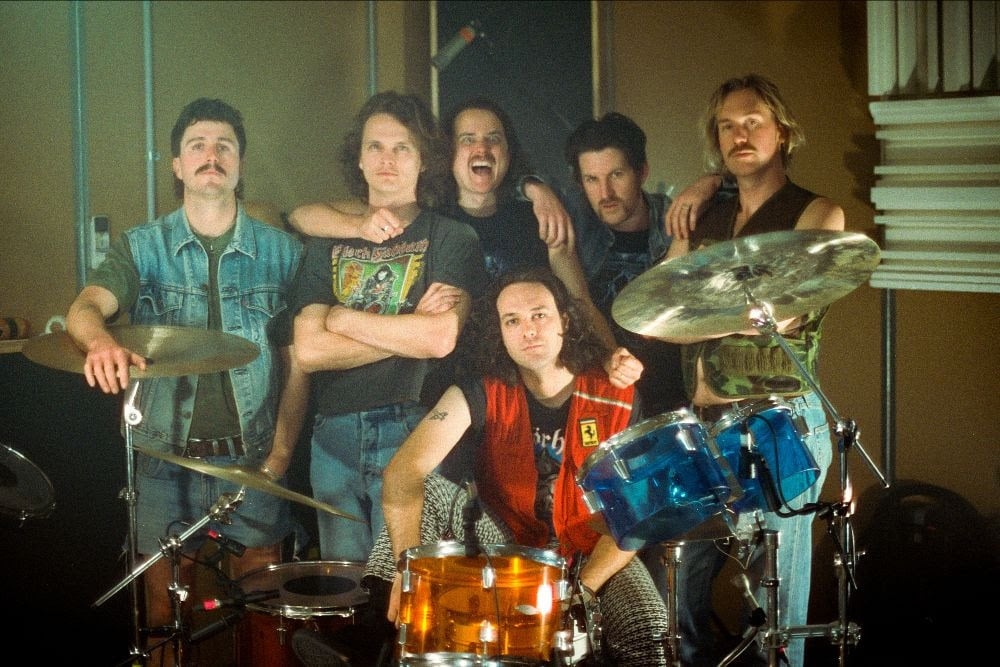
King Gizzard & the Lizard Wizard are taking what counts for them as a break. After two European tours, a series of residencies in US cities and a sprinkle of Australian shows in between, King Gizzard have slowed down just long enough to release their second new album of the year, the fully electronic “The Silver Cord” (out October 27th).
On the cusp of releasing their 25th album a little over a decade since their first, 2012’s “12 Bar Bruise”, King Gizzard have travelled a long, zig-zagging path from their garage punk origins. With the attention to detail as King Gizzard & the Lizard Wizard do on synth-heavy new album “The Silver Cord“. Its seven tracks may seem like the polar opposite of predecessor “PetroDragonic Apocalypse“, but the attentive listener will notice that these two albums have a lot more in common than you might think. “The Silver Cord” is the yang to “PetroDragonic Apocalypse’s” yin, in more ways than one.
The album has two versions – a short one clocking in at 28 minutes, and extended one exactly one hour longer. Neither version is the definitive one, with each version having their own strengths, weaknesses and WTF-moments. The version is the second shortest King Gizzard & the Lizard Wizard studio album to date, beating 2013’s “Eyes Like the Sky” by a mere ten seconds. Opening trio “Theia, The Silver Cord” and “Set” marked the first glimpse of what to expect, coming out as a triple single earlier this month by means of a music video best watched on shrooms. There’s a distinct absence of ‘traditional’ instruments on the entire album, with the band opting solely for synthesised sounds (you name it, they definitely used it). The last time King Gizzard went for this approach was on the summery “Butterfly 3000” in 2021, and even though Theia may bear reminiscence to that sun-kissed album, these comparisons don’t last much longer.
Title track “The Silver Cord” is perhaps the most absurd the band have ever sounded, with warped vocals, haunting melodies and intense lyrics making for an unsettling experience. Its finale restores some sanity into proceedings by way of beautiful synth patterns and ethereal vocals, before “Set” throws all that out of the window in favour of some swaggering beats, rapping from Ambrose Kenny-Smith and a repeated chant of, “slay the mighty Set”. For those unaware, “Set” was the Egyptian god of war and chaos. War and chaos are also pretty good descriptors for this song, destroying the ethereal worlds tracks one and two created without hesitation.
The album’s opening trio painted a relatively positive picture sonically, but the sonic serenity pretty much ends with “Set”. “Chang’e” – the weakest of a strong bunch – is a sudden shift in tone, bridging the gap between “Set’s” playfulness and the intensity still to come. Just like its counterparts across the album, “Chang’e” has a knack for combining warm synth tones with unhinged melodic passages and ethereal vocals. For those curious, Chinese mythology refers to Chang’e as “the woman in the moon”. Interestingly, “PetroDragonic Apocalypse” track “Witchcraft” (also track four…) refers to a similar blood moon goddess. Coincidence? Not at all, but you’d have to keep reading to find out why. “The Silver Cord’s” strongest moments come during the final three songs, which fused together are an absolute monstrous experience. “Gilgamesh” sounds like a bad trip, with heavily altered vocals and another rapped verse from Kenny-Smith. The beats are raw, the synths are warped and the interplay between Mackenzie and Kenny–Smith is infectiously good. “Swan Song” enters much darker territory, both sonically and lyrically. If “Gilgamesh” was a bad trip, then “Swan Song” is the comedown from hell.
There are even moments where Mackenzie veers into throat singing, hauntingly so. It all makes way for “Extinction“, King Gizzard & the Lizard Wizard’s most unhinged album closer to date, a culmination of two entire albums worth of experimentation, lore and hidden connections. Its endingpushes the band into new sonic territory: hardstyle, but not quite in the classic sense of the genre. It’s fast, it’s in your face and and beat-driven to the point of no return. The synths which snake around drummer Michael Cavanagh’s drums are relentless, ensuring “The Silver Cord” goes out on a (for some listeners, literal) high. Think of it as ending on a peak, or being on a trip which you never want to end.
And now for the extended version. Let’s start with the elephant in the room: constant references to previous album “PetroDragonic Apocalypse”. By way of callbacks on each song to its corresponding soundtrack counterpart on PDA, “The Silver Cord” serves the purpose of a mirror, reflecting back elements of a previous album yet in a warped fashion. Yin and yang, basically. “Theia’s” extended cut spawns twenty minutes, although they fly by pretty quickly by way of sprawling melodies, programmed beats and both a call-back to the previous album as well as a call-forwardto the next song: we hear Mackenzie sing both “Motor Spirit”repeatedly, as well as recite the “I’m just a vessel” verse from title track “The Silver Cord“. This song’s own extended version centres on acid-laced synth passages (and an oh so subtle melodic callback to PDA’s “Supercell”), also presenting us with the first hints of drum and bass to grace the record. There’s a sense of fleeting urgency to “The Silver Cord’s” extended version, which the groove-based “Set” builds on in and amongst utterings of the word “converge” laced in a near-robotic level of vocoder. Instrumentally, it continues to play on that one quirky melody, with an extra rapped verse from Ambrose Kenny-Smith adding to the fun.
“Chang’e” – which was the weakest track on the short version – is elevated to completely new heights as its extended version borrows both melodies and entire verses from “PetroDragonic Apocalypse” counterpart “Witchcraft”. This metal song’s solo is transposed to synths on “Chang’e“, flirting with upbeat percussion and layered melodies as Mackenzie sings of “red and deep burnt blues”and snakes, which slither “just out of sight”. “Gilgamesh’s” extended version takes the dark undertones of its short version and builds on them in such a way that they mark the perfect precursor for what “Swan Song” and “Extinction” will unleash later. As “Gilgamesh’s” extended version unpacks layer after layer of bubbling synths and obscure noises, we hear the band chant “Gila! Gila!”in what is by far the most obvious callback on the entire album.
It sets the scene perfectly for the Jungle-lite “Swan Song“, which takes no prisoners from the word go and manages to paint a morbid picture led by some of Mackenzie’s gnarliest and prettiest vocals on the record. Things kick up another notch just over halfway into the song, when a heavily roboticized voice makes a bold proclamation over some very subtle, pulsing synths: “The eye dilates, the air gyrates / A gate in the sky, a portal to die, A shriek from space, a mangled yell / Dragon descends, welcome to hell”. This makes way for an in your face instrumental passage, before this same verse returns amidst sonic hellfire. If you think it sounds like the end of the world, then that’s because it is. “Swan Song” is the album’s thematic and sonic breaking point, an apocalypse of sorts where the asteroids are Cavanaugh’s brute force drums, and the flames are synthesizers. In Kenny-Smith’s words, “this plane nosedives straight into hell”. Jungle is massive, and so is “Swan Song”.
“Extinction” is the aftermath of this chaos, although that’s not to say the intensity lets up one bit. Mackenzie’s gnarliness on “Swan Song” has been replaced with ethereal vocal passages, including lyrical references to PDA’s “Flamethrower” with “Extinction” centring on one key lyric throughout: “I can see everything, I can be in the music”. It’s an all encompassing line which King Gizzard fans will surely unpack in more ways than one. As the song prepares for its climax, you can sense that the intertwining synth tones and bubbling undergrowth of bass-y rhythms have one more punch yet to pack. King Gizzard attempting to make classic European hardstyle within the foundations of “The Silver Cord’s” sonic universe. The last four minutes of the album slowly build up in intensity, climaxing on what almost feels like a second apocalypse, one spearheaded by warped synths, a hi-BPM tempo and the constant recurrence of the song’s focal melody. It’s one hell of an ending, to one hell of an album.
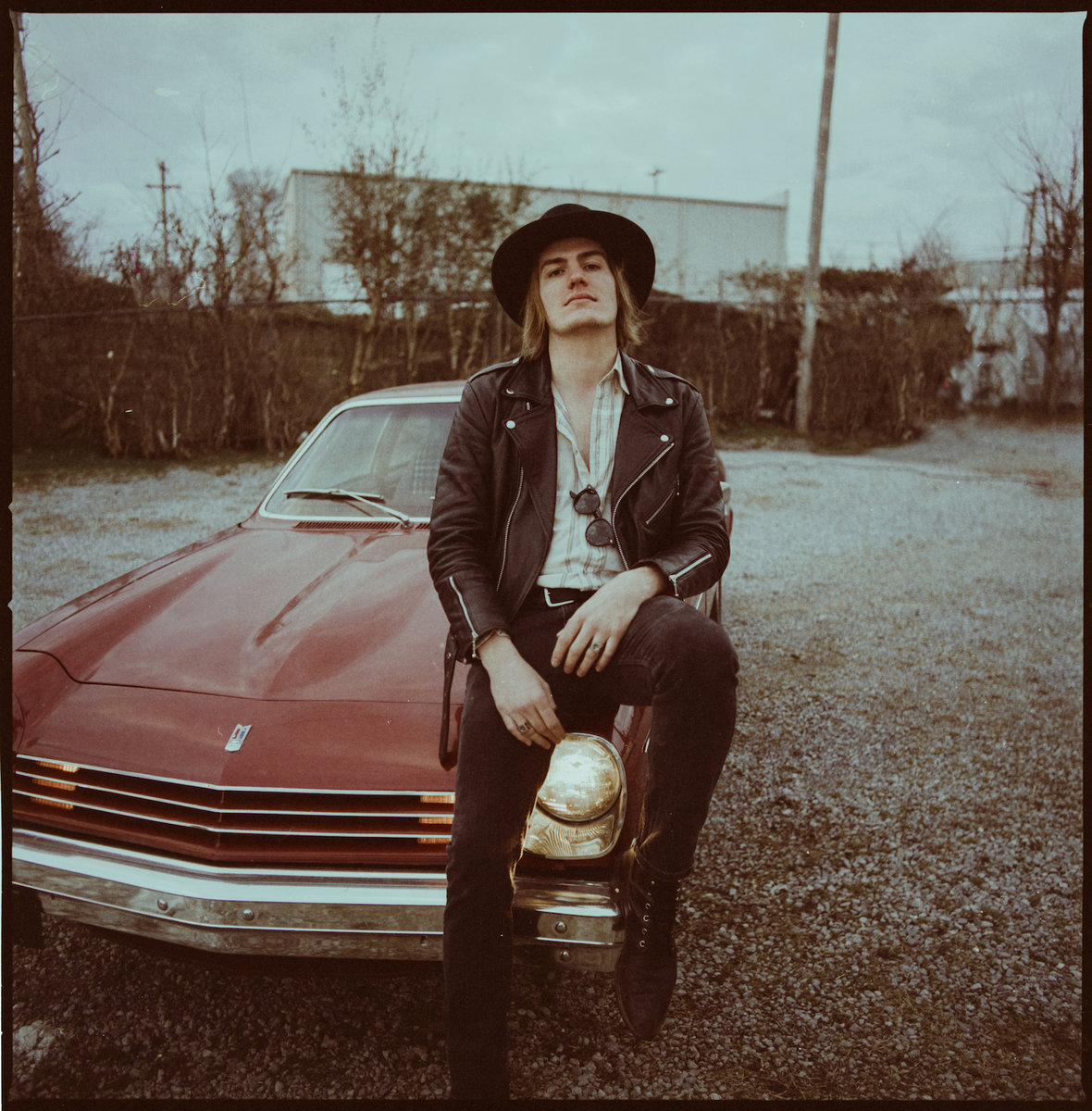
Dylan LeBlanc is a singer-songwriter and multi-instrumentalist who often finds himself flirting with the edge — or “dancing on a razor,” as he calls it — as it is all he has ever known. A verdict vagabond since he was a little boy tossed between Texas, Louisiana and Alabama, LeBlanc thrives on the precipice, never staying in one place for too long. It is that nomadic spirit that drew him not only to a life as a touring musician, but also to the beast that titles his newest record: ‘Coyote.’
LeBlanc says he has always related to the insatiable, scavenging nature of the wily coyote. Much like the animal, LeBlanc is a wanderer who knows when to trust his instincts, musically and otherwise. It is a spiritual kinship that runs deep, but he credits one particularly hair-raising face-to-face instance with solidifying his bond with the animal.
‘Coyote’ marks Dylan LeBlanc’s fifth studio album and his first full-length LP to be self-produced. Recorded at the iconic FAME Studios in Muscle Shoals, AL, it boasts a handpicked ensemble of world renowned session players including Fred Eltringham, known for his work with Ringo Starr and Sheryl Crow, pianist Jim “Moose” Brown, who’s collaborated with Bob Seger, and bassist Seth Kaufman, celebrated for his contributions to Lana Del Rey’s tracks. The album is both semi-autobiographical and a concept album centered on the evocative character of “Coyote”, a man on the run in pursuit of an ever elusive freedom from his past.
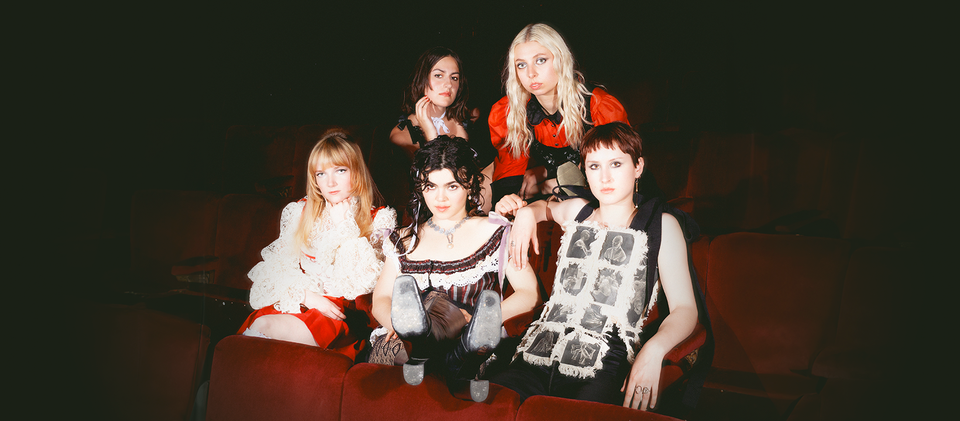
The Last Dinner Party are a indie rock band from London, formed in 2021. The Last Dinner Party will soon be your new favourite band. They look like a gang of feral Catholic schoolgirl misfits who have staged a rebellion, raided the drama club’s wardrobe room and are throwing a goth party on the hockey pitch. They sound like a group who broke free of orchestra training when they discovered a stash of old Sparks and Roxy Music albums, The band consists of Abigail Morris (vocals), Lizzie Mayland (vocals, guitar), Emily Roberts (lead guitar, mandolin, flute), Georgia Davies (bass), and Aurora Nishevci (keys, vocals). The band’s debut single, “Nothing Matters“, was described as “art-rock bombast” by Rolling Stone UK, while the Evening Standard described their music and live shows as having a “distinctive baroque-pop sound and look”. The band have been compared to Kate Bush, Siouxsie and the Banshees, Sparks, and Warpaint,
The band signed with Island Records before releasing their debut single “Nothing Matters” in April 2023. Their second single “Sinner” was released in June 2023, and their third single “My Lady of Mercy” was released in October 2023. The band have just completed their first tour as a headline act was of the UK and US beginning in October 2023.
“My Lady of Mercy” is about being a girl. A girl looking at a painting of Joan of Arc for the first time and thinking that she looks so brave and so beautiful that maybe she wants to kiss her. And maybe she also wants to kiss the girl who stands next to her in the school choir.
The Last Dinner Party perform “My Lady of Mercy” on Later… with Jools Holland.
Duran Duran fans got an earful this weekend, when five of the British band’s albums dropped on streaming platforms for the first time. The trove includes the Mark Ronson-produced “All You Need Is Now”, a fan-favourite which this year celebrates its 10th anniversary; and 2004’s “Astronaut”, which featured the reunited classic line-up of Simon Le Bon (vocals), Nick Rhodes (keys), John Taylor (bass), Roger Taylor (drums) and Andy Taylor (guitar), who has since departed the group once again.
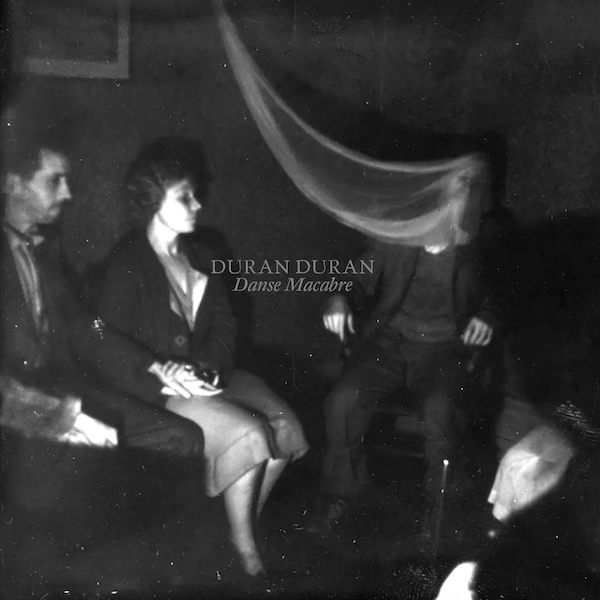
Also out now the band’s latest release a concept album at heart, Duran Duran’s “Danse Macabre” was triggered by a Halloween 2022 concert in Las Vegas in which the band worked through its catalogue, pulling out obscurities that tied into the theme as well as some choice covers by artists such as the Rolling Stones, Siouxsie and the Banshees and the Specials. The LP embraced Duran Duran’s legacy by dipping into their musical past with songs that looked ahead by glancing backward.
“Danse Macabre” goes deeper into that past by pulling vintage songs like “Nightboat” (from their 1981 debut) and “Secret Oktober” (originally the B-side of 1983 single “Union of the Snake”), slapping on some appropriate new textures and placing them alongside covers of the Rolling Stones’ “Paint It, Black,” Talking Heads’ “Psycho Killer” and Billie Eilish’s “Bury a Friend.”
The best songs, though, are the new ones. “Black Moonlight” glides along a slinky nostalgic groove – provided by an instantly recognizable Nile Rodgers guitar riff – laced with “Thriller”-style sound effects, while “Danse Macabre” loads up on eerie synths, and an even more frightening rap by Simon Le Bon, for the album’s centerline. The covers are mere side attractions, the threads that pull together the album’s moody concept. “Ghost Town” and “Super Lonely Freak” (a reworking of Rick James‘ classic song) won’t replace the originals, not by a long shot, but their place on “Danse Macabre” serves a purpose on this fun but fleeting LP.
Their 16th record, a spinoff from that spooky show, carries over several songs from the set while adding a handful of new tracks to fit the occasion. The result is a work that feels both mannered and effortless, a loosely connected collection of songs Duran Duran knows well enough to deliver with confidence without ever having to try too hard.
Also new to DSPs is “Medazzaland” (1997), “Pop Trash” (2000), “Red Carpet Massacre” (2007), and “Boredof Prozac and the Internet“, the TV Mania side project led by Rhodes and former Duran Duran guitarist Warren Cuccurullo.
With 14 studios albums, hits and remix collections, plus sides projects including Arcadia and The Power Station, the Duran Duran streaming collection is now complete.
Earlier this year, the British band released a cover of Bowie’s “Five Years,” a string of outdoor shows have been announced for the U.K., Ireland and Spain,
The alternative rock outfit last month marked 40 years since the release of their debut single, “Planet Earth”.
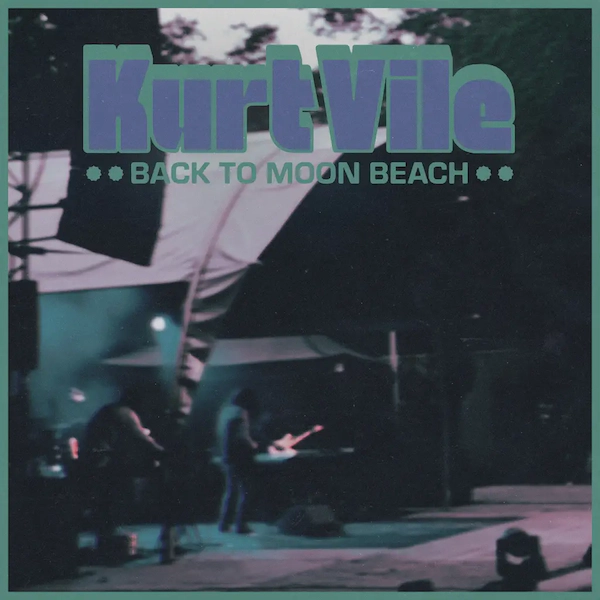
Last year, the lackadaisical Philadelphian indie rock prince Kurt Vile released his album “Watch My Moves”. Since then, Vile has covered Charli XCX and played live with a whole lot of luminaries. Next month, Kurt Vile will release “Back To Moon Beach”, a new record that he’s calling an EP even though it’s almost an hour long.
The songs on “Back To Moon Beach” come from sessions that Kurt Vile recorded over the past four years, and they include tracks recorded with musicians like Chris Cohen, Warpaint’s Stella Mozgawa, and Vile’s late bandmate Rob Laasko. It includes Vile’s covers of Bob Dylan’s “Must Be Santa” and Wilco’s “Passenger Side.” Recent Wilco collaborator Cate Le Bon co-produced three tracks, including the EP opener and first single “Another Good Year For the Roses.”
“Another good year for the roses” has nothing to do with George Jones’ “A Good Year For The Roses,” though I imagine that the reference is intentional. Instead, “Another good year for the roses” is a sprawling track that lasts for nearly six minutes. It starts off as an ambling groove with some nifty pedal steel and cowbell action, and it builds into a psychedelic jam. Kurt Vile co-directed the video with Drew Saracco, and it features the great character actors Michael Shannon, Kevin Corrigan, and David Wike,
“Back To Moon Beach” (Verve Records) is an EP by no one’s definition but Kurt Vile’s. For Kurt, this collection is an expression of just how deep his well of non-album material runs.
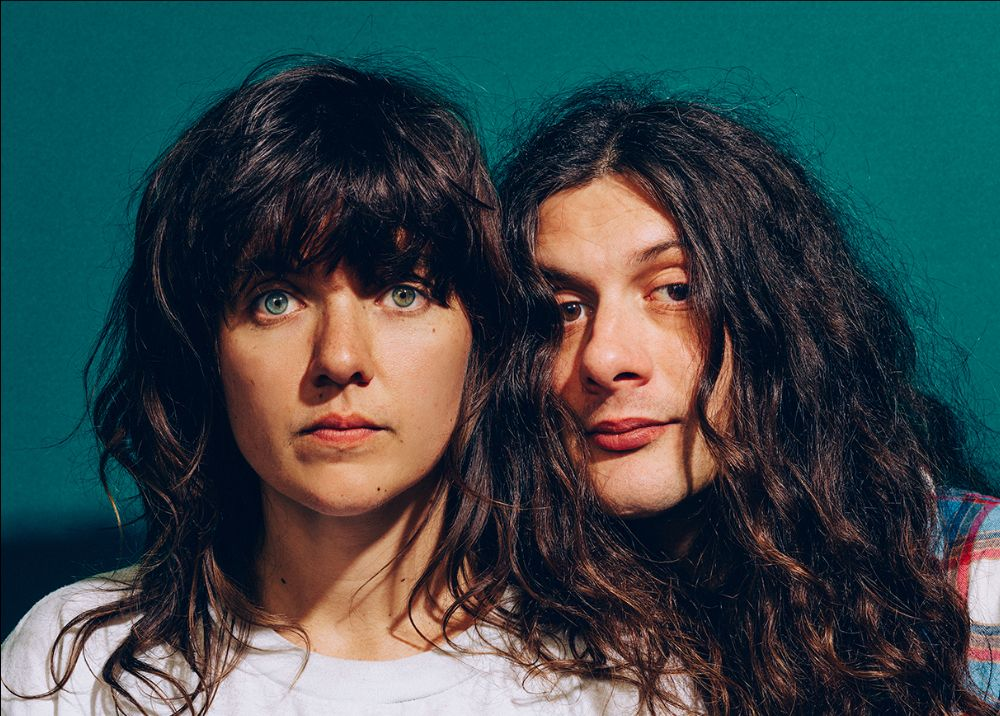
Wow can you believe it’s been 6 years since Courtney Barnett and Kurt Vile released their collaboration album “Lotta Sea Lice” What’s better than Kurt and Courtney?, Answer Kurt and Courtney each covering a Chastity Belt song!!! Listen to CB covering “Different Now” , Suicide Squeeze celebrates the band Chastity Belt with the latest in its split 7″ single series–a pair of covers by Friends of the Band and tour mates Kurt Vile and Courtney Barnett. For this release, Kurt and Courtney each recorded a song from the band’s third album, 2017’s “IUsed to Spend So Much Time Alone“, in their signature styles. Side K is Kurt’s version of “This Time of Night,” on which he lovingly recreates the anxious interplay of Julia Shapiro and Lydia Lund’s guitars, stretching each note of the song’s fraught vocal melody to its breaking point.
Flip the record to Side C for Courtney’s take on “Different Now,” where she pulls the song from its Pacific Northwest haze, leaves it out to dry in the middle of the desert, and wrings something almost joyous from the original’s ambiguity.
“This Time of Night” / “Different Now” will be available on vinyl and digital platforms, with a one-time retail vinyl pressing limited to 1500 (250 pink, 250 black, 1000 blue) copies on heavyweight vinyl.
releases October 27th, 2023
Written by Chastity Belt Guitars and Vocals by Courtney Barnett Drums and Synths by Stella Mozgawa
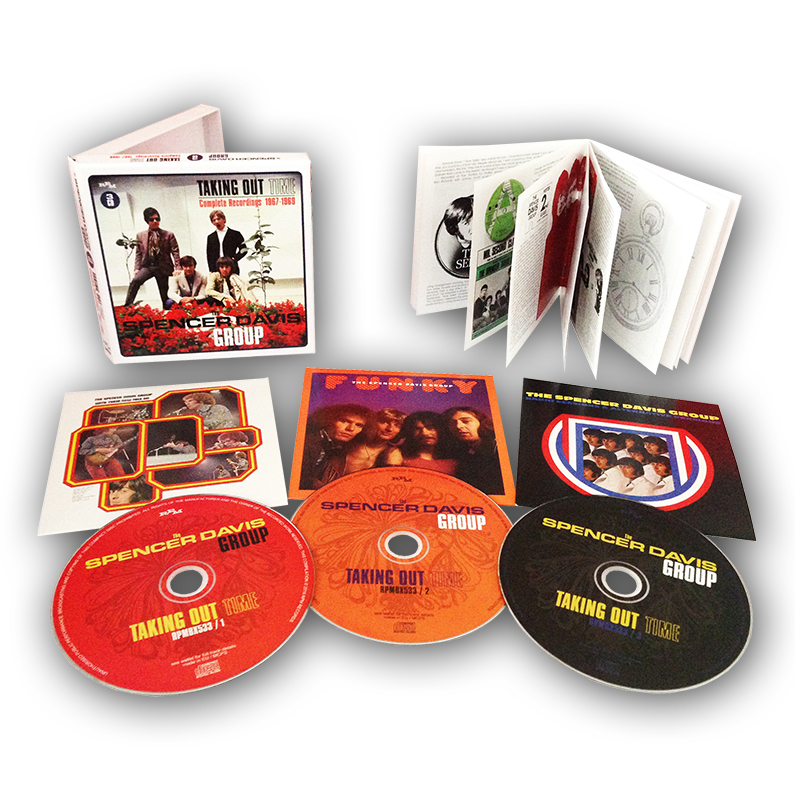
First-ever complete collection of all the recordings made by 60’s Hammond driven R&B Pop stars TheSpencer Davis Group during the period 1967-1969. Disc One features their 1967 singles recorded with Stevie Winwood replacements Phil Sawyer and Eddie Hardin, including the pop classics ‘Time Seller’ and ‘Mr Second Class’. Also their recordings used in the film soundtrack “Here We Go Round The Mulberry Bush”.
The second half of Disc One comprises their 1968 single and album recorded with Sawyer’s replacement Ray Fenwick, who brought with him the excellent ‘After Tea’ (co-written with Dutch Tee Set pop master Hans Van Eijck). Album With Their New Face On is a mix of jazzy R&B and pop psychedelia. The standout R&B track is ‘Don’t Want You No More’, which was later covered by The Allman Brothers.
the second disc Two boasts their rare, Germany-only single, and the US only LP Funky recorded in 1969 by Fenwick and Davis plus Nigel Olsson and Dee Murray (just before they joined Elton John). Also included is the theme to the TV show Magpie, originally recorded in 1968, and the groovy, heavy psych single ‘Short Change’.
RPM is pleased to finally be able to serve up previously unreleased BBC Sessions, recorded through 1968 around the promotion of “With Their New Face On”. These are coupled on Disc Three with live tracks and other rarities for which tapes have been archived, plus interesting alternative versions discovered down the years.
This 3CD clamshell packaged box set is crammed full of fascinating details in booklet notes from Andy Neill, photo’s from various archives, and input from original members Ray Fenwick, Pete York and Spencer Davis.
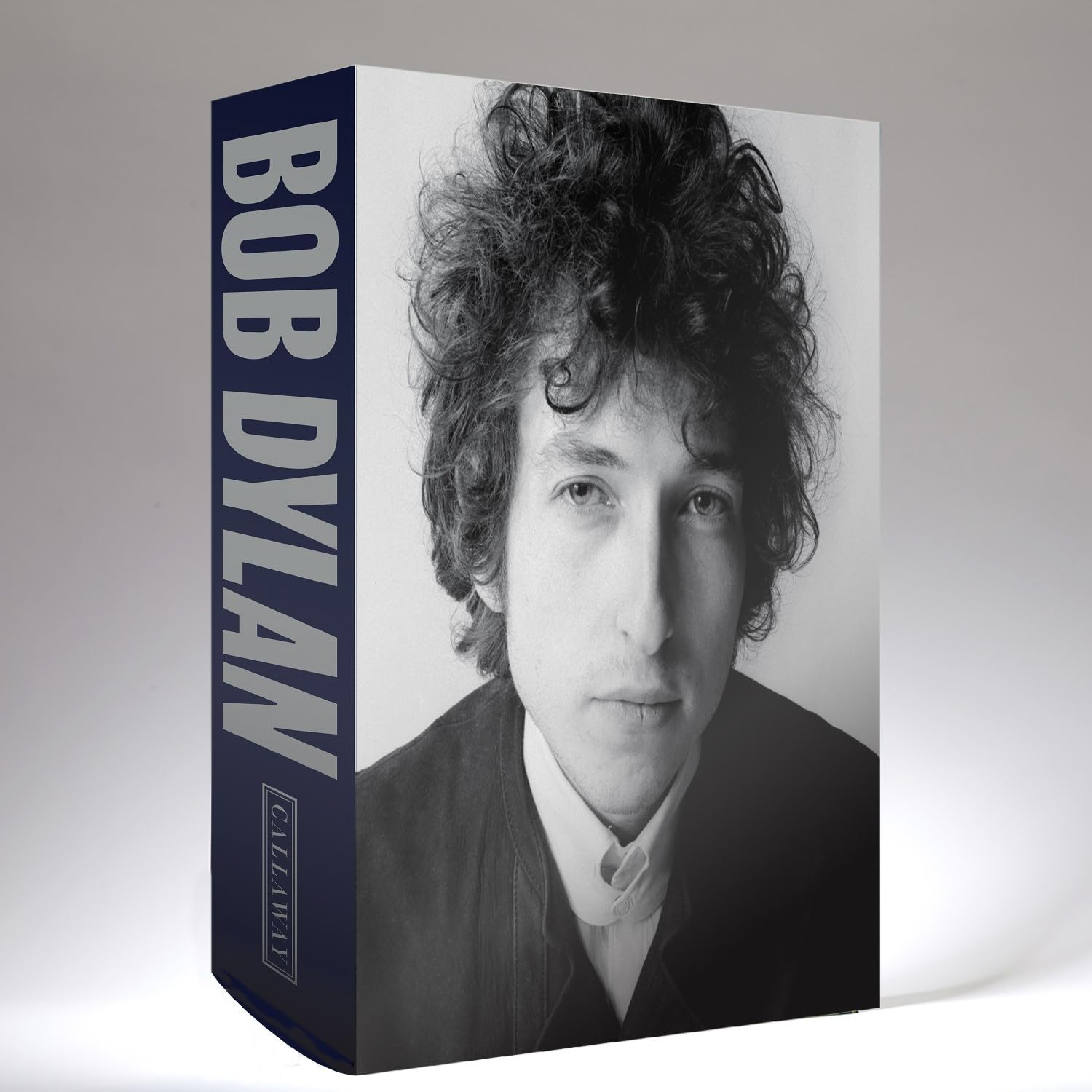
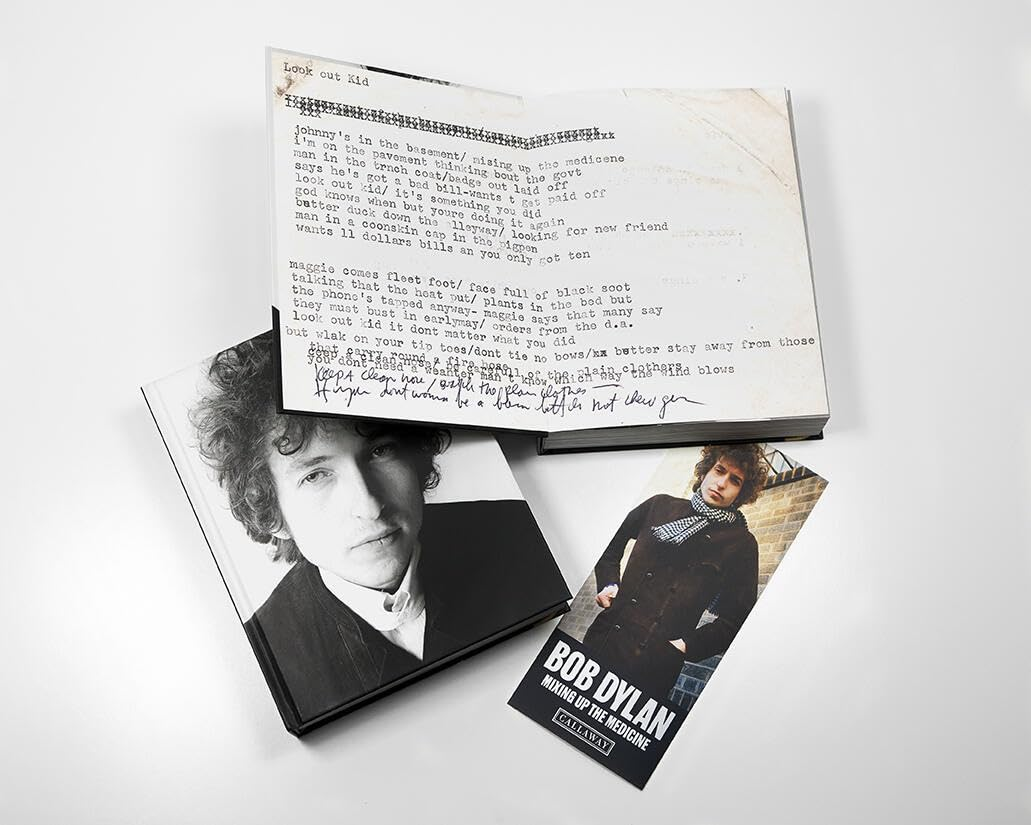
publishing house Callaway will release Mixing Up the Medicine, a 600+-page tome promised to be “the most comprehensive book yet published on the work of Nobel Prize-winning singer-songwriter-poet and cultural icon, Bob Dylan.” As entire libraries could be filled with the books written on Dylan, that’s no small boast – but this hefty coffee table volume looks like it might live up to the hype. Written and edited by Mark Davidson and Parker Fishel, the book celebrates both Dylan himself and The Bob Dylan Center, the expansive Tulsa, Oklahoma museum that opened to the public in May 2022 which has become ground zero for studies of the artist’s life and work. Though the book is massive – filled with over 1,100 images by 135 photographers plus 30 original essays, an introduction by Sean Wilentz, and an epilogue by Douglas Brinkley – its companion CD/LP is a brief Dylan primer with just a dozen tracks spanning 1964-2000 including “Blowin’ in the Wind,” “Tangled Up in Blue,” and “Things Have Changed.”
Bob Dylan: Mixing Up the Medicine is the landmark magnum opus every Bob Dylan fan has been waiting for since the 60s: lavishly illustrated with hundreds of previously unseen photographs and spanning from Dylan’s childhood in Hibbing, Minnesota, to the Nobel Prize for Literature and beyond, this is a treasure trove that promises to be of vast interest to Bob Dylan musical fans as well as a broader cultural audience.
Former Muncie Girls leader shines with great songs and harmonies on her second solo album, LANDE HEKT Sometimes with artists you just need the right entry point. Exeter indie punks Muncie Girls passed me by; likewise with singer/bassist Lande Hekt’s 2021 solo debut, But when Lande, now based out of Brighton, released a fantastic cover of The Wedding Present’s “Seamonsters’ standout “Octopussy” she had my attention. “House Without A View” follows in much the path as “Going to Hell”, full of expertly crafted, jangly indie pop that really showcases what a wonderful songwriter she is. Also, what a voice. Her crystal clear pipes cut through Muncie Girls’ fuzzy punk with ease but it’s more of a natural fit here where her lilt is given more nuanced backing on these 11 songs that range from acoustic folk-rock to glistening shoegazy numbers to strummy, snarling guitar pop.
Her lyrics are vulnerable — “I’m not someone who works at lightning speed/ I’m not even someone who knows what I need,” she sings on on the jaunty “Backstreet Snow” — but there is strength in her delivery that makes it clear she’s working things out, thank you very much. Listening to “House Without a View”, I keep thinking of the late Kirsty MacColl who made similarly smart, tuneful pop 35 years earlier and who also had a way with ethereal harmonies that can lift you six inches off the ground.
The second full-length solo offering from Muncie Girls leader Lande Hekt effectively follows up last year’s equally impressive “Going To Hell.” This record is filled with often intimate ’90s-style alt-rock with quite personal lyrics. There’s immense joy in key single “Gay Space Cadets” and touching sadness in the breakup energy of “Half of You.” “Backstreet Snow” and “Cut My Hair” are the kind of songs that would have gotten loads of airplay in 1997, while “Lola” is a strong character study where Hekt sings, “You’re really nothing like me/ I wonder how we are built so differently.” Her delivery is always warm and engaging.