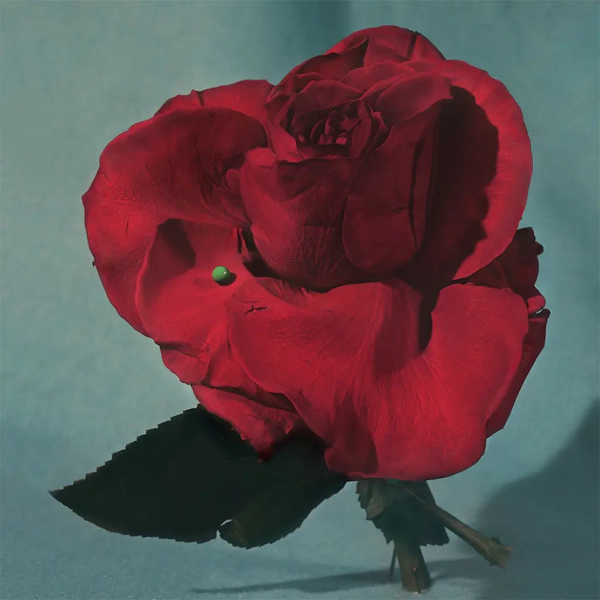
On this day (November 2nd) in 1982: Los Angeles neo-psych band The Dream Syndicate released in the UK one of the landmark alternative rock albums of the early-’80s, their debut ‘The Days Of Wine & Roses’, on Ruby/Slash Records...The LP’s sprawling, psychedelic, ragged guitar-rock, steeped in the influence of the Velvet Underground, helped to launch a scene in LA that was dubbed ‘The Paisley Underground’.
The phrase “days of wine and roses” is originally from the poem “Vitae Summa Brevis” by the English writer Ernest Dowson (1867–1900):
When they recorded their debut album “The Days of Wine and Roses”, the Dream Syndicate hadn’t even been together for a year. They went into the studio less than a month after forming and escaped with a noisy EP that documented their early, ragged sound. Now they had a deal with a record label and a producer, Chris D., who knew his way around a mixing board and was ready to make an LP that would help define an era, and live on as one of the most important albums of its time. Mixing the grungy grind of Crazy Horse at their bleakest, the barely tamed energy of the Velvet Underground at their wildest, and the abrasive glare of Dylan in his prime, the band unleashed a sound that was fueled by youth, confidence, and an unquenchable desire to make the kind of record that they wanted to hear but nobody else was making. Add to this heady mixture the dual guitar acrobatics of Steve Wynn and Karl Precoda, the steady rhythm section of bassist Kendra Smith and drummer Dennis Duck (that was always there when the guitarists got too near to tumbling over the edge), and Wynn’s sneering, snarling, and unhinged vocals and the band had everything they needed to vault this record into the realm of brilliance. Not a singular kind of brilliance: They reveal many sides and shades as they run through the songs like there’s a glittering prize awaiting them at the end.
Recorded mostly live and with broken headphones that forced the guitarists to guess what the other guy was doing, they rock out like dervishes on tracks like “Definitely Clean,” chime spookily then explode into shattered glass on “That’s What She Always Says,” strut and swoon drunkenly on “Until Lately,” and on the title track, show off a kind of daring, untethered psychedelic jamming that would make Quicksilver Messenger Service green with envy. Toss in a cranky, overloaded pop song “Tell Me When It’s Over”, a chilling track with some wonderfully cracked guitar soloing “Halloween”, a heartbreak ballad sung sweetly by Smith“Too Little, Too Late”, and it’s perfect.
Everything works like it was crafted out of trippy, malevolent stardust — from Wynn’s hard-bitten lyrics to Precoda’s massively sludgy guitar tone that was so gruesome it earned the nickname “the Thing” — and the album makes good on the promise of all the influential but flawed bands and LPs that had come before and influenced them. For just a moment they tapped into the molten core of rock music and were able to concoct something that had all the danger, beauty, energy, and fire that people talk about and are rarely able to achieve.
Steve Wynn – guitar, vocals
Karl Precoda – guitar
Kendra Smith – bass, vocal (“Too Little, Too Late”)
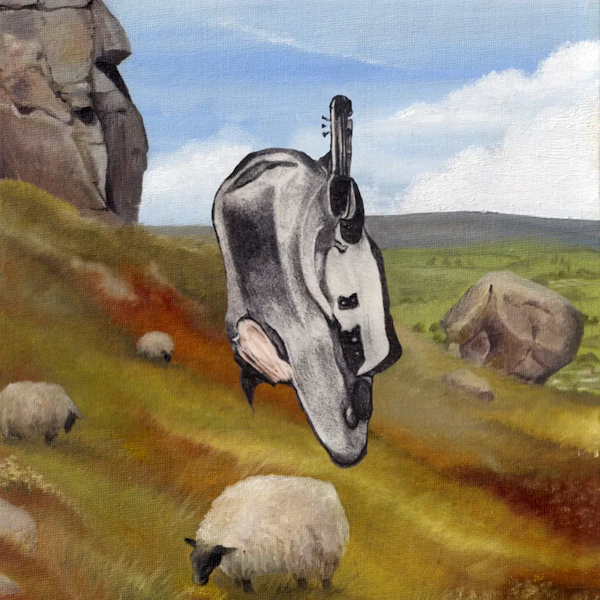
King Creosote AA single comprised of “Susie Mullen” and ”Walter de la Nightmare”. Amidst frenetic modular synths and drums, “Susie Mullen” takes King Creosote (aka Fife’s Kenny Anderson) sound in a new direction whilst “Walter de la Nightmare” brings his beautiful vocals back centre-stage. Available to buy as a 7”,vinyl.
King Creosote revealed details about the songs: “To find the source of inspiration for the music of ‘Susie Mullen’ you need only squeeze the belly of a souvenir camel toy from Egypt to unleash a rather urgent and tinny sounding nursery rhyme in Arabic, jam along in the key of Bb. A Crail live audience in 2017 heard the debut collaboration between KC and camel.” Referencing the single artwork, Anderson explains the meaning of lyrics of “Susie Mullen”: “With the luxury of hindsight, missed opportunities in the St. Andrews Woollen Mill workplace of yesteryear have become today’s befuddled and rather embarrassing memories.”
On “Walter de la Nightmare”, Kenny adds: “The lyrics reference a song by Billy Pilgrim RIP from Fence Sampler #3 in which Walter de la Mare recounts a lightning strike on a large old tree. Nota bene, I am fully aware that ‘lymph nodes’ and ‘emphatic’ do not conflate to ‘node lymphatic’, but it sounds good to my ear, and it provides a much-needed rhyme. Both Susie and Walter have taken over two decades to make their pilgrimage from Egypt to Ullapool.”
Amidst frenetic modular synths and drums, “Susie Mullen” takes King Creosote sound in a new direction whilst “Walter de la Nightmare” brings his beautiful vocals back centre-stage. Available on this AA 7″ single.
“Wildflowers” is the finest hour for Tom Petty as a recording artist and darkest as a songwriter. It was his 10th album and first under a new Warner Bros. Records contract, the 1994 set offered 15 songs as varied and nuanced as any he would write, unified by an underlying sense of loss. There were flashes of rock energy in the reliably fine musicianship and familiar sparks of sardonic humor, but “Wildflowers’ most distinctive songs revealed glimpses of defeat and exhaustion new to his work. [The album received a lavish expansion on October 2020.]
As sessions began in 1992, Petty was no longer the scrappy outsider and rock classicist who led his Gainesville, Fla., bandmates to L.A.’s promised land in the mid-’70s. Now in his early 40s, he was rock royalty himself, standing beside Messrs. Dylan, Harrison, Lynne and Orbison in the Traveling Wilburys, and leading his own best Heartbreakers. But his platinum albums, ticket sales and radio hits had come at a personal cost. His marriage of 18 years was unraveling, held together only by fraying threads of concern for his daughters and guilt over his career’s impact on his family. That private drama fuelled a prolific burst of songwriting marked by a dark tonal shift.
Petty’s decision to produce his first Warner full-length as a solo rather than band album was motivated by the desire for a looser framework less tethered to his then six-piece band. Such had been the case when Petty, Heartbreakers guitarist Mike Campbell and Petty’s fellow Wilbury, producer Jeff Lynne, had recorded his first solo set, 1989’s “Full Moon Fever”. This time out, Petty and Campbell teamed with producer Rick Rubin, now successfully established beyond his early hip-hop and rap base. Beyond his fan’s enthusiasm for his client, Rubin’s most consequential contribution to the sessions was his skill at framing the material with an aural intimacy that prefigured Johnny Cash’s transformative “American Recording’s” album.
In contrast to the lush, widescreen sweep Lynne established for “Full Moon Fever” and its follow-up, “Into the Great Wide Open”, Rubin pulled sonic focus into extreme close-ups: Guitars and keyboards are often close-miked and lush while Petty’s voice is brought forward, looming over the mix.
That balance of high-definition detail and vocal immediacy animates the opening title track, a tender lullaby that highlights Petty’s acoustic guitar and vocal so artfully that its gradual accretion of instruments—rippling piano and harpsichord, harmonium, bass, and percussion, culminating in Michael Kamen’s silken string arrangement—is truly subliminal.
The wistful benediction of “Wildflowers” gives way to stark desolation on “You Don’t Know How It Feels,” the album’s first single and a stunning exercise in slow-burning, foursquare rock. With Petty on acoustic and electric guitars, harmonica and bass, the arrangement moves at a dirge’s pace beneath the singer’s bleary invitation to take a “midnight ride” to escape romantic abandonment. “But let me get to the point, let’s roll another joint/And turn the radio loud, I’m too alone to be proud,” Petty pleads on a chorus that does double-duty as sing-along and existential surrender, concluding, “You don’t know how it feels to be me.”
In programming the November 1994 release, Petty and his partners alternate between quieter acoustic reveries and tougher electric tracks closer to the Heartbreakers’ core sound. Thus, the stomping attack of “You Don’t Know How It Feels” yields to the lighter, lyrical “Time To Move On” before veering back into power chords and cymbal crashes on “You Wreck Me,” a fleet rocker built with his full band’s live sets in plain view, its lyrics glancing backwards with imagery evoking lost youth. Even as he taps into a trope resonant with his own early hits (“Tonight we ride, right or wrong…on a radio song…”), Petty invokes a bond both seductive and destructive, tugging at a thread of comingled passion and disillusionment that runs through much of the album.
The album’s second single, “You Wreck Me,” shares its electric energy and second-person pillow talk with “Honey Bee” and “Cabin Down Below.” Deeper emotional traction follows when Petty turns inward on quieter songs that dolly in for a closer look at his distress. “It’s Good to Be King” is a minor-keyed reality check, a confession that daydreams are only brief respites at best in a melancholy twist on Mel Brooks’ punchline, imagining and then dismissing power, wealth, and love as within reach.
“Yeah, I’ll be king when dogs get wings,” Petty mordantly comments. Pulled as the album’s third single, the song both conveys and mocks its regal mirage with another elegant Kamen orchestral arrangement while backlighting a recurrent subtext of loneliness and emotional distance that surfaces more explicitly on deep cuts revealing those troubled emotions.
“Only a Broken Heart” confronts a relationship in crisis, wishing “to start all over again/To clean up my mistakes.” On “Don’t Fade on Me,” he pleads for reconnection while alluding to his partner’s own emotional unravelling. “Hard on Me” finds the singer struggling “to hold on to tomorrow” for his “little girl” even as his partner hardens her antagonism toward him.
The music varies in pace and feel, thanks to a deceptively large musical cast that includes most of the Heartbreakers alongside additional percussion, string and horn players. Yet the sense of connective emotional tissue is there in every other track. “To Find a Friend,” with Ringo Starr guesting on drums, covered elsewhere by future Heartbreaker Steve Ferrone, is a startling projection of its author’s inner vision as Petty baldly reports, “In the middle of his life/He left his wife/And ran off to be bad/Boy, it was sad…”
These tensions ultimately resolve on the album’s closing track, “Wake Up Time,” an elegiac ballad that measures the toll of time and heartbreak against Kamen’s most expansive and sympathetic orchestral chart. The song’s weary but clear-eyed sense of acceptance can’t extinguish a melancholy that lingers over the entire set.
As for the album’s stature in Petty’s rich catalogue of solo and band releases, making the best case for “Wildflowers”as his strongest album is Tom Petty himself. He declared it his favourite recording in 2005 in an interview with American Songwriter’s Paul Zollo, asserting it was made “at the top of my game as far as craft and inspiration colliding at the same moment.” Its generous song list only hinted at the virtual torrent of material he was creating during this period, reflected in the shelf of material left behind when he was talked out of releasing it as a double album. Some of those tracks would surface on his subsequent soundtrack set, “She’s The One“, recorded with the Heartbreakers.
In the last years of his life, with triumphant tours and albums to buoy his confidence, Petty proposed an ambitious reissue that would literally double down on “Wildflowers”as a two-disc package and an anniversary tour that would have Petty and the Heartbreakers performing the album in its entirety.
It’s being billed as “the last Beatles song.” And now, 2023 brings one of the most anticipated releases of their long and endlessly eventful history. “Now And Then,” written and sung by John Lennon, developed and worked on by Paul McCartney, George Harrison and Ringo Starr, is now finally finished by Paul and Ringo over four decades later.
First, though, a 12-minute “Now And Then – The Last Beatles Song” documentary film, written and directed by Oliver Murray, has debuted on November 1st.
“Now and Then’s” eventful journey to fruition took place over five decades and is the product of conversations and collaborations between the four Beatles that go on to this day. The long mythologised John Lennon demo was first worked on in February 1995 by Paul, George and Ringo as part of The Beatles Anthology project but it remained unfinished, partly because of the impossible technological challenges involved in working with the vocal John had recorded on tape in the 1970s. For years it looked like the song could never be completed. But in 2022 there was a stroke of serendipity. A software system developed by Peter Jackson and his team, used throughout the production of the documentary series “Get Back”, finally opened the way for the uncoupling of John’s vocal from his piano part. As a result, the original recording could be brought to life and worked on anew with contributions from all four Beatles. This remarkable story of musical archaeology reflects The Beatles’ endless creative curiosity and shared fascination with technology. It marks the completion of the last recording that John, Paul and George and Ringo will get to make together and celebrates the legacy of the foremost and most influential band in popular music history.
The double A-side single cleverly pairs the last Beatles song with the first: the band’s 1962 debut U.K. single, “Love Me Do,” a truly fitting full-circle counterpart to “Now And Then.” The songs will be included in expanded editions of The Beatles’ 1962-1966 (aka The Red Album) and 1967-1970 (The Blue Album) collections coming in various formats on November 10th.
“Running From the Chase”, Truth Club’s second album and first for Double Double Whammy, is one of the most alluring and uncomfortable records of the year. Placing heavier emphasis on melody and dynamic arrangement, Harrington and his bandmates, Kameron Vann, Yvonne Chazal and Elise Jaffe, have built an album that feels like a nihilistic Trojan Horse. These songs create an impending sense of doom while also getting stuck in your head. Lead single “Blue Eternal” sees them pushing further into the murky dread at the heart of their sound. As though taking on the POV of a poor soul caught in a whirlpool, Harrington sings “held in a wave of some vibration / a trace of our trial / stuck in its cycle”—the tense, driving guitars a riptide of their own.
That trapped feeling extends into songs like “Exit Cycle,” where calming guitar strums undergird the description of a wasted day framed as “two dozen hours, deposed.” It’s a song about the feeling of futility, lack of fulfillment, and hopelessness, and yet it’s palpably ambitious. Truth Club has mastered the art of the slow build, and when “Exit Cycle” reaches its peak, it’s transcendent.
Indigo De Souza makes a cameo here as well, singing a sweet, hazy backup that stands in contrast with Harrington’s commanding chant. On one level, there is a silver lining to all of Truth Club’s toiling music. Harrington wrote these songs during a particularly aggressive battle with bipolar disorder, and tried to capture his feelings within them. He describes it as though he’s placed these feelings “in a jar” to observe down the line. That they exist means he’s been able to sublimate them down into something new, something useful to himself and to us. The perspectives we hear from, singing from beneath a crushing weight, are doing so from the past. “Running From the Chase” is a reminder to let some light fill up darker corners.
From Truth Club’s “Running From the Chase“, out October 6th, 2023 via Double Double Whammy
Louis Gutierrez, who first came to prominence as guitarist with The Three O’Clock – one of the quintessential groups (& along with Dream Syndicate, a personal favourite) to come out of Los Angeles’ early-’80s, neo-psychedelic movement dubbed ‘The Paisley Underground’; in particular, their albums ‘Sixteen Tambourines’ (1983) & ‘Arrive Without Travelling’ (1985) are essential recordings of the decade; the group originally formed under the name The Salvation Army, a raw variant that bridged punk, psych & garage rock, releasing one self-titled cult fave album on Frontier Records in 1982; Louis left The ThreeO’Clock in 1986 to form rootsy, power pop-ish combo Louis & Clark, with Michael ‘Clark’ Gurley (one EP, ‘Hollywood Capacity Maximum’, in 1987); he then became a principal member of alternative rock band, Mary’s Danish (thee studio & one live album between 1989-92) after which he & two bandmates formed Battery Acid; after 25 years of turning down reunion offers, The Three O’Clock reformed in 2013 to play that year’s Coachella festival – they have since performed select dates, including a Paisley Underground reunion with The Bangles, Dream Syndicate & Rain Parade in December. 2013…
The first full-length album from one of the pillars of the Paisley Underground scene of early-80s Los Angeles is a classic capsule of that moment. The baroque pop melds a heavy 60s pop psychedelic sound with a touch of 80s new wave as evidenced by the use of piano and harpsichord alongside synthesizers. The album contains the breakthrough single from the band, “Jet Fighter,” as “Fall to the Ground,” “A Day in Erotica,” and a stellar cover of The Bee Gees “In My Own Time.”
released November 20th 2020
song taken from the 1985 album “Arrive Without Travelling” on I.R.S. Records IRS-5591. “Her heads revolving like a Catherine Wheel spinning on the ground.”
Launched a little more than twenty years ago in Raleigh, North Carolina, Chatham County Line built a devoted local following on the strength of their genre-bending live show—an intoxicating blend of bluegrass, folk, country, and rock and roll—before breaking out internationally with their 2003 self-titled debut. In the years to come, the band would go on to release eight more critically acclaimed studio albums, top the Billboard Bluegrass Chart four times, collaborate with the likes of Judy Collins, Sharon Van Etten, and Norwegian star Jonas Fjeld, earn two gold records in Norway (where they were also twice nominated for the Spellemannprisen, Norway’s equivalent of a Grammy), and share bills with everyone from Guy Clark and Lyle Lovett to Steve Martin & Martin Short and The Avett Brothers. NPR hailed the group as “a bridge between bluegrass traditions and a fresh interpretation of those influences,” while Uncut lauded their “powerful melodies and gorgeous harmonies,” and Pitchfork dubbed their music “timeless.”
The band’s latest release, “Hiyo”, marks the band’s first release since the departure of their long-time banjo player and serves as something of a reintroduction to the roots stalwarts, complete with new sounds, new collaborators,
Dave Wilson: Vocal, Guitars, Harmonica, Synthesizer, Banjo John Teer: Mandolin, Guitars, Vocal Greg Readling: Bass, Pedal Steel, Piano, Clavinet, Organ, Vocal Jamie Dick: Drums, Percussion John Mailander: Fiddle, Octave Mandolin, Synth, Harmonium Al Weatherhead: Mellotron, Optigan
“Day of the Dog” is over ten years old. Well, it came out October 8th 2013. I tried to write a whole thing explaining everything and thanking everyone and I think that just has to wait until I write my tell-all memoir. But thank you, everyone, for my life in music.
I will say that this is one of my personal favourites of my own records, and one of the few that came out exactly as I wanted it to. (There are two others.) This distilled the essence of something for me. It was exactly what I needed, musically and energetically. The realest I ever felt in public up to that point.
I feel a lot of fondness for it, the way we recorded it, the mood in my music life at the time – the newness and evolution of my still-new band and how much we were loving rock’n’roll, exploring it together, showing each other stuff we thought was cool, just absolutely soaking in music.
It was Howlin’ Wolf and obscure soul (thank you to Jorgen Jorgensen and his iPod and mix CDs by Will Kent) and so much Chuck Berry, plus the Pixies and Krill, and Sam Cooke Live at the Harlem Square Club, and John Lennon, and Iggy Pop’s Raw Power (the song most of all), and Bruce Springsteen I would think?, and the Buzzcocks and Telekinesis, and of course Paul Baribeau, and Bo Diddley and the Velvet Underground and (flagrantly) Frankie Lee Sims and so much more.
On and after this record, everything happened. A life any favorite songs or good memories of it, please feel free to share ‘em.
For most of the record, the band is: Ben Joseph – keys Ezra Furman – guitar and vocals Jorgen Jorgensen – bass Sam Durkes – drums Tim Sandusky – saxophone
And again. Thank you, thank you, thank you. Mitch Marlow Shane Daunt Marc Riley Simon Taffe Glenn Morrow Michael Hann Reinhold Seyfriedsberger and absolutely way too many more to say. Shout out to Adria