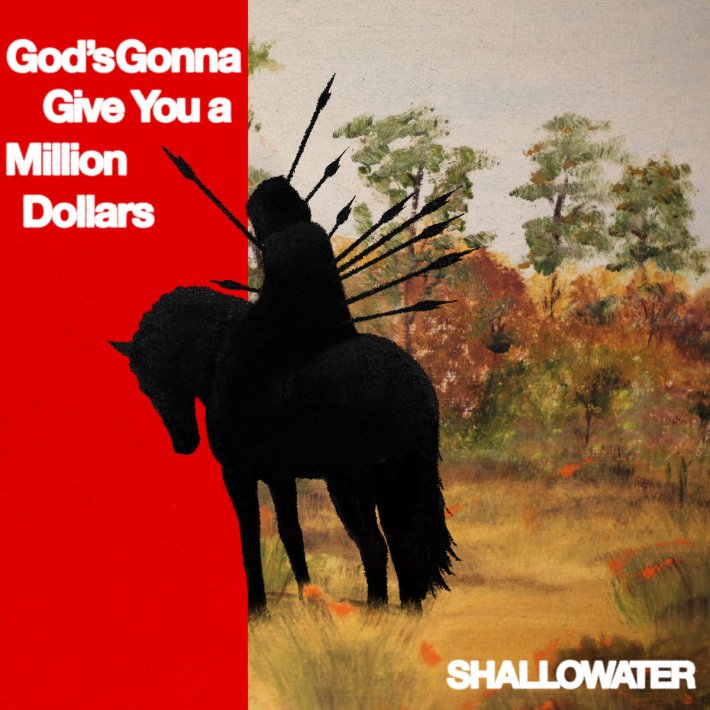
Behold, the country-fried slow core album of your dreams! On “God’s Gonna Give You A Million Dollars”,Shallowater conjure the tumbleweed-strewn environs of their West Texas homeland in the form of patiently creeping pensive twang, but from time to time the gad-dang thing explodes like an improperly lit propane tank. The vibes are too dour to be described as immaculate, but you can just bask in this thing until it blows you away.
There’s a wonderful synthesis of sounds on this album – it’s solid from the start until the finish, overall an excellent album and I hope this one gives them some more hype!
Shallowater is possibly the best act in slowcore right now. Their debut was a great taste of the eventual magic that would appear here. The cohesion, the consistency, and oh my god that distorted guitar is absolute bliss! A truly marvelous record from one of the most promising talent around right now in the genre.
This Sunderland producer’s previous work included one EP of power electronics, one of antic club tracks, collabs with Aya and 96 Back as Microplastics, gigging with Kero Kero Bonito and a smattering of other credits. So her staggering, fully formed songwriterly debut was a total bolt from the blue. A swarming orchestral epic with shades of Julia Holter and Phil Elverum, it addressed her grief for her late father in serenely surrealist images – hitting a deer with a car in the middle of the night – and the painfully mundane realism of sitting in hospital corridors together.
The standout “Miss America” combined both to stunning effect, a numbed incantation of everything Walton had seen on the US trip where she learned of her father’s diagnosis, the familiar now remade horribly mythic.
Walton is a beloved figure across various sectors of the alternative music underground. Outside of her own music and soundtrack work, she has been a live drummer for Kero Kero Bonito, collaborates with Sarah Midori Perry on the pair’s Cryalot project, has remixed Metronomy and worked with Iceboy Violet, BABii and more. She recently contributed to London collective caroline’s acclaimed “caroline 2” album.
The first seeds of Walton’s debut album were sowed during touring North America in 2018, where whilst ticking off life-long music goals, Walton’s father was dying of cancer. Grief is a constant presence throughout “Daughters”, and specifically the surreal nature of having to process it amongst a blur of airports, flight connections, hotel rooms and battles for stolen medication with the American healthcare system. Strip malls, drug deals, panic attacks; the artificiality of downtown American city districts dovetailing with reality in its most brutal form. “Miss America” for a day while life is changed forever.
Weaving between real life diary entries, travelogue-style storytelling, imagery that ranges from mechanical to religious and a scattering of fiction (though we are obliged to mention that ‘Shelly’ is based on a true story), “Daughters” climaxes with the staggering run of ‘Saints’, ‘Miss America’ and its title track. Sampling unattended machines harmonising bleeps into the void in a London hospital ward, ‘Saints’ narrates Walton taking her father to and from cancer research trials, “sat, hunched and sick in the concourse as minutes became hours”. And to be very real for a moment, Jen is a friend, and first hearing the ‘Miss America’ demo is up there with the most emotional moments we’ve had in 15 years of running this record label.
Finished in London across the second half of 2024, “Daughters” features musical contributions from some of the closest friends and collaborators that Walton has made in her time as a musician: aya (who also mixed the album), Daniel S. Evans, Joshua Barfood and Nick Granata (all of Shovel Dance), Alex McKenzie (of caroline and Shovel Dance), Aga Ujma and Bob Lockwood.
Local Action is proud to present “Daughters“, the debut album by Jennifer Walton.
Lisa Knapp has long been an exciting folk singer and interpreter, with a range that’s open-hearted and wild, and her husband, Gerry Diver, is an innovative producer working with ease across folk, pop, film and TV. The couple’s first officially collaborative album includes a brilliant, cinematic rendition of the murder ballad “Long Lankin” and a moving, fragile rush through the emotions of Irish ballad “Lass of Aughrim”. Knapp’s spry facility with the fiddle in Monaghan Jig/Monks Jig Set also impresses, as does her spoken-word delivery of travelling snapshots in “Train Song”.
Since her 2007 debut, “Wild and Undaunted“, Londoner Lisa Knapp has blazed an impressive trail at the avant edge of British folk, her bravura vocals lighting up self-penned songs and well-loved standards, while the inventive arrangements of partner and producer Gerry Diver – now credited as co-creator – have helped capture the wyrdness, wonder and darkness of folklore.
On “Hinterland“, the pair repeat the trick to thrilling effect. Opener “Hawk & Crow” has Knapp at her larkish best, giving voice to a cast of birds over a stumbling, broken rhythm – a kind of elfin Tom Waits. The spoken-word “Train Song” relocates us to today’s mundane realities – “poplars tall, village hall, stately home, sewage works” – before “Star Carr” “whisks us back to the Mesolithic Yorkshire site where ritual headdresses of red deer antler hint at ancient raves.
The most transfixing song too few people heard in 2025 has actually been around for nearly 300 years. “Long Lankin”, an insanely violent traditional folk murder ballad, has been performed by musical ghouls since at least the 1750s. Far more recently, its dark soul has been conjured by trad stars as esteemed as Martin Carthy, Shirley Collins and Steeleye Span. Never, however, have I heard a version as bone-chilling as the one by the English folk star Lisa Knapp. (It appears on “Hinterland“, her first album co-credited to her longtime partner in music, life and, for all I know, crime, Gerry Diver). Knapp’s quavering soprano manages to sound, at once, pristine and menacing, a silky ghost of a thing equally skilled at seduction and threat. The clarity of her tone has a Sandy Denny purity, but her vibrato portends imminent danger, underscored by Diver’s creepy-crawly glockenspiel andPete Flood’s spooky drums, which have the jazzy surprise of Terry Cox’s work with Pentangle. While the musicians orchestrate the shifting perspectives of the lyric, Knapp delivers a vocal so arresting, you won’t know whether to shudder or swoon.
Along with intense fiddle playing from Diver, crepuscular instrumentation accompanies a clutch of traditional ballads; the tender romance of “I Must Away Love“, But the murderous “Long Lankin” and the forlorn “Lass of Aughrim“, the last with Knapp in heartbreaking form. She sings carefully throughout but remains unafraid to spill the odd yowl and yelp; you get the whole person. Folk at its most exalted.
In a year that saw the troubling rise of AI-generated slop music, there is something endlessly comforting about a song that can only have been written by a messy, complicated human. The first lines of Al Olender’s delightfully specific track “The Cyclone”, draw on a memory of driving to Queens to “try to get laid”, and from there the song takes our unwinding narrator to a Baltimore freeway, Planet Fitness bathroom, and, yes, the titular Coney Island attraction. It’s a well-trodden theme, though usually sung by classic dude troubadours such as Townes Van Zandt or Merle Haggard: no matter where she runs, she’s herself, and it’s a problem.
But the song’s crescendo is one of the prettiest, and lasting, that I have heard in a while. After losing love (or maybe it was just some guy), the singer resolves to replace all of her glass with paper plates – “things I cannot break”
“The Cyclone” off Al Olender’s sophomore record, ‘The Worrier’.
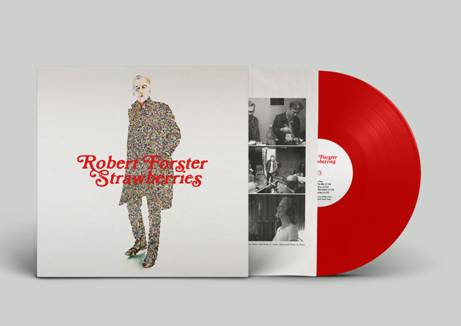
Iconic singer-songwriter Robert Forster returns with “Strawberries”, his ninth solo album, delivering a fresh yet unmistakable sound. Inspired by a simple moment at home—a bowl of irresistible strawberries—Forster weaves together a collection of observational stories that venture beyond personal introspection. With a mix of playful, character-driven narratives and atmospheric soundscapes, “Strawberries” is a new direction for Forster, whose legendary career spans the Go-Betweens and nearly three decades of solo work.
If 2023’s “The Candle And The Flame” documented Forster and family creatively responding to his wife Karin Bäumler’s cancer diagnosis, solo album number nine was less overtly personal; an album of fictions and innovations, recorded in Sweden with producer Peter Morén (of Peter, Björn & John). Cue, then, tales of noisy sex and gay crushes, uninhibited yelps and jazz-punk skronk; a songwriting craftsman investigating new territory without ever compromising his authentic voice.
We are very proud of this record and my fellow Tubs. we finally tried quite hard. it’s the most PERSONAL but also the most Rocking we’ve ever been. the former felt arduous at times and, especially on ‘strange’, and sometimes it felt a bit TMI but I’m glad I ‘went there’. but, as the latter hopefully demonstrates, there’s also a lot of fun and joy and lager in there. see you on the road xxx
London group The Tubs released one of 2023’s most underrated albums, “Dead Meat”, which saw the group—featuring the former members of Joanna Gruesome—pairing soaring pop melodies with an immaculate college rock jangle. Their follow-up to that album, “Cotton Crown”, is a more deeply personal affair, featuring songs written about grieving the death of his mother. And while the subject matter’s a bit heavier, their pop songwriting has only grown stronger, as on the harsher punk strum-along “Chain Reaction” or the infectious riffs of “Freak Mode,” which we dubbed the Essential Track. Though it’s an album defined by real pain, it’s nonetheless good for the soul. (We’ll have more on this one soon.)
“It’s quite fun for me to dredge up my most embarrassing or selfish moments,” Tubs frontman Owen Williams admitted. The second Tubs album was emotionally visceral, too, with a full-pelt intensity – think Hüsker Dü meets Richard Thompson – that made them instant favourites.
The Tubs performing live in the KEXP studio. Recorded June 3rd, 2025.
Songs: Freak Mode 00:32 Round The Bend 03:45 Dead Meat 06:00 Narcissist 08:17 Sniveller 12:01 Wretched Lie 16:55Owen Williams – Guitar, Vocals Devon Murphy – Bass Dan Lucas – Lead Guitar, Vocals Taylor Stewart – Drums
Also essential from 2025: Tubs twin band Ex-Vöid’s “In Love”, where Williams ceded most of the frontperson duties to Lan McArdle, tonally Linda Thompson to his Richard.
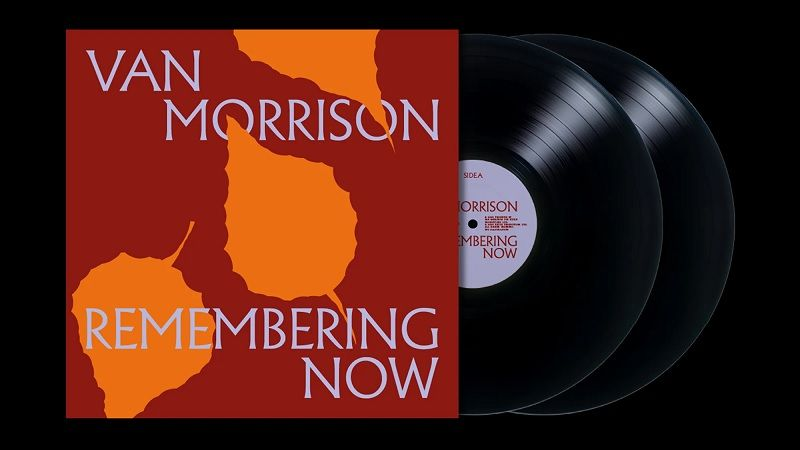
“Remembering Now” is a brand new studio album from the legendary Van Morrison, due out June 13th listen to its debut single, “Down to Joy,” As he approaches his 80th birthday, this album finds Van in a reflective mood. There are numerous echoes back to old songs, places and familiar themes. Undoubtedly his best release in many, many years and I say that as a lifelong fan.
After albums focusing on skiffle, rock’n’roll covers and duet versions of his back catalogue, Morrison’s 47th album (!) saw his still staggering voice back on the deep stuff – a heroic re-engagement with the mystic, with the muse William Blake and what he calls on page 54 “transcending the mundane”. Side Two, remarkably, held perhaps his best run of music in over 35 years, meditative, transported extemporisations that stood comparison with his very finest work.
This is a record of opposites colliding – of dialectics trying to find a path of resolution. While the music has an effervescence and an elegiac uplift, most of the words deal with the cold analysis of the self (the exception being the three lyrics by James Dean Bradfield which look for and hopefully find answers in people, their memories, language and beliefs).
The music is energised and at times euphoric. Recording could sometimes be sporadic and isolated, at other times we played live in a band setting, again the opposites making sense with each other.
Ten out of 12 tracks from “Critical Thinking” made the cut for Keith Cameron’s selection of Manics tracks in MOJO’s Book Of The Year, 168 Songs Of Hatred And Failure – a strong indicator of the consistent quality of this, the band’s 15th album. The rousing anthems recalled the band’s ’80s antecedents as much as their mid-’90s commercial peak; the elegantly jangly “Dear Stephen“, meanwhile, provided a timely grappling with the ongoing complexities of being a Smiths fan.
There are crises at the heart of these songs. They are microcosms of meaninglessness in a world so brutal and divided, at an age when so many different kind of failures have been witnessed. What is the point in a song – thus the shift towards the internal. Start with yourself, maybe the rest will come.
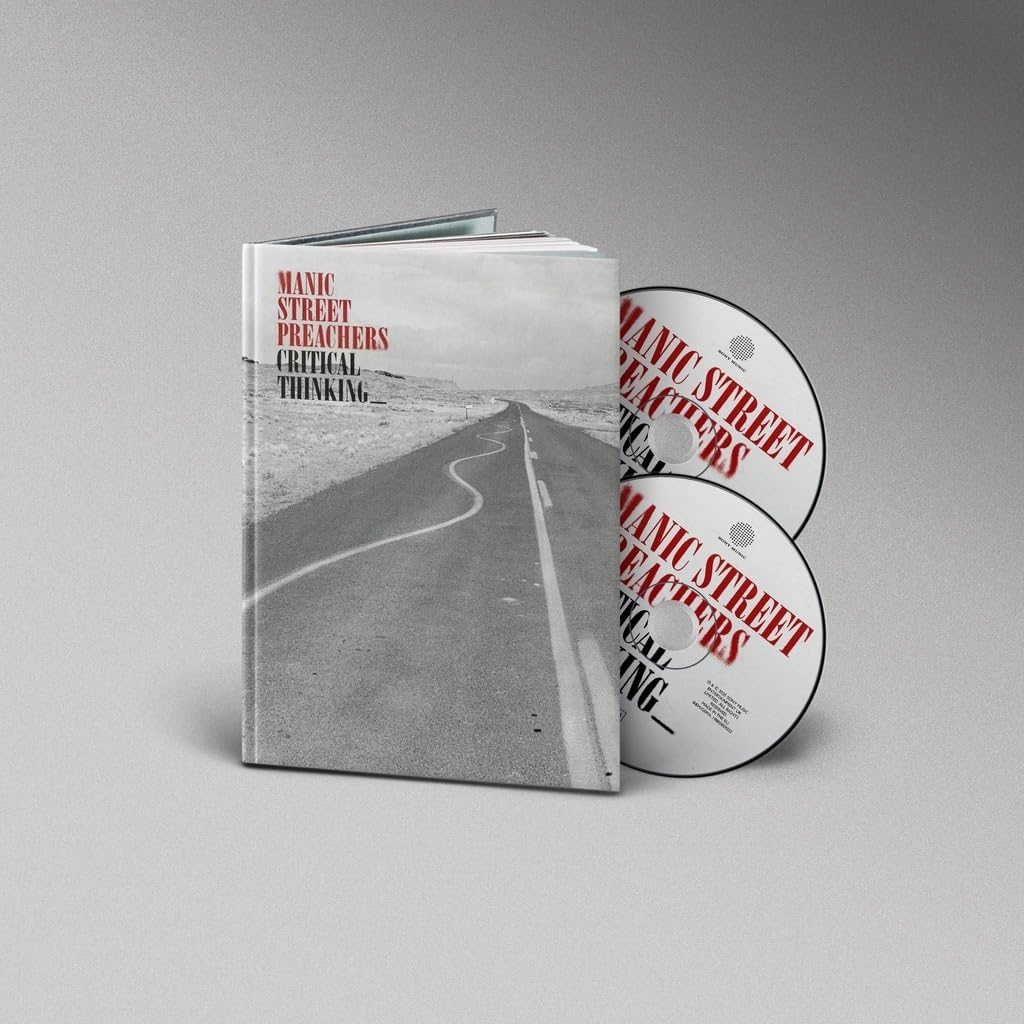
The artwork for the album is by the world renowned Magnum photographer David Hurn. It evokes these feelings of uncertainty doubt and desire. 15 studio albums in, perhaps it should be like this. We’ve covered a lot of ground, the lines on the cover don’t quite connect, mirroring our current dilemma.
1. Critical Thinking An address to the self and wider culture – a challenge to the cliched naivety of ‘Be Kind’ culture + the cults of mindfulness and wellness – dripping with sarcasm and rejection. Also a call for realism and a warning to keep your perspective sharp and in focus – question before you accept. The sound is jagged and awkward – echoes of post punk touchstones P.i.L., Gang of Four, Shriekback and the tonal cadence of The Whipping Boy. When it was written, I’d been reading The Handover by David Runciman and The New Leviathans by John Gray, realising how willing we can be to give so much of ourselves away – how gullible the human race is.
2. Decline and Fall Using the past to push into the future – Richard Jobson’s dancing and The Associates’ glitter ball on Top of the Pops. Lyrical themes of inertia and collapse as the music propels you on and on – hyper-capitalism, digital malaise, managed decline. Trust + joy to be found in the tiny miracles that remain ‘dry stone walls’ + the comfort of the familiar.
3. Brushstrokes of Reunion Nods to imperial-era Waterboys, particularly the love and desperation of Rags – R.E.M. Life’s Rich Pageant meets classic Manics crunch + velocity. Lyrically, about the hypnotic quality of a painting that’s inherited from someone who has passed.
4. Hiding in Plain Sight Anne Sexton’s line ‘I am a collection of dismantled almosts’ really resonated and was the spark for the song – the lyrics and the music flowed and I’d written the whole thing in an hour. The song unfolds in 3 acts – a facing the mirror moment – an admission of self hatred – a forlorn act of nostalgic resistance. Layer upon layer of longing. The Only Ones, Make Me Smile (Come Up and See Me), Kirsty MacColl / Mazzy Star backing vocals. A song in love with its own sense of regret.
5. People Ruin Paintings The narcissism of adventurers + explorers, the hypocrisy of the carbon footprint – the empty evangelism of the television travel show drenched in a cynical inverted nihilism. Man’s insatiable addiction to discover and use. The gentle lilt of 10,000 Maniacs. Musically the three of us playing telepathically, referencing thirty plus years of playing together instinctively.
6. Dear Stephen A song triggered by a postcard sent to me by Morrissey in 1984 wishing that I ‘get well soon’ – a song torn between opposites – an elegy to forgiveness and how tactile objects still have the power to comfort + soothe – an examination of my own shortcomings as seen through my love of The Smiths mirrored by shimmering guitars and a rhythm section in complete harmony. Rattlesnakes-era Lloyd Cole, the tenderness of the Pretenders.
7. (Was I) Being Baptised Written about a day spent in the company of Allen Toussaint, being inspired by his patience, eloquence and natural skill as a storyteller. A meditation on quiet dignity + resistance. Written with a nod to the yearning spiritual, flowing with the gentle ease + grace of the Weather Prophets. The motif at the start of the song is a nod to the intro of Glen Campbell’s Southern Nights, written by Toussaint.
8. My Brave Friend A declaration of remembrance, a hymn to friendship + loss, an old troubled song brought back to life by sorrow + memory. Scott Walker No Regrets, Bryan Ferry Jealous Guy.
9. Out of Time Revival A song about the fruitless search for answers and optimism and looking for them in all the wrong places. Putting too much pressure on memories + cultural signposts and trying to distil everything down to something more pragmatic. Inspired by the rhythm track of When Doves Cry and Drastic Plastic by Be Bop Deluxe.
10. Deleted Scenes Our version of the pure pop glitter of the alternative ’80s – The Cure, Strawberry Switchblade, Voice of the Beehive, The Bangles. A fantasy – a folly of desire + fear – the possibility of self destruction – drunk on hatred + love. Again, opposites colliding, trying to make sense together.
11. Late Day Peaks My wife came back from an exhibition of Gwen John’s paintings with a copy of Sue Hubbard’s God’s Little Artist – a biography in verse that traces the life of the painter. The book made me appreciate finding joy in the smallest things. The song is an autumnal goodbye to the past – a recognition of place + time – the precious nature of interior life – the golden glow of doing nothing.
12. One Man Militia The cold analysis of self-delusion – the shame of self censorship – the self-indulgent nature of art – the disaster of men. Written on the day of the Queen’s funeral when I locked myself in the studio with (producer) Loz Williams. Later, the three of us summoned the spirit of the Pistol’s No Fun + World Destruction by Lydon/Bambaataa – the constant push to take a side – the impossibly of reasoned debate in the cesspit of digital oblivion.
The divorce of Americana royalty Jason Isbell and Amanda Shires provided source material for both artists on their 2025 solo albums: a compelling if sometimes unnerving opportunity to hear opposing sides of the story. Jason Isbell and his band the 400 Unit are masters of big-stage country-rock dynamics, but Isbell is going in a very different direction on “Foxes In The Snow“, his brand new album that he’ll release in a few weeks. “Foxes In The Now” is a fully solo-acoustic album, recorded without any help from the 400 Unit.Isbell made the whole thing in a five-day stretch at New York’s famed Electric Lady Studios last fall, and he played the same guitar, a 1940 Martin acoustic antique, on every song.
Jason Isbell recorded “Foxes in the Snow” without his usual backing band, the 400 Unit, and outside of a marriage that turned into a muse. What’s to become of Isbell’s career without that spark? This is the sound of figuring that out. There’s introspection about what it all means, even what his own old songs now mean, but he’s also become angrier and more lyrically impulsive. Isbell has been stripped bare, and you hear it everywhere on this new album. He’s never had more main-character energy. The results are often cathartic, and sometimes a little jarring, but “Foxes in the Snow” is a grower. It draws us in more deeply with each spin.
“Foxes In The Snow” is not a Belle And Sebastian cover, and I wonder if the similarity between Isbell’s title and that of the B&S classic “Fox In The Snow” is intentional. “Foxes In The Snow” is a simple, bluesy love song.
Jason Isbell is a contemporary songwriter who blends rock, folk, and country into a unique sound that resonates with many. His emotional lyrics and storytelling ability have garnered him critical acclaim, yet he remains underappreciated by the mainstream.
Albums like “Southeastern” and “The Nashville Sound” showcase his ability to tackle personal and societal issues with grace and honesty. Isbell’s music often reflects his own struggles with addiction and recovery, making it deeply relatable.
He has won multiple Grammy Awards, yet his name is often overlooked in discussions about the best songwriters of his generation. His songs are like windows into his soul, offering a glimpse of his personal journey and struggles.
Southeastern Records marketed and distributed by Thirty Tigers Released on: 14th February 2025
Bon Iver returned with “Sable”, an EP of three mostly-acoustic songs that were his most stripped-back since “For Emma, Forever Ago”, but with the kind of grizzled reflection that’s to be expected of the 17 years of life Justin Vernon lived since that pivotal debut album. It seemed like a return to form, but as Justin put it in a recent interview with The New York Times, it was more like “the last gasping breath of my former self that really did feel bad for himself.” Those three songs now double as the first three tracks of the new full-length Bon Iver album, “Sable, Fable”, and the rest of the album is a more modern representation of Bon Iver, which transformed over the years from Justin’s solo project into a many-membered collective.
The difference is really clear by the fifth track, “Everything Is Peaceful Love,” a dose of soulful, funky, R&B-infused pop that counteracts Bon Iver’s sadboy era with positivity, joy, and rhythm. “I’m not saying nothing bad about the old stuff,” he said in that NYT interview, “but now I’m just much more like, hey, we don’t got much time left to live — let’s be sexy.”
Justin Vernon is finally happy! And he sounds perhaps more enchanting as a man embracing joy as he did as a lone wanderer in the wintery woodlands of Wisconsin. The album opens on familiar ground with the Sable tracks, and these build beautifully until we reach Fable and Vernon exclaims: “January ain’t the whole world”. From there on the album is a gorgeous celebration of accepting love and happiness through some incredibly vibey and experimental songs in the Bon Iver signature. “If Only I Could Wait”, with Danielle Haim is a standout, alongside “Walk Home”, and the slow submergence into steady love through the album closers There’s a Rhythm and Au Revoir is simply perfect.









 The Fat Angel Sings