The Americana world was shaken in 2020 by the death of Justin Townes Earle, the talented singer songwriter country/folk/blues musician following in the footsteps of his father, alt-country SteveEarle. His songs were rich in guitar, organ and horns (the first two of which he’d played in his father’s band) and featured evocative, personal lyrics inspired by his own personal demons and the stark realities of life in general. His last album, 2019’s “The Saint of Lost Causes”, was an affecting critique of the American dream in 12 songs and signalled his burgeoning promise was cut short when he succumbed to a long struggle with drug abuse at only 38 years old.
The bulk of “All In” offers material from the sessions that would birth the songs of “The Saint of Lost Causes” most of which did not make that final album. Only a work-in-progress version of the title track and demos of “Appalachian Nightmare” and “Over Alameda” – the latter two paired with the released album versions for comparison – indicate what was left on the album, with six demos showcasing songs left on the cutting room floor. Additionally, there are two covers from that album’s sessions: the formative “Rocket 88” and a haunting version of Fleetwood Mac’s “Dreams” that serves as the album’s lead single.
Other rarities on “All In” cover the period surrounding “Kids in the Street”, including a demo of that album’s “If I Was the Devil” and two live tracks from the period recorded live for the elder Earle’s SiriusXM radio show.
The album closes with three rare covers Earle recorded: a 2014 take on Bruce Springsteen’s “Glory Days” for a “Born in the U.S.A.”tribute album; a 2010 version of John Prine’s “Far from Me,” recorded for a tribute album to that legendary songwriter; and a take on Paul Simon’s “Graceland” that was issued as a B-side/bonus track to “Kids in the Street”.
New West Records – who released “The Saint of Lost Causes” and its predecessor, 2017’s “Kids in theStreet” – will memorialize Earle’s tenure on the label with “All In: Unreleased & Rarities“, is a collection of demos and outtakes from this period. Nearly entirely previously unreleased, the album will be available August 9th on CD, vinyl and digital.
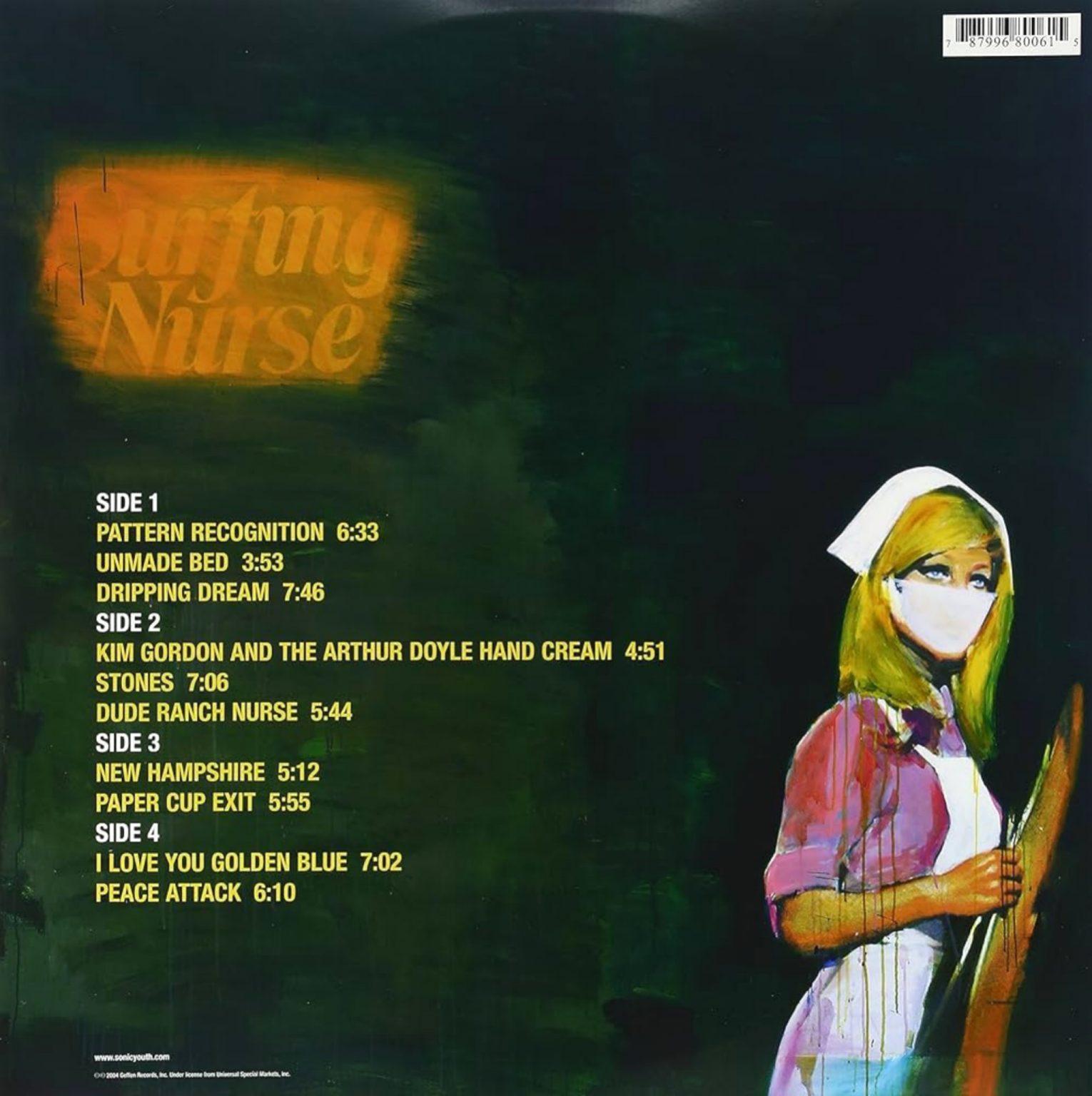
Picking up where “Murray Street’s” languid experimentalism left off, Sonic Youth’s somewhat awkwardly named “Sonic Nurse” shows that the band still sounds revitalized, and may have even tapped into a more fruitful creative streak than they did on their previous album. Anyone who has stuck with Sonic Youth this long knows more or less what to expect from them, but the group still has the potential to surprise; one of “Sonic Nurse” biggest surprises is the return of Kim Gordon. She had a relatively limited presence on “NYC Ghosts & Flowers” and “Murray Street”, but she’s back in a big way on this album, contributing four tracks; not coincidentally, Gordon’s songs are among the strongest on the album. “Pattern Recognition” gets “Sonic Nurse” off to a strong start “Your pattern recognition is kind of slow,” Kim Gordon taunts at the outset of Sonic Youth’s 13th studio album. Her quieter songs have just as much impact: “Dude Ranch Nurse” boasts an oddly timeless guitar lick and lyrics (“Let me ride you till you fall/Let’s pretend that there’s nothing at all”) that blur the line between alluring and nihilistic.
Her legendary alt-noise outfit of exactly three decades isn’t the kind of band that immediately announced themselves as my favourite. It was a realization after years of sinking in how often I still listened to every single one of their albums since Steve Shelley became their permanent drummer. I’ve been in love with Sonic Youth for years, first the dynamic contrast between the sweet (soothing Lee and Thurston explorations) and sour (viciously abrasive Kim ones) “A Thousand Leaves” had got my attention even more immediately “Daydream Nation” then along with “Experimental Jet Set” and “Dirty” .
With the rabid “NYC Ghosts & Flowers” and with a more solidified love of Sonic Youth by 2002’s “Murray Street” maybe the 2008 “Battery Park” live recording with the reunited Feelies.
Most of “Sonic Nurse“, including a beautiful, opening number and perhaps another standout, a beautiful but bleak ballad with ghostly vocals that recall Nico at her most fragile. “I Love You Golden Blue” “Sonic Nurse” was possibly their softest, cleanest album, it’s notable how well that material translated to the live setting, but also how memorable it was anyway. If it’s a transcendent album,
SonicNurse starts loose and jammy with excursions Thurston Moore’s “Dripping Dream” begins as absurdist, angular rock (although he still has the ability to make phrases like “We’ve been searching for the cream dream wax” sound like the coolest thing ever) and stretches out into a beautiful epic, with the interplay of feedback and guitar lines giving it a comet-tail majesty. “Paper Cup Exit,” the requisite Lee Ranaldo track, has a sharper-edged mix of noise and melody than most of “Sonic Nurse”
“Stones” (“The dead are alright with me,” sings Thurston, or does he mean the Dead?), but less so than the stretcher parts of “Murray Street”. The single “Unmade Bed” and “I Love You Golden Blue,” the other advance track, were definitelytheir softest, a friendly contrast between Steve’s atypical use of toms in the former and a typically tone-deaf Kim crooning a ballad in the latter. The idea of Geffen cajoling them into attempting a more major-label digestible version of a hushed meditation like “Leaves’ “Hits of Sunshine” is patently ludicrous, but that’s sort of the feel. Even with its ginormous epics, “Karen Revisited” and “Sympathy for the Strawberry,”
“Murray Street” felt like a streamlined version of an assured sound, and I would say that continued with overwhelming success throughout the final three albums SonicYouth ever make. The hooks increasingly poked out of the friendly morass in the second half: Lee’s “they were rising up out of a paper cup,” the sliding-up-the-neck lead guitar that suddenly squirts out of the Krautrock in personal fave “New Hampshire” which could pass for a lost track from “Daydream Nation” — Sonic Youth actually sound younger and more enthusiastic than they have in a few albums.
“Sonic Nurse’s” most memorable tune isn’t delicate at all, though, in fact, it’s a bit insensitive. I’ll call it by its real title: “Mariah Carey and the Arthur Doyle Hand Cream,” which did end up in a more major-label digestible state upon release. Unlike their winking embrace of Madonna and their downright touching requiem for Karen Carpenter (not to mention their classic Carpenters cover). But the song is so fun and ridiculous, I somewhat doubt Carey, who can afford better mental healthcare than Kim Gordon I love when Kim mentions Eminem and then quasi-raps “Did he bake you and then forsake you / Is innocence gonna still overtake you.” Maybe Mariah would even have a laugh herself at “you’re just being totally perfect” or “maybe you need an emo boy” or “it’s time to take a bubble bath.”
Because of Sonic Youth’s sweeping discography made up more than 20 years there are louder parts than I remembered, particularly the feedback tantrum that finishes off “Dripping Dream” and the squelching wah-wah solos that take over “New Hampshire.” So maybe it’s just another Sonic Youth album, though the trilogy from “Murray Street” through 2006’s even more subdued and hookier. “Rather Ripped” is the most melodic they ever became, with “Sonic Nurse”smack in the middle. When Kim strains to croon “I can’t read your mind” on “Golden Blue,” it goes against all telepathy and nature this quartet’s synergy had developed by 2004 in their own mysterious, alternate-tuned language. So it’s maybe a Thurston phrase I misheard as “Heaven’s junk” and couldn’t find again that sums up “Sonic Nurse“. Or Lee’s inevitably catchy “Paper Cut Exit”: “I don’t mind if you sing a different song / Just as long as you sing, sing along.”
Whatever it may be, this album remains one of the great high watermarks in a career filled with them. thanks to rockandrollglobe.com for the words
On July 12th, BMG Records will be making “The Best of Friends” available on vinyl for the very first time as a 2LP set along with its return to the CD format as well. The reissue includes an exclusive edition available through Vinyl Me Please, featuring a striking red and black marble vinyl limited to 750 units. All formats include the Bonus Track “Up and Down” featuring Johnnie Johnson on piano. Pairing the original Boogie Chile up with high profile guests who worshiped at the altar of one of the meanest guitar players to ever walk on two feet. Featuring a whole host of guests like Eric Clapton, Ry Cooder, Carlos Santana, Van Morrison & Booker T. Jones
Known to music fans around the world as the “King of the Boogie,” John Lee Hooker endures as one of the true superstars of the blues genre. His work is widely recognized for its impact on modern music – his simple, yet deeply effective songs transcend borders and languages around the globe. Each decade of Hooker’s long career brought a new generation of fans and fresh opportunities for the ever-evolving artist, and he regularly toured and recorded up until his passing in 2001.
For blues fans at the time, “The Best of Friends” served as an indispensable compendium for exploring Hooker’s work during the ‘80s and ‘90s across such classic albums as 1989’s seminal “The Healer” and 1995’s “Chill Out.” Now, a quarter century later, the collection offers music fans a key reminder of what makes John Lee Hooker one of the definitive architects of electric blues music in the 20th century.
It’s never been on vinyl until now, and it’s here on exclusive coloured vinyl and strictly limited to 750 units.
A new vinyl box set chronicling the legacy of the Australian punk band classic album will be released on November 15th. The Saints’ seminal 1977 debut LP, “(I’m) Stranded”, is being honoured with a rarities-rich deluxe edition, coming out on In The Red Recordings in collaboration with Universal Music Australia. The project is being spearheaded by Feel Presents and the band’s founding member Ed Kuepper it will feature all the band’s studio and live recordings from 1976 thru 1977.
In addition to the original LP remastered for vinyl for the first time in over 40 years, this box set also includes such audio extras as a five-song live performance from Paddington Town Hall, Sydney April 3rd,1977 appearing on vinyl for the first time; a full live performance from the Hope & Anchor Front Row Festival, London, November 1977, also appearing on vinyl for the first time; all three tracks from the 1977 “This Perfect Day” 12” single and all four tracks from the 1977 1-2-3-4 double 7” single and the previously unreleased 1976 demo mix of the full “(I’m) Stranded” album.
The set includes a 28 page 12” x 12” photo essay of the band covering their origins from 1973 through the end of ’77, an authorized band history, an 8” x 10” 1976 promo photo and a “(I’m) Stranded” sticker.
“It’s been an exhausting yet thrilling process being involved in the creation of this box set,” Kuepper said in a press statement. “It’s been 51 years in the making and has possibly turned out even better than I anticipated. It’s by far the most extensive appraisal of the band, both aurally and visually, that has ever been made available and hopefully reveals some things people may not have known about the band.”
This year marks the 50th anniversary of the writing of “(I’m) Stranded” and the 50th anniversary of Kuepper’s career as a live performer. And in celebration of it all, The Saints are actually reforming in celebration of the box set release under the aegis The Saints ’73-’78. Joining original members Kuepper and drummer Ivor Hay will be honorary Saints; vocalist Mark Arm of Seattle’s pioneering Mudhoney, bassist Peter Oxley of Sunnyboys fame and former The Birthday Party / Bad Seeds guitarist Mick Harvey.
The Saints ’73-’78 will perform select tracks from all three classic Kuepper-led Saints titles “(I’m) Stranded” (1977), “Eternally Yours” (1978) and “Prehistoric Sounds” (1978).
“The Saints’ first three albums rank among the best records ever made,” proclaims Arm. “They have been a part of my life since stumbling upon them in the early 80s. Their influence looms large in Mudhoney world. I am stoked, stunned, and humbled that I get to join in on this Rock ‘n’ Roll Reality Camp with Ed, Ivor, Peter and Mick!”
“I’m really looking forward to having the chance to be playing these great songs again and capturing the original excitement and energy of the first three albums,” adds Ivor.
“It’s great to be given the opportunity to run through this set of songs again and especially the chance to work with a group of people of the calibre of Mark, Mick, Pete and especially Ivor, who is one of the most distinctive drummers I’ve had the pleasure to work with,” Kuepper explains. I’m feeling chuffed that they’re all on board for this. We will be concentrating exclusively on material from and around the first three albums, including stuff that hasn’t been performed live in Australia before….or at least for a pretty long time… Very much looking forward to this, catch us if you can, pop fans.”
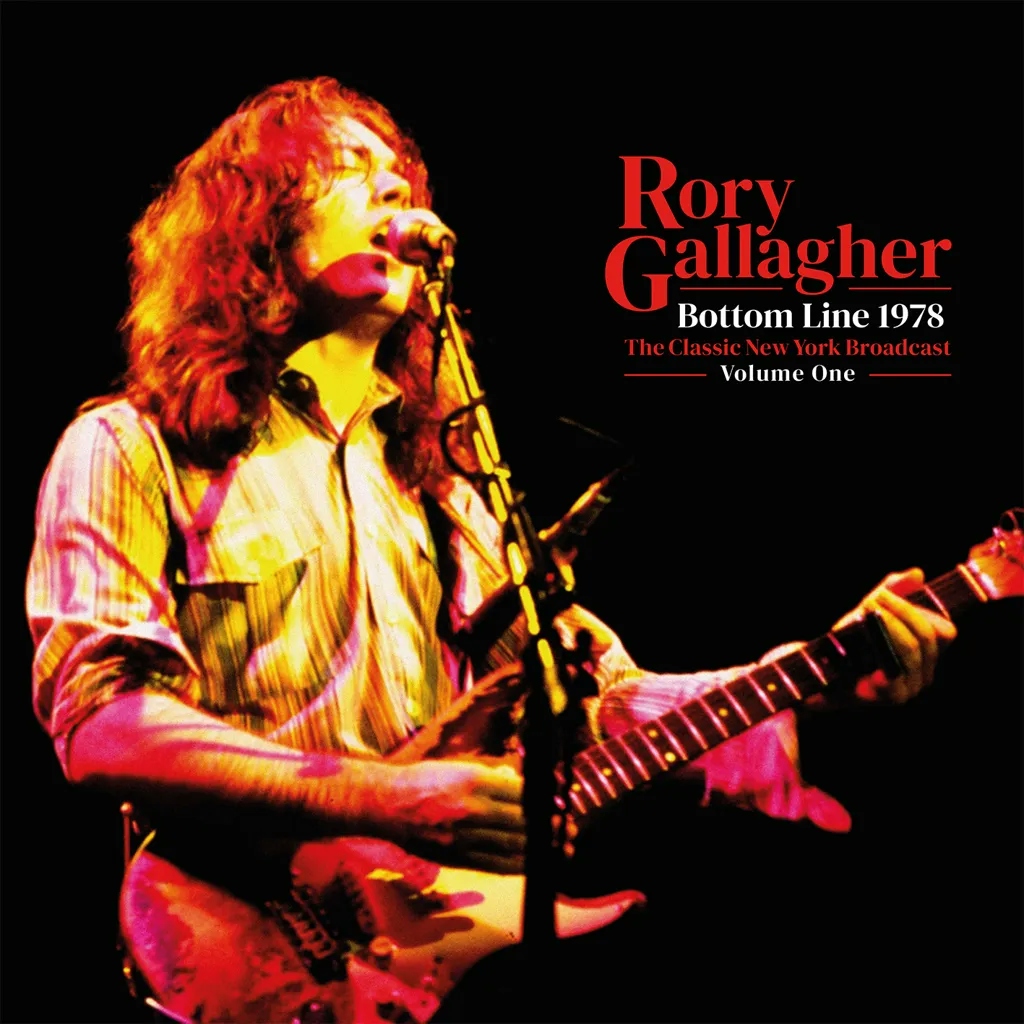
Irish blues rock guitarist Rory Gallagher was in peak form when this energetic and highly entertaining set was recorded at the legendary Bottom Line club in New York City in the fall of 1978. Gallagher had been on the European music scene for nearly a decade (and a viable name in the U.S. for almost six years) when he blew into the Big Apple for his first NY show in almost two years.
Rory Gallagher had returned to his power trio line up of bass, drums and guitar for this tour, after several years touring with a keyboardist, in a quartet format. Long-time bassist Gerry McAvoy was still on board, and he and Gallagher were joined by drummer Ted McKenna, previously a member with the SensationalAlex Harvey Band. For this set, Gallagher warmed up with “Shin Kicker,” a rocking-blues romp that encompasses the best elements of UK blues movement. “Garbage Man,” a slow blues number that was an obvious crowd pleaser, follows soon after and leads the way into “Secret Agent,” one of Gallagher’s best known rockers,
This was the first show he played that night, and while it lacked some of the surprises of the second show, it still contained plenty of evidence of Gallagher being of the premier talent of his generation. “Moonchild,” “Roberta” and as well as a tasty re-make of the classic Frankie Ford hit, “Sea Cruise,” are all good examples of why Rory Gallagher was an exciting showman.
But it is on “Bullfrog Blues,” where Gallagher kicks into hyper-drive — his guitar/vocal interplay is simply astounding. For the end of the show, he reverts back to his better know blues rockers, such as his arrangement of the Buddy Guy/Junior Wells classic, “Messing With the Kid.”
Gallagher first made a name for himself in 1969 with the band Taste. They recorded three albums before splitting in 1971. Gallagher recorded several solo albums between 1971 and 1991, but also is noted for his work on the legendary “London Sessions” album by blues icon, Muddy Waters, released on Chess Records in 1972. Sadly, he died after receiving a liver transplant in 1995, at the age of 47. Not long after this show, his brand of blues-rock fell out of favour with radio programmers, and like artists such as Robin Trower or Steve Marriott, Gallagher had to focus on a smaller, but fiercely loyal, following.
The new Humanist official single “Brother” sung by Depeche Mode singer Dave Gahan is a tribute to the late, great Mark Lanegan with whom Humanist’s Rob Marshall collaborated on the albums “Gargoyle” and “Somebody’s Knocking”. The track comes accompanied by a striking B&W video.
Commenting on the track Rob Marshall says: “One week after Lanegan’s departure, Ed Harcourt reached out to me regarding one of the musical ideas I’d shared. He reminisced about Mark’s habit of affectionately calling his closest allies ‘Brother’. Which is what he always called me too. This endearing term hinted at a camaraderie akin to a tight-knit family. The song became ‘Brother’. Listening back for the first time, immersed in the music, emotions surged and memories flooded my mind. Initially overwhelmed, I was moved to tears by the sheer power of it all.
Dave Gahan, being another of Mark’s long time friends, seemed the perfect fit for the vocals, and after hearing the track he completely agreed. The track came further to life as more of Mark’s former comrades came into the picture: Isobel Campbell’s haunting cello, Sietse van Gorkom’s stirring strings – all intertwined in a cathartic symphony of remembrance and reverence. It’s a humble tribute to a colossal soul, but it feels undeniably fitting.” Following their recent shows supporting Janes Addiction in the UK, today Humanist also announce news of an October headline UK tour
Taken from the album “On The Edge Of A Lost And Lonely World” released 26th July 2024 via Bella Union
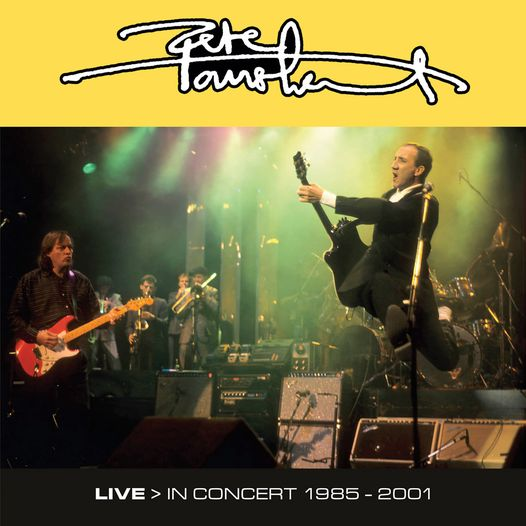
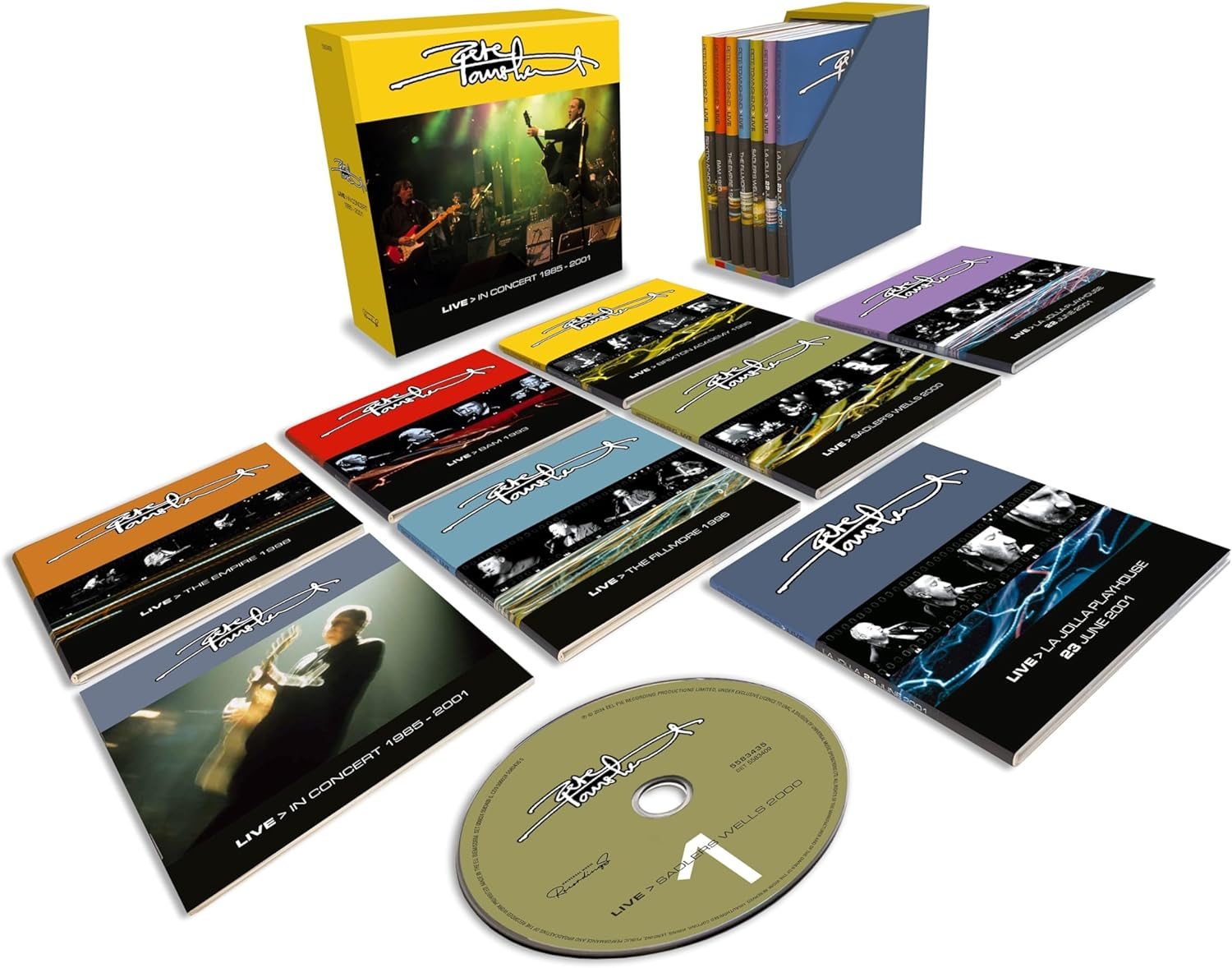
For the first time, all the Eel Pie live shows have been compiled in one place to create an expanded complete live 14-CD box set, Pete Townshend Live In Concert 1985-2001. The seven double albums in the set have been newly mastered by long-time Who engineer Jon Astley, and have not been available since 2002.
Featuring audio from some of Pete’s most loved live shows over the years including Brixton Academy 1985, Brooklyn Academy of Music 1993, Sadler’s Wells 2000, La Jolla 2001 and more. . The whopping 14-CD set will cover a series of shows from 1985-2001, originally released through Townshend’s own Eel Pie publishing house.
The Pete Townshend highlights include an entire album rendition of “Lifehouse,” the lost rock opera that theWho later fashioned into “Who’s Next”: The live records feature a mix of Townshend’s solo work and samples from his work with The Who. “Baba O’Riley,” “Teenage Wasteland,” and “Pinball Wizard” all appear alongside “Let My Love Open The Door,” “A Little Is Enough,” and “Slit Skirts” in a series of setlists that cover a wide-reaching discography.
When it comes to releasing new music in 2024, Townshend recently spoke to the New York Times. “I’ve got about 500 titles I might release online, mostly unfinished stuff,” he shared. “We’re not making Coca-Cola, where every can has to taste the same. And it’s turned out, surprise, surprise, that rock ’n’ roll is really good at dealing with the difficulties of aging. Watching Keith Richards onstage, trying to do what he used to do — it’s disturbing, heart-rending, but also delightful.”
The box set features rare photos and concert memorabilia in a full colour 28-page book. The book also includes sleeve notes by archivist Matt Kent and a new exclusive foreword from Pete Townshend. Pre-order your copy before it sells out, and enjoy a rare chance to listen to plenty of Who favourites, songs from Pete’s solo catalogue, plus some great jazz and rock standards. Released on 26th July.
DISC ONE: Brixton Academy 1 and 2 Nov. 1985. DISC TWO: Brixton Academy 1 and 2 Nov. 1985. DISC THREE: Brooklyn Academy of Music, Brooklyn, N.Y.7 August 1993, DISC FOUR: Brooklyn Academy of Music, Brooklyn, N.Y.7 August 1993, DISC FIVE: Fillmore 1996 – 30 April 1996, DISC SIX: Fillmore 1996 – 30 April 1996, DISC SEVEN: The Empire 9 November 1998, DISC EIGHT: The Empire 9 November 1998, DISC NINE: Live Sadler’s Wells 2000 – Recorded live 25 and 26 February 2000, DISC TEN: Live Sadler’s Wells 2000 – Recorded live 25 and 26 February 2000. DISC ELEVEN: La Jolla Playhouse 22 June 2001, DISC TWELVE: La Jolla Playhouse 22 June 2001, DISC THIRTEEN: La Jolla Playhouse 23 June 2001, DISC FOURTEEN: La Jolla Playhouse 23 June 2001
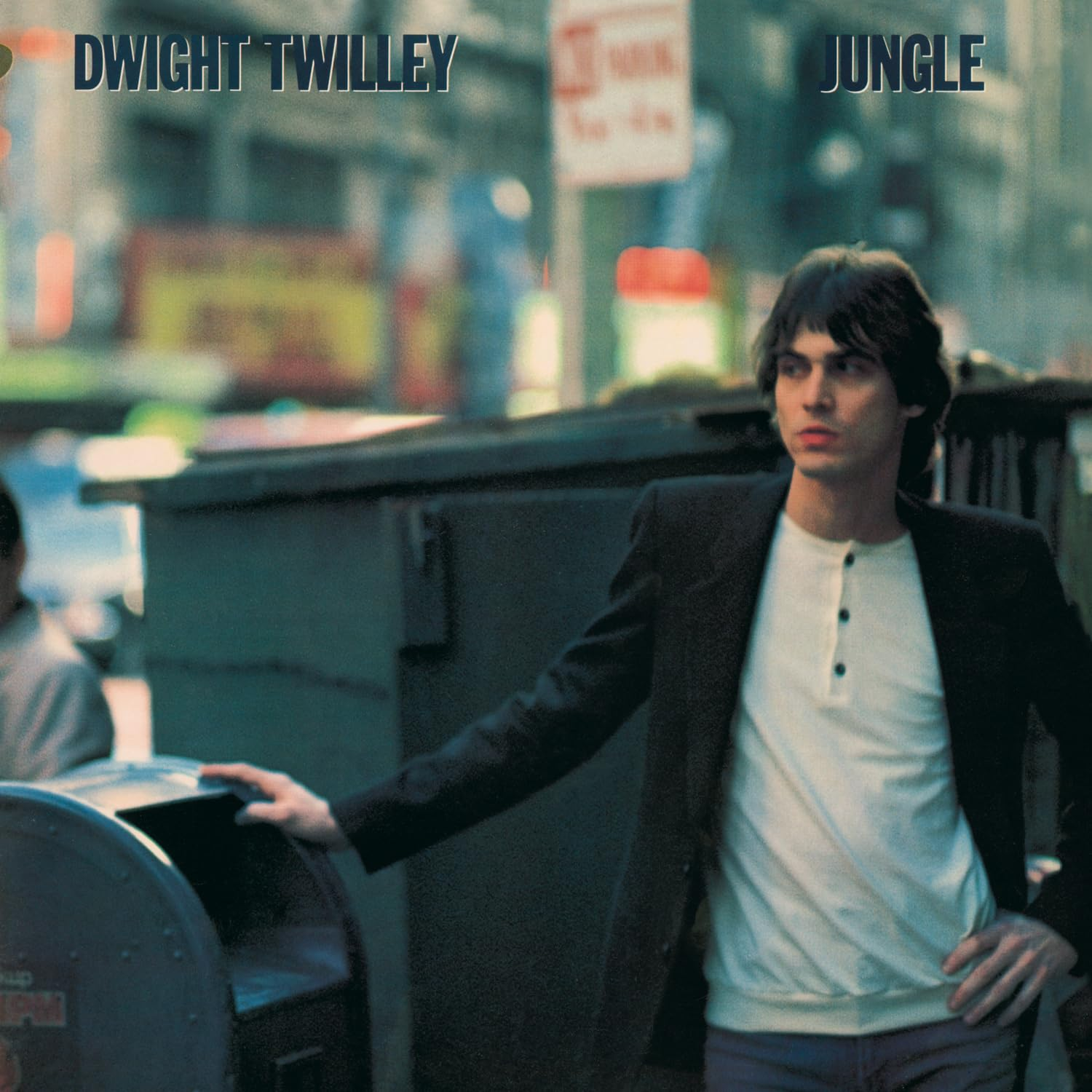
Record label Iconoclassic Records is saying: Welcome to the “Jungle”. The label is reissuing the late, great Dwight Twilley’s 1984 album “Jungle” for the first time on CD in a 40th anniversary expanded edition featuring six bonus tracks (four of which are previously unreleased).
Twilley’s third solo album and second on EMI America, “Jungle” became the singer-songwriter’s most successful. It reached the top 40 of the Billboard 200 and yielded the top 20 hit “Girls,” fuelled by a music video in heavy rotation on MTV. The irresistible “Girls” opened with a snatch of Lerner and Loewe’s “Thank Heaven for Little Girls” from the 1958 film musical Gigi and boasted a guest appearance on vocals by Tom Petty.
The track epitomized the album’s blend of contemporary power pop with a Beatles-worthy melodic sensibility. “Why You Wanna Break My Heart” would gain a new generation of fans when Tia Carrere covered it on the double-platinum soundtrack to the 1992 comedy Wayne’s World, while “Little Bit of Love” joined “Girls” as an MTV fixture in those halcyon days. Twilley wrote all of the album’s songs himself, with an assist on “Max Dog” from Rocky Burnette and Pat Robinson.
Recorded at Sound City with producers John Hug, Mark Smith, and Noah Shark, Jungle welcomed musicians including Buzzy Feiten, Mike Campbell, and Richie Zito on guitar; Alan Pasqua, Michael Boddicker, and Steve Goldstein on keyboards; Kenny Lewis on bass; and Craig Krampf and Mike Baird on drums. Susan Cowsill joined on background vocals.
Iconoclassic’s deluxe expanded edition boasts six bonus tracks including the outtakes “Forget About It, Baby,” “You Can Change It,” and “Don’t You Love Her,” and Twilley’s demos of “Long, Lonely Nights,” “To Get to You,” and the title track. Ken Sharp has contributed a new essay based on his interviews with the late artist (who passed away in October 2023 at the age of 72); it can be found in the 12-page booklet which also features previously unseen photos from the original cover shoot. These photos were recently uncovered by original art director Zox. Rounding out this splendid package, Maria Triana has remastered the audio from the original tapes.
“Jungle”, released in cooperation with the Estate of Dwight Twilley, follows Iconoclassic’s essential reissue of Twilley’s Wild Dogs. it’s due this tomorrow, June 7th.
American psychedelic rock band The Flaming Lips have announced dates for their latest tour in celebration of the 20th anniversary of their classic album “Yoshimi Battles the Pink Robots.” Tickets for 8 UK/IE dates go on sale this Friday at 10am, set a reminder: https://tinyurl.com/yc7as5am
Released in July 2002, “Yoshimi Battles the Pink Robots” remains the commercial high-water mark in TheFlaming Lips ‘wild four-decade journey, giving the Grammy award-winners their first RIAA certified Gold Record. As the eagerly awaited follow-up to 1999’s masterwork, “The Soft Bulletin”, “Yoshimi” proved that singer/guitarist Wayne Coyne, and multi-instrumentalist Steven Drozd had yet another masterpiece in them.
Bonny Light Horseman’s new album, “Keep Me on Your Mind/See You Free”, is an ode to the blessed mess of our humanity. Confident and generous, it is an unvarnished offering that puts every feeling and supposed flaw out in the open. The themes are stacked high and staked even higher: love and loss, hope and sorrow, community and family, change and time all permeate Bonny Light Horseman’s most vulnerable and bounteous offering to date. Yet for all of its humanistic touchpoints, “Keep Me on Your Mind/See You Free” was forged from a kind of unexplainable magic.
The new double LP ‘Keep Me on Your Mind / See You Free’ is out June 7th (!). We are grateful, psyched, and bursting to share this music with you. Thank you to everyone who made it possible to make it: our partners (business + romantic), our friends + families, especially the O’Leary Family at Levis Corner House in West Cork where we recorded many of the songs, and all of you who listen.
Written over five months in 2023, this third album began when the band’s core trio–Anaïs Mitchell, Eric D. Johnson, and Josh Kaufman–convened in an Irish pub alongside beloved collaborators JT Bates (drums), Cameron Ralston (bass), and recording engineer Bella Blasko. Mitchell suggested the pub as their first recording location, based on her one conversation with owner Joe O’Leary. She had a feeling about the place, and was surprised by her bandmates’ enthusiasm for the idea. Stepping inside the pub’s aged confines, the trio felt an immediate connection to its palpable sense of community, and of family, forged over many decades.
The pub was Levis (pronounced: “leh-viss”) Corner House, a century-old watering hole in Ballydehob, a tiny coastal village in County Cork, and its energy became a singular source of Bonny Light Horseman’s creative engine. The pub’s upright piano, which they lubricated with olive oil to quiet its creaking, became a sort of spiritual fulcrum, a single entity that embodied all of the album’s motifs: imperfection as a badge of honour; aging, endurance and the passage of time; how the simplest of acts can heal us. The analogs–between this century-old meeting place of local folk and this trio of American folkies–were undeniable. “It has this sense of history; it’s also small, and crammed with a bunch of stuff that’s spilling all over the place,” says Kaufman. “It was like the pub version of our band.” A painting that hung on a wall of the pub, which watched over the band during their time working, became the album cover. “I was making eye contact with that person for most of the recording,” Johnson said of the artwork. And there was a deeper connection. Before the band had even planned to record in the pub, the owner’s wife had named the woman in the painting Bonnie.
There’s magic in a place like Levis Corner House, yes, but it takes the right wizards to wield it. At the center of Bonny Light Horseman is, always, the singular combination of three powerful and tender artists–artists who expertly dodge superlatives but are quick to acknowledge the ways they strengthen and enrich one another, and the bond that makes each one better, braver and more vulnerable than they’d be on their own. Nowhere is this more apparent than in the force of their voices together, which work with complete trust in one another through the gentlest moments and the most ruthless wails. The result can comfort and cradle listeners, but also leaves them rattled, wrecked, and reborn.
On a practical level, the “blessed mess” of “Keep Me on Your Mind/See You Free” shows up in its fidelity to this home, as crowd noise, laughter, coughing, and field recordings (“Think of the royalties, lads!”) convey everything from this special place in time. But philosophically, the “mess” is evidence of something deeper. It’s the imperfect, soul-nourishing fruit born of a singular communal experience, one that transforms its participants through the spirit of good company. Mitchell posits the idea of a “feast” and how dinners with friends effortlessly span courses, conversations, and hours — a meal that’s nutritious on physical and spiritual levels. “I have a friend who says you should never remove the dishes from the table, that you should sit among the wreckage,” she offers.
“There was this new level of letting it all hang out,” Mitchell said of the album’s making. In its evolution from recording to release, this meant compiling a double LP—eighteen songs across two discs. It also meant two titles, if not precisely two distinct records. “Keep Me on Your Mind/See You Free“is sprawling and welcoming, and encompasses the group’s captivating artistic layers: its roots in the sounds and lyrical spirit of traditional folk music, its branches in a more experimental and emotionally raw version of the band.
The group tracked about half of the songs in the main room of Levis’s. They spent two days working alone. On the evening of the third, O’Leary invited some enthusiastic residents to join in. That’s not to say it’s a live album; instead, the third day of the Ireland sessions represented a serendipitous blend of energies because the audience implicitly understood the assignment. Patrons gave the band enough space to talk about arrangements and record multiple versions of songs, but they also provided an evident sense of environmental joy as they chatted over pints with friends and family. “We were doing this in the middle of their spot and they intuitively understood what was required of them,” Johnson said. “It was pretty magic.”
The band then returned to their spiritual home, upstate New York’s Dreamland Recording Studios (where they completed their first two albums), to finish the work they had started. Frequent collaborator Mike Lewis joined on bass and tenor saxophone. Annie Nero stopped by to play upright bass and sing some harmonies for an afternoon. The days were rhapsodic and restorative, filled with crying, and songs that poured out like tears.
The poignant quandary at the center of “I Know You Know” revealed itself in mere minutes. The trio attributes the speed to the fact that they’d already finished much of “Keep Me on Your Mind/See You Free” and were able to “stand on the shoulders” of that creativity. It’s also demonstrative of the band’s ability to lace emotional devastation with a pop sensibility, which they’ve achieved throughout the album. Its feel-good, mandolin-laced arrangement and anthemic chorus belie how its refrain will wreck you. “I’m a fool if I love you and a fool if I let you go,” Johnson sings as Mitchell’s voice soars alongside him.
“Tumblin Down” is similar in its melodic tribulation. A folk-rock portrayal of an unravelling relationship, it’s like the spirit of Ingmar Bergman’s “Scenes From a Marriage” set to song—light on its surface but woven from existential crisis. “When I Was Younger,” meanwhile, is a primal scream, revolutionary for its open reckoning with motherhood, maturation and all of the things polite society doesn’t say out loud. In the song, Mitchell and Johnson’s honeyed voices meet and transform into a two-headed beast formed from pent-up emotion; its roar is necessary, beautiful, and scary.
“Old Dutch” originated as a voice memo recorded in a historical church of the same name in Kaufman’s home city. “It was timestamped ‘Old Dutch’ and that was too perfect; it sounded like a Bonny Light Horseman song,” he said. Its choral refrain echoes those origins; it also punctuates the band’s tale of shifting love with that alluring thing the heart is inevitably steered by—a lingering, often illogical, feeling.
With “Keep Me on Your Mind/See You Free”, Bonny Light Horseman offers a distinct sense of grace, and a reminder that life is most lived when things aren’t so perfect. Over the years, the band has accumulated many miles on the collective odometer of life. That’s all reflected here, in these modern folk songs, laced with glory and chaos. As Mitchell puts it: “It’s not concise. It’s not simple. It’s messy, and that’s OK.”
This cover painting is “Martha” by Tom Campbell.
Bonny Light Horseman the upcoming album ‘Keep Me On Your Mind/See You Free’, out 6/7 on Jagjaguwar.






 The Fat Angel Sings