
Archive for the ‘MUSIC’ Category
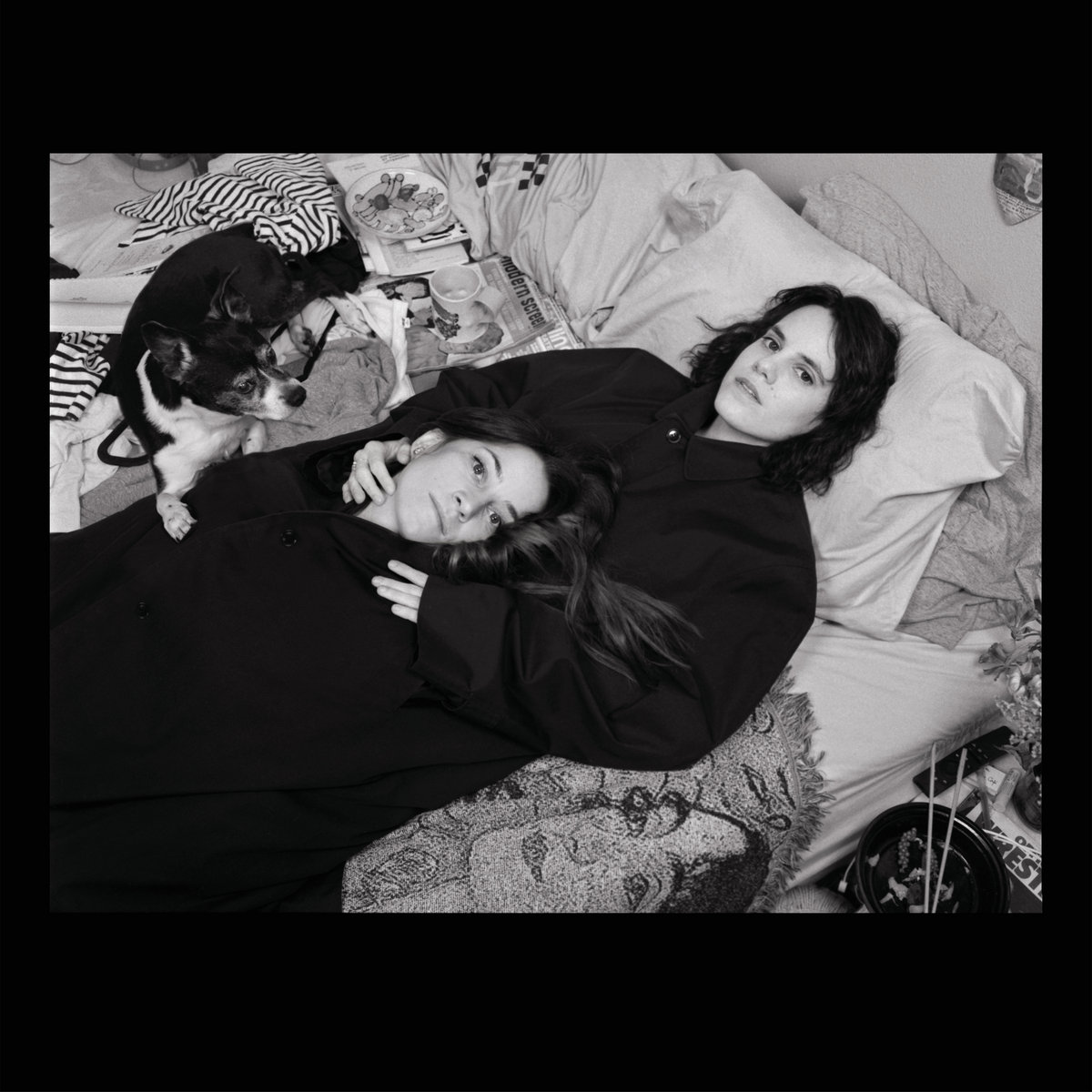
“Boring is the worst word that I know,” Cousines Like Shit sing on “Boring” before adding, ” And if I call you boring…” which leaves the listener to fill the blank but is clearly something you don’t not want to be the recipient of. Led by real life cousins Hannah and Laura Breitfuss, this Vienna, Austria duo specialize in detached, danceable post-punk that mixes drony keyboard washes with spiky guitars, disco drumming, pop choruses and heaps of sly, side-eyed attitude. “Permanent Earthquake” is their second album and, like 2023’s Avant Trash, it’s crammed with barbed bangers. They actually made it in NYC with The Wants’ Madison Velding-VanDam who helped them get sonics just right, with the rhythm section snap of classic 1980 new wave.
Musically they are somewhere between Ladytron and Broadcast, but thematically Cousines are much more playful and snarky, like a couple of partygoers who’d rather dissect every attendee than mingle. (In that respect they recall Munich’s Chicks on Speed.) With it’s strong lyrical hook, “Boring” is the obvious hit here but “No” has the best chorus, and “Frenemies” and “Sober at the Club” aren’t far behind in the hooks department. No shit here: these Cousines have made a record perfect for dancing at angles at inappropriate times.
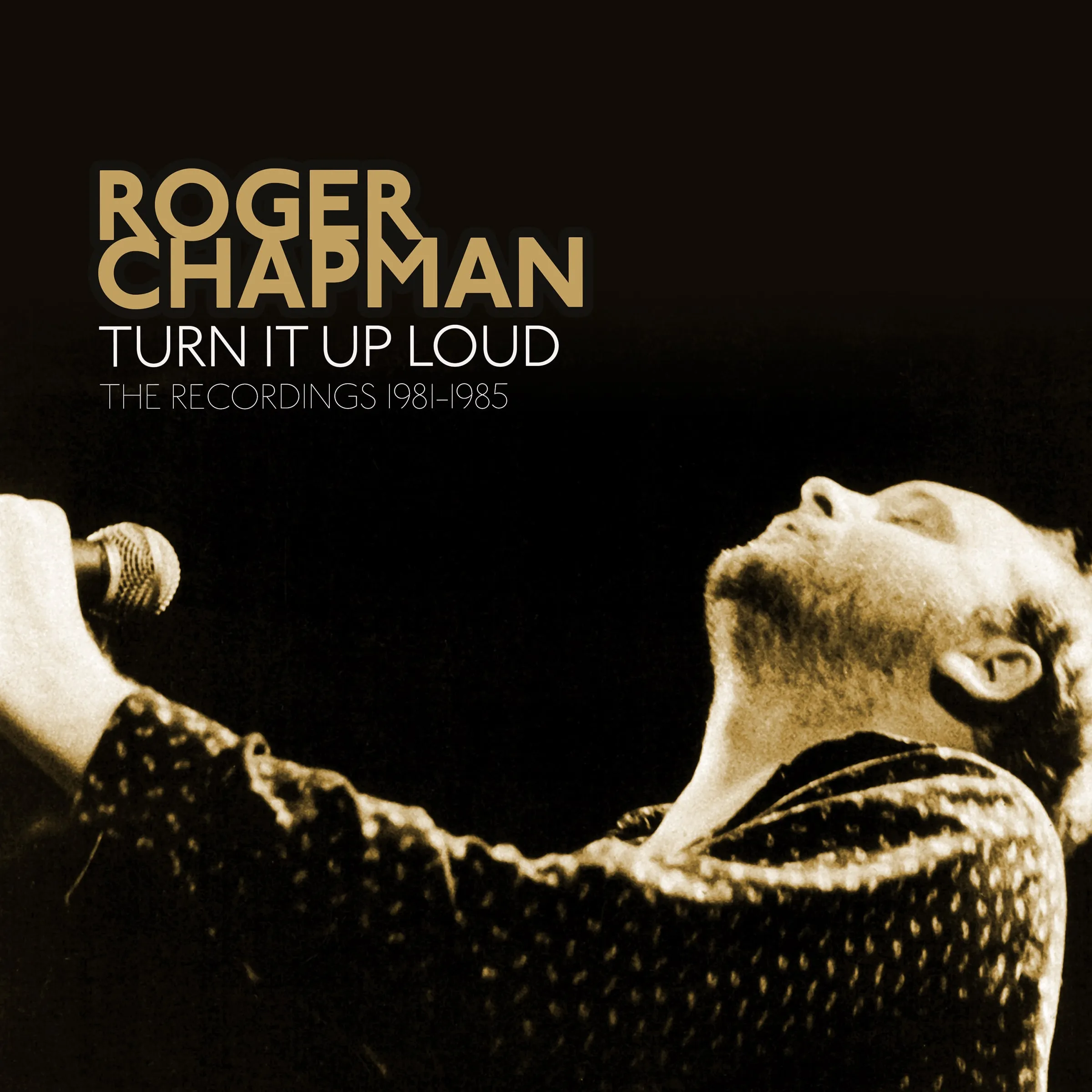
Roger Chapman first came to public attention as the vocalist with the legendary Leicester British band Family who recorded a series of acclaimed albums between 1968 and 1973. With Family, Chapman gained a reputation as a fine and unique vocalist. This reputation was enhanced further through a series of albums and live performances with the band Streetwalkers which Chapman formed with ex-Family guitarist John “Charlie” Whitney in 1974.
Upon the demise of Streetwalkers, Roger embarked on a solo career which continues to this day. His first solo album, “Chappo”, was released in 1979 and gained critical acclaim in the UK and brought Roger considerable commercial success in Germany, where he would continue to enjoy popularity over the ensuing decades. By 1981 he had become a major artist in his own right, thanks to his energetic albums and live performances with his band The Shortlist. Between 1981 and 1985 he released the live double album “He Was…She Was…You Was…We Was” (1982) and three excellent studio works, “Hyenas Only Laugh For Fun” (1981), “Mango Crazy” (1983) and “The Shadow Knows” (1984). He had also gained attention thanks to his collaboration with Mike Oldfield on the track “Shadow On The Wall’ which was a worldwide hit single.
This 5CD clamshell boxed set featuring the classic Roger Chapman solo albums “Hyenas Only Laugh for Fun”, “He Was…She Was…You Was…We Was”, “Mango Crazy and “The Shadow Knows“. With an additional eight bonus tracks drawn from live recordings and singles. All newly remastered from the original master tapes. Including an illustrated booklet with new essay.
This boxed set has been newly remastered from the master tapes and gathers these albums along with a further eight bonus tracks drawn from the EP ‘Live In Berlin’ (1985) and singles. The set also includes an illustrated booklet with new essay and exclusive interview.
Esoteric Recordings Released originally 28/10/22
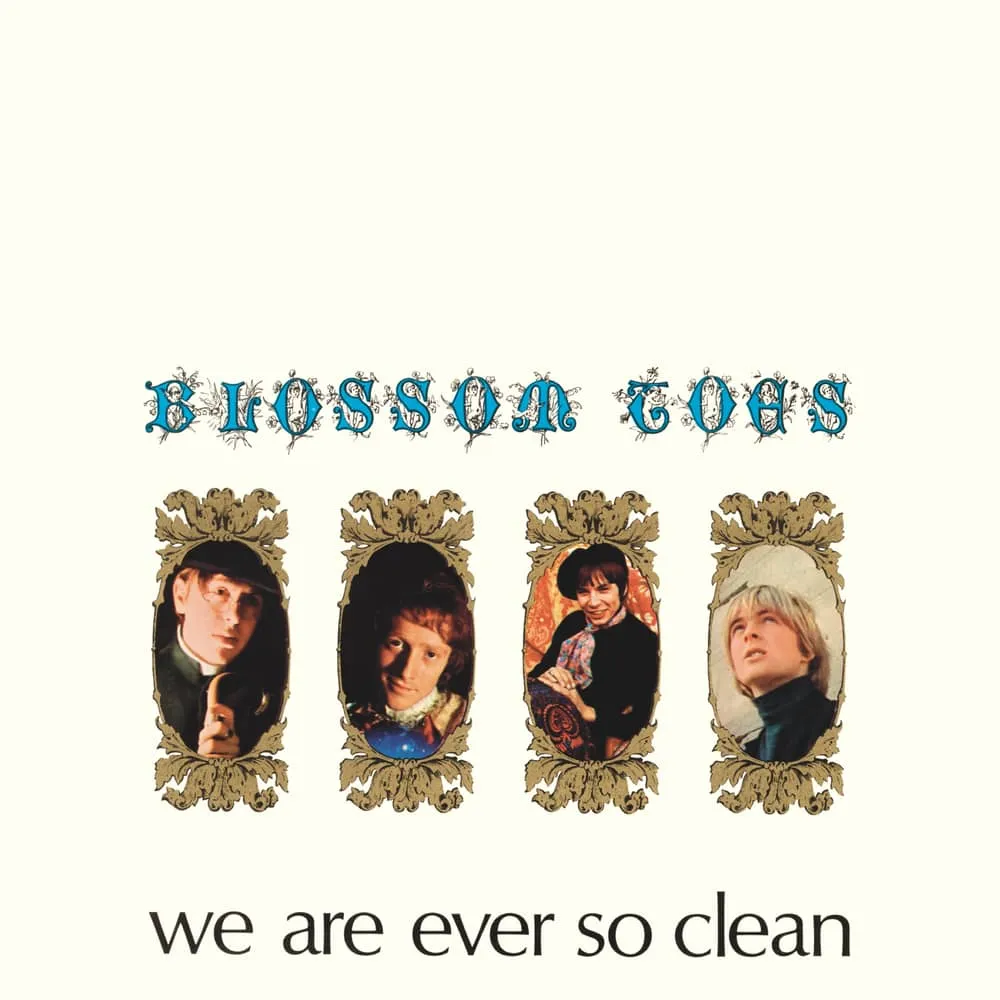
Released in October 1967, ‘We Are Ever So Clean’ was the wonderful debut album by Blossom Toes, one of Britain’s most imaginative bands of the late 1960s. Originally known as The Ingoes, the band featured Brian Gooding (guitar, vocals, keyboards), Jim Cregan (guitar, vocals), Brian Belshaw (bass, vocals) and Kevin Westlake (drums, percussion). Signing to Giorgio Gomelsky’s newly formed Marmalade Records in 1967, the band recorded their debut masterpiece throughout the Summer of that year.
Upon its release, it was described by Melody Maker as “Giorgio Gomelsky’s Lonely Hearts Club Band”, although this was unfair. While the album did indeed reflect the style of the burgeoning British psychedelic rock movement, the album revealed Blossom Toes to be an innovative band and was a highly original work with such classic tracks as ‘Look At Me I’m You’ and ‘What On Earth’.
Blossom Toes existed for a short period in the late ’60s, transitioning quickly from an R&B/beat band to embrace Baroque instrumentation and vivid, cheery psychedelia on their 1967 debut “We Are Ever So Clean”. Released just four months after the Beatles’ world-shaking and similarly toned Sgt. Pepper’s Lonely Hearts Club Band, and weeks before The Who Sell Out, the album lived in the shadows of bigger musical events, and Blossom Toes lingered briefly in obscurity before disbanding in 1969.
After a few decades passed, however, the band, and their debut album in particular, began to take on a more clearly defined importance in the bigger picture of ’60s psychedelia. The bright, curious melodies of tracks like “What on Earth” are cut from a similar cloth as material the Kinks and the Pretty Things were releasing at the same time, but are filled out with an overabundance of brass, strings, and theatrical orchestral elements. “What’s It For?” feels like a happier, more thoughtful cousin of the Who, and songs like this and “The Remarkable Saga of the Frozen Dog” or “The Intrepid Balloonist’s Handbook, Vol. 1” carry the same charming British sense of absurdist humor as Bonzo Dog Band.
Blossom Toes’ song structures are unconventional, often including several sections that would most likely be cut from the average ’60s pop song. Even so, they never get assertive enough to reach prog territory, keeping a mild and approachable demeanor with light vocal harmonies and bounding bass grooves on “When the Alarm Clock Rings” and getting into backwards guitar solos and paisley-coloured dissonance on rocking standout “Look at Me I’m You” without losing their friendly melodic sensibilities. Childlike tunes like “People of the Royal Parks” indulge in all-out chamber twee. “We Are Ever So Clean” bears many of the hallmarks of better-known albums from its time, with its various pieces recalling everything from the soaring joy of the Idle Race and the happy-go-lucky mod pop of Small Faces to all of the previously mentioned bands.
Despite these clear similarities, the thread of genuine excitement and naïve positivity that runs throughout “We Are Ever So Clean” keeps the album from feeling like the result of Blossom Toes merely following the trends of their time. There’s barely a trace of darkness or anxiety in these wide-ranging songs, putting the album in a rare class of well-adjusted psychedelia.
Unfairly overlooked at the time of its release, ‘We Are Ever So Clean’ is regarded as one of the greatest psychedelic rock albums ever. This new official limited vinyl edition has been newly remastered and was cut at Abbey Road Studios. The LP is a facsimile of the original 1967 release and features an illustrated inner bag.
The album was reissued in 2007 by Sunbeam Records along with bonus tracks.
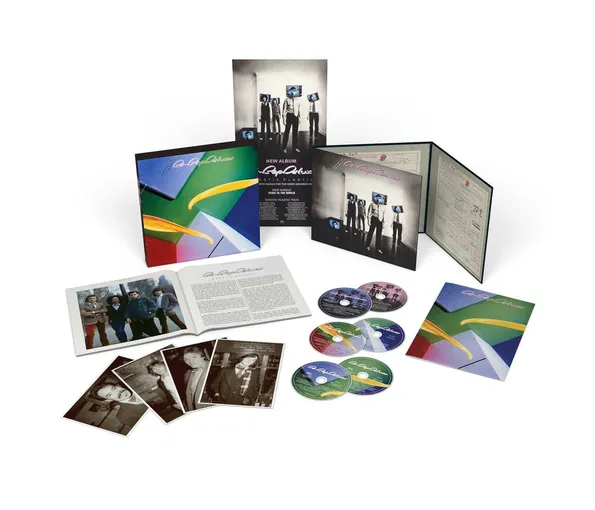
Here is the sixth and final unboxing videos looking at the Be Bop Deluxe – Super Deluxe Edition Box Sets from Esoteric Recordings and Cherry Red Records. Esoteric Recordings is proud to announce the release of a new re-mastered six-disc deluxe expanded boxed set limited edition (comprising 4 CDs and two NTSTC – Region Free DVDs) of “Drastic Plastic” the classic 1978 album by Be Bop Deluxe.
“Drastic Plastic” would be the final Be Bop Deluxe album and was recorded in the summer of 1978 in the South of France at The Villa Saint Georges, Juan-les-Pins, utilising the Rolling Stones mobile studio, with final sessions taking place at The Manor Studio and Abbey Road Studios. The record saw Bill Nelson (vocals, guitars, keyboards), Charles Tumahai (bass, vocals), Andy Clark (keyboards) and Simon Fox (drums) venture into new musical styles, with the album being ground-breaking in its move to more “art rock” and “new wave” influences. In many ways it can be seen as the signpost to where Bill Nelson would head with his Red Noise project with a desire to continue to progress as an artist by pushing musical boundaries.
Co-produced by Bill Nelson and John Leckie, “Drastic Plastic” was another hit album in both the UK and the USA and featured such classic material as ‘Electrical Language’, ‘Panic in the World’, ‘New Mysteries’, ‘Islands of the Dead’ and ‘Surreal Estate’. The recording sessions produced many more tracks which would appear as singles (such as Japan) and others that were originally planned for release as an EP set (‘Autosexual’, ‘Lovers are Mortal’, ‘Speed of the Wind’, ‘Quest for the Harvest of the Stars’, ‘Face in the Rain’), all of which eventually appeared on the retrospective compilation The Best of & the Rest Of… later in 1978.
This expanded deluxe reissue has been newly re-mastered from the original master tapes and features an additional 88 tracks, (43 of which are previously unreleased), drawn from stunning new 5.1 surround sound & stereo mixes from the original multi-track tapes by award winning engineer Stephen W. Tayler, previously unreleased out-takes from the album sessions, a BBC Radio John Peel Show session from January 1978, along with a CD of Bill Nelson’s previously unreleased demos for the album, “A Feeling of Playing”.
Also included is an additional DVD featuring Be Bop Deluxe in the South of France, (a collection of Bill Nelson’s 8mm home movies shot whilst recording “Drastic Plastic”) and the band’s Sight & Sound In Concert performance for BBC TV from 1978.
Another highlight of this limited-edition boxed set is the lavishly illustrated 68-page book with many previously unseen photographs and an essay of recollections by Bill Nelson. Additionally, the set includes postcards and a replica poster. This special deluxe limited-edition boxed set of “Drastic Plastic” is a fitting tribute to the creative vision of Bill Nelson and the musicianship of Be Bop Deluxe.
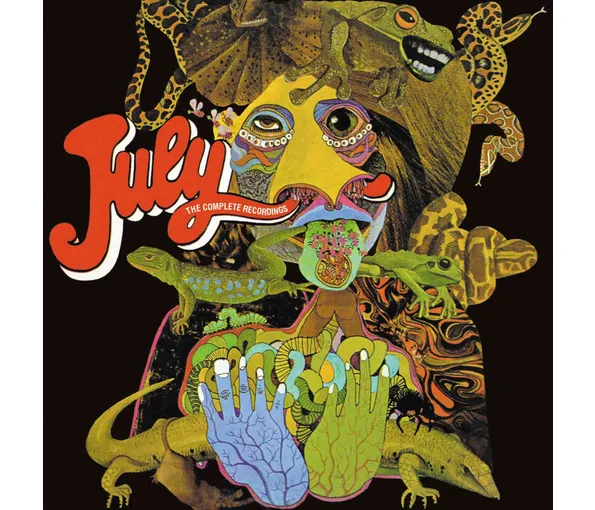
Released by the Major Minor label in 1968, the self-titled July album has long been acknowledged by genre enthusiasts as one of the classic UK psychedelic one-shots, mixing the ambition and experimentation of “Sgt. Pepper” with a lo-fi charm and endearing garage band artlessness.
The third Disc contains “The Second Of July”, a collection of pre-album demos that appeared in the mid-Nineties to capitalise on the band’s growing reputation as original copies of their LP began to sell for increasingly large sums of money.
The remainder of the boxed set consists of more recent July recordings following their triumphant return to live work a few years ago. Disc Four is the aborted album “Temporal Anomaly”, which was recorded circa 2010 but which gains a first-ever release, while Disc 5 is the appropriately-titled “Resurrection”, which received a limited release in 2013.
Disc Six comprises the latest July magnum opus, “The Wight Album”, which has been pieced together over the last few years by Tom Newman and Peter Cook at Tom’s own recording studio on the Isle of Wight. Now finally completed, “The Wight Album” – described by Tom as “the greatest July album” – brings the July story bang up to date.
This definitive 6-CD overview of the band’s activities includes newly-remastered versions of the album in both mono and stereo formats (the latter only previously available on the original 1968 American release) as well as the various single issues, including a completely different recording of album nugget ‘The Way’.
Housed in a clamshell box, and with a 40-page booklet containing a 7000 word essay on the band featuring new quotes and some priceless period photos, “The Complete Recordings” is an epic look at the studio activities of one of the biggest cults to emerge from the original British psychedelic scene.
It is also become one of the most hotly-pursued artefacts of the British psychedelic era, with an original UK copy (only graded at VG++) recently selling on eBay for around £3700.
The ELECTRIC PRUNES – ” Then Came The Dawn ” Complete Recordings 1966-1969 6CD Box Set
Posted: April 3, 2025 in MUSIC
The Electric Prunes came together in Southern California during 1966 and soon became regarded as one of the seminal US psychedelic groups, thanks to the hit singles ‘I Had Too Much (To Dream Last Night)’ and ‘Get Me To The World On Time’.
Through their various incarnations, the Electric Prunes recorded five albums for the Reprise label between 1967 and 1969 with legendary producer Dave Hassinger helping to create their unique and distinctive psychedelic sound.
Featuring the first CD issue of the mono mix of the ‘Mass In F Minor’, the collection also compiles the original dedicated mono 45 mixes, plus rare cuts, early demos, and extended takes, as well as the legendary live recording of the band captured in Stockholm during their European tour in late 1967, all lovingly remastered by Alec Palao.
Under the direction of composer and arranger David Axelrod, the Prunes helped pioneer the Religious Rock genre with the ‘Mass In F Minor’ and ‘Release Of An Oath’ LPs.
This collection brings together their entire output for the very first time, including stereo and mono versions of their first three albums. Aside from their two bona fide hits — “I Had Too Much (To Dream Last Night)” and “Get Me To The World On Time” I never really paid much attention to The Electric Prunes. But maybe it’s time to give them a closer look. And obviously, there’s never been a better time.
The new six-disc anthology “Then Came The Dawn – Complete Recordings 1966-1969” collects the band’s entire output, along with rarities, live tapes and demos. And even a cursory spin makes it clear they should be regarded as more than two-hit wonders. Tracks like “Train For Tomorrow, Try Me On For Size” and the magnificently titled “Are You Lovin’ Me More (But Enjoying It Less)” are hits that should have been, while plenty of other cuts find the group bouncing between garage-rock, psychedelia, paisley-pop and even folk and jazz. Maybe that lack of focus was one of their problems — that and the fact that they really, really overused that signature tremolo effect. Plus, evolving into a grandiosely overblown religious rock band probably didn’t help them either. At least, that’s where they lost me. But even if “Then Came The Dawn” ultimately taught me how much Electric Prunes is too much, it certainly enlightened me about the band. To complement these unique psychedelic sounds the box set includes a comprehensive history of the group by Gray Newell, featuring in-depth recollections from original vocalist James Lowe, and from key member of the later incarnation of the band, Richard Whetstone, making this the definitive Electric Prunes’ collection.
An extensive 6CD box set devoted to one of the key innovators of the ‘60s psychedelic sound featuring their entire output, rarities and demos.
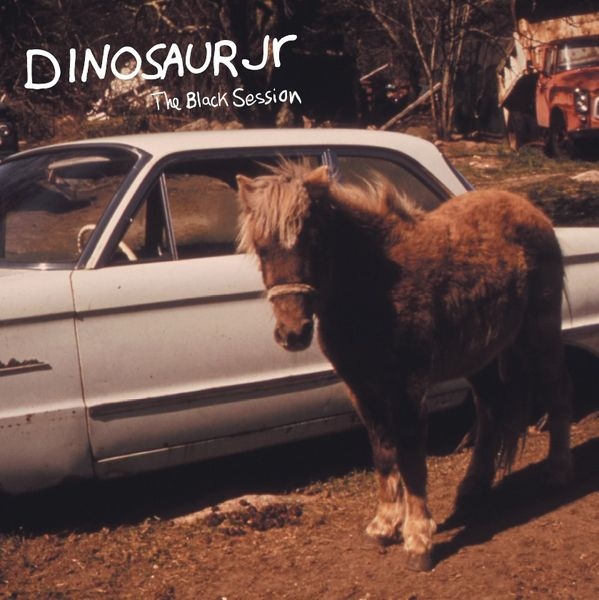
Recorded live in Paris – nine urgent Dinosaur Jr classics performed at arguably the band’s 90s peak as a live outfit. At the head of this joyous sound was J Mascis, putting his drawling vocals through the mic, and guitar that echoed Neil Young and his contemporaries, while stalwarts Lou Barlow and Murph laid the table, retaining that solid backline.
Paris played host to the band on the 2nd March 1993 and, for the first time, “The Black Session“, having been remastered from the original tapes, are offered for your delectation. It starts with ‘Quest’ from the band’s 1985 album “Dinosaur”, but the second track is a real treat as these grunge heavyweights present their take on The Cure’s ‘Just Like Heaven’ and this works, perhaps even better than Smith’s drawl, contentious I know,.
A rather polite audience signifies the next track and in juxtaposition ‘Lung’ begins. Taken from 1987’s “You’re Living All Over Me” and by this point, a recognisable track, as Mascis sings “…No way to collapse the lung, raise the doubt in everyone…”, with his stern guitar and familiar riff, you can’t but love this number. Performed live, it is even more adorable, with its swooping guitar and Murph’s drums.
The master of ceremonies introduces what follows and I wish I’d paid more attention during my French lessons, as the band launch into the recognisable ‘Freak Scene’, and if you’re unsure, I have to ask, where have you been? The penultimate track on side 1, shows just how raw and loved this band is, from a show recorded at Maison de la Radio, Studio 105 in Paris, 1993 – a fan favourite session that has been remastered from the original tapes. It sounds as fresh as the day it was recorded.
Side 2 commences with ‘Drawerings’ and is an opportunity to bathe in Mascis’ New England vocal drawl and his guitar playing eloquence. At times, pinpoint accurate, while others are as sprawled as the greatest modern art. As Jimi Hendrix once sang, it has to be “experienced”, both guitar and vocal. As ‘Budge’ signifies the penultimate track, this steam train rattles on, its riff sounding like the horn at the front of the engine. Then it’s left to ‘Thumb’ to ride until the end of the rails, as it’s clear this performance will soon draw the drapes. A track that was first released in February 1991, this is as near to perfect as a number is going to get. Starting with a brief ride on the phaser pedal, the man at the helm tonight playfully strides in at the end of the first verse singing “…why can’t you move without a goal…” and as we’re left to consider this question, as he sings “…There never really is a good time…”, as I decide that the message is just to swim in this sea of sound. I would now consider Mascis and co. to be the godfathers of the scene. The music is rich and this performance displays the band at their 90s peak. Only 9 tracks, but I would encourage anyone to immerse themselves in these 41 minutes of sounds and in the process feel the energy of one of the best bands grunge had to offer.
Produced in conjunction with the band and INA, France. A companion piece to 2022’s best-selling ‘Seventytwohundredseconds’ MTV EP.
HIGH TIDE – ” Sea Shanties ” Reissue Originally released October 1969
Posted: April 3, 2025 in MUSIC
High Tide featured the intense guitar playing of Tony Hill, the violin and keyboard skills of Simon House (later to join the Third Ear Band and then Hawkwind), bassist Pete Pavli and drummer Roger Hadden. Signing to Liberty Records soon after formation, the band recorded ‘Sea Shanties’ at Olympic studios, an album featuring some of the heaviest gothic progressive rock recorded at that time. This stunning album is now regarded as a true classic of its time notable for including the violin as a rock instrument. The cover artwork was drawn by Paul Whitehead..
On “Sea Shanties“, there’s nothing fey and flowery in Hill’s bleak lyrics or his doomy Jim Morrison-like delivery, and psychedelia’s melodic whimsy is supplanted by a physicality more in line with the visceral heft of metal progenitors…High Tide weren’t a power trio, though, and it was the interplay of Hill’s guitar with Simon House’s violin that created the band’s unique signature. Showing that rock violin needn’t be a marginal adornment, House whips up an aggressive edge that rivals the guitar… High Tide had the muscularity of a no-nonsense proto-metal band, but they also ventured into prog territory with changing time signatures and tempos, soft-hard dynamics, multi-part arrangements, and even some ornate faux-Baroque interludes… Far from the collection of nautical ditties its name suggests, “Sea Shanties” is an overlooked gem encapsulating the shifting musical currents in late-’60s British rock.
This official gatefold LP vinyl edition fully restores the original LP artwork, has been remastered from the original Liberty master tapes and has been cut at Abbey Road studios.
Though it met with a scathing review in Melody Maker, reviews in the underground press were universally positive, and sales were just enough to convince Liberty to give the green light to a second album
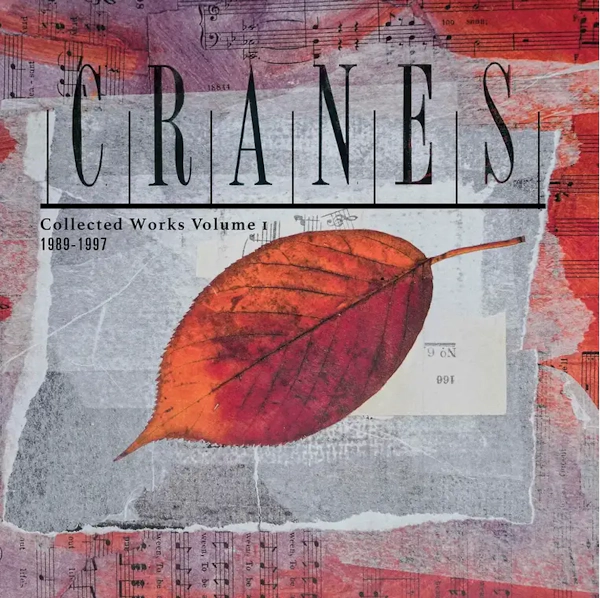
Extensive box set exploring Cranes’ output on the Dedicated label, 1989-1997. Includes albums, b-sides, remixes, rarities and live recordings. Curated in association with cranes founder and vocalist Alison Shaw. Artwork by 4ad graphic design legend Chris Bigg.
Formed in 1986 by siblings Alison and Jim Shaw, Cranes remain one of the most distinctive bands of the late 1980s and 1990s, their ever-mutating sound defying categorisation and existing outside of the zeitgeist. Their recorded output during their initial ten-year incarnation is collected together here for the first time, from the raw 1989 mini album “Self-Non-Self” (originally released on Bite Back!) through to the sophisticated 1997 epic “Population Four”.
Curated and overseen by singer Alison Shaw on behalf of the band, and resplendent in artwork by 4AD legend Chris Bigg (with detailed liner notes and discographic information), “Collected Works Vol 1” serves as timely reminder of Cranes’ magnificence as they evolved from stark, noisy soundscapes to bolder, more elaborate instrumentation and arrangements. With hints of ethereal rock, dream pop, shoegaze, industrial and neo- classical, theirs was a sound truly like no other.
A must for fans and a perfect all-in-one deep dive for the curious, “Collected Works Vol 1” is an emotionally charged time capsule showcasing one of the finest bands of the 1990s.

