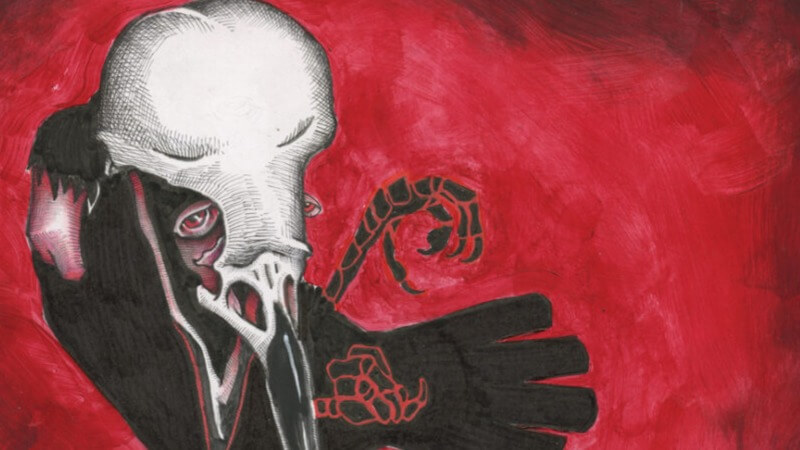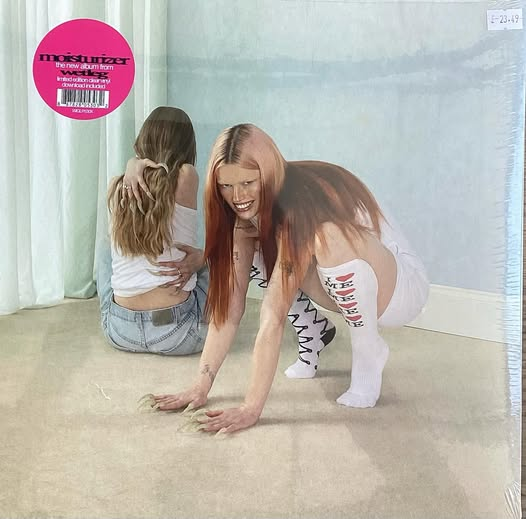
caroline have followed up their self-titled 2022 debut with an even more delightfully chaotic record. The experimental octet still works on a micro scale, but “caroline 2” is wide-eyed and enchanting without shying away from emotional profundity. “One of the fundamental themes is the idea of different things happening at once, things that are very different from each other but also simultaneous,” the band’s Jasper Llewellyn, who produced the record with Casper Hughes and Mike O’Malley, explained. The LP, led by ‘Total euphoria’, was written and recorded across various studio sessions over an 18-month period.
Returning with ‘caroline 2’, the eight-piece collective embrace a bolder, more expansive sound. Going beyond their debut’s explorations of repetition, slowness and space, the new album pushes further into dynamic contrasts — organic and electronic, raw and refined. Launched with the striking single ‘Tell me I never knew that’, featuring Caroline Polachek’s unmistakable vocals, “caroline 2” showcases a fearless interplay of layered instrumentation, warped vocal processing, and moments of both euphoria and melancholy. Intentional and immersive, this next chapter solidifies caroline as one of the most innovative voices in contemporary music.
The Holydrug Couple’s new and first release of 2025 is a familiar one—this year marks its tenth anniversary. Originally released in 2015 as part of a B-sides album from the Moonlust era, “Lunes 1 de Abril” is an atypical track that barely exceeds one minute in length, yet it has accumulated nearly 20 million plays on platforms like Spotify. In 2025, a decade since the album’s release and the creative work surrounding it, The Holydrug Couple is offering a kind of musical archaeology.
This move is both a response to fans who were left wanting more due to the song’s brevity and an effort by the artist to revisit and re-explore the creative paths taken during that time—in terms of production, composition, and mixing.
A damaged hard drive and the loss of most of the original sessions and tracks from those years forced Yves, with the help of some friends, to reconstruct, recreate, and re-record all the instruments that make up the song. The keyboards were recorded with Ismael Palma, producer of the band Inmontauk, at his studio in Santiago; the drums were recorded at Reflex Magnet Studios by Kb Cabala, an old friend now based in Berlin, and performed by Joaquin Margulis, current collaborator with Chicos de Nazca and TheHolydrug Couple. The rest of the work was done in Yves’ portable studio between Santiago and Berlin, completing the details and bringing all the sounds together to achieve a re-materialization of “Lunes 1 de Abril”.
It adds to the ‘Especial’ release, the remix made by Ismael Palma, aka Inmontauk. A very sensitive and evocative version that expands the colour palette on the presented music. The ‘New Disco Club Remix’ that presents a sort of Italo Disco, heavy on a arpeggiated bass and with drums player by Joaquin Margulis. The next tracks are an exercise that shows an expanded possibility on speed and format. This new version retains the spirit and texture of the original 2015 Moonlust-era release but expands into a longer, fuller version, with sound quality and arrangements that are sure to surprise 2025 listeners.
The repress of ‘I Kept These Old Blues’ on CD & LP is out now. Order to get the album with a signed art card. New edition with an extra track.“I Kept These Old Blues” is an astonishing first glimpse at the breadth of Muireann Bradleys talent – both as a guitar virtuoso and a singer. Her astounding fingerpicking and original interpretations of blues classics has already created a loyal fanbase of listeners and collectors alike. The first pressing of “I Kept These Old Blues” sold out globally and is already regarded as a collectible among in-the-know music fans – truly remarkable given Bradley was just 15 years old when she recorded it. Now remixed and remastered by Grammy-nominated mastering engineer Kevin Reeves and with the inclusion of a brand new track ‘I Kept These Old Blues’ demonstrates the kind of assuredness and skill to be expected of a musician five times Muireann’s age.
Every now and then an album comes along that captures the essence of a musical style with grace and purity and an intimate understanding of the ways that the songs work. At 17, Murieann Bradley, who hails from Ballybofey in County Donegal, Ireland, has been developing her nuanced finger-picking style, and she showcases her smooth, crystalline playing and singing in her interpretations of 12 blues standards on her debut album, “I Kept These Old Blues”.
Bradley’s fingers dance off the frets, bending the strings on just the right notes in her spry version of “Buck Dancer’s Choice.” She never crowds the notes on the cascading arpeggios on the tune, allowing it unfold spaciously. Her buoyant take on “Freight Train” mimics the motion of the train, and her spiraling guitar work and vibrant vocals evoke the joy and the melancholy in the song.
The album opens with a lilting version of “Candyman,” while Bradley’s expansive version of “Richland Woman Blues” overflows with her dazzling picking. Her smooth take on “Shake Sugaree” blossoms into jaunty lead runs on the instrumental bridges and the outro, and Bradley’s sprightly version of “Vestapol” illustrates her keen ability to play in an understated way and to allow every note room to breathe on its own and to occupy its own musical space.
Every song on “I Kept These Old Blues” is a gem, and they introduce us to an artist who’s already playing with the confidence and maturity of players such as Jorma Kaukonen, Larry Campbell, and Ruthie Foster.
Goddess is a project of producer and drummer, Fay Milton bringing together female and gender-expansive creativity and collaboration. Working with an impressive host of guest vocalists and instrumentalists, Goddess blurs genre boundaries with its mix of melodic and industrial sounds.
The idea to start the multi-pronged musical project that became known as Goddess came to Fay Milton clear-eyed, confident, and fully-formed. The band for which she had been the drummer, the much-lauded, two-time Mercury Prize nominated post-punk quartet Savages, were on hiatus, and while she had picked up some session drumming, she felt like she had a larger creative project in her. She knew that she wanted to honour the deep sisterhood that forms when female and non-binary musicians collaborate, and that the project would centre the community that she had built in the London independent music scene. There would be emotional range, strength, vulnerability, truth, and joy. There would also be a glimmer of Savages, as she knew her first collaborator would be Ayse Hassan, the band’s bassist, whose thunderous playing has always been the perfect complement to Fay’s ferocious drums. After years of planning, writing and recording, Goddess’ self-titled debut album is here. An epic 10-track opus of post-punk, electronica, dream-pop and indie-rock, the album is performed by a revolving cast of vocalists, bringing their own unique flavour and flair to each individual track. “With this project, I have come out from behind the drums and stepped into the producer role, allowing the feminine energy to run strong from the start to the finish of the creative process”, comments Fay Milton. The idea of Goddess stems from the curiosity of what happens when you bring creative spirits together in interesting new combinations.”
There were other deeply personal reasons that Fay sought out a bevy of collaborators for “Goddess”. She had spent much of the 2010s touring, traveling the world experiencing the type of professional highs most musicians only dream of. She knew she would continue creating music, but one topic in particular had begun to infiltrate her creative practice, and in doing so, changed the way she approached her craft forever.
“Around the time that Savages went on hiatus, I started thinking about the climate crisis and realizing how existential it is.” This realization led to Fay co-founding the climate activism charity Music Declares Emergency in 2019, whose mission is to give both music industry professionals as well as music fans a platform to demand government action to stop the climate crisis. As Music Declares Emergency began to grow, launching the NO MUSIC ON A DEAD PLANET campaign with artists like Billie Eilish and Radiohead, Fay still found herself pursuing her passion for music and songwriting, but with a totally fresh perspective. How can one engage in the music industry while keeping in mind a commitment to climate activism?
“I couldn’t really justify being someone who continues to jump on a plane every day,” says Fay. “I realised that if you’re not planning to tour, that’s a creative parameter that opens up a lot of freedom. You can have a different singer on every track and bring in instruments like harp and strings”. Thus Goddess was born—sitting squarely at the cross-section of a band, an artist collective, an exercise in collaboration, and a musical manifesto, Fay has created something that is both deeply personal and uses her considerable talent to bring together artists from all over the world to build something bigger than the sum of its parts.
As the project grew, Goddess became about much more than recording an album—it became about finding solace in a world that was becoming increasingly uncertain and calamitous, and providing hope and emotional release through the communal power of creating music. In assembling a crew of artists that inspire her, Fay tapped into the female spirit of open collaboration, a potent salve in dressing the wounds inflicted on us by rampant individualism.
Conceptually, Goddess is somewhat akin to say, Massive Attack or Desert Sessions—a musical experience where genre is more of a guideline than a fixed ethos, where each featured artist is allowed the space and freedom to make their song their own, all while under the guardianship of a visionary leader. Musically Goddess is eclectic, but more than that, it feels as if Fay has been able to connect all these disparate and singular vibes into one living, breathing whole, that demands the listener devour every minute in order to appreciate every single interwoven thread.
“Goddess” opens with the brooding and emotionally charged “Little Dark”, which features vocals by Shingai, ex-frontwoman of The Noisettes and one of Fay’s closest friends. Chronicling a late-night walk through London in the aftermath of the pandemic, “Little Dark” balances the crystal-clear harmony of Shingai’s voice with the track’s tenebrous undertones. “We’ve been really close friends for many, many years. We’ve had many late night jams, but getting in the studio to do a song together opened up a new depth to our relationship, both musically and as friends.”
Another longtime friend/first-time collaborator is Elena Tonra, who records as Ex:Re, and came up with Fay in London as the lead singer of the band Daughter. “She’s also a really close friend,” says Fay. Elena lends her feather-light, knife-sharp vocals to the lead single off of Goddess, “Shadows”, a track that showcases everything that gives the project its unique identity.
Two other highlights from Goddess share a similar noise-pop DNA: the R&B-tinged “Animal” and the all-out electro freakout “Fuckboy”. “Animal” features North London DIY icon and singer of feminist punk band Skinny Girl Diet, Delilah Holliday, as she gives voice to the sexy beast within all of us. “Fuckboy” is perhaps the most heavy and rhythmic track on the record, a pulsating slice of industrial rock and electronic dance that features singer/visual artist Salvia, delivering inscrutable lyrics about taking delight in the grotesque.
There are no two vocalists alike on “Goddess”, and this is completely by design. Astute listeners will notice that of the 10 featured singers, all are female/non-binary, which was a conscious decision on Fay’s part. It’s a nod to the female representation that has been a through-line in her career, while also simply wanting to showcase the artists that she finds the most exciting. “All of the vocalists I was finding most interesting and inspiring were female and non-binary. Gender is not a topic of the “Goddess” album in any way, but it is a creative parameter of the project, and a very important one. The album is not about gender, but it’s working with gender as a creative tool.”
At its core, Goddess compiles all of the things that have seen Fay through this new creative chapter of her life, from her ever-evolving musicianship, through to her climate activism to her fascination with female and non-binary creativity. The name Goddess may seem a little audacious, but it’s not about self-deification, on the contrary–it’s about celebrating the beauty and spirit alive in everyone.
Chrysalis Records are proud to present UFO’s classic 1980 album ‘No Place To Run’, newly remastered from the original production tapes transfers at AIR Mastering and reissued on stunning 3LP tri-fold sleeve 180gm vinyl and 2CD Digipak formats on 25th July 2025.
‘No Place To Run’ was the eighth studio album by UFO and the first with Paul Chapman on guitar, following the departure of Michael Schenker. It was produced by legendary Beatles producer George Martin and recorded at his newly launched AIR Studios in Montserrat in the Caribbean, a stark difference from the bands’ usual surroundings.
Reflecting on the album forty five years later Phil Mogg said: “The thing that sticks in my mind from recording ‘No Place To Run’ was the complete miss match with UFO / George Martin (who was a lovely chap) and nothing summed it up more than when George would say to Geoff (sound engineer): ‘Well Geoff, it’s six o’clock, time for a G&T out on the veranda.’ How very civilised!”
The reissue includes a new and previously unreleased mix of ‘Live at The Marquee, London, 16th November 1980’, mixed by revered engineer Brian Kehew from the original multi-track tapes, giving a powerfully fresh sound. Only three tracks have ever been officially released before (‘Lettin’ Go’, ‘MysteryTrain’ and ‘No Place to Run’). The other eleven tracks from this legendary show have not been available until now. The set will take fans right back to the electric atmosphere of the Marquee, with a band at the very top of their game.
Brian Kehew said:
“Paul Chapman’s guitar sound here is really superb, a thick and singing B.C.Rich-into-Marshall tone… “No Place To Run” is certainly a special time for the band, the peak of their public acceptance. With the music world shifting into new wave and synth-pop around them, they stayed true to their roots and delivered yet another classic album.” (quote taken from liner notes)
Both formats feature new liner notes by Michael Hann featuring interviews with front-man vocalist Phil Mogg and drummer Andy Parker.
The legendary Robin Trower continues his prolific period with the release of a brand-new studio album, “Come And Find Me”. The record will be released on 25th April via Provogue.
As he reaches his eighth decade, with a lifetime of accolades and a seminal body of music behind him, Robin Trower is still chasing the biggest high he knows. It always starts the same way, with a road-scuffed Fender Stratocaster and a revved-up Marshall amplifier, those skilful fingers exploring the fretboard until a riff sticks and a new song ignites. And from the cultural flashpoint of Sixties London with Procol Harum, through 1974’s stadium-filling “Bridge Of Sighs”, right up to this year’s acclaimed “Come And Find Me”, it’s these addictive moments of creation that have kept the guitarist vital, relevant and contemporary while his peers trade on past glories.
Fiery, thoughtful and fuelled by real human emotion in a time of machine-generated music, “Come And Find Me” is hardly the work of a rock icon resting on his laurels. On the contrary: keenly aware of passing time, Robin Trower has made it his late-period mission to capture as many shards of magic as possible.
The new single ‘A Little Bit Of Freedom’ is out now! It’s the first single from my upcoming album ‘Come & Find Me’ which will be released on April 25th, 2025.
Rhino are too continue their Talking Heads reissue campaign with special super deluxe reissues of the band’s 1978 album “More Songs About Buildings and Food”. An expanded, Super Deluxe Edition of Talking Head’s second album, including discs of studio outtakes & live recordings from the period. The 3-CD & one-Blu-ray set will be available on July 25th & marks the band’s first collaboration with producer Brian Eno, who’d go on to work with the group on their two follow-up LPs, including the pivotal ‘Remain in Light’.
The 1978 album also includes Talking Heads’ first Top 40 single, a cover of Al Green’s “Take Me to the River” that reached #26. The upcoming reissue features a disc of rarities, most of them previously unreleased, including alternative versions of the album’s 11 songs. You can hear “Found a Job” from the new set below.
This set features the remastered album alongside a disc of rarities, including four previously unreleased alternate versions of album tracks. The set also includes alive recording of the band’s August 1978show at New York’s Entermedia Theatre. Footage from that show and another at Sproul Plaza at the University of California, Berkeley, both appear on the Blu-ray set.
Additionally, there are Dolby Atmos and 5.1 surround sound mixes by E.T. Thorngren (R.I.P.) and Jerry Harrison, plus a high-resolution stereo version of the album. This comes packaged in a large format 60-page hardcover bookwith previously unseen photos and new liner notes with recollections from Tina Weymouth, David Byrne, Chris Frantz, and Harrison.
In addition to the 3CD+blu-ray edition there will be a 4LP super deluxe which has the remastered album, the rarities and the live show. A 2LP vinyl edition is also available.
This reissue of “More Songs About Buildings and Food” is released on 25th July 2025 via Rhino.