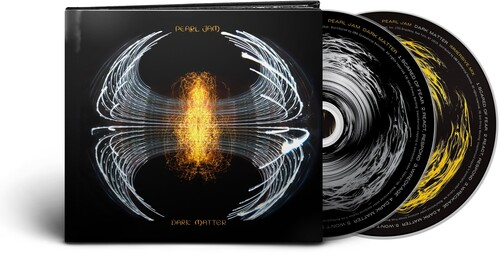
Pearl Jam will release their twelfth studio album, “Dark Matter”, on April 19th via MonkeywrenchRecords/Republic Records. To support the upcoming release, today the group has announced a 35-date worldwide tour this May, along with releasing the project’s title track. Produced by Grammy-winning producer Andrew Watt, “Dark Matter” marks the band’s first full-length since 2020’s “Gigaton“.
In 2023, the members of Pearl Jam headed to Shangri-La Studios in Malibu where they recorded the album live.
Eddie Vedder said about the album: “I’m getting chills, because I have good memories. We’re still looking for ways to communicate. We’re at this time in our lives when you could do it or you could not do it, but we still care about putting something out there that is meaningful and we hopefully think is our best work. No hyperbole, I think this is our best work.”
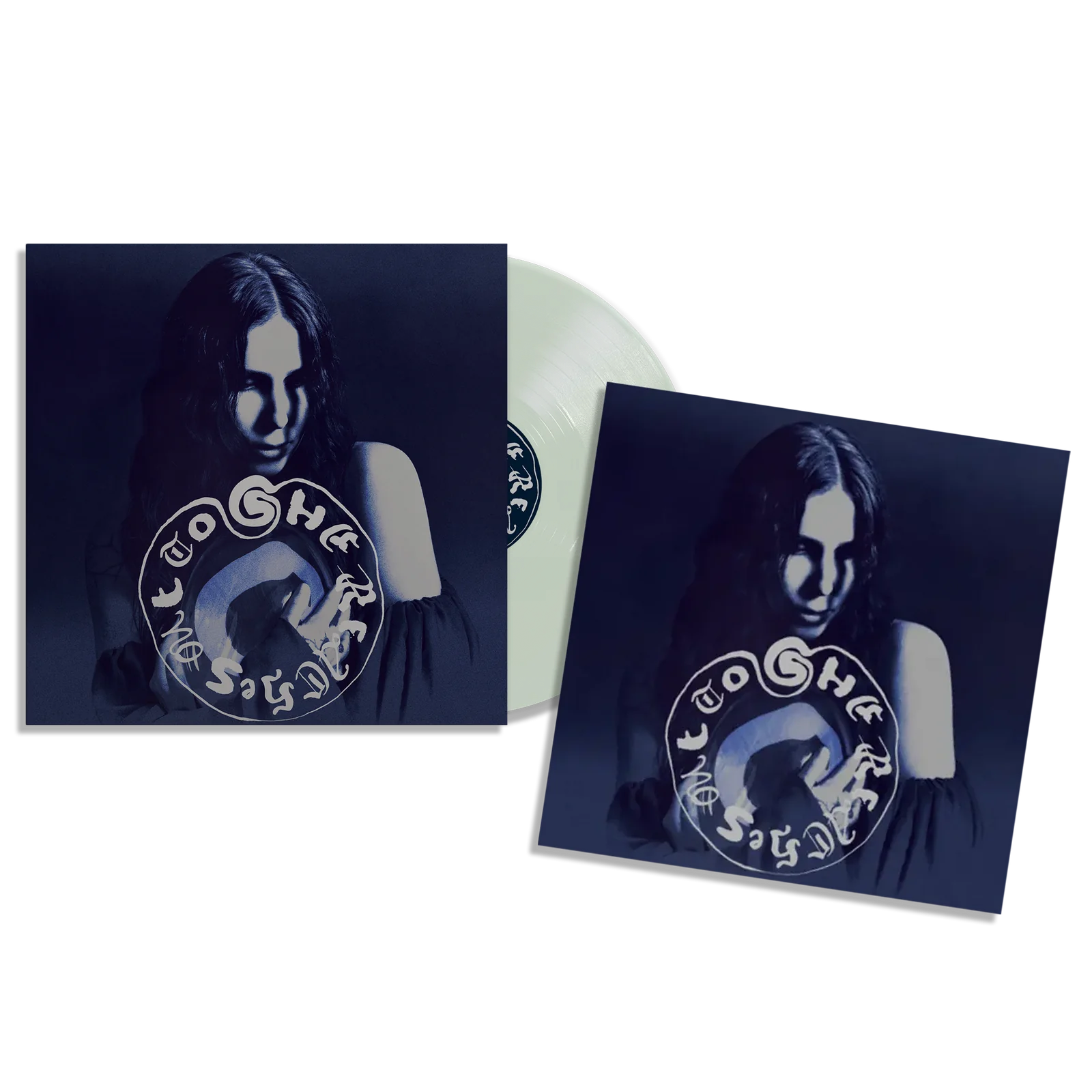
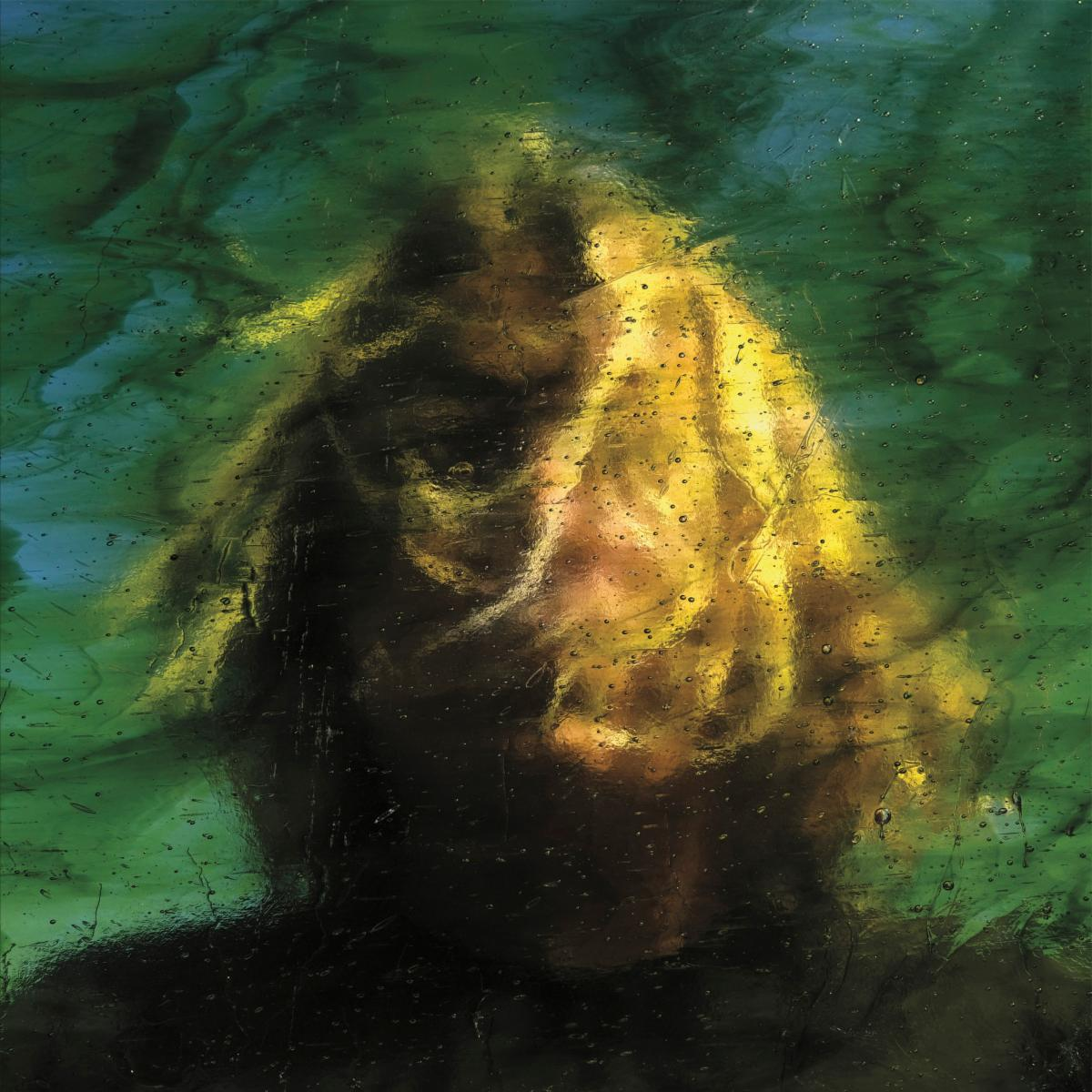
Chelsea Wolfe’s latest album, “She Reaches Out To She Reaches Out To She”, is a rebirth in process. It’s about how such a moment connects to our past, our present, and our future. It’s a powerfully cathartic statement about cutting ties, as well as an important reminder that healing is cyclical and circular, and not a simple linear process. As Wolfe explains, “It’s a record about the past self reaching out to the present self reaching out to the future self to summon change, growth, and guidance. It’s a story of setting yourself free from situations and patterns that are holding you back, in order to become self-empowered. It’s an invitation to step into your authenticity.
Wolfe takes us on a strange and dimly lit journey through trip-hop atmospherics by way of searing industrial rhythms – bathed in her trademark gloom, the electronics take centre stage here whilst, vocally, she pumps out whip-sharp emotional release after emotional release.
The synths plunge us headfirst into a pitchblack world of gothic industrial pop. ‘she reaches out to she reaches out to she’, is a rebirth in process. it’s about how such a moment connects to our past, our present, and our future. it’s a powerfully cathartic statement about cutting ties, as well as an important reminder that healing is cyclical and circular, and not a simple linear process. as Wolfe explains, “it’s a record about the past self reaching out to the present self reaching out to the future self to summon change, growth, and guidance. it’s a story of setting yourself free from situations and patterns that are holding you back, in order to become self-empowered. it’s an invitation to step into your authenticity.”
With a discography spanning nearly two decades, it’s still always a surprise which Chelsea Wolfe we’re gonna get with every new album. The veteran songwriter has been experimenting with gothic forms at least as far back as her folky early recordings in the late ’00s, and has since ventured into both more ethereal and heavier territory—in fact her last two releases represent this broad range perfectly as she teamed up with composer Tyler Bates for the original score to the 2022 slasher Xand metalcore icons Converge for a 2021 collaborative LP.
On “She Reaches Out to She Reaches Out to She”, Wolfe’s first solo album since 2019’s “Birth of Violence“, she steps back from the neo-folk and doom metal palettes she’s recently been working with to return to the darkwave influence of 2013’s “Pain Is Beauty” while amping up the industrial aesthetic across the record. This instrumental near-rebirth echoes the album’s subject matter, which Wolfe describes as a documentation of a “time of undoing.” As she clarifies while discussing the ominously slow-paced “The Liminal,” “[it’s like] standing on the threshold between the old and new. There’s no going back, but you’re not yet ready to step forward. You’re just finding stillness for once in your damn life.”
In addition to sharing how Céline Sciamma’s Portrait of a Lady on Fire influenced one of the record’s 10 songs, as well as producer Dave Sitek’s role in shaping the LP, Wolfe’s track-by-track breakdown provides guidance for “She Reaches Out to She Reaches Out to She’s” complex emotional journey while also helping gearheads ID an array of synths featured throughout the record. Stream the projectand find Chelsea’s words below.
1. “Whispers in the Echo Chamber” This is a song about cutting cords from patterns, relationships, and situations that you know and have known are toxic for you and are holding you back. It’s about seeking out what you need within yourself instead of constantly reaching outward. It’s a song about self-acceptance, transformation, and rebirth. A lyric like “Bathing in the blood of who I used to be” hints that this process isn’t as easy as it sounds on paper. These songs demanded to be felt and to be lived.
The whispered and swirling vocal textures of this song (ran through producer Dave Sitek’s modular wall) are meant to reflect those persistent intuitive voices that start rising up within you when it’s time to step out of the old and into the new. I love Bryan [Tulao]’s siren-like guitar and wild outro to this song, building the tension.
2. “House of Self-Undoing” “House of Self-Undoing” is an underworld journey. When you get sobre after years of numbing out, you feel, deeply: the moments of joy are euphoric, and the moments of pain are more visceral. But it’s like a call to adventure. Facing life fully present is exciting when you’ve spent half your life half-present.
Drummer Jess Gowrie wrote both the guitar and drum parts for this song, and it became a driving force for my vocals to float over and through as I narrate this underworld journey. The Pulsar by SOMA, along with the ARP synth, are both heavily featured on this album and have some highlighted moments on this song.
3. “Everything Turns Blue” I had written this song inspired by someone close to me who’d ended a long-term relationship with someone who had not been good for them for a long time, maybe never. Soon after, I realized I needed to leave behind someone in my own life who’d been really harmful for me for a long time as well. So this song is about processing and finding yourself again after making the split. There’s gonna be some high highs and low lows as you begin to navigate life anew.
The tonality of my voice on this recording reflects the message of this song. The burnout of being unsupported by someone who claimed to support me rose to the surface and I was fucking tired.
4. “Tunnel Lights” “Tunnel Lights” is a simple song, really—a song about actually living instead of just “getting by.” It’s about waking up to the fact that you’ve been languishing in the dark and understanding that it’s time to start taking steps toward the sparks of light that are calling you out of the tunnel-cave.
This song was originally called “The Chord” because as soon as Ben [Chisholm] hit that initial chord on the piano, we both knew it was something we needed to create a song around.
The vocals on this one are quite raw, as well—a first take late at night after a long day, a reminder to self that the message of the song rings true: the only way forward is through. The SOMA Lyra that Ben performed at the end, which was then side chained to the bass, creates a sort of passage for the final chorus to travel through.
5. “The Liminal” The void, “the liminal”, the threshold, the in-between, and the unseen are recurring characters on this album. Like the dark moon, that void-space can feel unpredictable and looming, but it also holds so much potential, mystery, and excitement.
There’s an inherent grief that comes with letting go of aspects of your life which no longer belong, even if you know that you’ve outgrown them. This song is like standing on the threshold between the old and new. There’s no going back, but you’re not yet ready to step forward. You’re just finding stillness for once in your damn life.
6. “Eyes Like Nightshade” In Victorian England, some would drop a tincture made with belladonna (a.k.a. deadly nightshade) into their eyes to dilate their pupils—it’s a look. This song pays tribute to a beautiful scene in one of my favorite films, Portrait of a Lady on Fire by Céline Sciamma, in which the two main characters experiment with flying ointment and end up with belladonna eyes. There’s an intimate, ASMR-like quality to that film that I was inspired by in my approach to the vocals on this album, delicate and detailed.
This song grew out of a completely different song, or perhaps it’s the ghost of it. We had a demo called “Red Vein” that Dave built so many new elements for that I felt it had become something new. It became a rhythmic jam that I wrote new vocals for, and then we had fun adding percussive elements to it in the studio, from a rotary phone to various handmade shakers.
7. “Salt” “Salt” touches on the way our lives lived via technology and our IRL tears coexist. Also, a little bit of magic: salt sprinkled on the doorframe and the windowsills for protection. To be honest, when I was first writing the verses for this, I was writing from the perspective of a character trapped in a video game, like a virtual reality girlfriend who just waits there to please and isn’t entitled to her own privacy. It seemed so lonely and twisted.
The original chorus I’d written fell away one night while I was listening to a rough instrumental mix of what we’d been working on, becoming another transformational moment on the record. The new melodies and lyrics that formed felt so much more resonant and universal. I think this song has the most obvious trip-hop influence—a genre that I grew up on and is still a favourite.
8. “Unseen World” A descent into the innermost; into the realm that cannot be seen but can be felt. A song about beginning to deprogram from traumatic social norms that have been ingrained in us. Right now is a time of undoing. It’s time to trust in your instinctual inner bell, and in the ever-turning wheel of life.
Another Pulsar- and ARP-heavy song, also featuring the Hydrasynth and C15, deeply layered to reflect the complex journey into that inner realm.
9. “Place in the Sun” “Place is the Sun” is about finding home in your body after being disconnected from it for a long time. It’s about finding safety in your body in a world that thrives off of making you feel insecure. This is a song about learning how to breathe, and finding joy and ease in singing again. If the lungs are the wings of the heart, to sing is to fly.
This song began as a piano and vocal piece, evolved with Sitek’s MPC, gated vocal samples, and reverbed-out mandolin. At the end of the song there’s light percussion played on the body of a guitar owned by the wonderful Elliott Smith.
10. “Dusk” “Dusk” is my fantasy-core contribution, a mythical love song. The friends or lovers have gone through hell and back but are still and always united in the end by love, like pottery gone through the firing process, then broken and pieced back together. I wrote “Dusk” while taking pottery classes—which I was not very good at, to be honest, but was inspired by what I was learning and by the various vessels and sculptures surrounding me as I worked.
“Dusk” opens with a Pulsar drone and a sample of my voice used as bass synth. This song began as a guitar demo—I heard Ben playing a pattern and ran to get a recording of it, and we built a song around it. The production has a sweetness about it that matches the energy of the lyrics. “Dusk” was originally a temporary name for the demo as that was the hour it was written, but I got attached to the liminal feeling of the word. There’s a finality to dusk, but it’s also a transitional, fleeting timespace that gives way to the dark so beautifully, with silvery purples and blues gently coloring the sky before the day is done.
Beautifully produced and rich in scope – ‘Iechyd Da’ is Bill Ryder-Jones’ most ambitious record to date. At times joyous and grand, at others intimate and heartbreaking, the past few years spent producing other artists have provided that gentle nudge to expand into new territory, from kids choirs and tender strings to dramatically re-contextualised disco samples.
Making this album has been a process that has been endlessly rewarding for Ryder-Jones, both creatively and personally, as he finally accepts that he’s made an album that has bettered one he’s been trying to top for a decade.
“It’s been incredible making this,” he says. “Despite all the life stuff that’s happened, it has brought me immense happiness. I’ve always railed against it when people ask if making a record is cathartic but I’d have to admit that this one really was. Over the years my music has lost a bit of its hope I reckon. It were important for me to make a record that had more hope in it. Even by my standards the last few years have been rocky, but I’ve chosen to soundtrack it with more positive music, you know? I love this album. I haven’t been this proud of a record since “A Bad Wind Blows in My Heart.”
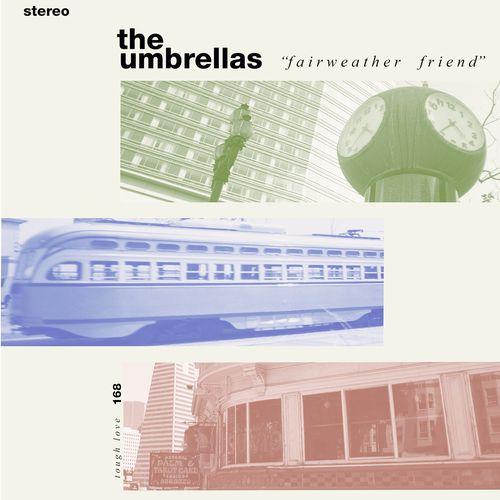
The Umbrellas are four renegade romantics crafting irresistible indie pop hymns. The band’s self-titled 2021 debut album became a breakout moment, winning critical praise and sparking an international tour. Follow-up LP ‘Fairweather Friend’ goes a step further – absorbing the sonic attack of their live shows, it balances this with studio finesse, allowing the San Francisco four-piece to become the band they’ve always aspired to be.
It’s a record overflowing with highlights. The candyfloss melodies of introductory track ‘Three Cheers!’ are matched to an impactful percussive punch; ‘Say What You Mean’ finds The Umbrellas working with total confidence, letting the song ride out to its chiming conclusion, four voices working in precision. ‘When You Find Out’ offers rotating notes of guitar punctuated by a vocal that pushes past angst to accept a world full of hope. A lean 10 track affair, it grasps towards beatific pop while fuelled by a sense of risk, and the precision that comes from long months on the road.
The Umbrellas coalesced around a group of musicians who would frequent legendary San Francisco record emporium Amoeba Music. Singer and guitarist Matt Ferrera links with bassist Nick Oka, while Keith Frerichs is the powerhouse drummer. A chance encounter with Morgan Stanley singing karaoke at a Fourth of July party cemented the line-up around an avowed thirst for melody. “All of us love really earnest pop songs,” Nick points out. “I guess we got to a point in our lives where we wanted to be genuine.”
Playing shows at San Francisco’s vital DIY redoubt Hit Gallery, The Umbrellas would share line-ups with local heroes such as April Magazine and Cindy. Recording their debut album across a two-day spell at Matt’s parents’ house, the results won a devoted cult following. Yet the experience of touring bonded them tightly and allowed the volume to tick up a little higher, and higher, and higher. “I think we got tired of people saying, oh you’re so much louder than I thought you’d be!” laughs Matt. “Our early recordings are sweet and earnest… and we wanted it to be louder.”
Kicking off sessions in November 2022, the band used an ad hoc space Matt created in his basement, working across a four-month period. Sessions were a little more relaxed in terms of timescale than their debut, but The Umbrellas were incredibly focussed on the project. “We gave ourselves more space for this album,” says Keith. “We wanted time to sit on the songs, and really work on them.”
Allowing their live dynamic to bleed out on tape, The Umbrellas are at once more physical and yet also more controlled on their new album. Take opening track ‘Three Cheers!’ – the peppy, sun-soaked rush masks a barbed lyric, courtesy of Nick Oka. “It’s a pseudo-political song about power struggles that occur in a job situation, or a friend group. It’s an observational song.”
‘Toe The Line’ has an unkempt, rollicking sense of energy, the playful relationship analogy of the lyric pushed to the speed of light by Keith’s ultra-fast punk drumming. ‘When You Find Out’ meanwhile epitomises their unified, egalitarian way of making music – with The Umbrellas, each voice counts. “It sounds different from any song we’ve ever written together,” says Morgan. “It shows how much we’ve grown. Trust helps us to build the songs. It’s definitely a team effort.”
It’s also a record of ambition. ‘Say What You Mean’ stretches past the four-minute mark, the viola performance informed by Estonian minimalist composer Arvo Pärt. ‘Gone’ was the first song attempted for the new album, and the last they actually finished, endless re-writes transforming it into a manifesto of control and release. Taken as a whole ‘Fairweather Friend’ is a bold indie pop triumph, crafted with purpose and attention. Taking their time over each note, the four-piece have strengthened their song writing, adding depth and assurance while unlocking their potential. Some bonds last a lifetime – The Umbrellas are ready to capture your heart.
“Blue Raspberry” is Katy Kirby’s follow up to her renowned debut album “Cool Dry Place”, which came out in February 2021.
Singer/songwriter Katy Kirby introduced her warm, articulate vocals, perceptive lyrics, and playful adult-alternative style on her debut album as she toured tirelessly supporting bands like Waxahatchee, Andy Shauf, Julia Jacklin and Alex G.
That record was a tried-and-true folk collection, perfectly displaying the chops of a young songwriter and emanating the warm feel of a band in a room; “Blue Raspberry”, made with the same band and producers (Logan Chung and Alberto Sewald), hits the gas and enters completely new territory as we see Katy truly step into her own as a song writing force.
She fearlessly leans far into baroque piano pop on tracks like ‘Redemption Arc’ and the title track ‘Blue Raspberry’, and lyrically she explores themes of loss and queer love. Very few are able to capture the same emotional, theatrical magic of artists like Fiona Apple, Tom Waits and Joanna Newsom but Katy pulls it off on this record; standout ‘Drop Dead’.
Ty Segall returns with his most ambitious, elastic set of songs to date, “Three Bells”, to be released January 26th via Drag City. Following 2022’s acoustic introspection opus, “Hello, Hi”, “Three Bells” is a deeper, wilder journey to the centre of the self, with Ty using his musical vocabulary with ever-increasing sophistication. In conjunction with this announcement, Ty unveils the new single/video, “My Room.”
“Three Bells” is an obsessive quest for expression. With much of the album being played by Ty in conversation with himself, a decision that further elevates the album’s conception, it answers back to the riptide always pulling Ty subconsciously into the depths. Questions we all ask in our own private mirrors are faced down here — and regardless of what the mysterious “Three Bells” mean in the context of the album’s libretto, you can be assured that Ty’s ringing them for himself, and for the rest of us in turn. With all fifteen songs brimming with perspectives, shape-shifting incessantly, Ty pushed them out farther and farther compositionally, challenging the way they’d be played. Each song moves through repetitive, thematic material in its own way, building a claustrophobic/paranoia vibe, cycling bold thrusts forward into ego deaths, the one-step-forward, two-steps- back patterns framing an overriding ask: what can we do to get past the back-and-forth conversation, to arrive at a place of acceptance?
On “Three Bells”, Ty and Denée Segall collaborated on five of the songs, including the previously released single, “Eggman”. Some of the songs needed the kind of playing Ty couldn’t get alone. Emmett Kelly’s bass parts not only addressed that need, but inspired the way the songs eventually went down. The remaining members of the Freedom Band were called in to play, transforming the material. Co-producer Cooper Crain, who deeply contributed to both “Harmonizer” and “Hello, Hi”, engineered and mixed most of the album.
On “My Room,”Ty rings the bell of the introvert who is empowered by the world inside his own room. The layers of acoustic and electric guitars dance around each other, quickening the already swinging tempo, while fuzz distortion blows the walls farther back as he takes us deeper. The accompanying music video was directed by longtime collaborators Matt Yoka and Ty, and features Ty steadfastly performing the song on stage as bananas are launched in his direction. He remains resolute in dedication to the craft, only to reveal a surreal dialogue between the dual facets of his own identity.
“Three Bells” takes Ty Segall’s trips so much deeper and farther than they’ve gone before — a masterpiece of personal expression, expressed through words, music and production, parabolically addressing malaise with compassion in a flowing, unstoppable hour-plus of intoxicating sound. Following the album’s release, Ty will tour throughout North America, with select dates in Europe.
Though widely known for his love of purple and being an incredibly reluctant interview subject, it’s music that made J Mascis’ name. Thankfully, his songs—both those with and without seminal alt-/noise-rockers Dinosaur Jr.—more than make up for his reticence when it comes to answering questions. Not only is he capable of some truly soul-crushing, devastating lyrical turns of phrase, but the emotion both his voice and guitar exude is so primal and visceral that it brings those emotions fully to life. Even when the songs are more calming and lethargic—as his solo work tends to be, especially compared to the boisterous output of his band—they fizzle with the entirety of the human experience, from birth all the way through to death, and with a great deal of love and loss in between.
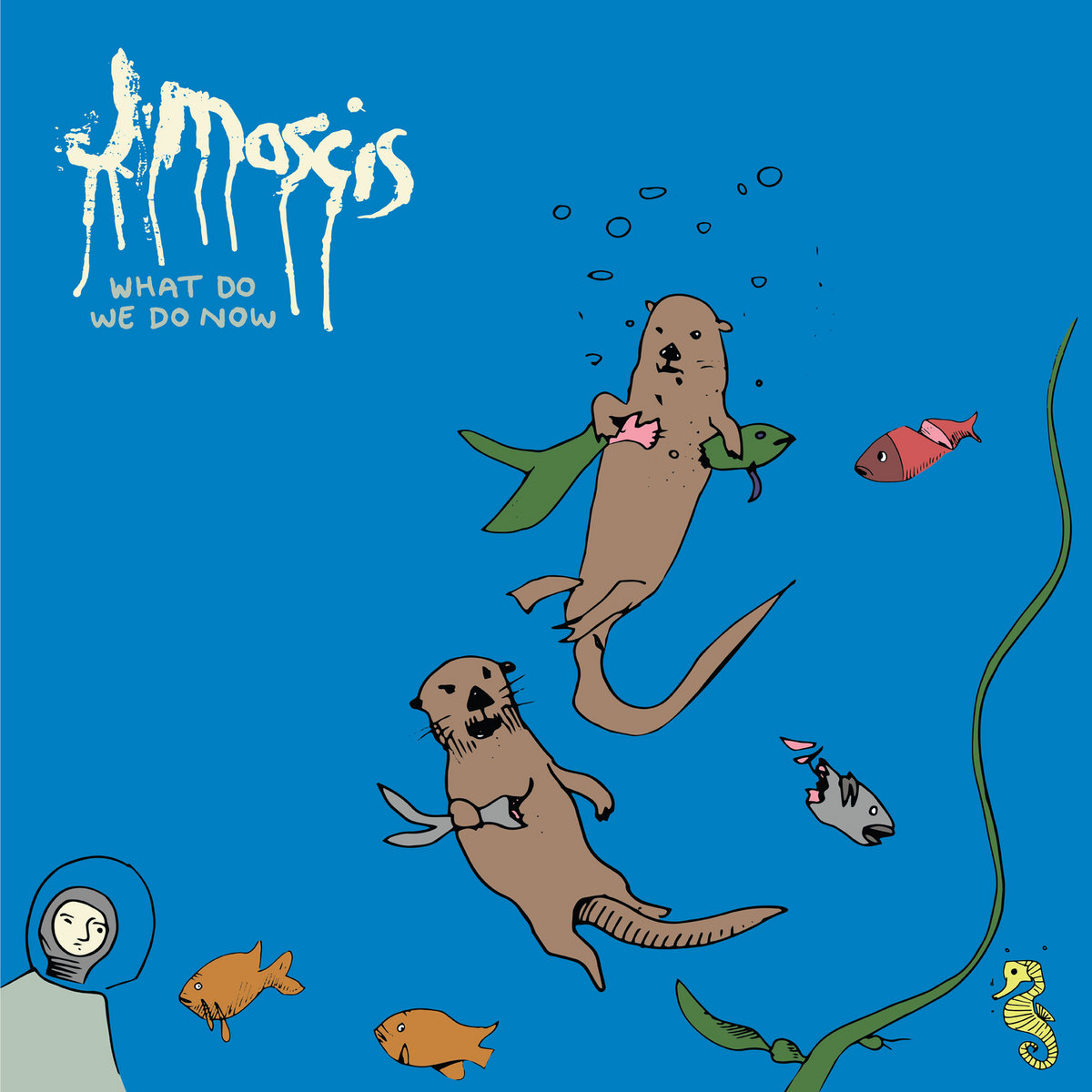
“What Do We Do Now”is Mascis’ fourth solo album, having released his debut, “Several Shades of Why”, in 2011. So distinctive is his playing style and his crooning, searching, almost-off-key croak, it’s unmistakable as anything other than a J Mascis record, but that’s no bad thing. The jangle of opener “Can’t Believe We’re Here” might, at first, seem to be masquerading as an early R.E.M. song—but once the 58-year-old starts singing, there’s no doubt this is Mascis at his finest.
The rest of the record is similarly haunted and melancholic, wistful and naively questioning. “I Can’t Find You” is a truly sad and despondent lament that’s succeeded by “Old Friends,” which, though slightly more upbeat, follows it with a similar sense of resigned hopelessness. “Set Me Down” shifts modes ever so slightly to take the form—almost—of a baroque indie-pop song (albeit without either the “baroque” or “indie-pop” elements, but instead, like all of these songs, a truly moving scuzzy guitar solo), while closer “End Is Gettin Shaky” conveys all the joy and uncertainty about modern life and manages to be both uplifting and thoroughly depressing at the same time.
Just in time for the massive Dinosaur Jr. kick I’ve gone into this year, Jay released what is essentially his 4th solo studio album. It’s nice and easy, and less noisy than Dino Jr. but he still delivers incredible solos whenever the song calls for it. Highlights: “Right Behind You,” “Old Friends,” “It’s True”
There are, of course, no Radiohead-esque transfigurations here, but there don’t need to be. After all, as the old cliché goes: if it ain’t broke, don’t fix it. This is as perfect as imperfect gets.
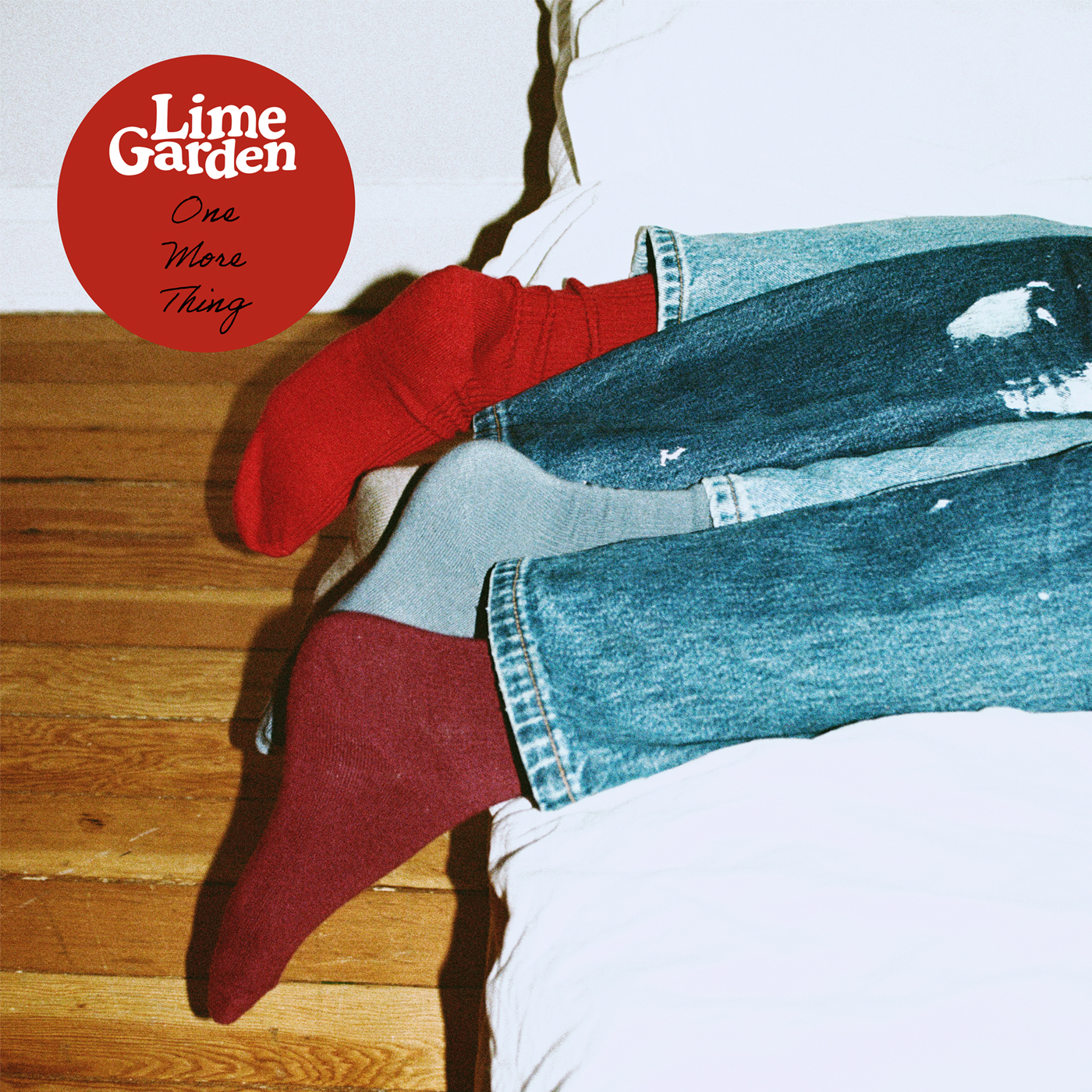
Lime Garden have shared a new video for their latest single, ‘Pop Star’. The band premiered the final advance taste from their debut album ‘One More Thing’ yesterday evening on Huw Stephens’ BBC Radio 6 Music show.
Speaking about ‘Pop Star’, Lime Garden’s Chloe Howard said: “‘Pop Star’ was influenced by a real pop star and me not wanting to go back to my part-time job after being in the studio. On the morning of the studio session,
I’d watched a TikTok of Damon Albarn talking about how Gorillaz used the standard preset on an omnichord for “Clint Eastwood” – and then guess what I found in the studio!? – so, we figured if Damon says so we should try it! Then I sang over the demo about not wanting to go to work the day after our studio session and the lyrics stuck. The song is almost so sarcastic that it’s gone full circle into honesty and my work / life imbalance. The song has got a swagger that might surprise a few people!”
Lime Garden will release ‘One More Thing’ (16th February) on So Young Records. The band will also be embarking on an in-store tour marking the record’s release, before their biggest UK headline tour to date commences on 27th February at YES (Pink Room) in Manchester and culminates with a hometown show at Chalk in Brighton on 8 March.
“We’ve already had so much success without releasing an album that there is this huge pressure around ‘The Mess We Seem To Make’,” starts Crawlers vocalist Holly Minto. “People keep telling us that as soon as we release it, things will really start for us, but what the fuck have we been doing this whole time then?” she continues with a smirk.
Taking the explosive theatrics that have made Crawlers such a must-see live force over the past few years, the band’s debut album now comes with a newfound sense of self as the once-self-described “silly eyeliner band” come into their own. It’s a record that doesn’t need to worry about chasing the latest trends in guitar music or fitting into a wider world ‘cos people are undoubtedly going to flock to the one Crawlers have built.
Crawlers formed in 2018, with guitarist Amy Woodall, bassist Liv Kettle and vocalist Holly playing their grunge-inspired rock’n’roll in whatever North East venue would have them. They developed a loyal following from the back of Amy’s Fiat Punto, but the inclusion of drummer Harry Breen and the release of ‘Come Over (Again)’ in 2021 quickly changed the band’s trajectory. The following year, they supported childhood heroes My Chemical Romance at Warrington’s Victoria Park, played before Maneskin at the Montreux Jazz Festival and put in dominant showings everywhere from Reading & Leeds to Community and The Great Escape.
A sold-out UK headline tour, a run of shows around North America and their ‘Loud Without Noises’ mixtape rounded out a year which Holly could only describe as “a bit silly”. 2023 was more of the brilliant same, but that hasn’t stopped Holly from feeling physically sick about the release of their debut album, occasionally checking in to see whether her old job at Nando’s was still hiring.
“It’s more anticipation for me,” adds Liv. “I’ve enjoyed every single moment that has led us here. I’m excited to see where the album takes us next.”
The first proper idea for ‘The Mess We Seem To Make’ was written in 2020 and became the shimmering ‘Call It Love’. By the time it came to actually sit down and pull the record together last year, Crawlers had a “disgusting” stack of 190 demos to try and make sense of. “Which are the ones we really care about?” explains Liv of their process, with the resulting twelve tracks perhaps not the most obvious choices.
When they first started writing, the group were inspired by Smashing Pumpkins’ ‘Melon Collie And The Infinite Sadness’, Pixies’ ‘Doolittle’ and Nirvana’s ‘In Utero’. “Just these amazing 90s alternative bands that wrote these incredible songs and managed to dress them up while still maintaining a rawness,” says Holly. That fuzzy rage can be felt across Crawlers’ back catalogue and continued to shape what would become the album’s prologue, angsty standalone singles ‘Messiah’ and ‘That Time Of Year Always’.
But as the process continued and the band continued to chase that feeling of excitement, their influences broadened. Amy got more into production, with Yeah Yeah Yeahs an important touchstone, while the joyous fury of Boygenius’ ‘The Record’ also inspired ‘The Mess We Seem To Make’. There were times Crawlers had to tell their label to trust them, especially with the nu-metal meets Bjork-inspired ‘Better If I Just Pretend’, but the end result brings new colours and dynamics to the band’s world without destroying anything that’s come before. “We’ve really been allowed to spread our feelings on a page with this album,” says Holly.
“The first song that we wrote that wasn’t typical for us was ‘Come Over (Again)’, and that one did alright,” grins Liv, with their breakout track currently sitting at well over 50 million streams. “We were really nervous about releasing it all those years ago, but we quickly realised that the excitement it made us feel was far more important. That energy has carried on through the mixtape and into this album. It might not be what people expect Crawlers to sound like, but that doesn’t mean it isn’t us.”
“The point of ‘Loud Without Noise’ was that it felt like an actual mixtape. It wasn’t coherent; it was just all our different influences on the same record. Sonically, a lot of the songs on the album are still really different,” explains Holly, pointing at the Adele-esque ballad ‘Golden Bridge’ that sits neatly alongside the heavy ‘Better If I Just Pretend’. “It all works together, though. We made sure it felt like the same world, and all our different influences help paint this collective vision,” she adds. “Everything’s elevated.”
“We are just in a place now where we are a lot more comfortable with who we are as individuals and as a band. The album definitely screams that,” says Liv. “There’s this unspoken mantra now that we are okay with ourselves.
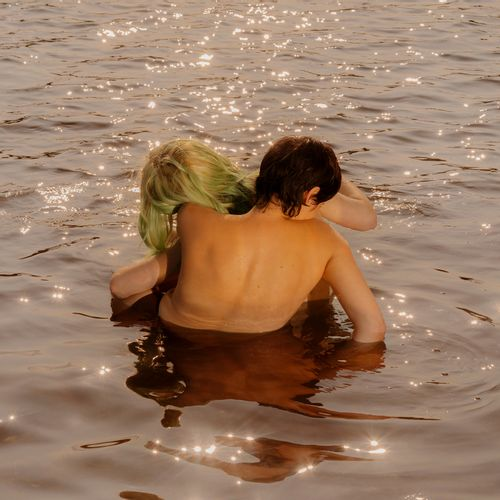
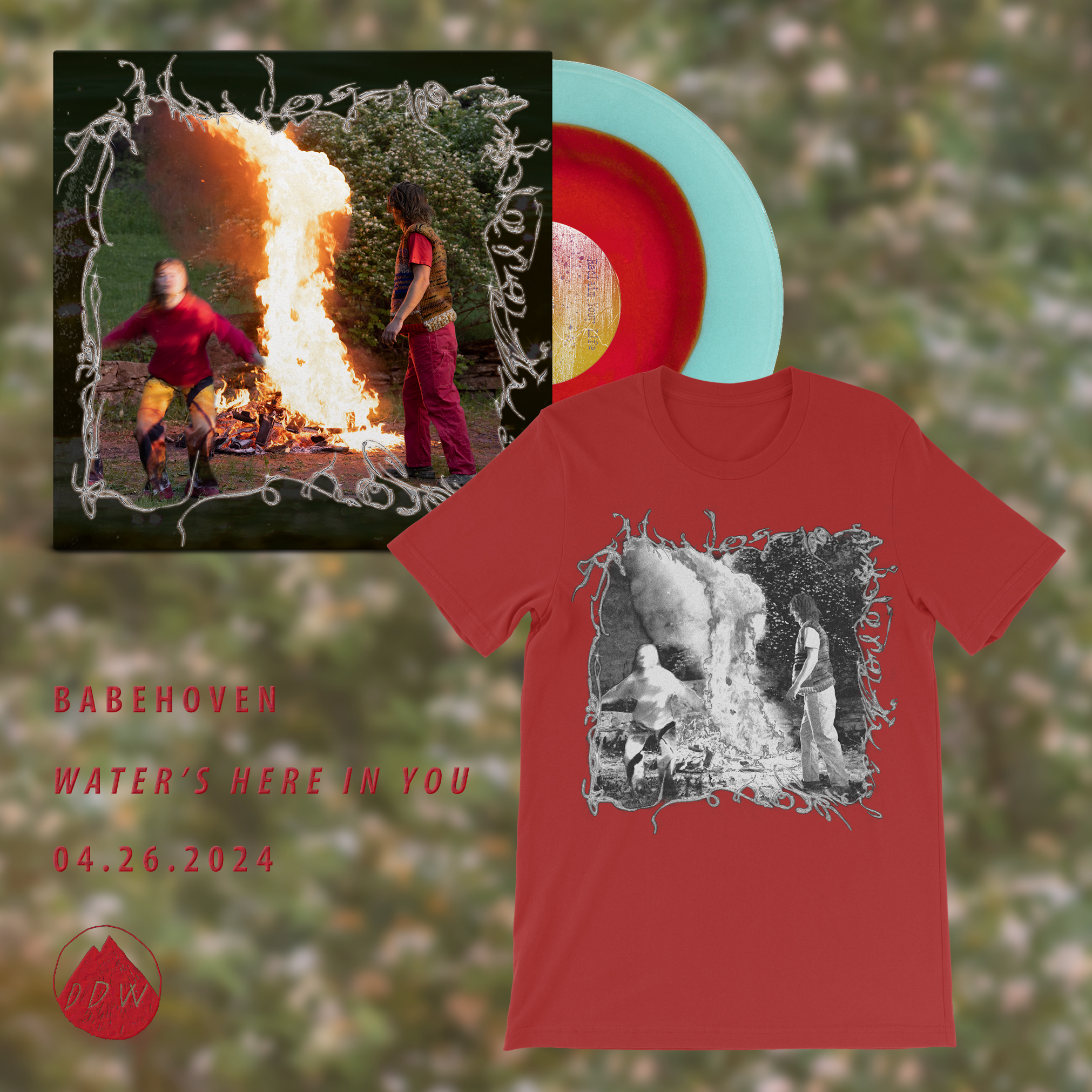
Hudson-based duo Babehoven make a triumphant return with their latest album, “Water’s Here In You”, set to release everywhere on April 26th, 2024. The album journeys through the indie folk landscape they had previously etched out, now adorned with touches of eerie, atmospheric, and occasionally dissociative tones.
“Seemingly aware of the blandness that runs through most modern indie rock, ‘Birdseye’ opts for something more ambitious and strikes a balance between melancholic and soaring, jangley and ornate.” —The FADER
“It’s not just one of Babehoven’s best, it’s one of the best moments of 2024 yet, period.” —Paste Magazine
From Babehoven’s sophomore album ‘Water’s Here in You’ available everywhere on LP/CD/digital April 26th, 2024 on Double Double Whammy


 The Fat Angel Sings