

:format(jpeg):mode_rgb():quality(90)/discogs-images/A-5373-1274614224.jpeg.jpg)
Curve were an English alternative rock and electronica duo from London, formed in 1990 and split in 2005. The band consisted of Toni Halliday (vocals, occasionally guitar) and Dean Garcia (bass, guitar, drums, programming) Garcia had played bass guitar as part of Eurythmics’ live band in 1983–84 and on two of their studio albums. Halliday also wrote the lyrics to the songs and they both contributed to song writing. Also an important collaborator was producer Alan Moulder, who helped them to shape their blend of heavy beats and densely layered guitar tracks set against Halliday’s vocals.
The London band Curve, cantered around the duo of vocalist Toni Halliday and multi-instrumentalist Dean Garcia, clearly tumbled into a specific groove and never left.
Post-punk was morphing into early “college” and “alternative” rock, including the shimmering reverberations of shoegaze and dream-pop. All of these were also folding back in new wave’s synths and digitized percussion that had taken off-ramps to an array of other club sounds like industrial, rap, and house music. The largely electronic rave movement then extended out from that branch of music’s family tree, as would its intertwined Madchester scene that often relied on more traditional band structures. Acidic keyboards, wiggly earworms, hypnotic grooves, and remixes were everywhere, with Curve deftly navigating these paths as they converged and diverged.
Not enough people know Curve’s music very well, if at all. they started up in late 1990, first ep came out in march 1991. beats were a big part of their music like MBV, or JaMC from the same time period. JaMC actually shared their drummer, Monti, for several years. both MBV and JaMC, plus Ride and many others, we engineered/produced by Alan Moulder. Alan and Toni were a couple, so he was always hanging out, and playing twisted guitars from time to time. some of the singles had vocal front mixes, and as Toni Halliday didn’t play an instrument at live shows, she was a prominent focal point. more often than not, she wasn’t shy and demure- she would hold the crowd in her left hand and a mic in her right.
They made a great bunch of music. After the first 4 EPs and 1st album, Dean Garcia continued to explore sonics in different areas. he had hints of edgy industrial beats earlier, but on “Cuckoo”, those elements really came out strong.
By their 4th or 5th album, they’d mostly gotten bored with the shoegaze song type ( perhaps also tired of the constant assaults by the Press in the mid-90s of any music that sounded remotely like shoegaze) by the mid 90s, ride and lush had veered towards britpop, Chapterhouse and Slowdive also went towards more ambient and electronic, then broke up. Pale Saints lasted til 95, and threw in the towel.
This band was (and still is) a definition of an alternative rock. Their music combines shoegaze, grunge, techno, breakbeat with even a slight touch of industrial and post-punk. Their texts are full of magical realism which reflects on everyday relationships in a highly allegorical/esoteric sort of way. All of this stuff is reinforced by incredibly insightful vocals of Toni Halliday and very skillful rhythm-section filled with all-consuming energy coming from these multi layered music styles in one place.
Check out their bandcamp page – a lot of goodies stored up there, including fan bootlegs. Curve was the elite. Highlights of Curve’s live career included a performance at the 1992 Glastonbury Festival.

Doppelgänger
As Curve, Halliday and Garcia released three acclaimed and increasingly successful EPs (“Blindfold”, “Frozen”, and “Cherry”) throughout 1991 on Anxious Records. They also made an impact on the UK album charts in 1992 with their debut studio album “Doppelgänger”.
They surpassed all expectations with their debut full-length, 1992’s “Doppelgänger“, which remains their most successful, highly regarded release. While most of “Doppelgänger’s” songs are massive rushes of energy, the band slows down at the end for the lush ambient drift of “Sandpit,” which might actually be the album’s best song overall.
Curve would continue making excellent albums and EPs after this one, and would influence countless dream pop, alternative dance, and even goth/industrial groups, but “Doppelgänger” remains their most powerful, essential release, and one of the best alternative albums of the early ’90s.
Moulder and Flood would handle Curve’s first LP “Doppelganger” in 1992, and then engineer, mix, or perform on almost everything Garcia and Halliday released as a duo over the next two decades. So pervasive was Moulder’s presence in particular that he ended up marrying Halliday.
Curve re-released the “Doppelganger” CD as a double album. This release included their first three EPs.
In 1992, the band released the compilation album “Pubic Fruit“, containing their first three EPs and an extended mix of the single “Faît Accompli”. Toni Halliday also featured on two songs (“Edge to Life” and “Bloodline”) from Recoil’s album, “Bloodline“. In 1993, Curve issued “Radio Sessions”, a compilation album of recordings made during their two sessions for John Peel’s show on the UK broadcasting station BBC Radio 1.
The appeal of the band’s early catalogue stretching to at least 1993’s sophomore LP “Cuckoo” stemmed primarily from playing and production that leaned into the sounds of goth, industrial, and shoegaze, their instrumentals and vocals swirling around like dust devils.
The “Horror Head” B-side “Falling Free,” for example, started off as a drum-pattern-powered workout but infamously got converted to hissing, burping IDM in a later Aphex Twin remix. The duo’s small roster of covers included Siouxsie and the Banshees and Tubeway Army, but their version of Donna Summer’s “I Feel Love” on an NME charity compilation found their takes on Giorgio Moroder’s classic melody and rhythm fighting through their distinctive fog of echo. The “Superblaster” single also gave us “Low and Behold,” with a spare, bassy keyboard up front in the mix to reinforce its sinister nature—”How we gloat/At others’ misfortune/A nation of reptiles/Given to nothing.”
The singles and B-sides that started to appear from “Doppelganger” forward showed Curve were comfortable dipping into percussion-heavy and dissonant experimentation. They also managed to create effortless techno synth lines that might have pleased Osborne even beyond his early presence at the duo’s sessions.

Cuckoo – (Expanded Edition)
Curve’s second studio album, the harder-edged “Cuckoo”. Curve have got to be one of the UK’s most unfortunate bands. Emerging out of the shoegazer scene with a new crossover sound that only a small section of the UK scene was ready for, the commercial failure of “Cuckoo” led them to split at the worst possible time.
Curve’s second album “Cuckoo” is more sophisticated, more seductive, less serrated, even squelchy in places than their debut, “Doppelganger“. A mature, fluent, and literary album, it hit the Top 30 on release in 1993. “Cuckoo” takes the listener from the established hallmarks and runs with them – over the horizon – to many new and rich areas of pop melodrama. Delicate and gorgeous moments sit easily with their simultaneously cool and incendiary sound. A more personal album, it is nonetheless metallic, unforgiving, Loud, clear. As with “Doppelganger” the album was produced by the band with Flood and Steve Osborne, and it was mixed by Alan Moulder. It is home to the lead tracks from singles “Blackerthreetracker” EP and “Superblaster” and is regarded by the band as their best piece of work.
The “Cuckoo” album was also re-released as a double album and included, amongst other songs, several remixes.
The British group went in a darker, moodier direction with 1993 follow-up “Cuckoo“. Opener “Missing Link” is furious and aggressive, coming closer to Ministry-style industrial than the group’s previous work, but other songs are slower, more atmospheric, and a bit more experimental. The songs still contain walls of searing guitar noise and thundering drums, but some of these tracks are a bit more spacious and reflective.
The percolating synths on songs like “Crystal” and “Unreadable Communication” come a bit closer to the then-developing trance style, and the slower songs anticipate the direction Massive Attack (and several other trip-hop groups) would take during the course of the decade. On the gentle “Left of Mother,” the group surprisingly incorporate acoustic guitars and strings, resulting in an earthly yet otherworldly combination which nevertheless sounds distinctly like Curve. “Superblaster” is a bit closer to the poppiness of “Doppelgänger’s” highlights, and was appropriately released as a single, but given that the chorus includes the line
“Have you got anything left to say before I shoot myself?,” it doesn’t come as much of a surprise that it wasn’t a hit. “Cuckoo” is riskier than its predecessor, and not as catchy, but it rewards repeated listening, and still stands among the band’s best work — Halliday has even stated that she considers it to be Curve’s best album.
2CD – 22 Tracks. This expanded 2CD edition includes the album plus the remixes and two previously unreleased tracks, the original versions of “Rising” and “Half The Time“, which have only previously been available in their remixed form. LP – 180 Gram Vinyl with Download. 10 Tracks.
Come Clean
Just as fans were beginning to wonder if the duo Curve would ever return from their self-imposed exile, they returned with their best album to date, “Come Clean“. Still combining largely electronic music with alternative hooks and lines, members Toni Halliday and Dean Garcia returned to a now-popular form of music they helped create years ago. Although the album’s two best tracks had previously appeared on their late-1997 EP “Chinese Burn” (the title tracks from both the EP and the full-length), there are plenty of other strong tracks in attendance.
“Come Clean”. Released in 1997, ”Chinese Burn” in its original form and remixed by the likes of Lunatic Calm criss-crossed IP universes from Marvel to Buffy the Vampire Slayer. The song’s smashing breakbeats and klaxon-like guitars from Garcia, paired with Halliday’s fuzzed-out vocals, all struck while The Prodigy and Chemical Brothers were hot. This was followed up by the midtempo “Coming Up Roses,” a ballad that stood out from the period’s aggressive focus on club floors and festival crowds.
Curve received high praise for 1996’s “Pink Girl with the Blues” EP and then arguably earned their broadest mainstream exposure with the lead single from their third album,
“Something Familiar” may be the band’s most melodically accessible track yet, while the extremely overdriven distortion and abrasive tones of “Dogbone” are just the opposite. Unlike many electronic bands, the duo makes it clear that they don’t just go for musical overkill, as evidenced by the slow electronic groove contained in “Killer Baby,” and the mid-paced dance-rock of “Cotton Candy.” “Come Clean” is the welcome return of a band that deserved attention when it first appeared years ago, and may get it in the electro-friendly late ’90s.
Locked in a contract dispute with Universal Music Group after the release of “Come Clean”, Halliday and Garcia would independently post songs to the World Wide Web that would later be gathered on the self-released “Open Day at the Hate Fest” in May of 2001.
Gift
Curve has had more of their share of ups and downs. Yet even when their career looked its bleakest, the band continued to make great music. When Estupendo/Universal told the band that their album “Gift” would be shelved, they continued to write and record. After posting several mp3s on their website, Toni Halliday and Dean Garcia had enough material to fill another album. As “Gift” was still tied up in legal battles with the major label, Curve independently released “Open Day” at the Hate Fest through their website. As the band enjoyed brisk sales of their self-release, they received word from Universal that “Gift” was put back on schedule and would be released on their Hip-O imprint.
It’s interesting to consider that “Gift” almost never saw the light of day. While it does fit in well with the band’s efforts, it sounds different enough to reveal that the duo has fresh ideas and an ability to write great melodies without recycling old ones. As “Come Clean” kicked things off with “Chinese Burn,” a gritty track featuring slick production, skittering beats, and a dirty, guitar-driven sound, “Hell Above Water” impressively introduces “Gift” with an edgy riff reminiscent of late-’90s Nine Inch Nails.
“Gift’s” title track follows and reveals one of the band’s slickest choruses, perfectly combining their up-tempo instrumental intensity with Toni Halliday’s sultry vocal work. Seemlessly flowing from menacing tracks like “Chainmail” and “Polaroid” to smoky, electronic-laden ballads like “Perish” and “Hung Up,” “Gift” is classic Curve with modern arrangements and energy. While mixing elements of rock and electronica together is old news for Curve, their songwriting seems more natural on this outing. Perhaps due to their more personal nature, Gift’s ten tracks are among Curve’s best. While bringing together an all-star mix of producers and performers, including Alan Moulder, Flood, Alan Wilder (Depeche Mode, Recoil), and Ben Grosse (Filter), Halliday and Garcia showcase their unique knack for recording songs that feature an underlying darkness, even in their lighter moments. As Garbage and Sneaker Pimps have each scored commercial success with similar blends of female lead vocals, big beats, samples, and electric guitars, Curve shows that they are among the innovators of the form and prove themselves with one of their finest efforts.
The New Adventures Of Curve
“The New Adventures of Curve” isn’t so much different than the old ones. Since Curve’s fan base hasn’t exactly gone through a drastic shift between 1991 and 2002, it’s generally happy with the duo sticking to the same sound, which has shown very subtle variations from release to release. Since the duo’s first single, several groups have attempted to mimic that sound or use that formula — dark dance beats, blurs of grinding guitars, a vulnerable but deadly vocal command — to no good effect. Or, in Garbage’s case, that template has been shrewdly polished and taken to the mainstream to very good effect. Throughout all of this, Curve has retained a very specific sound, and their enduring relevance has also had a good deal to do with the production, which has given their records an up-to-date or ahead-of-the-times feel. Curve has the small market they occupy cornered.
So here’s another web-only exclusive from the group that neither stands up to their best work nor dilutes it. Roughly half of these songs would make a suitable backdrop for a scene in a Gregg Araki film, in which the bodies of two malnourished androgynymphs feverishly tangle. These roaring numbers, as always, are tempered with slower, quieter material. The biggest (possibly only) surprise is what’s stuck at the end of this disc: a strange little rave-up sung by multi-instrumentalist Dean Garcia. Despite the fact that their records no longer sound completely unique, Garcia and Toni Halliday continue to please their loyal fan base while the popularity they deserve eludes them.
“The New Adventures of Curve” would tie a bow on Garcia and Halliday’s formal partnership. Initially available only on Curve’s own website, “New Adventures” maintained the duo’s gothy come-hither image to the bitter end. Short on tracks but long on time, it hypnotized listeners for 5 to 7 synth-and-patch-filled minutes at a clip with reverberating sheet-metal percussion (“Nice and Easy”), introspective and methodical riffing (“Star”), jittery EBM (“Answers”), and even Deepsky’s progressive breaks mixed into “Cold Comfort.” It was the encore for the duo’s concert of a career together, referencing and recasting their strengths, influences, and planted seeds.
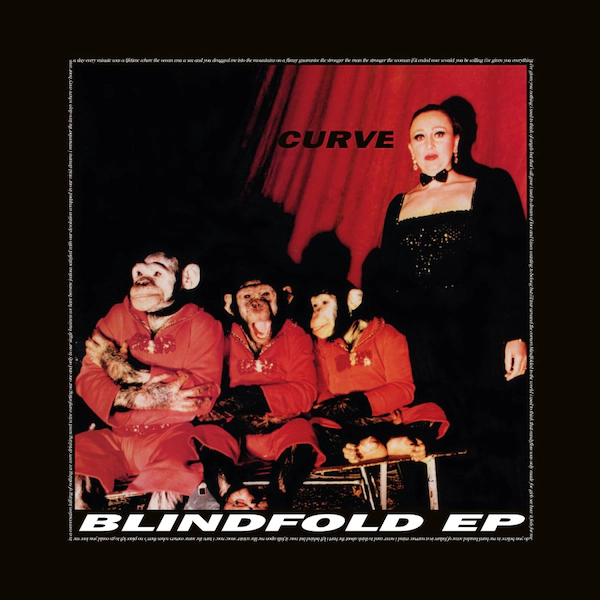
Producer Alan Moulder was a prominent collaborator who helped shape their blend of heavy beats and densely layered guitar tracks set against Halliday’s vocals. On March 4th, 1991, they released their debut EP “Blindfold” EP. The EP contained four tracks in total, “Ten Little Girls”, “I Speak Your Every Word”, “No Escape From Heaven” and the title track.
The English alternative rock duo Curve was founded in 1990 by Toni Halliday and Dean Garcia. After releasing their debut EP “Blindfold” in 1991, the duo returned after two months with their second EP Frozen. This 4-track set features “Coast Is Clear”, “The Colour Hurts”, “Zoo” and the title track. Just like the previous EP, “Frozen” was produced by Steve Osborne, who has worked with a wide variety of musicians, including Suede, New Order, Elbow, and U2 amongst others.
In 1991, they released their first three EPs, “Blindfold”, “Frozen” and “Cherry“. All three were produced by Steve Osborne, who also worked with U2, New Order and Simple Minds amongst others. The third EP “Cherry” was also known as “Clipped / Galaxy” and featured four tracks; “Clipped”, “Die Like A Dog”, “Galaxy” and the title track.
Curve released five studio albums in total (“Doppelgänger” in 1992, “Cuckoo” in 1993, “Come Clean” in 1998, “Gift” in 2001, and “The New Adventures of Curve” in 2002),
There has been five compilation albums (“Pubic Fruit” in 1992, “Radio Sessions” in 1993, “Open Day at the Hate Fest” in 2001, “The Way of Curve” in 2004, and “Rare and Unreleased” in 2010), and a string of EPs and singles.
Curve returned to the music business in 1996 with the EP “Pink Girl With the Blues”.
In 1997, they released “Chinese Burn”, the first single to be taken from their third studio album “Come Clean” (1998). The album is a set of songs displaying a more pronounced influence of electronic music than earlier releases.
Curve’s style described as a “towering monolith of guitar noise, dance tracks, dark goth, and airy melodies”. He also regarded the band’s music as a combination of “shoegazer atmospherics and techno beats”. Halliday cited Patti Smith and Nico, qualifying them as “marble giants”
Curve’s legacy best and brightest is the pair’s well-maintained Bandcamp page, sequestered from the rights and permissions issues of many streaming services. It holds just about every officially available song, rarities that appeared on special-edition physical and digital releases, studio mixes shelved by the band and their regular producers, unreleased remixes
Halliday has only sporadically re-entered the spotlight since then. She’s been a guest vocalist here and there, sang lead for Chatelaine and their 2010 album Take a Line for a Walk, and released the solo “Roll the Dice” EP in 2020. The Chatelaine music seems just a bit more satisfying overall as a curious slice of gothic chamber pop, while her vocals outpace the shiny synthpop production on her own release.
Garcia’s been far busier with production roles and as a player in multiple projects. His biggest name recognition might have come in KGC alongside members of KMFDM, while his longest-running concern has been SPC ECO, teaming with his daughter Rose Berlin to play loose and fast with shoegaze and various electronica subgenres. All of Garcia and Halliday’s newer outlets absolutely have wildly creative moments; none feel as purposefully in the pocket as Curve did.

 The Fat Angel Sings