

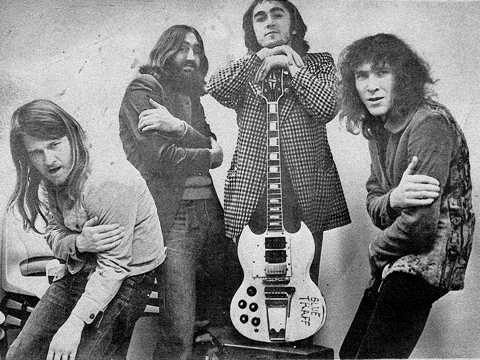
Three albums and out, Patto (named after vocalist Mike Patto) were highly regarded on the British rock scene in the ’70s. formed in London in 1970.
Founded by vocalist Mike Patto, their line-up was taken from Timebox, consisting of vocalist Patto, guitarist and vibraphone player Ollie Halsall, bassist Clive Griffiths and drummer John Halsey. Signed to the newly formed Vertigo label. With Muff Winwood as producer, they recorded their first album live in the studio.
The key point of the band was probably the superb guitar work of the eminently flexible , a performer whose session work was highly prized, even though the guitarist seemed hesitant to step into the spotlight. Patto performed a stately mix of jazz-rock with a little bit of blues. Following the breakup of the band, Following the breakup of the band, Halsall moved on to play with Tempest while Patto joined Spooky Tooth for their album “Mirror”.
In December 1971, Patto entered the studio again to record their second album, “Hold Your Fire“, after which they were dropped from the Vertigo roster. Despite poor record sales, they were becoming known as an exciting live act. Through his connections in England, Muff Winwood was able to have the band signed to Island Records, and they recorded the album “Roll ’em Smoke ’em Put Another Line Out” in 1972.
Patto and came back together in in 1975, though remained for only a single album, with Patto remaining the sole founding member by the following album. Mike Patto died in 1979 of throat cancer.

Criminally underrated band at the time, but borne into legend by the unspeakable tragedies that awaited its makers, the debut album by Patto can safely be described among the finest jazz-rock fusion albums ever cut by a British band. Mike Patto’s vocals certainly match that billing, a throaty, emotive sound that puts one in mind of the effect that Steve Winwood spent much of his career pursuing, while first lieutenant Ollie Halsall’s reputation as one of the era’s hottest guitarists is revealed as only one of the strings to his bow — early into the opening “The Man,” he unleashes a mean vibraphone solo as well.
However, “Hold Me Back” quickly restates his lead duty and, though the song itself is little more than a crude rewrite of the Rolling Stones’ “Stray Cat Blues,” the riffs that scythe through the brew are sparkling enough to camouflage any lyrical redundancies. “Money Bag,” too, offers up a showcase that is difficult to shake, duelling with a scat rhythm section that is tasteful enough to eat, but never overwhelming the mood.
The passing of time has not preserved all of Patto’s joys — like so much of the fusion of the age, there are elements that sound preposterously overwrought today. At its best, however, it re-establishes all the glories for which Patto was renowned at the time.

Ignore the fact that the opening title track sounds almost exactly like the intro to Neil Young’s “Ohio” and Patto’s second album kicks into gear from the moment needle strikes vinyl. A driving fiesta of good-time bluesy-rock, “Hold Your Fire” retains just enough of its predecessor’s jazz fusion sensibilities to ensure that you’re never sure what will happen next, but similarly imbibes sufficient oxygen from elsewhere on the early-’70s British rock underground to line up alongside any other primal gem of the age.
Certainly producer Muff Winwood seems considerably more at ease than he did his last time around, hauling Ollie Halsall’s tuneful soloing high up in the mix and framing the album’s best tracks — the melancholy “You, You Point Your Finger” among them — within some breathtakingly lovely arrangements. Another highlight, the funky Faces-like “See You at the Dance Tonight,” almost single-handedly blueprints the best of the still-unborn pub rock boom, while Halsall’s playful “Air Raid Shelter” would not have been out of place on “Hold Your Fire”, which further proves that not all of Patto’s early instincts have been suppressed. Neither do the surprises stop with the music.
“Hold Your Fire” was released in positively the most un-Roger Dean-like sleeve design to which Dean ever put his name.

The band switched the label and the new company sent Muff Winwood to produce and change the band’s direction to maybe become more mass friendly. It failed to appeal a new audience and alienated the base they had.
The album has its moments but hardly even one consistent song. It remains an undefinable hotchpotch of possibilities.
Studio albums
- 1970 – Patto
- 1971 – Hold Your Fire
- 1972 – Roll ’em Smoke ’em Put Another Line Out
 The Fat Angel Sings