

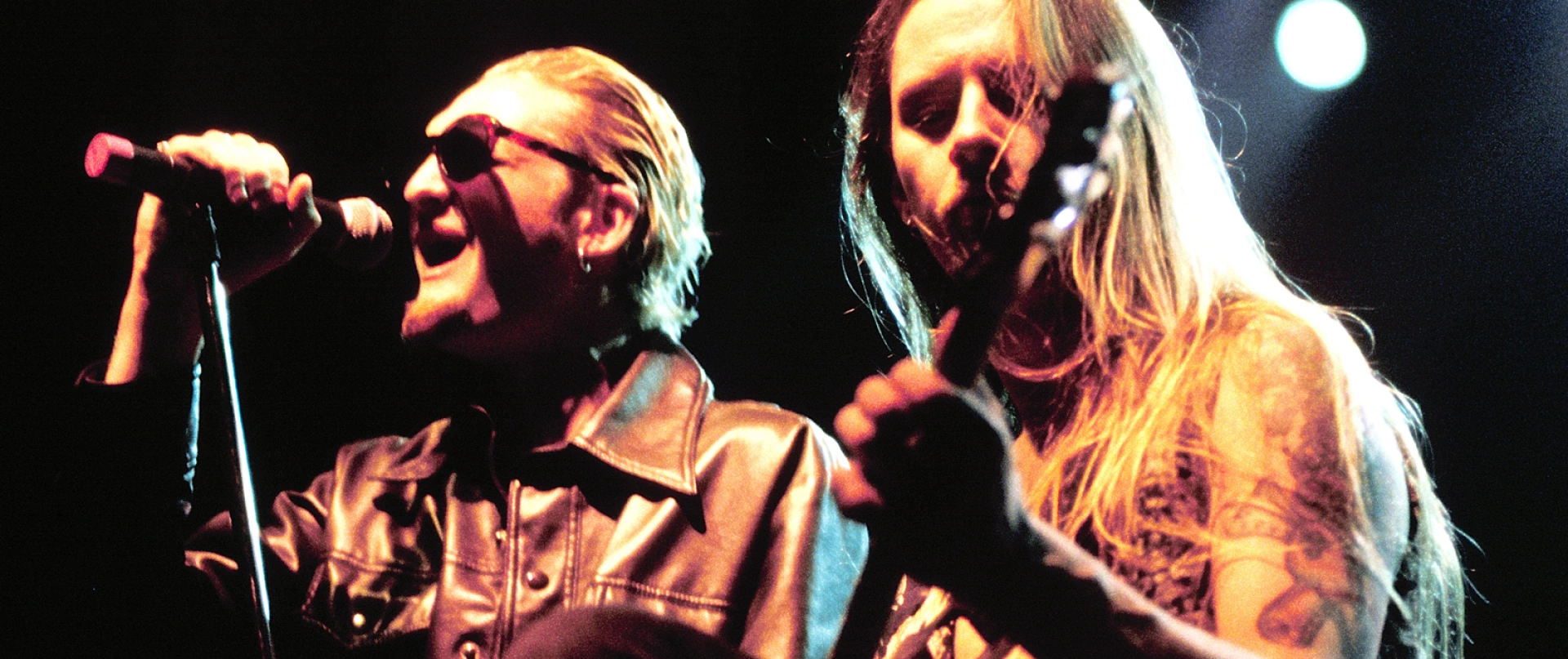
American rock band Alice in Chains has released six studio albums, three extended plays (EP), three live albums, Alice in Chains was formed in 1987 by guitarist Jerry Cantrell and drummer Sean Kinney, who then recruited bassist Mike Starr and singer Layne Staley. The band was first formed in 1987. The group hails from the area of Seattle, Washington. Guitarist-vocalist Jerry Cantrell and the late Layne Staley achieved enormous success without compromising anything, and the band have continued to write fantastic songs in the post-reunion years of the 2010s to now.
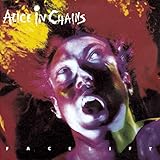
Facelift
The band were signed to Columbia Records in 1989 and released its first EP, “We Die Young”, in July 1990. Alice in Chains both epitomized the solemn, heavy Seattle sound of the 1990s and stood apart from the grunge hordes. What separated Alice in Chains from their alt-rock brethren was how their roots lay in heavy metal, not punk. Guitarist Jerry Cantrell and vocalist Layne Staley had both played in metal bands prior to the formation of Alice in Chains.
They released the band’s debut, “Facelift”, in 1990, well before Nirvana’s Nevermind pushed the underground into the mainstream. Despite their connections to metal, Alice in Chains thrived in the glory days of grunge, and it wasn’t merely a question of timing, either. The band’s sensibility fit into the alternative rock zeitgeist of the early ’90s. Cantrell’s gloomy, minor-key riffs were an ideal match for Staley’s tortured lyrics, creating a sound that felt as heavy as their Seattle cohorts but also was slightly slicker and ready for radio. It was versatile, too. After the group scored rock radio and MTV hits with “Man in the Box” and “Would?” in the early days of grunge, eventually “Facelift” achieved double Platinum sales .
This Grammy-winning hit from “Facelift” features Staley’s most recognizable vocal part, a wordless howl that weaves itself into the main guitar riff in a way that’s tremendously catchy. Staley said that he wrote the lyrics about the idea of government censorship, but that he was “really, really stoned” when he penned them, so that might not translate. Either way, the song is one of their best.
“Facelift” opener is one of the shortest tunes in their catalogue, but it packs a walloping punch into that runtime, as well as macabre lyrics that Cantrell wrote after witnessing 10-year-old kids dealing drugs.
At six-and-a-half minutes, “Love, Hate, Love” is the longest track on AIC’ 1990 debut, and it’s the one that Cantrell once dubbed “the masterpiece” of the album. Featuring one of Staley’s first knockout vocal performances, this slow-burner tackles the nuances of love and hatred, two passionate feelings that are often enmeshed in the most unpleasant ways. All of that tension comes through on here.
The band toured in support of the album for two years before releasing the acoustic EP “Sap” in early 1992.

Dirt
In 1992, Alice in Chains released the critically acclaimed album “Dirt”, It became the band’s most successful, The band did not tour in support of “Dirt” for very long, due to Staley’s drug addiction. While touring, Starr left the band for personal reasons and was replaced by Mike Inez.
“Dirt” is Alice in Chains’ major artistic statement and the closest they ever came to recording a flat-out masterpiece. It’s a primal, sickening howl from the depths of Layne Staley’s heroin addiction, and one of the most harrowing concept albums ever recorded. Not every song on “Dirt” is explicitly about heroin, but Jerry Cantrell’s solo-written contributions (nearly half the album) effectively maintain the thematic coherence — nearly every song is imbued with the morbidity, self-disgust, and/or resignation of a self-aware yet powerless addict. Cantrell’s technically limited but inventive guitar work is by turns explosive, textured, and queasily disorienting, keeping the listener off balance with atonal riffs and off-kilter time signatures. Staley’s stark confessional lyrics are similarly effective, and consistently miserable.
Cantrell wrote “Would?” about his late friend, and Mother Love Bone frontman, Andrew Wood, who died of a drug overdose in 1990 at just 24 years old. One of many tragically prescient songs in the AIC playbook, its balance between emotionally turbulent lyrics and generally fun-to-listen-to sound make it the quintessential Chains song, and one of Staley’s most well-rounded vocal performances.
“Them Bones” is one of their foremost crushers. With palm-muted metal chugs that recall Pantera, a monster truck of a hook and guitar tones that are smothered in muddy distortion, this sinewy “Dirt” banger is 10 tons of pure hard-rock destruction that still makes room for piercing reflections on mortality. Hearing Staley croon, “I feel so alone/Gonna end up a big ol’ pile of them bones,” is positively chilling.
“Down in a Hole” ended up becoming one of the most beloved songs on their 1992 sophomore LP, “Dirt.” Crawling, slightly psychedelic and unmistakably Sabbathian, this moody gem about the guitarist’s then-girlfriend demonstrated the emotional and sonic range of the band to great effect.
Sometimes he’s just numb and apathetic, totally desensitized to the outside world; sometimes his self-justifications betray a shockingly casual amorality; his moments of self-recognition are permeated by despair and suicidal self-loathing. Even given its subject matter, “Dirt” is monstrously bleak, closely resembling the cracked, haunted landscape of its cover art.
AIC usually prefer to traverse the back roads of metal, hard rock and alt-rock, but they also excelled at down-the-middle grunge. After a jammy, psychedelic intro with plenty of wah-wah pedal abuse, “Rain When I Die” contains the most early-Nineties Seattle chorus on “Dirt”, while also maintaining their own signature flair. It’s a true classic of their early catalogue.
The album holds out little hope for its protagonists (aside from the much-needed survival story of “Rooster,” a tribute to Cantrell’s Vietnam-vet father), but in the end, it’s redeemed by the honesty of its self-revelation and the sharp focus of its music. Some versions of “Dirt” feature “Down in a Hole” as the next-to-last track rather than the fourth.

Jar Of Flies
1994 saw the release of Alice in Chains’ second acoustic EP, “Jar of Flies”. It entered the charts in the top slot, making it the first Alice in Chains release—and the first EP in history—to debut at number one.
Amazingly, “Rotten Apple” isn’t even the best song on “Jar of Flies”. The seven-song release also contains the greatest stripped-down track in the band’s discography, the glimmering “Nutshell.” Even without the force of blaring amplifiers, the band sound totally locked-in for this highlight, which boasts a gnarly yet tasteful solo, subtle drums and a sweetly melancholy vocal performance from Staley.
AIC made history when 1994’s “Jar of Flies” became the first EP in history to peak at No. 1 on the Billboard 200, and “Rotten Apple” shows why it happened. The intro track from the band’s second acoustic EP boasts god-tier harmonies from the two singers, which slither in between a sultry guitar lick that’s drenched in phaser effects. It’s way more blues-rock than it is grunge or metal, but AIC never sound out of their element .

Alice in Chains
In 1995, the band released a self-titled album, Alice in Chains entered a hiatus after not touring since the release of “Dirt”. Dispelling rumours of their demise due to Layne Staley’s heroin addiction, “Alice in Chains” is a sonically detailed effort that ranks as their best-produced record, and its best moments are easily some of their most mature music. “Alice in Chains” relies less on metallic riffs and more on melody and texturally varied arrangements than the group’s previous full-length albums, finally integrating some of the more delicate acoustic moods of their EPs. The lyrics deal with familiar AIC subject matter — despair, misery, loneliness, and disappointment — but in a more understated fashion, and the lyrics take on more uplifting qualities of toughness and endurance, which were missing from much of their previous work. The consistent visceral impact “Alice in Chains” lacks in comparison to that previous work is partially made up for by the skilled production and songs like “Grind,” “Brush Away,” “Over Now,” and the hit ballad “Heaven Beside You,” which are among the band’s best work.
Still, in spite of its many virtues, it’s hard not to feel a little frustrated with the record, as though, given those qualities, it should have turned out better than it did — there are some slow spots where the songs are under-crafted and not especially memorable, and those moments can make the band sound uncommitted and distracted. That, in turn, can make the defiance of songs like “Grind” (“you’d be well advised/not to plan my funeral ‘fore the body dies”) sound more like denial; just when Alice in Chains’ music was finally beginning to emerge from the dark side, the intra-band problems became too much to bear and made Alice in Chains the last collection of new material the Staley-fronted AIC would release.
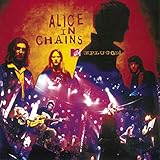
MTV Unplugged
From 1996 to 2002, the band was mostly inactive, but releasing two live albums, including the successful “MTV Unplugged”, Between the end of 1993 and a performance for MTV Unplugged in the spring of 1996, Alice in Chains performed no concerts — they didn’t even support the release of their eponymous third album with a minor tour. There’s a variety of reasons for their inactivity — primarily it’s due to the health of certain members — but the lack of concerts made the Unplugged performance seem special. During the concert, Alice in Chains drew from their three albums and two EPs, offering new, more reflective arrangements for harder songs like “Would?” and virtually re-creating the original versions of “Got Me Wrong” and “No Excuses.” Throughout the album, the group sounds tight and professional — on the basis of this performance, it’s hard to believe that they hadn’t played together for nearly three years — but it doesn’t offer anything that the albums don’t already.
The acoustic arrangements of the harder songs sound like novelties, and the rest sound like rehashes of their previous work, only without much energy. Again, it’s a case of an Unplugged album that is designed to attract the band’s core audience, which makes it a fairly entertaining effort that is essentially just an official bootleg.

Live
On April 19th, 2002, Staley was found dead in his home after overdosing on heroin and cocaine, causing the group to break up. 2005, the band reunited with a new vocalist William DuVall. Alice in Chains had signed to Virgin/EMI making it the band’s first label change in their 20-plus year career.
With Alice in Chains on hiatus by the turn of the 21st century, Columbia Records issued several stop-gap releases to fill up the space — 1999’s greatest-hits collection “Nothing Safe” and the box set “Music Bank”, and a year later, their first true live collection, titled simply Live. Despite Alice in Chains’ inability (or outright refusal) to launch a proper tour after 1994, fans lucky enough to have caught one of their early tours will attest that they were quite a powerful live act. Their detuned sound and tales from the darkside are even more sinister and gripping on the concert stage, as evidenced by this 14-track set.
With a healthy helping of selections from their 1992 tour de force, “Dirt”, Alice in Chains let it rip on such metallic standouts as “Dam That River,” “Would?,” “Rooster,” “Angry Chair,” “Junkhead,” and a “drunk and disorderly” version of “Dirt’s” title track. Also featured are the early classics “Man in the Box” and “Bleed the Freak,” as well as a track that never appeared on any of their official studio albums, “Queen of the Rodeo.” Live shows what a devastating live band Alice in Chains could be.
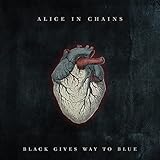
Black Gives Way to Blue
“Black Gives Way to Blue”, the group’s first album with DuVall, was released on September 2009.
It’s hard not to feel for Alice in Chains — all the guys in the band were lifers, all except lead singer Layne Staley, who never managed to exorcise his demons, succumbing to drug addiction in 2002. Alice in Chains stopped being a going concern long before that, all due to Staley’s addictions, and it took guitarist Jerry Cantrell, bassist Mike Inez, and drummer Sean Kinney a long time to decide to regroup, finally hiring William DuVall as Staley’s replacement and delivering “Black Gives Way to Blue” a full 14 years after the band’s last album.
“Check My Brain” was the first official single from AIC’ comeback album, 2009’s and the band’s second-ever track to feature Staley’s replacement, William DuVall, on the mic. The late frontman is so revered that whoever filled his shoes was always going to be controversial with some fans, but this song is a goddamn ripper that offered triumphant reassurance that the band were still a hard-rock machine.
To everybody’s credit, “Black Gives Way to Blue” sounds like it could have been delivered a year after Alice in Chains: it’s unconcerned with fashion; it’s true to their dark, churning gloom rock; and if you’re not paying attention too closely, it’s easy to mistake DuVall for his predecessor. There’s a difference between desperately attempting to recapture past glories and reconnecting with their roots, and Alice in Chains fall into the latter category.
While they’ll never be mistaken for a feel-good band, there is a palpable sense of relief that they get to play together again as a band, and what’s remarkable is that they still sound like themselves, capturing that weird murk halfway between ’80s metal and ’90s northwestern sludge, reminding us that we were missing something in their absence.

The Devil Put Dinosaurs Here
In 2011, Alice in Chains began work on their fifth studio album, “The Devil Put Dinosaurs Here”, which was released on May 2013. The big task for Alice in Chains on their 2009 comeback “Black Gives Way to Blue” was to prove they could carry on battered and bruised, missing Layne Staley but still in touch with their core. Enter “The Devil Put the Dinosaurs Here“, a record that is pretty close to identical to “Black Gives Way to Blue” in its sound, attack, and feel. Where it differs is in the latter, as the overall album feels lighter and, at times, the individual songs do, too. “Scalpel” flirts with the acoustic bones of “Jar of Flies” and also has perhaps the richest melody here, working as a song, not a grind.
This standout from 2013’s “The Devil Put Dinosaurs Here” sounds like Slayer gone sludge — gargantuan riffs, intense vocals from Cantrell and the eerie refrain, “I’ll just haunt you like a phantom limb.”
That said, there is an appeal to that monochromatic churn, the kind AIC created on “Dirt” and haven’t let go of since. The lightness comes not from the songs — the tempos still drag their feet, the guitars mine a minor key, the harmonies are in fifths so they sound like power chords — but rather from the precision of the band’s attack and, especially, the production.
This has a digital sheen that was missing even from “Black Gives Way to Blue”, and it gives the album an expansive feel, so the patented churn doesn’t seem quite so claustrophobic as before. Then again, perhaps that expansiveness is just a sign of age: Alice in Chains are now firmly entrenched in their middle age and settling into what they do best: retaining their signature without pandering and, tellingly, without succumbing to the darkness that otherwise defines them.
Rainier Fog
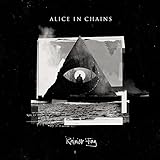
Alice in Chains’ sixth studio album, “Rainier Fog“, was released in August 2018. Consider “Rainier Fog” as something as a homecoming for Alice in Chains. Named after the heavy mist that comes rolling down from nearby Mount Rainier, the album finds Alice in Chains recording in Seattle for the first time since the group reunited in 2008 with William DuVall replacing the late Layne Staley as lead vocalist. Alice in Chains are aware of the significance of their return to Seattle, the place where they formed and rose to fame, so they wrote a tribute to all of their compatriots in the grunge scene, but that title track obscures how the album as a whole feels as if this incarnation of the band is exceedingly comfortable in its own skin. By this point, this latter-day version of Alice in Chains has recorded as many albums as the original line-up and has been together nearly twice as long, which means there’s an easy, evident chemistry to these ten songs.
Alice in Chains smartly decide to lean into this coziness, never attempting something new — the closest to a new wrinkle would be the ballad “Maybe,” which has a bit of an ’80s AOR bent — and focusing on their interplay and craft instead. It’s a gambit that pays off. “Rainier Fog” is, from front to back, a strong and lean record, one that benefits from its familiarity because the standard tricks — the grinding guitars and droning harmonies — now seem to carry not a whit of angst.
“The One You Know” is the intro cut and lead single from 2018’s “Rainier Fog”, and it’s proof of how much gas the band has left in the tank. The way the tense, metallic lead riff juxtaposes Cantrell and William Duvall’s pillowy harmonies during the chorus creates a hot-and-cold effect that’s classic AIC with a modern twist.
This is music made from a band that has been through the wringer and is happy to settle down and play, and there’s an undeniable appeal to that open heart, particularly when it’s camouflaged underneath such nominally heavy music.
The Albums:
Facelift (1990)
Dirt (1992)
Alice in Chains (1995)
Black Gives Way to Blue (2009)
The Devil Put Dinosaurs Here (2013)
Rainier Fog (2018)
 The Fat Angel Sings
Nicely done. I always liked Jar Of Flies best. I did have Dirt but I didn’t play the whole thing as much as I did Jar. I should have LOVED this band but they were eclipsed by Soundgarden, Pumpkins, Nirvana and Pearl Jam in my listening habits.
I’m reappraising them now though. I even bought MTV Unplugged in vinyl at the weekend