

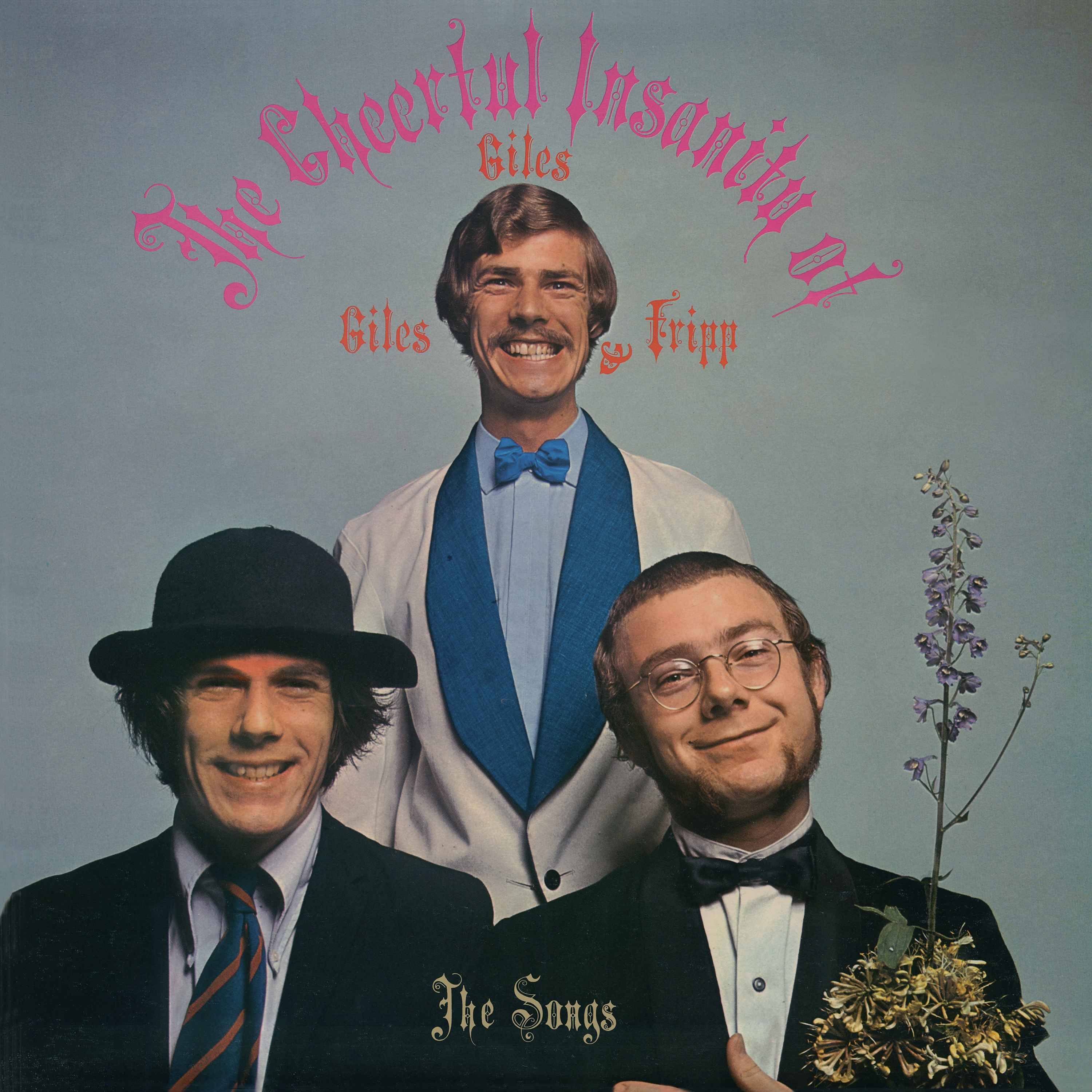
The first standalone release of the songs from Giles, Giles & Fripp’s 1968 debut album, now with spoken word sections removed. While 1967 is rightly remembered for an abundance of classic albums, there were also quieter debut LPs emerging, signalling popular music’s imminent changes to a more rock-oriented, musician-centred approach. It was also the year that Robert Fripp applied for a ‘singing organist’ role advertised by brothers Peter and Michael Giles, despite having no experience either as a singer or organist.
Experiencing a few challenges and disappointments on the way, the year was an exciting one for the trio, who recorded a series of demo tapes which eventually led to them being offered a record deal with Decca Records.
In 1968, “The Cheerful Insanity Of Giles, Giles & Fripp” album was released, bringing a mix of folk and psychedelic pop interspersed with Goon-ish humour, a slightly confusing cocktail of seriousness and comedy but nonetheless an album showing some beautiful harmonies and fine guitar playing.
“The Cheerful Insanity Of Giles, Giles And Fripp” might not have made waves when it landed in 1968, but it’s since become a cult curiosity for anyone tracking the tangled roots of King Crimson. The trio of Michael Giles, Peter Giles and Robert Fripp wove a quilt of psych, chamber folk, jazz daftness and classical eccentricity, within a spoken-word skit framing device (a la ‘The Saga Of Rodney Toady’, ‘Just George’). It’s less a precursor to “In The Court Of The Crimson King” than a sidelong step into the British art-pop twilight zone, with Fripp still years away from his feedback-drenched grandeur. Though it reportedly sold only 500 copies at first, reissues with bonus demos and singles have helped rescue it from obscurity, especially the 2001 Brondesbury Tapes, capturing home-recorded sketches that fill in the backstory.
For all its lack of commercial success, the album has been reissued on several occasions – though never in an edition that focuses purely on the songs. For this updated 2025 remaster, the somewhat dated spoken word/humourous interludes have been removed which has allowed for the songs to flow as an album revealing it as a charming, sometimes whimsical example of late British psychedelic music.
New 2025 remaster by David Singleton.
 The Fat Angel Sings