

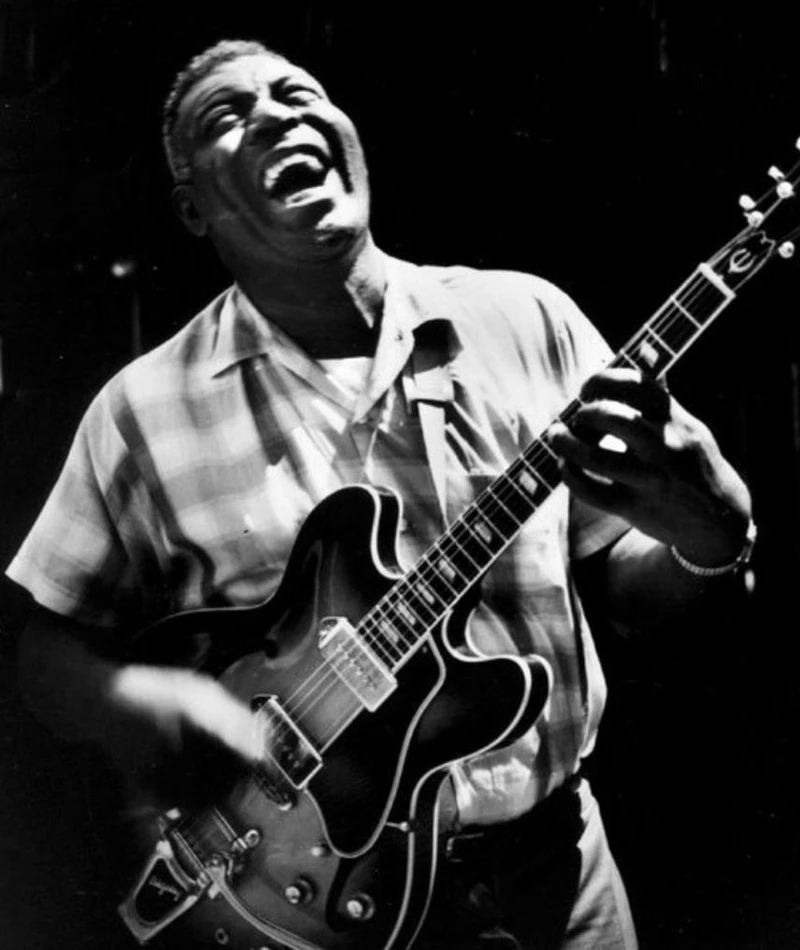
Chester Arthur Burnett (June 10th, 1910 – January 10th, 1976), better known under his stage name Howlin’ Wolf, An American blues singer, guitarist and harmonica player. He was at the forefront of transforming acoustic Delta blues into electric Chicago blues, and over a four-decade career, recorded his blues, rhythm and blues, rock and roll, and psychedelic rock. He is regarded as one of the most influential blues musicians of all time. Born into poverty in Mississippi, Burnett became a protégé of Delta blues musician Charley Patton in the 1930s. In the Deep South, he began a solo career by performing with other notable blues musicians of the day. By the end of the decade, he had established himself in the Mississippi Delta. Following a number of legal issues, a stint in prison, and Army service, he was recruited by A&R man Ike Turner to record for producer Sam Phillips in Memphis.
Producer Sam Phillips recalled, “When I heard Howlin’ Wolf, I said, ‘This is for me. This is where the soul of man never dies.
His reputation grew throughout the blues revival of the 1960s, and he continued to perform until November 1975, when he performed for the last time alongside fellow blues musician B.B. King. With a booming voice and an imposing physical presence, he is one of the best-known Chicago blues artists. described as “a primal, ferocious blues belter with a roster of classics rivalling anyone, and a sandpaper growl of a voice that has been widely imitated”.
He died on January 10th, 1976, after years of deteriorating health.
Moanin’ at Midnight
His first record “Moanin’ at Midnight” (1951) led to a record deal with Chess Records in Chicago. Between 1951 and 1969, six of his songs reached the R&B charts. Howlin’ Wolf’s first singles were issued by two different record companies in 1951: “Moanin’ at Midnight”/”How Many More Years“ released on Chess Records, “Riding in the Moonlight”/”Morning at Midnight,” and “Passing By Blues”/”Crying at Daybreak” released on Modern’s subsidiary RPM Records.
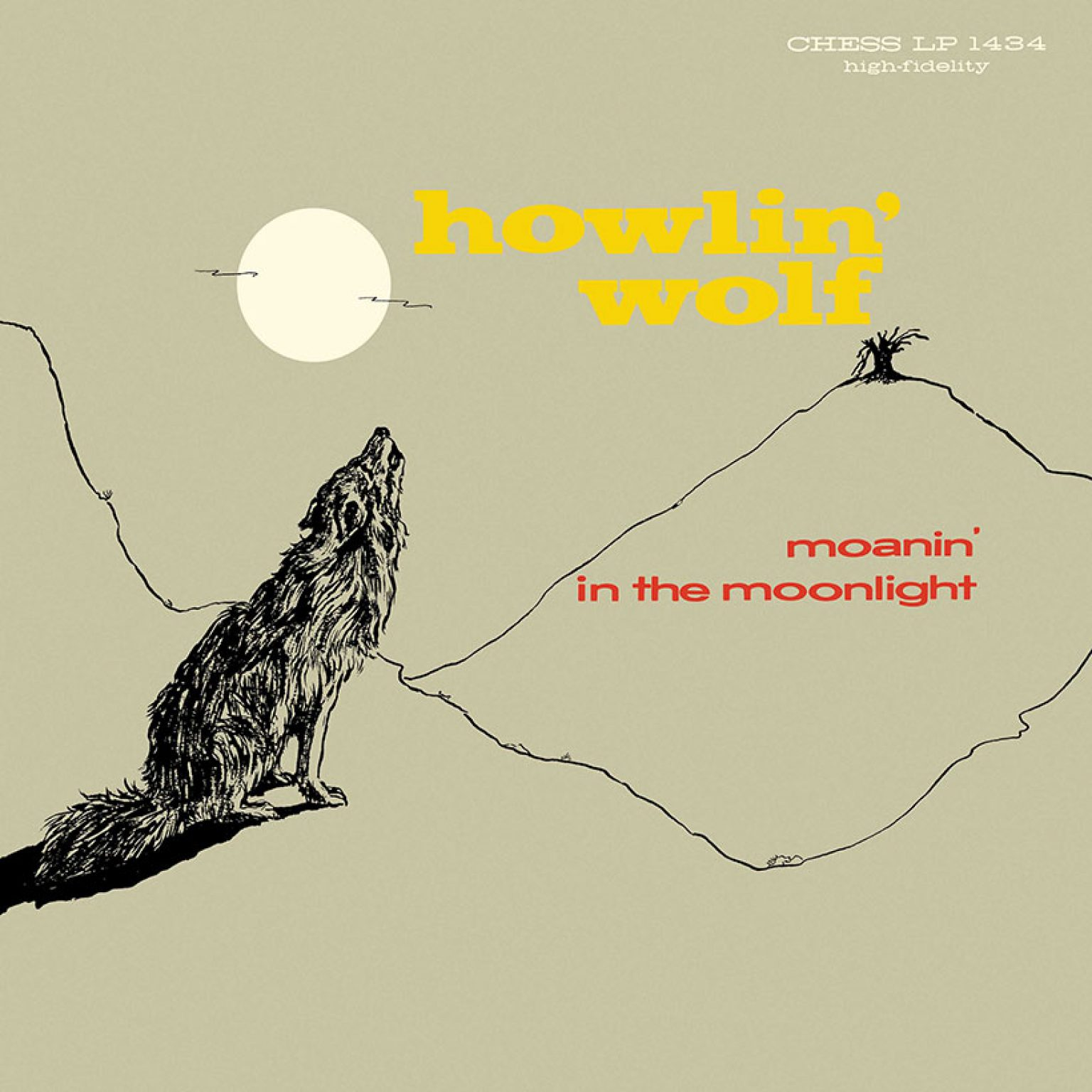
“Moanin’ in the Moonlight” was Howlin’ Wolf’s first collection of sides for the Chess label, packed with great tunes and untouchable performances by the man himself. The last word in electric Chicago blues, Wolf was possessed of fine guitar and harp skills, a voice that could separate skin from bone, and a sheer magnetism and charisma that knew (and has known) no equal. This disc is outstanding throughout, and features some of his best sides, including “How Many More Years,” “Smokestack Lightnin’,” “Evil,” and “I Asked for Water (She Gave Me Gasoline).” Highly recommended for the uninitiated and a must for collectors.
Wolf had persuaded the guitarist Hubert Sumlin to leave Memphis and join him in Chicago; Sumlin’s understated solos and surprisingly subtle phrasing perfectly complemented Burnett’s huge voice. The line-up of the band changed often over the years. Wolf employed many different guitarists, both on recordings and in live performance, With the exception of a couple of brief absences in the late 1950s, Sumlin remained a member of the band for the rest of Wolf’s career and is the guitarist most often associated with the Howlin’ Wolf sound.
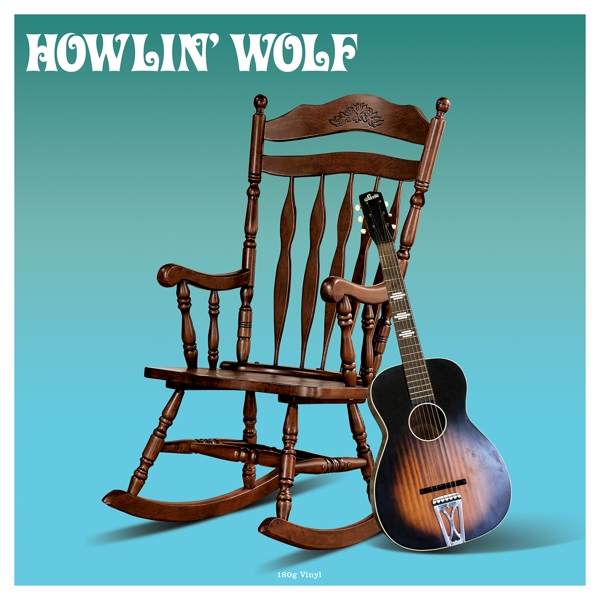
His studio albums include “Howlin’ Wolf a..k.a The Rocking Chair Album“, a collection of singles from 1957 to 1961, Howlin’ Wolf had five songs on the national R&B charts: “Moanin’ at Midnight”, “How Many More Years”, “Who Will Be Next”, “Smokestack Lightning”, and “I Asked for Water (She Gave Me Gasoline)”.
Howlin’ Wolf’s second compilation album, “Howlin’ Wolf” often called “the rocking chair album” because of its cover illustration—was released in 1962. Those tracks afforded classic status are many, including “Spoonful,” “The Red Rooster,” “Wang Dang Doodle,” “Back Door Man,” “Shake for Me,” and “Who’s Been Talking?” Also featuring the fine work of Chess house producer and bassist Willie Dixon and guitarist Hubert Sumlin, “Rockin’ Chair” qualifies as one of pinnacles of early electric blues, and is an essential album for any quality blues collection.
In the early 1960s, Howlin’ Wolf recorded several songs that became his most famous, despite receiving no radio play: “Wang Dang Doodle”, “Back Door Man”, “Spoonful”, “The Red Rooster”, “I Ain’t Superstitious”, “Goin’ Down Slow”, and “Killing Floor”, many of which were written by Willie Dixon. Several songs became part of the repertoires of the new young British and American rock groups, who further popularized them.
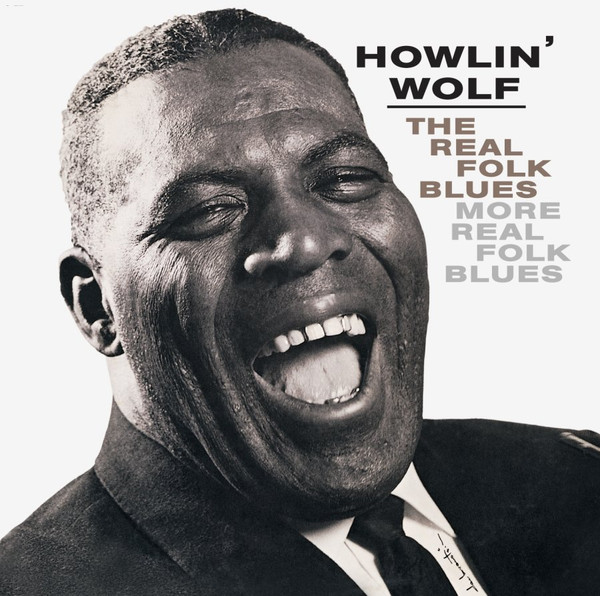
The Rolling Stones recording of “Little Red Rooster” rbecame a number one single in the UK. In 1965, at the height of the British Invasion, the Stones came to America for an appearance on ABC-TV’s rock music show, Shindig! They insisted, as part of their appearing on the program, that Howlin’ Wolf would be their special guest. With the Stones sitting at his feet, Wolf performed an empassioned version of “How Many More Years” with a few million people watching his network TV debut.
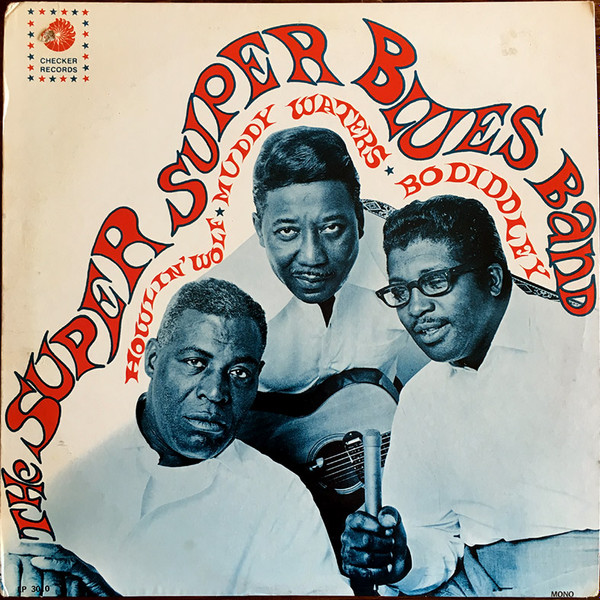
Howlin’ Wolf recorded albums with other established musicians starting with The Super Super Blues Band (1968), which featured Bo Diddley and Muddy Waters. This is easily a “super super blues bust.” Power trios, of course, were hip in the late ’60s — even at down-home Chess Studios, where ad hoc “supergroups” were assembled for 1967’s “Super Blues” and its sequel, “Super Super Blues Band“.
The band on “Super Super Blues Band” included two-thirds of the original “Super Blues” headliners — Muddy Waters and Bo Diddley — with Howlin’ Wolf replacing Little Walter to round out the trio. Unlike Walter, who was willing to cede the spotlight to Diddley and Waters on “Super Blues”, Wolf adamantly refuses to back down from his rivals, resulting in a flood of contentious studio banter that turns out to be more entertaining than the otherwise unmemorable music from this stylistic train wreck.
Although Wolf and Waters duke it out in earnest on the blues standards, the presence of Diddley (and his rave-up repertoire) makes the prospect of an ensemble impossible; in the end, there are just too many clashing ingredients (the squealing “girlie” choruses vs. Wolf’s growl, Diddley’s space guitar antics vs. Waters’ uncompromising slide guitar) to make the mix digestible.
Meanwhile, as the three frontmen struggle to outduel each other on every song, they drown out an underused, all-star backing band made up of Otis Spann on piano, Hubert Sumlin on guitar, Buddy Guy on bass, and Clifton James on drums. At least it sounds like they had fun doing it.
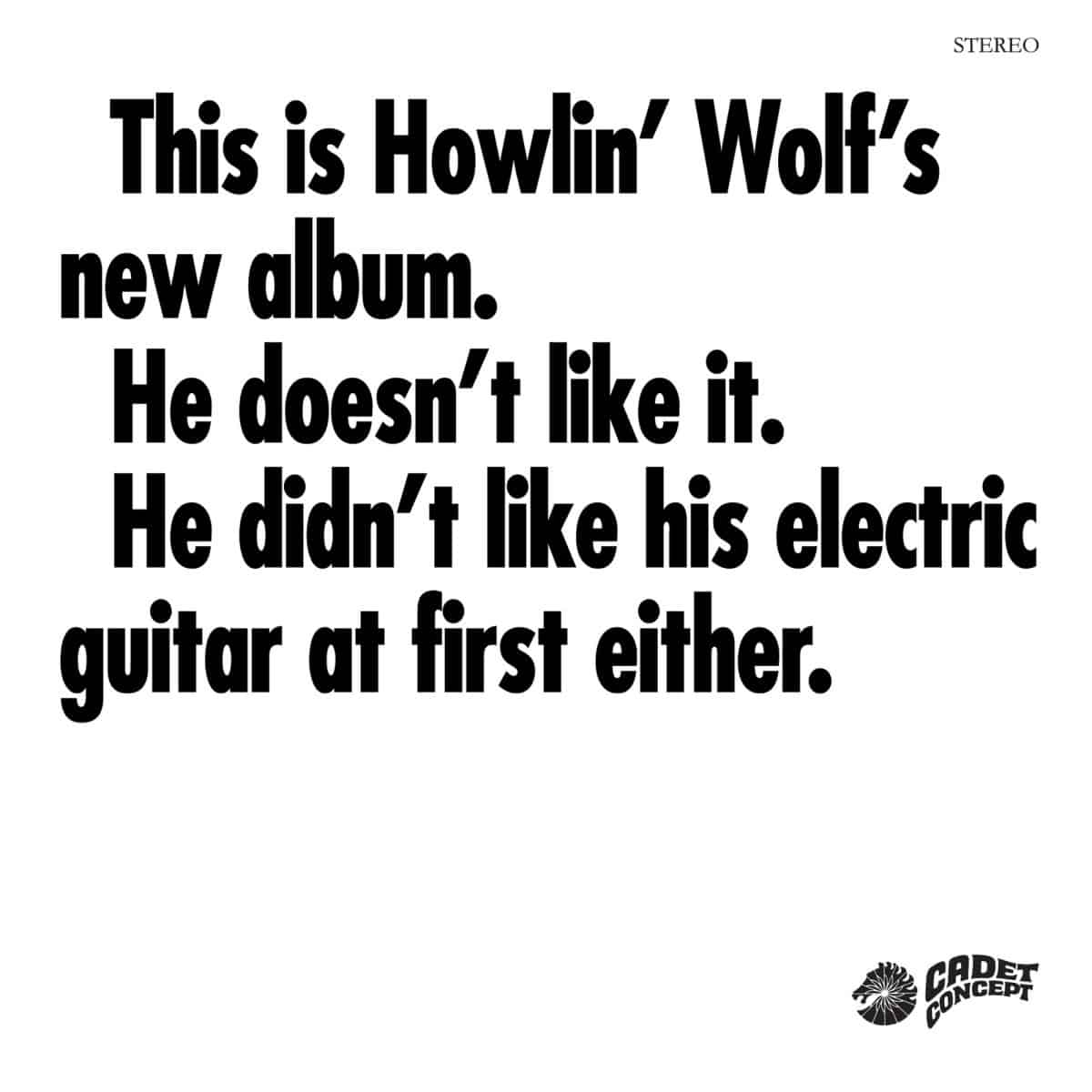
The Howlin’ Wolf Album, like rival bluesman Muddy Waters’s album “Electric Mud“, was designed to appeal to the new hippie audience. The album had an attention-getting cover: large black letters on a white background proclaiming “This is Howlin’ Wolf’s new album. He doesn’t like it. He didn’t like his electric guitar at first either.”
This album, though, originally released in 1969 on the Chess Records subsidiary Cadet Records, is hardly typical Wolf, and the bluesman himself hated it, which may in some way have contributed to the album’s odd cult standing. The idea was as simple as it was probably misguided, an attempt to modernize Wolf’s sound into psychedelic Jimi Hendrix land, and the results were, well, odd at best, and laughable and lamentable at worst, and through no fault of Wolf’s, who obviously tried his best to make sense of all of it. Howlin’ Wolf completists will want this for its novelty value, but it’s far from an accurate portrait of this powerful bluesman’s talent and appeal.
The album cover may have contributed to its poor sales. Chess co-founder Leonard Chess admitted that the cover was a bad idea, saying, “I guess negativity isn’t a good way to sell records. Who wants to hear that a musician doesn’t like his own music?”
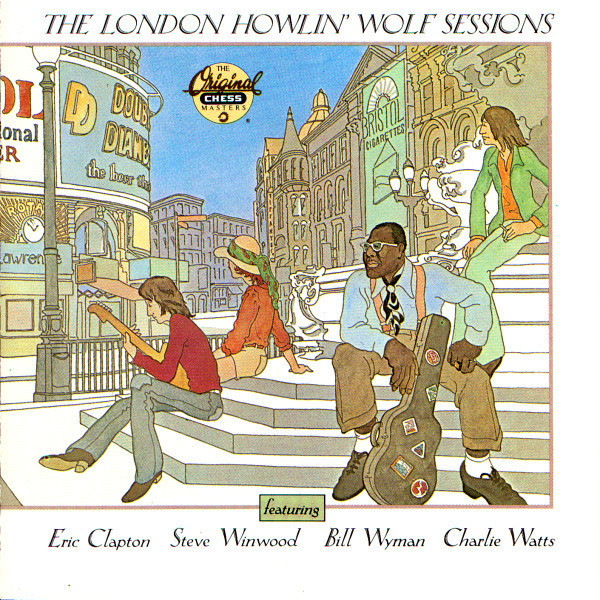
The London Howlin’ Wolf Sessions (1971)
Musicians Eric Clapton, Steve Winwood, Ian Stewart, Bill Wyman, and Charlie Watts backed Wolf for The London Howlin’ Wolf Sessions, which proved more successful with his British audiences than American
For the casual blues fan with a scant knowledge of the Wolf, this 1971 pairing, with Eric Clapton, Bill Wyman and Charlie Watts from the Rolling Stones, Ringo Starr, and other British superstars, appears on the surface to be one hell of a super session. But those lofty notions are quickly dispelled once you slip this disc into the player and hit play. While it’s nowhere near as awful as some blues purists make it out to be, the disparity of energy levels between the Wolf and his U.K. acolytes is not only palpable but downright depressing.
Wolf was a very sick man at this juncture and Norman Dayron’s non-production idea of just doing remakes of earlier Chess classics is wrongheaded in the extreme. The rehearsal snippet of Wolf trying to teach the band how to play Willie Dixon’s “Little Red Rooster” shows just how far off the mark the whole concept of this rock superstar mélange truly is. Even Eric Clapton, who usually welcomes any chance to play with one of his idols, has criticized this album repeatedly in interviews, which speaks volumes in and of itself.
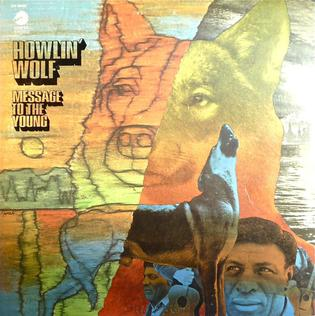
Message to the Young (1971),
I like this album enough to play it a couple times a year. Wolf has still got the voice and I kinda like the guitar being nice and rocky and jagged. The bass is full thunder. But his voice is great and strange and Howlin and eerie.
It’s a Howlin Wolf album – shut up with the “it aint’ as good as his first one nonsense”.
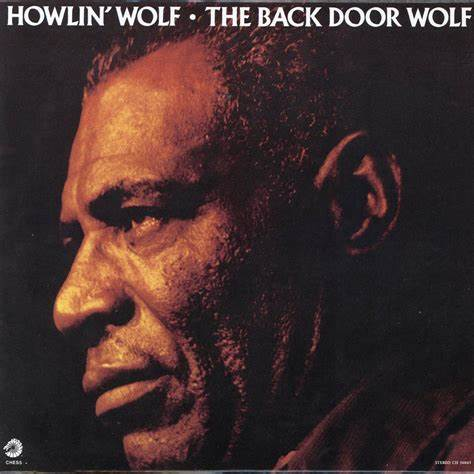
The Back Door Wolf (1973).
His last album was entirely composed of new material. It was recorded with musicians who regularly backed him on stage, including Hubert Sumlin, Detroit Junior, Andrew “Blueblood” McMahon, Chico Chism, Lafayette “Shorty” Gilbert and the bandleader, Eddie Shaw. The album is shorter than any other he recorded, a little more than 35 minutes, because of his declining health.
Howlin Wolf’s last public performance was in November 1975 at the International Amphitheatre in Chicago. He shared the bill with B.B. King, Albert King, Luther Allison, and O. V. Wright. Wolf reportedly gave an “unforgettable” performance, even crawling across the stage during the song, “Crawling King Snake”. The crowd gave him a five-minute standing ovation. When he got off the stage after the concert was over, a team of paramedics had to revive him.
 The Fat Angel Sings