

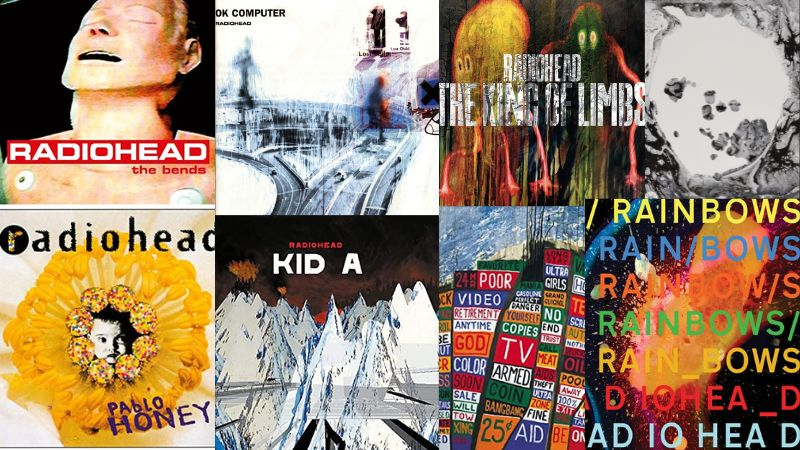
Since their formation in 1985 in Abingdon, Oxfordshire, Radiohead has emerged as the trailblazing English rock band that continues to captivate audiences with their distinctive sound and experimental spirit. The band’s lineup features Thom Yorke, a multi-talented artist contributing vocals, guitar, piano, and keyboards, alongside the Greenwood brothers Jonny, whose mastery extends to guitar, keyboards, and various other instruments, and Colin, the bassist.
Ed O’Brien adds his guitar skills and backing vocals, while Philip Selway solidifies the rhythm with his drumming and percussion. A collaborative force, Radiohead has fostered enduring partnerships with producer Nigel Godrich and cover artist Stanley Donwood since 1994, underscoring their commitment to innovation. Widely credited with pushing the boundaries of alternative rock,
Taking the time to explore music of the iconic British band Radiohead. I am among the really few listeners who didn’t get Radiohead in their early days. I gave “OK Computer” the third album release a few spins before but it never clicked. I’m aware of a few of the band’s more iconic singles “High And Dry”, “No Surprises”, “Karma Police” the inevitable “Creep” and the wonderful “Daydreaming” from 2016’s “A Moon Shaped Pool“. Apart from that I always considered Radiohead to be highly overrated. Thom Yorke‘s distinctive vocal performance never really clicked with me.
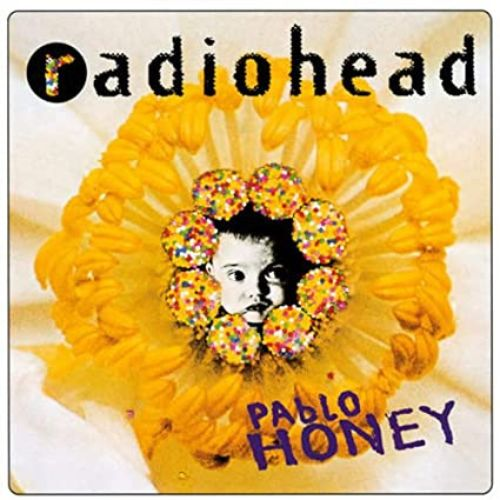
“Pablo Honey” emerged from three weeks of recording at Chipping Norton Studios. Singles like ‘Creep’, ‘Anyone Can Play Guitar’, and ‘Stop Whispering’ initially had modest impact, with ‘Creep’ eventually gaining international traction. The album’s transatlantic ambition was highlighted by a US tour with Belly and PJ Harvey. I started listening to their debut “Pablo Honey” and I got it, This album is more 90s teen angst than the actual 90s were and not just because it features “Creep“.
Opening track “You” comes with loud guitars and a screaming Thom Yorke. Immediately I get a feeling of “Oh this is gonna be tough” because Yorke’s voice is challenging. Noisy tracks like “Stop Whispering” continue that vibe. This is the sound of an angry young band that is still looking for its path, . There are more melodic approaches like “Thinking About You” . On the other hand songs like “Anyone Can Play Guitar” is a little cringy. As far as I’m informed “Pablo Honey” was considered the band’s weakest release and apparently they did’nt like it either. It’s interesting to witness the beginnings of such an influential band .
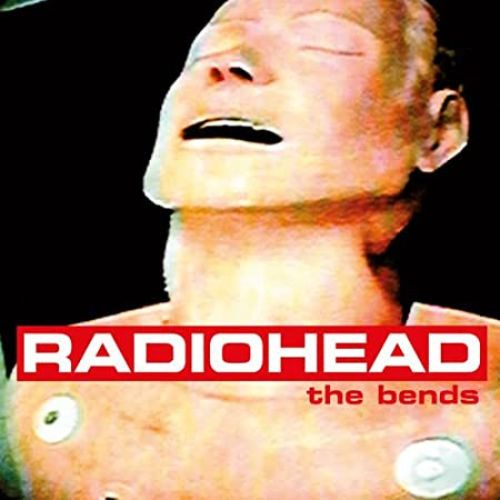
“The Bends” Radiohead’s second studio album, released on 13th March 1995 by Parlophone, marked a pivotal shift in their musical trajectory. Produced by John Leckie, with additional contributions from Radiohead, Nigel Godrich, and Jim Warren, the album showcased a fusion of guitar-driven melodies and introspective ballads, characterized by enigmatic lyrics. The recording process spanned RAK Studios, Abbey Road, and the Manor.
“The Bends” is a different situation, general considered to be their peak in terms of classic guitar rock. I find myself remembering tracks like “Just” and “Street Spirit (Fade Out)” The title-track puts the whole teen angst vibe into more ordered territory so I can see why this attracts a lot of people from that generation. I realize that I personally prefer the more melodic side of the band’s earlier work. “High And Dry” is a long time favourite,
I never realized how good “Fake Plastic Trees” is. Well, maybe it’s the strings but this is a hidden treasure. (Nice Dream) as well, despite the noisy ending (strings again). Still, noisier moments like “Sulk” make me shiver… Yorke’s voice is challenging on these songs. Although I actually like 90s guitar music I realize once again how tricky it is for me to connect with that sound. “The Bends” is apparently better than “Pablo Honey” but you don’t need to study Radiohead that much to realize this.
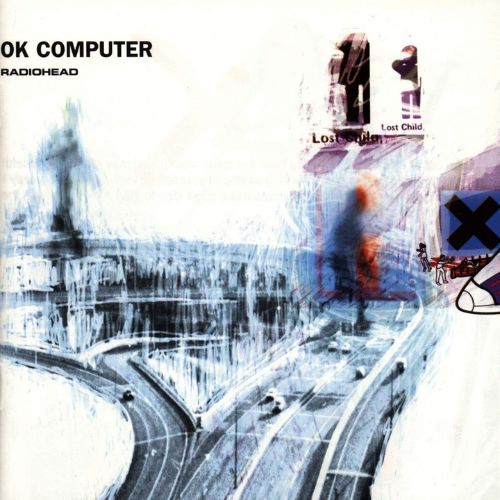
Released on 16th June 1997 by EMI, ‘OK Computer’ is the transformative third studio album from Radiohead. Produced by Nigel Godrich, it was crafted within the confines of their rehearsal space in Oxfordshire and the historic St Catherine’s Court mansion in Bath. Departing from their earlier guitar-focused style, the album’s intricate layers and abstract lyrics set the stage for Radiohead’s experimental evolution. ‘OK Computer’ hauntingly paints a world grappling with consumerism, isolation, and political unease, exhibiting a prophetic insight into the 21st century. Garnering critical acclaim,
It appears to be common sense that “OK Computer” is considered to be Radiohead‘s peak work. Following the first two albums I think it feels like the next logical step. The noisy angst is still there but it’s getting ordered and teams up with abstract structures. That’s the impression I get from the first two songs “Airbag” and “Paranoid Android“. Listening to a track like “Climbing Up The Walls” I can totally get why it influenced so many artists over the past twenty years. However, I still prefer their quieter songs. “No Surprises” remains indestructible and same goes for “Karma Police”.
I might have underestimated “Exit Music” a bit which I mainly know due to a really sweet cover version Vampire Weekend released ten years ago. It also got a better effect when being experienced via headphone’s. Especially “Subterranean Homesick Alien” really starts to make sense. “Exit Music” is a monster of a track and I have now massive respect for it.
The melancholic and melodic Radiohead are more my sound instead of the noisy chaotic ones. “Let Down” is another hidden treasure here. So it’s my favourite of the three albums which shouldn’t be a total surprise. Sometimes complex music needs a bit more time and that’s probably the most valuable lesson I learned on this day.
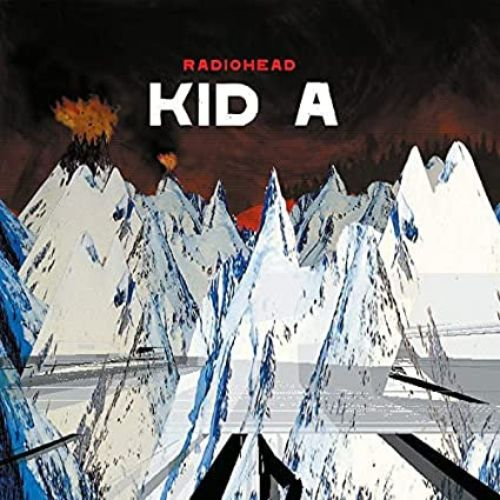
“Kid A” with it the probably most significant shift in the band’s history. Forget about the noisy guitars, its opening song “Everything In Its Right Place” surprises with a tender electronic beat and a fragile piano. I like where this is going. The title-track of their 2000 album heads for the same direction. This record definitely feels like a similar big break for Radiohead. Things are getting experimental, jazzy (I mean, that brass section on “The National Anthem” way different. There’s room for ambient textures, electronic beats and (again) pretty cinematic string sections. Especially the one on “How To Disappear Completely” instantly clicks with me. This feels more like the sound I associated with Radiohead in my mind.
“Kid A” marked a significant departure from their previous sound. Released on October 2nd, 2000, via Parlophone, it was the outcome of sessions across Paris, Copenhagen, Gloucestershire, and Oxfordshire, produced by Nigel Godrich. Thom Yorke, influenced by electronic, krautrock, and jazz, sought a new direction post the stress of promoting ‘OK Computer’ (1997). The album’s unique sonority was cultivated through modular synthesizers, ondes Martenot, and experimental manipulation of guitar, augmented with abstract, randomized lyrics.
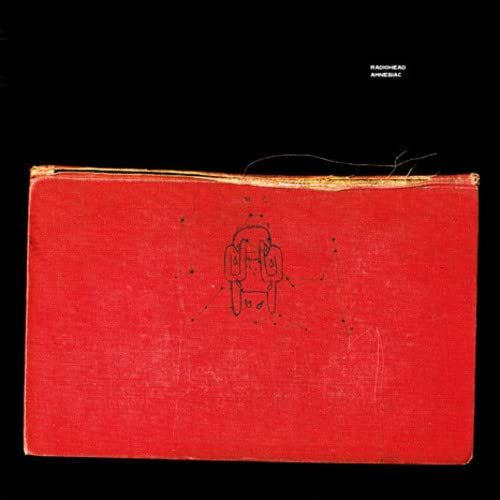
“Kid A” was a challenge but its companion album – 2001’s “Amnesiac” takes things even further. It’s even weirder although there are tracks on it like “I Might Be Wrong” and “Knives Out” which I find quite interesting. Although these two albums are more adventurous and difficult than their predecessors I actually find them more appealing, especially the piano-driven moments. Maybe it’s due to the effect gentle electronic sounds and ambient textures and find it easier to connect with them. These two need a bit more time (and good headphones) but there is something about them which I find quite addictive. Oh, and I always respect musicians who take brave steps towards new directions.
“Amnesiac” Radiohead’s fifth studio album, released on 30th May 2001 via EMI subsidiaries Parlophone and Capitol Records, emerged from the same sessions as its predecessor, “Kid A” (2000), showcasing the band’s progressive sound. Melding electronic, classical, jazz, and krautrock influences, “Amnesiac’s” uniqueness shines. Notable tracks include the collaborative “Life in a Glasshouse” with jazz trumpeter Humphrey Lyttelton.
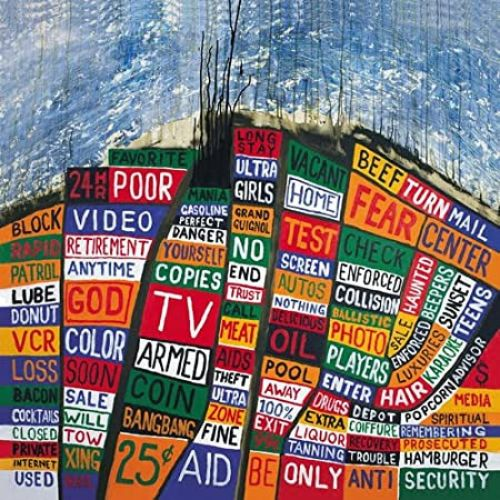
“Hail to the Thief”, the sixth studio album by English rock band Radiohead, arrived on 9th June 2003 through Parlophone worldwide and a day later via Capitol Records in the US. Marking the conclusion of their EMI contract, Radiohead fused electronic and rock elements in a burst of spontaneity. Recorded in just two weeks in Los Angeles, the album was produced by Nigel Godrich. Thom Yorke’s lyrics drew inspiration from the Iraq war and political climate, woven with influences from children’s literature. The album’s artwork, a Hollywood map, encapsulates the essence.
“Hail To The Thief” is not quite a dramatic twist as “Kid A” back then, more like a continuation of the “OK Computer” formula. Right from the beginning with the opening track “2 + 2 = 5” the record shows that the noisy guitars are back after taking a little break on the two predecessors. Now, it feels as if these two worlds find a way to coexist in some way. I really love the hypnotic way of “Where I End And You Begin” and the ghostly electronica of “The Gloaming” is fascinating. There’s even an almost pop-structured tune on the album with “Myxomatosis” the gritty rocker “There, There“.
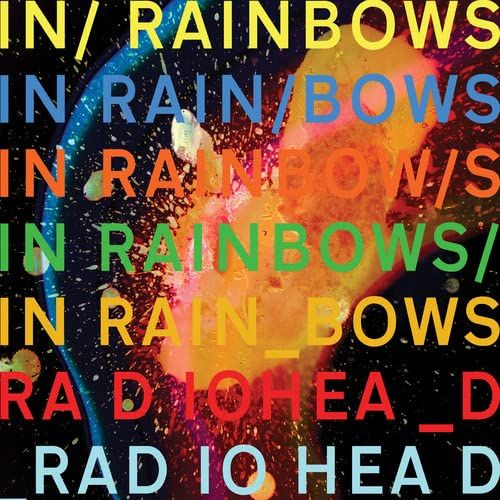
Continuing the ride through the discography with 2007’s “In Rainbows” surfaced on 10th October 2007, shattering norms as it allowed listeners to pay what they wished for the download, followed by physical releases. Following their EMI contract’s end post-‘Hail to the Thief,’ Radiohead embarked on the album in early 2005, transitioning from initial producer Spike Stent to longtime collaborator Nigel Godrich. The eclectic recording locations spanned from country houses to London studios. Blending rock, electronic elements, and heartfelt lyrics, the album marked a departure. The innovative release approach drew global attention, lauded for its innovation yet critiqued for precedent-setting implications.
First tracks “15 Steps” and “Bodysnatchers” has got a driven krautrock-infected groove but over the course of the record things are slowing down and these are the moments I always enjoy. “Nude” got that wonderful string arrangement The dreamy and melancholic vibe of “Weird Fishes” and the majestic build-up of “All I Need”.
The musical perfection these guys are delivering on this one show that they are simply really crafted musicians I guess and in that position you might lose your interest in traditional song structures over the years. That’s another aspect Radiohead continue to push themselves forward with these albums and that might also explain the ‘event’ effect you get whenever they release a new album.
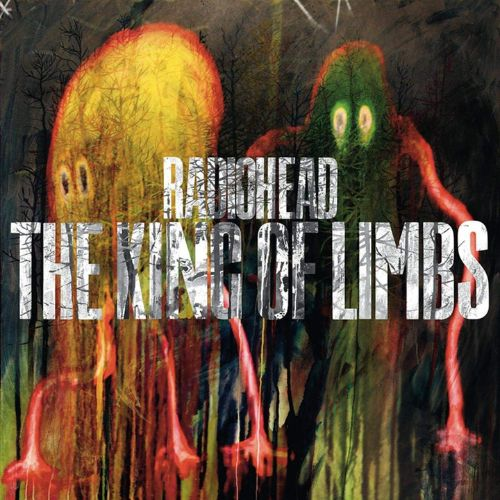
Departing from their earlier work like ‘In Rainbows’, this release marked a sonic evolution for the band. Utilizing sampling and looping techniques with producer Nigel Godrich, Radiohead crafted an intricate soundscape that defied traditional structures. The album’s evocative artwork, a collaborative effort by Thom Yorke and Stanley Donwood, drew from fairy tales and nature. While “Lotus Flower” became a viral internet meme, the album’s rhythmically complex tracks required the addition of a second drummer during their subsequent tour.
“The King Of Limbs” from 2011 is a relatively short affair with only eight tracks. It’s more electronic and minimalistic again and I think that was also the time when Thom Yorke and Modeselektor engaged in a friendship, right? Songs like “Bloom” and “Feral” are quite structure-lacking experiments and later on there are some really wonderful moments like “Codex” and “Giving Up The Ghost”. Also liking the laidback vibe of “Separator”, the record’s closing track.
It’s quite a moody and mellow album and maybe that’s when Radiohead entered a more mature phase in the bands devolpment where the noisy elements are less important than the musical and artistic challenge.
We’ve come a long away from “Creep” to something like “Separator”. That’s the thought I have while giving “The King Of Limbs” another spin. It’s fascinating to see how much these guys matured. “TKOL” is a solid but short record and now I only notice how close to a traditional pop song “Lotus Flower”, the record’s lead single, is which I mainly remembered for Yorke’s very artistic music video.
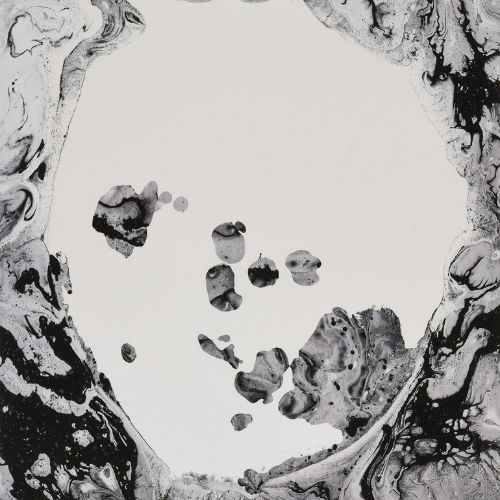
Moving on directly to the bands album “A Moon Shaped Pool”. Produced in collaboration with Nigel Godrich, the album was crafted across RAK Studios in London, Oxford’s own studio, and La Fabrique in Saint-Rémy-de-Provence, France. The orchestration includes Jonny Greenwood’s string and choral arrangements performed by the London Contemporary Orchestra. Addressing climate change, groupthink, and heartbreak, the lyrics resonate as responses to Thom Yorke’s personal experiences.
As I’ve been enjoying the string-focussed moments the most on the past albums I’m in for a special treat on this one as they are way more in the foreground. I knew that “Daydreaming” was a masterpiece and it still is but songs like “The Numbers” and “True Love Waits” are also pretty outstanding. There is some of the most reduced work of the band in recent years on this one. The folky “Desert Island Disk” is a great one and so is the silent piano-driven “Glass Eyes“. They remain musically sophisticated on this album and I think for the first time the beauty of the music itself gets a spot in the limelight. It’s still pretty complex but on “A Moon Shaped Pool” I feel like there’s also a more emotional approach within the band.

I do now have a better understanding on why they are such a holy grail for many music lovers. Each member appears to be a dedicated and highly crafted musician in his field and whenever these forces collide they are trying to push all their ambitions together for the best possible outcome. And it’s not about challenging their audience but also themselves. That’s why they appeal to get better with age, Most of the early stuff feels a bit outdated now and that makes it quite hard to get an emotional connection to “The Bends”, My favourite record of all those so far appears to be “Kid A” loving the overall vibe it provides and the cohesive story it tells.
The discography of English rock band Radiohead have released nine studio albums, one live album, five compilation albums, one remix album, nine video albums, seven EPs, 32 singles and 48 music videos.
Over the years, their discography and artistic evolution have garnered critical accolades, including multiple Grammy and Ivor Novello Awards, and a coveted place in the Rock and Roll Hall of Fame. As Radiohead’s sonic tapestry continues to reverberate, their impact on the musical landscape remains indelible. Listening to the entire back catalogue in such a short time feels a bit like watching a band grow up in hyperspeed mode. Throughout the past thirty years they remained creatively hungry and stubborn. They became one of the biggest cult bands in modern music without delivering a proper hit single following the 1990s while still delivering profound and critically praised music. The valuable lesson here: good music needs your time and attention; it can be challenging but ultimately rewarding.
- Pablo Honey — 22nd February 1993
- The Bends — 8th March 1995
- OK Computer — 21st May 1997
- Kid A — 2nd October 2000
- Amnesiac — 30th May 2001
- Hail to the Thief — 9th June 2003
- In Rainbows — 10th October 2007
- The King of Limbs — 18th February 2011
- A Moon Shaped Pool — 8th May 2016
 The Fat Angel Sings