

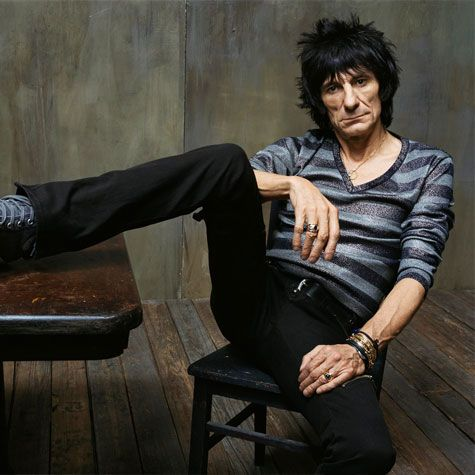
One of those classic, black-coiffed, skinny-jeaned British rock’n’rollers whose face is a road map of his career, is the great Ronnie Wood who comes from a long line of Middlesex water gypsies and his itinerant roots show through in a rich career that encompasses 60s groups The Birds, The Creation, Faces of course and a stint with Jeff Beck Group. Wood had begun his career in 1964, playing lead guitar with several British rhythm and blues bands in short succession, He joined the Jeff Beck Group in 1967 as a guitarist and bassist, playing on the albums “Truth” and “Beck-Ola”.
Latterly, his ongoing place in The Rolling Stones’ history, where he is far more than foil to Keith Richards, has made Ronnie a national treasure. His place at the forefront of British blues riff gods is assured via Faces epics such as ‘Stay With Me’, ‘Miss Judy’s Farm’ and ‘Too Bad’, but he is an accomplished folk guitarist as well, whose playing graces the best Rod Stewart albums. He has conjured many other minor miracles too, such as when his delicate acoustic meshes alongside fellow Faces Ronnie Lane’s fretless bass on the gorgeous cockney lament ‘Debris’, or the wonderfully obscure ‘Just For The Moment’, from the 1972 (but released in ’76) soundtrack album for the Canadian movie “Mahoney’s Last Stand“.
And yet Ronnie also had his own albums to do, providing us with several real gems from the studio that, though packed with stellar mates and guests, still maintain their integrity.
Born in a council house in Yiewsley, Hillingdon, as a kid Ronnie Wood was known as Young Timber (his dad was Timber) and the pair toured the racetracks of the south England in a 24-piece harmonica band that gave Ronnie the taste for the high life. He began playing guitar in The Birds in 1964, moved on to the psych-rock outfit The Creation, and participated in Jeff Beck’s late 60s blues and rock mash-ups Truth and Beck-Ola. He joined Small Faces after Steve Marriott’s departure and lasted the course when they became Faces, also decorating Rod Stewart’s fine albums “An Old Raincoat, Will Never Let You Down”, “Gasoline Alley” and “Every Picture Tells A Story“. He joined the Stones when Mick Taylor left in 1975, and has played with them ever since.
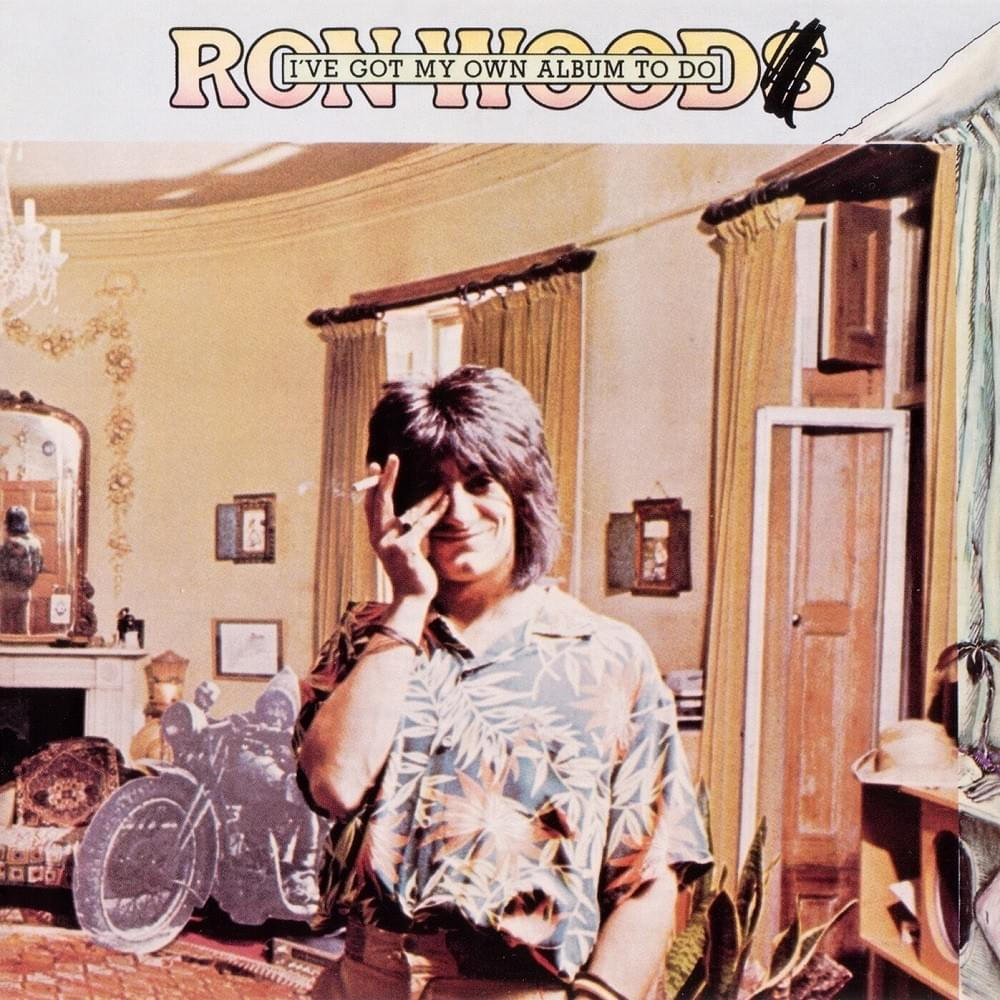
Ronnie Wood, ‘I’ve Got My Own Album to Do’ (1974)
Ronnie’s solo albums start with 1974’s “I’ve Got My Own Album To Do”. It’s only rock’n’roll, but we like that one. As Faces began to split, he started several solo projects, eventually recording his first solo LP, “I’ve Got My Own Album to Do“, in 1974. The album featured bandmate McLagan as well as former Beatle George Harrison and Keith Richards of the Rolling Stones, a longtime friend of Wood. Soon after Mick Taylor left the Rolling Stones, Richards invited Wood to join them; he did so in 1975,
Rod Stewart had already established a parallel solo career when Wood released his debut, and that basically finished the Faces. In a sign of things to come, future Rolling Stones bandmates Mick Jagger and Keith Richards sat in, as did Mick Taylor – the guitarist whom Wood ultimately replaced. Moving seamlessly from one Rock & Roll Hall of Fame band to the next was probably a smart idea, considering Wood was apparently so anonymous that the label misspelled his last name on the album cover. Always a good sport, Ronnie Wood simply scratched it out. He was headed to bigger things.

Richards, Mick Jagger, an uncredited David Bowie and George Harrison all appeared on it. So do most of Rod’s studio pals, including Martin Quittenton, Pete Sears and Stewart himself, as well as the stellar rhythm section of Willie Weeks and Andy Newmark, Faces Ian McLagan and Mick Taylor. Key tracks include the opener, ‘I Can Feel The Fire’, with Mick adding some of his finest backing vocals, and Harrison’s ‘Far East Man’, which also appears on Harrison’s Dark Horse album.

Ronnie Wood, ‘Now Look’ (1975)
Wood gave away some of the ragged charm of his debut, but gained the sharp and soulful insight of co-producer, co-writer and key backing vocalist Bobby Womack. Rather than dominating the proceedings, as Bernard Fowler seemed to on the later “Slide on This”, Womack perfectly meshed with Wood. Their terrific update of “Big Bayou” led to its appearance on Wood’s final tour with the Faces, then former singer Rod Stewart recorded his own version in 1976.
1975’s “Now Look” is remarkable for co-production from Bobby Womack and Ian McLagan, Jean Roussel’s masterful keyboards and a cracking version of the Ann Peebles soul classic ‘I Can’t Stand The Rain’, which give Woody a chance to show off his underrated pipes.
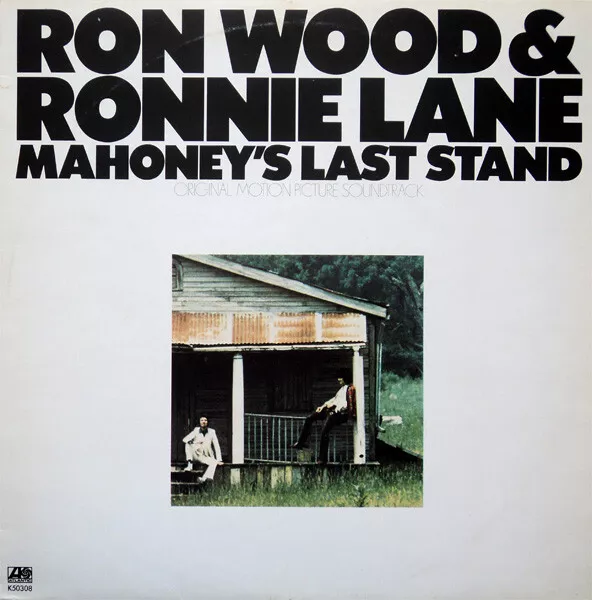
In 1972, Wood and Faces bassist Ronnie Lane composed the soundtrack to the film “Mahoney’s Last Stand” the soundtrack, which was released as an LP in 1976, also features Faces bandmates Ian McLagan and Kenney Jones, along with contributions from Pete Townshend and Ric Grech. Wood also performed with Townshend, Grech, Steve Winwood, Jim Capaldi at Clapton’s Rainbow Concert in 1973.
“Mahoney’s Last Stand”, credited to Wood and Lane, and produced in 1972 at Olympic Sound Studios by Glyn Johns, slipped through the net though it featured Lane’s then-accomplices Pete Townshend, Mickey Waller and Benny Gallacher, with the Stones’ horn men Jim Price and Bobby Keys adding extra atmosphere.

Ronnie Wood, ‘Gimme Some Neck’ (1979)
Wood was still capable of surprising before he sank into a comfy spot as junior member of the Rolling Stones. On “Gimme Some Neck“, that meant summoning a steady musical balance between the Faces and his next band. Wood wrote eight of 11 songs, then carved out a small supporting tour where fans got to hear a singer often unfavourably compared to Bob Dylan completely own this album’s best cover.
“Gimme Some Neck” did the business in the States and introduced us to his own original artwork, painting having been an obsession since he’d attended Ealing College Of Art. The obscure Bob Dylan song ‘Seven Days’ is the calling card here, but once again the back-ups read like a Who’s Who, with Mick Fleetwood, The Crusaders Robert Popwell, Traffic’s Dave Mason and Swamp Dogg inhabiting a most eclectic mix helmed by the equally iconoclastic London-born producer Roy Thomas Baker.
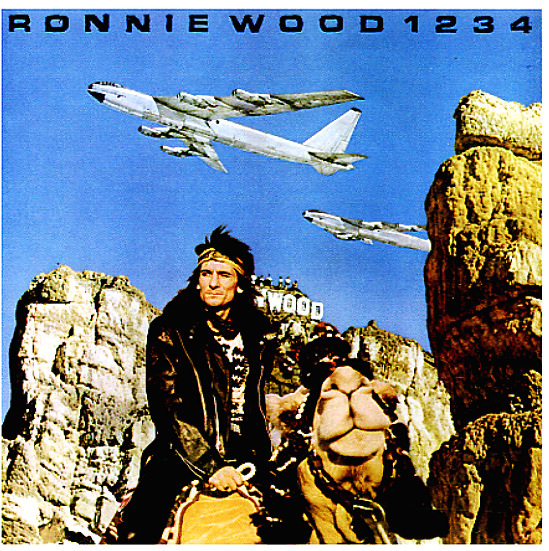
Ronnie Wood, ‘1234’ (1981)
Wood again works with a merry-go-round of musicians, changing the line up with each successive track. Worse, he seems to have released some of them without having, you know, actually finished. The results come off like a demo-dotted anthology-type package of odds and ends, rather than a cohesive look at where Wood was creatively at the dawn of a new decade. Perhaps unsurprisingly, this became the first of two solo albums – along with 2010’s “I Feel Like Playing” that finished at a deflating No. 164 on the chart.
Soul-funk brothers and cream-of-the-crop sessioneers joined Ronnie for “1234”, a real party-hard album enlivened by the Jagger-inspired ‘Redeyes’ and the Womack collaboration ‘Priceless’.
A stint with Bo Diddley resulted in The Gunslingers’ “Live At The Ritz“, packed full of great blues such as ‘Road Runner’, a new take on the Wood/Stewart track ‘Plynth (Water Down The Drain)’ and a breezy attempt at the Stones’ ‘Honky Tonk Women’. But the closer, Bo’s ‘Who Do You Love’, is the charm.
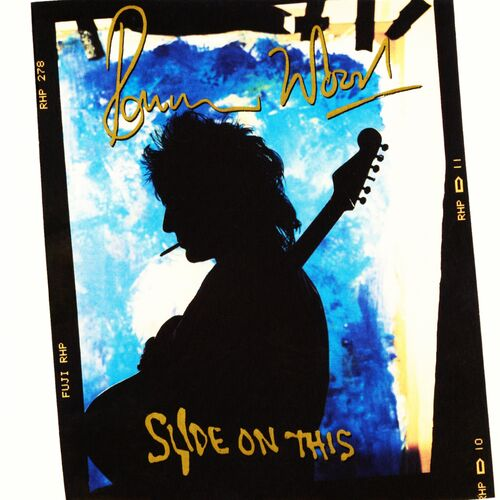
Ronnie Wood, ‘Slide on This’ (1992)
Something is probably amiss when critics talk more about the Wood paintings included in the reissue packaging than about the actual album. It’s understandable, really, considering how Wood seemed to disappear into “Slide on This”, as long time Rolling Stones collaborator Bernard Fowler moved to the fore. He sang, played keyboards and programmed the drums, while also co-writing nine of project’s 13 tracks. A virtual sideman on his own album, Wood closes with a creatively adrift remake of one of his own songs, “Breathe on Me” from Now Look.
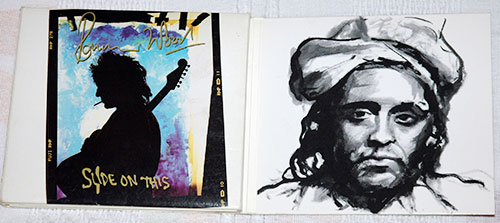
“Slide On This” was recorded in Wood’s Irish home, with Bernard Fowler keeping the songs on a Southern soul tip, abetted by Allman Brother Chuck Leavell, neighbour Joe Elliott, from Def Leppard ,and U2’s The Edge. The drummers are Charlie Watts and Simon Kirke, and Michael Kamen provides string arrangements on another high-class outing. Try the version of George Clinton’s 1967 ditty ‘Testify’ which goes back to the Detroit soul days of The Parliaments.
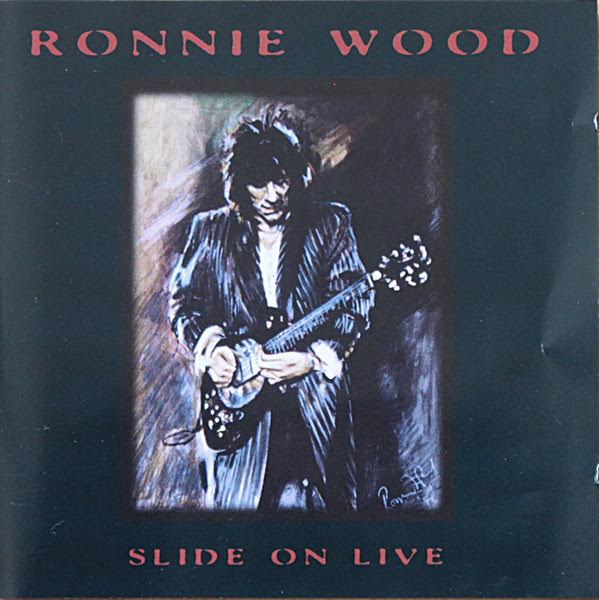
The live companion, “Slide On Live: Plugged In And Standing” (caught in the States and Japan), shows off the Wood ensemble on favourites such as ‘Stay With Me’, ‘Silicone Grown’ and Jagger/Richards/Wood’s ‘Pretty Beat Up’.
:format(jpeg):mode_rgb():quality(90)/discogs-images/R-1125471-1200237226.jpeg.jpg)
Ronnie Wood, – Not For Beginners (2001)
We waited until 2001 for what is probably Ron’s favourite album, “Not For Beginners”. He revisits a track cut by The Birds, ‘Leaving Here’, cheekily jumps to The Byrds’ ‘Rock’n’Roll Star’, enlists Dylan for ‘Interfere’ and ‘King Of Kings’, and makes sense of a cast list numbering Stereophonic frontman Kelly Jones, Elvis Presley’s Scotty Moore and DJ Fontana, as well as his own kids, Jesse and Leah. Definitely one of Woody’s best.
At this point, Ronnie Wood hadn’t made a solo album in nearly a decade. “Not for Beginners” made the case of a much longer wait. There were too few non-instrumental originals, too many outside collaborators and too few songs that rose above the project’s central pub-rock pretensions. Bob Dylan stops by for a croaky, though surprisingly effective, duet, but then so do Wood’s kids.

For a considered overview, the compilation Ronnie Wood Anthology: The Essential Collection criss-crosses his career. It’s a great place to get to know more about someone who’s a lot more complex than you may have ever expected, with visits to The Birds and everything thereafter up to the Stones.
The belated issue of The First Barbarians: Live From Kilburn is taken from a Gaumont State show going back to July 1974, with Ronnie and Keef in their raven-haired pomp bossing a sextet that buzzes and crackles with excitement.

Ronnie Wood, ‘I Feel Like Playing’ (2010)
In 2010 Ronnie released “I Feel Like Playing“, his seventh studio album; naturally, he did the cover art, and it is a great record. It features a string of guests and opens with Ronnie’s song, “Why You Wanna Go And Do A Thing Like That For” which shows his love for Dylan but also his skill as a songwriter. It sounds like a song that must have been recorded by everyone and deserves to be more widely heard: a 21st-century classic.
More like “I Feel Like Playing” … With a Group of Entirely Random Collaborators. Wood tries for the same good-time attitude as his best work, but he keeps stumbling over odd pairings with the likes of Slash, Bob Rock and Flea. It also feels weirdly disconnected from the troubles Wood was having in his private life (poorly received memoir, divorce, domestic incident with new girlfriend, rehab). Even Bobby Womack, returning after their triumphs together on 1975’s “Now Look“, can’t save this one.
Coming up do date we have “I Feel Like Playing“, on which a completely rehabilitated Ronnie mixes old- and new-school characters: Slash, Billy Gibbons, Beach Boy Blondie Chaplin, Darryl Jones, Flea, Jim Keltner, Ivan Neville, and an appearance or from Bobby Womack on four numbers, enjoying a swansong before his death, in 2014. Sure, this is typical all-star jam party fare, but that’s no bad thing. When Ronnie Wood throws a shindig you know you’re in for a real good time. There’s a little bit of everything on order at his buffet – rockers, reggae, blues and boogie.
Essentially a modest man, Wood has collaborated with all the above, as well as sharing the stage with Bowie and Prince. Oh, and don’t forget his laughing-his-head off appearance with Keith when they backed Dylan on ‘Blowin’ In The Wind’ at Live Aid in 1985, introduced by Jack Nicholson. He’s never pretended to reinvent the wheel, but still Ronnie Wood will take you rolling down the road. Enter his caravan of sound delights.
As a member of the Rolling Stones, Wood was inducted into the Rock and Roll Hall of Fame in 1989 and was inducted a second time, as a member of Faces, in 2012. In the Rolling Stones, Wood plays the slide guitar as Taylor and Brian Jones had done before him, and added lap steel and pedal steel guitar to the band. Wood’s guitar interplay with Richards often blurs the boundaries between lead and rhythm roles

Mike Figgis directs this documentary focusing on the life of Rolling Stones guitarist Ronnie Wood. Featuring archive performance footage and interviews with Wood, his family and bandmates including Mick Jagger, Keith Richards and Rod Stewart, the film traces Wood’s career from buying his first guitar to playing with the Jeff Beck Group, Faces and The Rolling Stones, his struggles with drugs and alcohol, and also his love of painting.
Also check out “Live at the Ritz” with Bo Diddley, “Buried Alive: Live in Maryland” with the New Barbarians, Mad Lad: A Live Tribute to Chuck Berry, Mr. Luck – A Tribute to Jimmy Reed: Live at the Royal Albert Hall
 The Fat Angel Sings