

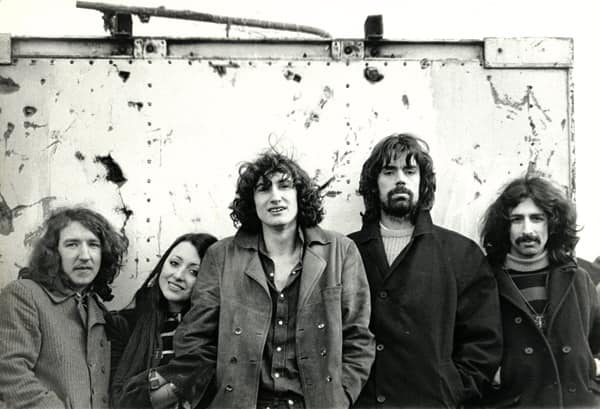
“The Garden Of Jane Delawney” was released in April 1970, but Trees were back in the studio to record the follow-up within five months, the intervening time seemingly spent listening to Steeleye Span’s debut album “Hark! The Village Wait” (released that June) and – at least occasionally – to each other. Having jostled for position a little inelegantly over the course of the first record, Trees benefited from a Bedford-van boot camp, gigging giving them a better command of group dynamics. All Phil Manzanera acid flash on the first album, guitarist Barry Clarke’s contributions take on a more measured, Quicksilver Messenger Service tone, his guitar flickering around the edges of songs rather than screaming into centre stage. Vocalist Celia Humphris also finds a new range, and if she cannot do traditional warhorses like “Polly On The Shore” and “Geordie” with the same conviction as a Shirley Collins or an Anne Briggs, she no longer sounds like she is just impersonating a folk singer.
Her two-layered vocal helps make “Murdoch” by far the best of Trees’ self-written songs. Bassist Bias Boshell reckons his tale of a mysterious awful up in the mountains came to him in a dream. With a subtle, insistent guitar and keyboard refrain, it’s certainly a piece that burrows into the subconscious, Trees discovering the passage behind the cupboard that leads from After Bathing At Baxter’s-era Jefferson Airplane into Stevie Nicks-age Fleetwood Mac.
However, if their compositions are tighter (opener “Soldiers Three” is a stylish fake medieval round), Trees still yearned to stretch out; their take on Cyril Tawney’s “Sally Free And Easy” bursts its banks to become a 10-minute guitar sprawl, but it’s a mark of their new-found unity that Costa and Clarke queue up in an orderly fashion to decorate “Streets Of Derry”, another spectacular journey from rustic inner space to the wild West Coast.
 The Fat Angel Sings