

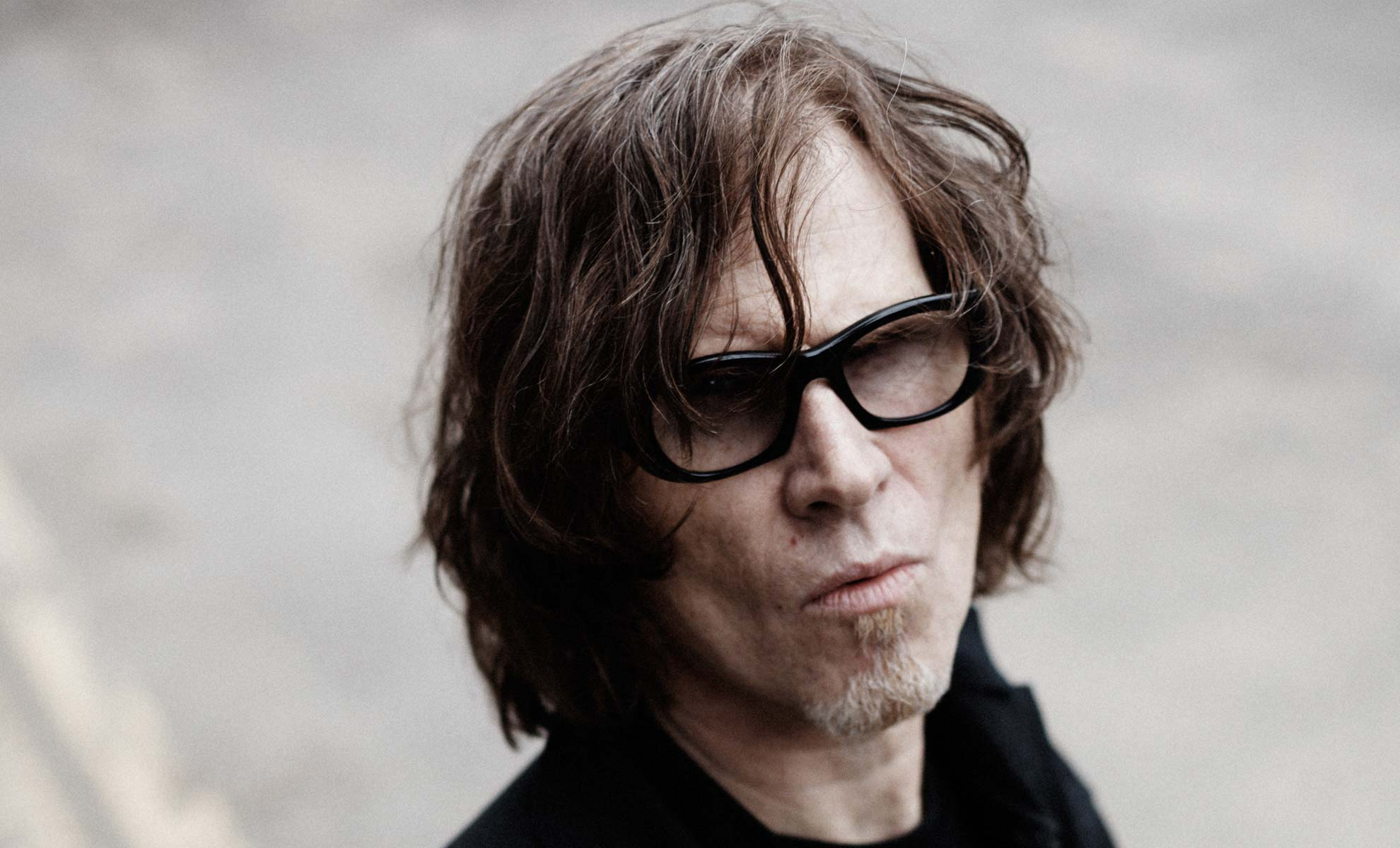
Mark Lanegan’s best albums marked him out as one of rock’s great voices. Here are the very best, from his time in the Screaming Trees to Queens Of The Stone Age and beyond, via an extraordinary solo career
For a man often depicted by the press as a lone wolf, the late Mark Lanegan was unusually collaborative throughout his decades in the music business. There were albums with Queens Of The Stone Age, Greg Dulli, Isobel Campbell and Soulsavers, and guest appearances on records by The Breeders, the Eagles Of Death Metal, Masters Of Reality, Mike Watt and Creature With The Atom Brain, to name but a few.
His time as leader of Seattle’s hugely influential proto-grunge lords Screaming Trees, and half a dozen riveting solo albums that drew from the deepest recesses of folk and blues. “Basically,” he said, “I’m always singing about the same stuff, whether it’s in a loud or a quiet outfit.”
Lanegan had a parallel solo career, and his debut album, “The Winding Sheet“, included appearances from Cobain and Nirvana bassist Krist Novoselic.
Lanegan’s music, which he once memorably equated to “throwing a little darkness on people”, was both unsettling and strangely moving. His was one of the great singing voices in modern rock; a rusty carburettor sound capable of imbuing even the slimmest lyric with real gravitas. Known for his deep, melancholy vocals, the American singer-songwriter died at his home in Killarney, Ireland, “A beloved singer, songwriter, author, and musician he was 57 and is survived by his wife Shelley [Brien].”
Born in the Washington suburb of Ellensburg in 1964, a troubled teenage life led to heroin addiction and a year-long spell in prison for drug-related misdemeanours. In 1985 he formed Screaming Trees with Van and Gary Lee Conner and Mark Pickerel. Four albums of slanted, heavy-duty rock led to a major-label deal with Epic Records in 1991, yet success for the band proved oddly elusive. By the end of the decade, Screaming Trees were all but over, and by then Lanegan was already several albums into a solo career.
After the Screaming Trees went on hiatus in 1996, he joined the ever-changing line-up of Josh Homme’s Queens of the Stone Age. He first appeared on the rock band’s “Rated R” album in 2000, lending his voice and song writing talent to several songs, and also performed on their breakout album “Songs for the Deaf” – earning a Grammy nomination for both.
In 2000 he turned up on Queens Of The Stone Age’s “Rated R“, signing up as a full-time member of the band the following year. He also squeezed in another project, joining buddy and Afghan Whigs mainman Greg Dulli in the Twilight Singers, before the pair struck out alone as the Gutter Twins. Perhaps unsurprisingly, he quit QOTSA in 2005, though he continued to sing on their albums and occasionally tour with them.
The Gutter Twins with Afghan Whigs vocalist Greg Dulli;
Lanegan recorded three delicious desert-noir collaborative albums with Scottish singer-songwriter ex-Belle & Sebastian star Isobel Campbell – the first of which, “Ballad of the Broken Seas, was nominated for the 2006 Mercury Music Prize.
Factor in a downtempo album of electronica with northern upstart duo Soulsavers,
You wonder how he had time to do any of it, let alone maintain a high level of consistency.
2012’s “Blues Funeral”, was his first solo album in eight years, sparked a period of prolificity, with four more albums – “Imitations”, “Phantom Radio”, “Gargoyle” and “Somebody’s Knocking” released over the following years, before his final collection, “Straight Songs of Sorrow”, arrived in 2020.
“Songs are always an expression of joy for me, no matter how sad they may seem to somebody else,” he has said. “I don’t even call it work, because song writing is more like a gift that I’m able to enjoy. A gift that somebody gave me, though I don’t know where or why.”
In 2020, he published a memoir called “Sing Backwards And Weep“, which covered everything from “addiction to touring, petty crime, homelessness and the tragic deaths of his closest friends” – among them Cobain and Alice in Chains’ Layne Staley. He followed that up with last year’s Devil In A Coma, which detailed his near-death experience with Covid, which included cracked ribs after a fall and recurring hallucinations. “I’d taken my share of well-deserved ass-kickings over the years but this thing was trying to dismantle me, body and mind, and I could see no end to it in sight,” he wrote,
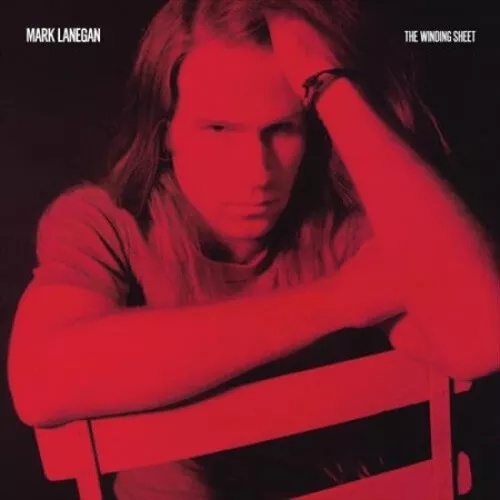
The Winding Sheet (Sub Pop) 1990
The album earned enthusiastic reviews, but after the success of “Nearly Lost You,” Lanegan and the Trees hit the road for a long tour; by most accounts, the group had a strained relationship in the best of circumstances, and as weeks turned into months on the road, the hard-drinking band clashed frequently, it’s sometimes hard to square the band’s paisley-patterned sound with the intimidating image Lanegan cultivated later on. The group’s major label debut, “Uncle Anesthesia”, was released eight months before Nirvana’s “Nevermind” in 1991, just missing the grunge goldmine. Then again, its lead single, “Bed of Roses,” wasn’t really grungy at all, gesturing instead to the jangly sounds of R.E.M.
While the long-haired, leather-clad Lanegan seen in the song’s video looks every bit the bar-brawling rocker, his voice—deep and sonorous, but not yet displaying the ravages of a hard-knock life—suggests that, if the cultural tides had turned a different way, Lanegan could’ve been the American Morrissey.
Screaming Trees – Sweet Oblivion (Epic, 1992)
The sixth and best album by the Screaming Trees was a winning mix of West Coast grunge, knotty punk and 70s hard rock. It should have put the band on a similar commercial level as Nirvana, yet it didn’t pan out that way.
Big hooks and sharp riffs abound, not least on big hit “Nearly Lost You”, which gained traction from being on the “Singles” compilation. The album also marked out Lanegan as both a gifted songwriter and a consummate frontman, who invested the songs with a menace and mood that cut deep into American roots territory. “Dollar Bill” is another highlight, while “For Celebrations Past” found him channelling some ancient spirit like a latter-day Jim Morrison.
Mark Lanegan Band – Bubblegum (Beggars Banquet, 2004)
Just as his associations with Nirvana helped Screaming Trees get a leg up in the early ’90s, Lanegan’s Queens of the Stone Age tenure had a reinvigorating effect on his solo career both commercially and aesthetically. Recorded at various locations in 2003-04 and featuring collaborators Josh Homme and Nick Oliveri (QOTSA), Duff McKagan and Izzy Stradlin (who contributes stunning vocals to the bruising single “Hit The City“), there is not a weak track here, from the maudlin yet compelling Lee Hazlewood-referencing “Wedding Dress” to the full-on deadpan freak-out of “Methamphetamine Blues”.
Lanegan may have still been a member of QOTSA, but “Bubblegum” was the undisputed highlight of his solo career thus far. Not that he was entirely alone – PJ Harvey fetches up on “Come To Me” (who contributes stunning vocals to the bruising single and pulsating duet “Hit The City”, Izzy Stradlin and Duff McKagan add ballast to the wonderfully weary “Strange Religion“, and Josh Homme rams a knuckleduster into the clanging rock of “Methamphetamine Blues“.
His first album to chart internationally, 2004’s “Bubblegum”, uprooted the earthy qualities of Lanegan’s previous solo releases in favour of busted drum-machine rhythms and atomic fuzz, as exemplified by the raucous industrial funk of “Methamphetamine Blues.” Borrowing a page from the Queens’ supergroup playbook, Lanegan corralled an all-star cast for the album,
These redemptive songs of lust, longing and drug psychosis are at times scuffed and melancholic, at others inflamed and scary. Also aboard are old mucker Greg Dulli, QOTSA’s Nick Oliveri and former Mrs Lanegan Wendy Rae Fowler.
The original crammed 15 songs onto one vinyl record in 50 minutes. The four-LP box set reissue expands this to a double album, plus two bonus LPs featuring rarities, out-takes and demos, including 12 previously unreleased tracks. All of which are unmissable.
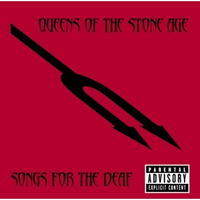
Queens Of The Stone Age – Songs For The Deaf (Interscope, 2002)
Having had a cameo on QOTSA’s “Rated R”, Lanegan’s contribution to the desert rockers’ third album was more substantial, co-writing and/or singing lead on five tunes.
“Songs For The Deaf” was a loose concept piece that barrelled through California, accompanied by fictional visits from small-town radio stations. As such, Lanegan’s oddly carefree vocals brought a Biblical weirdness to “God Is In The Radio”, while “Hangin’ Tree” was fairly dripping with barely concealed malice. He’s also to the fore on both the title track and “Song For The Dead”, intoning over the din like some malignant sprite.
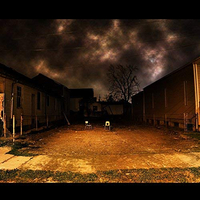
Gutter Twins – Saturnalia (Sub Pop, 2008)
The bonds between Lanegan and ex-Afghan Whigs man Greg Dulli run deep. They began playing on each other’s records around the turn of the millennium and toured for a while as the Twilight Singers. (Dulli also credits Lanegan with saving him from a potentially lethal cocaine habit.)
Where Lanegan’s solo records plumbed the darkest nights of his soul with an unflinching documentarian’s eye, Afghan Whigs/Twilight Singers auteur Greg Dulli did the same through a seedy cinematic lens. After they guested on each other’s records, a full-on union between these two dark princes of alt-rock was all but inevitable. Their one and only album together as the Gutter Twins, “Saturnalia“, feels like the musical version of the long-awaited Pacino/De Niro matchup in Heat—a tense cat-and-mouse game between two wily veterans cast against an extravagant rock-noir backdrop. Had it been released, say, a dozen years earlier, the punchy “Idle Hands” could very well have turned out to be a bigger hit than anything the Trees or Whigs had released at the time.
The Gutter Twins found the pair united as the self-styled “satanic Everly Brothers”, taking turns at the mic for a set of gloriously doomy, post-grunge songs fed by a shared taste for life’s forbidden fruit. Lanegan excels on the anthemic “Idle Hands”, and the buzzing “Bête Noire”, in which he moans at the moon like a lost hound over an ominous beat.
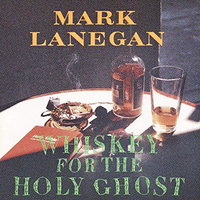
Mark Lanegan – Whiskey For The Holy Ghost (Sub Pop, 1994)
His solo debut “The Winding Sheet” saw Lanegan dispense with the noisy rockisms of his Screaming Trees persona, but his new career didn’t really begin to fly until this ravishing follow-up.
The mood is almost uniformly dark, Lanegan essaying boozy tales of sorrow and defeat with a voice that sounds like a busted squeeze box. It’s as close as he ever got to making his own down-home album. Breathy whispers, strings and acoustic guitars poke through the porch light, while songs like “Pendulum” herald the arrival of Lanegan the literate poet, with a reach and breadth only hinted at previously.
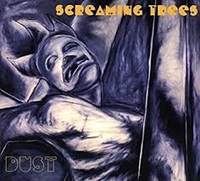
Screaming Trees – Dust (Epic, 1996)
The Trees’ swansong came four years after “Sweet Oblivion“, and in the wake of scrapped sessions with producer Don Fleming. “Dust” actually turned out to be more of a signpost to Lanegan’s solo career than the guns-blazing final huzzah that fans may have envisioned.
There’s a haunting blues quality to much of the album, though it’s undoubtedly the razor-backed product of a band with a steady grip on rock dynamics, the Eastern flavours of the outstanding “Halo Of Ashes” and the ringing “Dying Days” being undeniable proof. The band didn’t officially call it quits until 2000, but “Dust “proved to be a worthy send-off.
After the Trees’ 1996 album “Dust” failed to capitalize on their post-“Singles” bump, Lanegan’s solo career became his primary outlet. His records dug even deeper into country, blues, and soul, their quieter presentation drawing out the raspy resonance of his voice. On this understated beauty from 2001’s “Field Songs”, Lanegan pays ultimate tribute to the Gun Club’s Jeffrey Lee Pierce, the hero-turned-friend who originally made the underground safe for blues-loving punks back in the early ’80s.
“Kimiko’s Dream House” sees him complete the lyrics to an unfinished song Pierce had gifted him shortly before his 1996 death. And Lanegan sounds genuinely humbled by the opportunity, turning in one of the most gentle and graceful performances of his career.
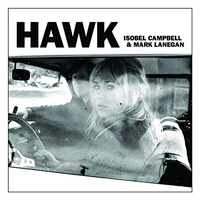
Isobel Campbell & Mark Lanegan – Hawk (V2, 2010)
The third and best collaboration with the former Belle & Sebastian singer continued the duo’s fetishistic pursuit of the Old West, with Lanegan playing leathery Lee Hazlewood to her purring Nancy Sinatra. It was an unlikely union, but it worked well.
Campbell’s dust-caked songs and stirring arrangements provide the ideal vehicle for Lanegan’s lived-in growl, be it the acoustic blues of “You Won’t Let Me Down Again”, “Time Of The Season” or the boot-heel bluster of “Get Behind Me”. “Snake Song“, too, is suitably venomous, though Lanegan comes on like a bruised Appalachian romantic on “Eyes Of Green“, complete with fiddle solo.
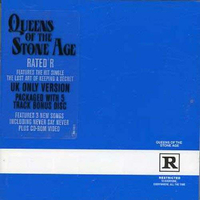
Queens Of The Stone Age – Rated R (Interscope, 2000)
QOTSA’s breakthrough album, “Rated R” marked the start of the band’s long-running association with Lanegan, who has gone on to appear on every album since. The music itself carried strong traces of the Trees (no doubt helped by the involvement of their ex-drummer Barrett Martin), though their old singer’s role was somewhat subsumed by the success of Lanegan-free singles “Feel Good Hit Of The Summer” and “The Lost Art Of Keeping A Secret“.
Lanegan could afford to chill out on his solo records because he had an open invitation to growl away to his heart’s content with America’s premier turn-of-the-century hard-rock band. Lanegan made his Queens of the Stone Age debut on 2000’s “Rated R”, singing lead on the grunge-soul groover “In the Fade.” But two years later, on “Song for the Dead,” Lanegan exploited the full demonic potential of his hell-bound howl; even Grohl’s rapid-fire drumming seems to cower in his presence, signalling the singer’s entrance by shifting from a full-throttle thrash to a seasick grind. Arguably, Lanegan’s stone-faced live performances of the song with Queens during this era did more to shape his doom-prophet image than anything else in his canon.
That said, his gruff vocals on “In The Fade” render it reassuringly potent. He also added back-ups to “Leg Of Lamb, Auto Pilot” and Homme’s personal favourite, “I Think I Lost My Headache”.
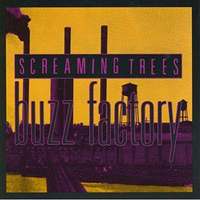
Screaming Trees – Buzz Factory (SST, 1989)
Lanegan joined Screaming Trees in the 1980s and went on to produce eight studio albums until the group’s split in 2000. The band pioneered a sound that combined 1960s garage rock with 1970s punk – which later became known as grunge. Although they never achieved the mainstream success of contemporaries like Soundgarden and Nirvana, they scored hits in the US with “Nearly Lost You” in 1992 and “All I Know” in 1996.
Co-produced by Jack Endino, the man behind Nirvana’s Bleach and Mudhoney’s Superfuzz Bigmuff, Buzz Factory is the best example of the Trees’s early output on SST Records. There are heaving great riffs, and the music carries a raw, unvarnished quality, veering from the Soundgarden-ish “Black Sun Morning” to the Stooges-like “Subtle Poison“.
It’s very much the sound of a band in transition, Lanegan’s baritone yet to acquire its unique sense of command and presence. There’s plenty to admire, though, not least “Where The Twain Shall Meet” and “Flower Web”. Buzz Factory was the band’s last album for SST, after which they went briefly to Sub Pop before a more extended tenure with Epic.
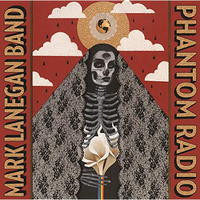
Mark Lanegan Band – Phantom Radio (Vagrant, 2014)
Ever since his Screaming Trees days, Lanegan was synonymous with a dark, dusty, dangerous corner of the American musical landscape. So it was a bit of a surprise to find him, on his ninth solo album, ensconced under the grey skies of 1980s England.
From the deep, chiming gothic guitar of opener “Harvest Home” to the chilly synths and Hooky bass line of “Floor Of The Ocean“, on “Phantom Radio” he channelled Joy Division, Echo And The Bunnymen and The Cure alongside Depeche Mode at their most downcast.
And then, of course, there’s that voice. Always threateningly beautiful, if anything Lanegan proved here he was getting better with age – grittier by the year, and more soulful, while retaining the melancholic warmth that made his previous projects so special.
Lanegan’s music was nearly always informed by the blues, and the singer was willing to take his darkly poetic sensibility to whatever style his muse pointed him. His solo work veered from the semi-acoustic atmospherics of 1990’s “The Winding Sheet“, 1998’s “Scraps at Midnight“, and the adventurous hard rock of 2004’s “Bubblegum and 2012’s “Blues Funeral”, to the clean electronic surfaces of 2014’s “Phantom Radio” and 2020’s unsparingly confessional “Straight Songs of Sorrow”.
 The Fat Angel Sings