


You probably know the story of the rise and fall of the brothers Gallagher at this point; from gate crashing an empty Glasgow King Tuts in front of Alan McGee (on this day in 1993) to two sold out nights at Knebworth within three years, Noel Gallagher establishing himself as rock’s finest song writing magpie whilst his brother Liam channelled John Lennon and Johnny Rotten simultaneously, the fights, the quips, the tabloid outrage, the onstage break ups, the backstage brawls… and a collection of some of the most perfect singles of any band in history.
The discography of the indie rock band Oasis consists of seven studio albums, two live albums, five compilation albums, six video albums, one extended play, twenty eight singles which includes one double single, Liam and Noel at least – have announced that next year they will reform for a string of stadium dates in the UK and Ireland. Whether another Oasis album will follow remains to be seen.
Following Oasis certainly had its ups and its downs; when they were great, good lord, were they untouchable, when it went bad, did they ever stink. But which of their albums shines the brightest?
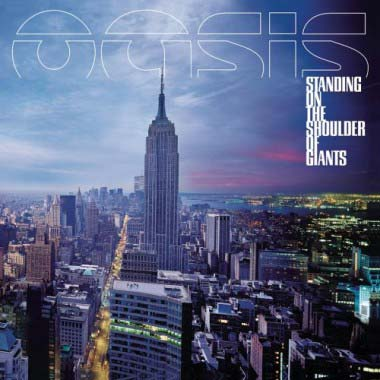
Standing On The Shoulder Of Giants (2000)
The lowest point of Oasis’ career by some distance, “Standing on the Shoulder of Giants” is a mightily bizarre album for a number of reasons. Firstly, it actually starts really well, with the opening instrumental “Fuckin’ in the Bushes” still used as Liam Gallagher’s intro music to this very day, and lead single “Go Let It Out” featuring a proper earworm chorus, but the crash after that is quite astonishing.
When it arrived three years after the perceived folly of “Be Here Now, Standing On The Shoulder Of Giants” was meant to herald a new creative dawn for Oasis – now without Bonehead and Guigsy. Beta Band-cribbing lead single “Go Let It Out” certainly suggested as much, After that though, Oasis’ fourth album quickly falls off a cliff. Liam’s first stab at song writing, the mawkish “Little James”, was widely derided, but not much else here fares any better (Noel’s “I can see a liar, sitting by the fire” on “I Can See A Liar” isn’t exactly Smokey Robinson, either). Strangely, ELO-soundalike closer “Roll It Over” was largely overlooked by the group on subsequent live outings despite being one of the best things here by some stretch.
Two sloppy, AOR plodders fronted by Noel back-to-back “Where Did It All Go Wrong” and “Sunday Morning Call” and the pedestrian glam of “I Can See a Liar “are bad, but nothing the band ever released comes close to the horror of Liam’s infamous, saccharine “Little James“. The inclusion of this terrible song alone cements SOTSOG’s place at the bottom of the pile here.

Dig Out Your Soul (2008)
It would soon all end with a smashed guitar and a dashed plum, but with hindsight does Oasis’ last (for now?) album sound like a band at the end of their road? . Hammering first single “The Shock Of The Lightening”, Liam’s Lennon-esque “I’m Outta Time” and “Falling Down“, later explored to mind-bending effect by Amorphous Androgynous, all suggest Oasis still had plenty of creative fire in their bellies, but elsewhere you can’t shake off the feeling of a group running out of both puff and ideas. Tellingly, by the time the band played their last show less than a year after the album’s release only three songs from “Dig Out Your Soul” were in the set list.
The final Oasis album, released only 10 months before an infamous backstage altercation between Noel and Liam in Paris that led to the split of the band, is a rather sad way for the band to go out. Like all of their albums, “Dig Out Your Soul” features a couple of decent singles, opening track “Bag It Up” sets the bar reasonably high.
But the most damning thing you can say about the album is that the majority of it just passes by unnoticed: for a band who were used to being a national obsession, that is nowhere near good enough.

Heathen Chemistry (2002)
It’s not massive praise to say that “Heathen Chemistry” marked a clear upgrade from the disastrous “Standing on the Shoulder of Giants“, and the album does have its fair share of problems, the most obvious ones being that the band should never, ever have been left to self-produce themselves, and tthat here are least two too many ballads here. There are some very decent songs, but as a whole, it lacks both consistency and sparkle to rank amongst the best.
Having booted out all three of Liam’s original bandmates from The Rain and supplanted them with handpicked indie-rock pros, for “Heathen Chemistry”, Noel opened the door to others writing songs. Gem Archer’s “Hung In A Bad Place” and, particularly, Liam’s “Songbird” – a breezy love letter to his then-fiancée Nicole Appleton – brought fresh energy, while Noel’s perennial England-out-of-the-World Cup weepie “Stop Crying Your Heart Out” topped off a promising new blend. Oasis Mk2 might not ever match the era-defining glories of their earlier incarnations, but “Heathen Chemistry” has aged remarkably well.
But, “Heathen Chemistry” scores high for a including a set of hugely anthemic singles; “Little by Little“, “Songbird” and the excellent “Stop Crying Your Heart Out” might all be a bit schmaltzy, but they manage to tug at the heartstrings in the intended manner, and the garage slink of The Hindu Times feels like Oasis by way of Black Rebel Motorcycle Club. Chuck in the enjoyable “Hung in a Bad Place” and “Better Man” and this is a decent album overall.

Familiar to Millions (2001)
The Gallagher brothers’ boundless, boorish, boasting bluster and blather only felt like brazen British working class moxie as long as they made great records that backed up their obnoxious arrogance. So when the songwriting fell off the last six years, on the bloated “Be Here Now” and “Standing on the Shoulder of Giants“, it was like watching helium hiss out of an overstuffed blimp. After all the babble, and the posturing prattle, Oasis’s U.S. sales plummeted . So leave it to Oasis to resort to the biggest, emptiest rock gesture of all: the huge-stadium live LP! Their popularity remains unchanged in home England, which still worships the group uncritically .
So the brothers give us this document of Wembley stadium and its Canyonesque acoustics, with its cheering, singing throngs of 70,000 people. Just contemplating the 98-minute, double CD “Familiar to Millions“, because Oasis always deliver their material with conviction live, . And because they play a best-of set, going all the way back to their initial singles “Supersonic” and “Shakermaker,” and such enduring tunes as “Acquiesce,” “Roll With It,” and “Live Forever,” Familiar is a reminder of the substance they retain, even as they doggy-paddle along, stuck for bearings. Strong Noel-sung covers of Neil Young’s “Hey Hey, My My” and The Beatles’ “Helter Skelter” are also delivered in their hard-working, serve-the-song demeanor.
Most of all, the band plays well. New key member Andy Bell, late of early-’90s fantastic favourites Ride (let’s forget Hurricane #1) is twice the bassist Paul McGuigan was, so the loss of three-fifths of the original line-up has actually tightened them up. The band’s strengths-Noel’s hooks and Liam’s strong, gruff, accented vocals-come to the fore, while the weaknesses-inferior material-are weeded out like it they were never written. Hell, only five of these 18 songs are post-1995, one of which, “Gas Panic!” (which sounds like it’s sung by Bell, hurrah!), sounds vintage. It still would have been better to record at a rock theater or hall. This sounds a tad hollow, even though the guitars are so meaty-rare for a stadium tape. But if Oasis has been staggered here by a punch they invited (we’ll see if they get off the canvas or not, as the siblings keep snipping at each other), Familiar shows they went down fighting as a touring live band. And with the mainstream rock scene as dire as it is now, we could still use them.
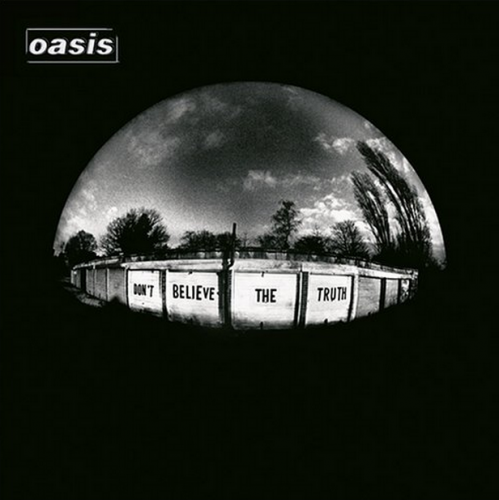
Don’t Believe The Truth (2005)
The best album by the non-classic line up of Oasis by some distance. “Don’t Believe the Truth” is the closest Noel and Liam ever came to putting out a record that gets close to the consistency of their earliest material. Lead single “Lyla“, a fantastic stomping, strutter of a tune, was a good place to start getting people back onside, but Noel going full Dylan on “Mucky Fingers“, the punky “The Meaning of Soul” and the dreamy pop of Andy Bell’s “Keep the Dream Alive” all back it up brilliantly.
Oasis now boasted four match-fit songwriters and a pool of 60 songs were whittled down to a punchy eleven, the likes of “Lyla”, “The Importance Of Being Idle” and Liam’s bolshy “The Meaning Of Soul” pivoting nimbly round around a mid-60s axis of The Beatles, Stones and The Kinks.
The sixth album that had some blood and thunder, with ‘Lyla’ shaking off the dust and ‘The Importance Of Being Idle’ relocating Noel’s mojo for the first time in years. It is not Oasis at their windmill swinging best, but it has songs that pack a punch and others that sit nicely in the corner quietly reflecting.
Then we also get The Importance of Being Idle, a song many have claimed is the band’s final great moment. It’s a great song, undeniably, and a good shout for being their last hurrah, but there are plenty of moments here that are its equal.

Be Here Now (1997)
Notorious for its length, its pomposity, its excess and its expense, “Be Here Now” has become the classic cautionary tale for any band who hit it big to keep their feet on the ground. It’s a fair message, as this is a record that is often laugh out loud hilarious in its OTT nature, but, listening back to it today, it’s actually aged rather well.
Oasis’ third album was the moment the Gallaghers irreparably George Bested it. An overblown, coke-addled folly that would prove to be Britpop’s Altamont. Yes, the album’s 72 minutes are frequently weighed down by lumpen bridges and middle eights, endless guitar overdubs and laboured arrangements “All Around The World” couldn’t be any longer if it tried – and that’s before it reappears in ‘reprise’ form), but strip back the production bluster (something Noel Gallagher largely puts down to mixing the record while high on cocaine) and some of the band’s finest songs of the era are hiding underneath the noise and confusion.
“D’ya Know What I Mean” is an absolutely, monumentally huge opening statement, the chorus to “Stand By Me” remains iconic, the likes of “My Big Mouth” and “I Hope, I Think, I Know” are fantastically underrated, careering rock and roll songs and, although they’d hate the comparison, Oasis sound like a larger fuelled Bon Jovi on Fade In-Fade Out. Which is a compliment by the way.
We still have no idea why the mad bastards made “All Around the World” nearly ten minutes long – actually, we do, it’s called cocaine – but it doesn’t detract from the fact that “Be Here Now” is much better than you remember.
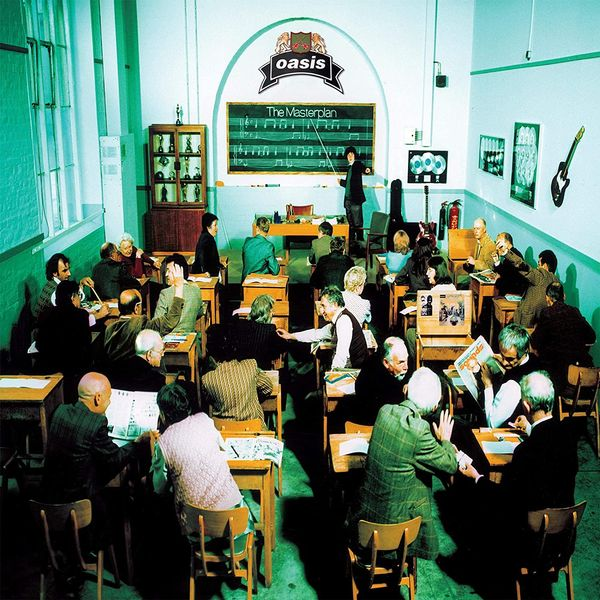
The Masterplan (1998)
Yes, yes, we know, “The Masterplan” is not an Oasis studio album, and usually B-sides and rarities collections would not be included for consideration on a list such as this. But such was the prolific nature of Noel Gallagher’s songwriting prowess in the band’s early years that it feels insane not to include a set of songs this good here. Sure, as those early singles swung in like wrecking balls, it seemed thrillingly cocksure to toss gems like ‘Acquiesce’, ‘Talk Tonight’ and ‘Fade Away’ away as flips, but by the time this compilation arrived in ’98, it came laced with forehead-slapping frustration that Noel didn’t hold them back for a great third album.
A central plank to Oasis’s mid-’90s dominance dictated that Noel’s songbook was so stuffed with classics, the extra tracks on singles packed more chart-topping potential than any other band’s A-sides. Here, as a stopgap after their 1996 Knebworth mega-gig and “Be Here Now“, they reinforced the point
Although technically a compilation album consisting of B-sides, you’d struggle to find many Oasis fans who don’t feel the record is worthy of the same regard as a studio release. These tracks are gilded pieces of rock-perfection that 45’ singles were invented for, and to relegate them onto the flip side of history is a sin that this isn’t able to permit.
The album serves as the perfect measure of the perfuse creative brilliance that the band coaxed up at this point. There isn’t a B-side on the album that couldn’t at least compete with its A-side counterpart.
Some might argue that they would have been better off holding back on these hits to bolster future records, but there is something in keeping with the Oasis ethos to fling them out as little brothers vying for a punch-up with the fellas on the heavy-hitters that sit opposite them.
The fact that the likes of Fade Away, Half the World Away, Talk Tonight and the title track are as well-known and beloved as pretty much any song in Oasis’ back catalogue says it all. Plus, it opens with the sublime “Acquiesce”, a song that not only might just be the finest of the band’s entire career, it feels like the perfect encapsulation of Liam and Noel’s individual strengths; the creative push and pull between the two brothers that was so key to the alchemy that made them essential, all surmised in four and a half stunning minutes.

(What’s The Story) Morning Glory (1995)
Naming the best two Oasis albums is something of a cliché at this point, but it’s a cliché for a reason, they really are, comfortably, leagues ahead of the rest of the band’s discography. … Morning Glory was an absolute smash when it arrived, breaking records for sales and chart positions in the UK and giving us a set of songs that have crossed over into the lexicon of British culture to the point where you can’t imagine meeting someone who doesn’t know all the words to Wonderwall.
It has got the jukebox friendly hits, the pint-fuelled energy and the swaggering originality that singled Oasis out as the group of a generation. The ultimate middle finger from the band is that with this record they etched every word into the mind of anyone who ever listened to it, and that includes the few contrarians that weren’t swept up in the Britpop storm.
To be fair, pretty much every track sounds like a single, and deeper cuts like Hello and Cast No Shadow are just as good as Don’t Look Back in Anger or Some Might Say.
It’s album closer Champagne Supernova that really is the superstar here though, a song with a breadth and ambition way beyond anything the band had attempted up until that point, they’d never get as close to it again either. Cultural monolith, sure, but this is a great album first and foremost.
Approach these 12 songs with virgin ears, and ‘Morning Glory’ is still a staggeringly good record. From the knockout one-two of ‘Wonderwall’ and ‘Don’t Look Back In Anger’, through the haunted strum of ‘Cast No Shadow’.

Definitely Maybe (1994)
So, what could come above one of the best-selling albums in UK chart history? Only one of the greatest debut albums in history. The debate between which is the superior of the first two Oasis albums has raged for decades, but in our opinion, this is something of a no brainer. Where … Morning Glory had a couple of songs that were good but not great, the weakest moment on Definitely Maybe is still a minimum 8/10, and the majority of it is 10/10 perfect. What they shared while growing up in suburban Burnage, south Manchester, was a passion for two rock idols, The Beatles and the Sex Pistols. After much in-studio huffing, puffing and pugilism, 1994’s Oasis debut, “Definitely Maybe”, delivered a confident amalgam of those two influences, and almost single-handedly reinstated home-grown rock in the British pop charts. For the next couple of albums, Noel Gallagher drew on a stockpile of anthems composed pre-fame, but the problems started thereafter, when he felt increasingly straitjacketed by the imperative to write for stadiums.
Seriously, can you name another album with a heavy hitting, bar setting opening trilogy of Rock ‘n’ Roll Star, Shakermaker and Live Forever? That’s the first three songs on your first album and a pretty strong shout for the most staggering introduction in the history of rock. And that’s before we even get into Supersonic, Slide Away, Columbia, Up in the Sky, Cigarettes and Alcohol... There are bands who have had careers lasting multiple decades with greatest hits collections that look puny, irrelevant and full of filler when put next to these songs.
While most ’90s indie bands had a tacit agreement – “Let’s kick off with a shit debut, then we’ll get cracking…” Oasis burst out of the blocks fully formed, with attitude, chemistry, pull quotes, a Parka and a pocketful of perfect songs.
“Definitely Maybe” is a timeless, ageless classic album, comprised solely of huge rock and roll tunes, Godzilla-sized choruses and lyrics that make you feel like you’re the centre of the fucking universe. It turned its creators into the hottest band on the planet and it’s the best album Oasis have ever recorded.
‘Definitely Maybe’ is as good as rock ‘n’ roll gets.
 The Fat Angel Sings