


The injustices in the music industry are numerous, extensive and outrageous. Budgie never became as big as ”the big three”; Black Sabbath, Deep Purple and Led Zeppelin. On the other hand, it’s only fair. Budgie didn’t belong on the pedestal among “the big three”, but they were better than most other contemporary bands around that time . Budgie stood beside the road and saw themselves being overtaken by less talented bands. Despite talent, dedication and hard work Budgie only achieved moderate success.
Budgie was formed in Cardiff in 1966 led by Burke Shelley (bass and vocals) and Brian Goddard (guitar). They soon found drummer Ray Phillips through an ad in the local paper. Tony Bourge (guitar) joined in 1967. They weren’t named “Budgie” from the beginning. In fact, they played a few gigs under the unglamorous name ”Hills Contemporary Grass” before changing their name to the more spectacular ”Six Ton Budgie”, then changed again to just “Budgie”. Often thought of as a cross between Black Sabbath and Rush, the underappreciated outfit has influenced countless acts, despite enduring countless line-up shifts throughout their history.
The story behind the band name is that they loved the idea of playing noisy, heavy rock and calling themselves after something diametrically opposed to that. Brian Goddard left the band early for family reasons. Since that time Budgie always were a three-piece line-up. The username Brocashelm really hit the head on the nail in a blog entry in The Metal Archives; “If you took Black Sabbath’s density, King Crimson’s peculiar song constructs, and added a dash of Rush’s overall style, you should get an idea of what’s going on here.” Budgie never really got the recognition they deserved. However, when Metallica, Iron Maiden and other bands later made covers of their songs they got a late but rightful redress.
Budgie suffered from bad press and lacked strong management of a Peter Grant-type (Led Zeppelin). Their record company MCA did nothing to promote them. At the same time, they were too abnormal. Quirky, humorous and playful lyrics, weird arrangements, banshee vocals, unexpected tempo changes and an unorthodox mix of hardness and softness. The most important reason for the lack of success was the absence of a big hit. “Breadfan”, “Crash Course In Brain Surgery” and “Zoom Club” came close.
Their first five albums; for MCA was their golden age.
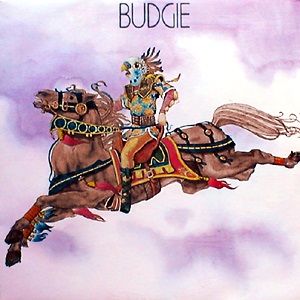
Budgie didn’t sell enough albums so that the members could retire to the countryside with a crawl distance from the local pub. First, there was a growing interest for early British heavy metal bands. Secondly the met a renowned producer, Rodger Bain (producer of Black Sabbath’s first three albums), who was on a talent spotting mission in Wales. Thirdly, they signed a contract with the big record company MCA Records. Their self-titled debut album is raw and brutal. The album was recorded at Rockfield Studios in Monmouth in South Wales in only four days on a eight track tape.
The album starts off with “Guts” which encompass their trademarks; nasal and high-pitched vocals, thick bass lines, proficient guitar riffs and pounding drums. Listening to “Guts” really highlights how underrated Budgie has been in the heavy metal scene. The song is characterized by its descending riffs, which perfectly complement the wonderfully twisted lyrics. Lyrically, “Guts” presents the perspective of a desperate soul who fails to recognize his own cruelty and arrogance toward the opposite gender. This depth in storytelling, combined with the band’s robust musical execution, showcases Budgie’s distinctive approach to heavy metal.
The second song “Everything In My Heart” is a delicate ballad and only one minute long. The heavy riffing is back again in the next song, “The Author”. Burke Shelley had a penchant for wordplay and pun. The fourth song is “Nude Disintegrating Parachutist Woman”. This song is a good example of their sound trademarks; weird arrangements, dynamic variations between hard and soft, shifts between mangling and sensitivity and last but not least unexpected tempo changes. The song is eight and a half minute long.
The first song on the flip side is “Rape of the Locks”, which bears many similarities with classic Black Sabbath. Second maybe to Toni Iommi, Tony Bourge was the riffmaster of early heavy metal. The next song is “All Night Petrol”, which is rather tiresome. The next to last song is a short ballad “You and I”, delivered in 1 minutes and 45 seconds. The album closing song is “Homicidal Suicidal”, a compact song to say the least. “Homicidal suicidal / Big time loser, big time boozer / Live and learn, let it burn / All time winner, you’re a sinner”.
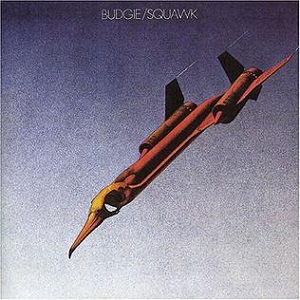
The self-titled debut album received moderately positive reviews at the time. It’s hard to believe today, but in the 1970s band’s would have an opportunity to grow and evolve through their albums and find its true shape and form. Even the big record companies had a certain element of patience. However, Budgie was bent and shaped from the very beginning. There was no difficult second album syndrome Budgie began to work on their second album called “Squawk” (a loud, harsh or discordant noise made by a bird or a person). Rodger Bain again got renewed trust as producer (co-producer is more correct). Budgie knew which song to place where. “Whiskey River” is a hard and driving opening song.
The second song “Rockin Man” got the guitar riffs, plink-plonk basslines and drums in the right places. In the third and extremely Beatles-inspired song “Rolling Home Again” it’s all clear that this album isn’t as focused as its predecessor. The fourth song “Make Me Happy” makes this fact even more clear. They were trying to combine different styles and made experiment. The order is restored in the next song “Hot As A Docker’s Armpit”, allegedly coined by Steve Marriott “Hot As a Docker’s Armpit,” This song distinguishes itself with its powerful, stomping, and stuttering riff, which is cleverly mirrored in the vocal melody. “Hot As a Docker’s Armpit” is a perfect introduction to Budgie’s heavy metal sound, drawing listeners in with its energetic progression that picks up pace halfway through the track. While you might momentarily think you’re hearing Geddy Lee from Rush, it’s actually Burke Shelley’s impressive vocals driving the song.
The song has the same song structure as many of Black Sabbath songs. The first song on the flip side is “Drugstore Woman”. This bluesy song is as simple as a shoe sole. The song seamlessly goes over into the instrumental “Bottled”. The next to last song on the album “Young Is A World” is one of the albums highlights. It begins as a meditative ballad and gets slightly harder. The song is a good example of the unexpected tempo changes. The closing song “Stranded” was inspired of a bass guitar riff from John Paul Jones (Led Zeppelin).
“Squawk” was recorded in two weeks in Rockfield Studios. The album isn’t as doom-sounding as the debut album. It’s more of heavy metal intermingled with acoustic interludes. However, the album meant that Budgie reached a larger audience and begin to tour extensively in UK and Europe. The album outshines the other MCA albums namely because of the album cover. It’s the work of legendary artist Roger Dean.
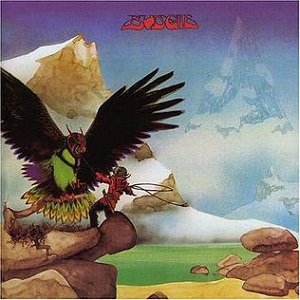
The third album “Never Turn Your Back On A Friend” is flawless. It veers more towards progressive rock than their previous two albums. Produced by Budgie and again recorded at Rockfield Studios. Album cover by Roger Dean. The opening song “Breadfan” which would later be covered by Metallica, further cementing Budgie’s influence in the metal genre. The song deals with the love of money (slang: bread) “Breadfan, open up your mind, open up your purse / Open up your bones, never, never gonna lose it.“ The song starts with one of best guitar riffs of early heavy metal. Speaking of unexpected tempo changes. In the middle of the song there’s a melodic interlude which goes over into the initial riff.
The next song is a cover of “Baby, Please Don’t Go”, a blues song popularized by Big Joe Williams in the 1930s. Budgie’s claim to fame in covering this classic song is the rolling basslines, rhythmic drums, catchy guitar and Shelley’s spectacular vocals.
The third song is a beautiful ballad “You Know I Always Love You”. The fourth song “You’re The Biggest Thing Since Powdered Milk” begins with a drum solo for nearly two minutes (it was the 1970s) before a guitar riff comes into play. This song has all the desirable attributes. This song title is a clever and romantic way to express feelings, infusing a bit of poetic flair and perhaps a sprinkle of exaggeration to capture someone’s attention. It’s possible that the humor and slight hyperbole in such phrases work wonders in making someone feel special and cherished. The idea that humor and heartfelt sincerity can combine to perfectly convey affection is what makes this song so charming. “You’re The Biggest Thing Since Powdered Milk” not only makes us smile with its unique title but also ushers in a vibe of playful and genuine adoration.
It’s gets even better in “In The Grip Of A Tyrefitter’s Hand”. captures this concept in a uniquely poetic way. The track explores the tough aspects of life through the metaphor of a tire fitter’s powerful grip. Just as a tire fitter’s hands are toughened by their demanding job, the song suggests that people, too, are shaped by the challenges they face, using this gripping imagery to delve into deeper themes of strength and perseverance in everyday life. This proves that Budgie were now a class act and also give a glimpse of what could have been. The next to last song is “Riding My Nightmare”, a ballad and maybe the weakest song on the album.
The closing song “Parents” still hits me with the same force after all these years. The music is mid-paced and acoustic. The lyrics are percipient. “When I was a little boy / They would say to me / Don’t go in the world and play / It’s bad company”. In just over ten minutes, Budgie delivered one of their most outstanding compositions ever with the song “Parents,” Described as an almost-perfect portrayal of romantic despair, “Parents” captivates with its poignant lyrics and emotive delivery. The song showcases the band at their best: Burke Shelley’s powerful vocals deeply resonate, while guitarist Tony Bourge impresses with a compelling single riff played to perfection. This track stands as a testament to Budgie’s ability to blend intricate musicianship with deeply affecting themes.
A standout track from this album, “You Know I’ll Always Love You,” surprised fans with its awe-inspiring lyrical themes and high-pitched vocals reminiscent of bands like Rush and Led Zeppelin. Discussing the soothing vocals on this song, it’s clear that Burke Shelley was an incredible asset to Budgie. His emotive performance in this beautiful track raises the question: Can heavy metal acts deliver such poignant expressions? Budgie answers this with a resounding yes, captivating listeners with a song that lasts just over two minutes.
A couple of verses later Shelley sings; “Wash your hands and up to bed / Mind your manners / Or you’re dead / Mind the cars cos you’ve got school on Monday”. Guitarist Tony Bourge makes his guitar sound like squeaking seagulls in the end of the song, maybe a nostalgic reference to the upbringing on the South Coast of Wales. Anyway, this is a groundbreaking album.
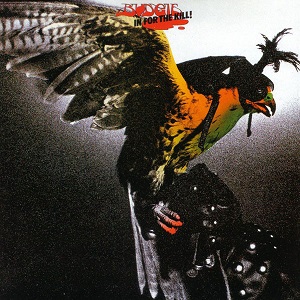
The fourth album “In For The Kill” is their masterwork. By this time drummer Ray Phillips had left the band and been replaced by Pete Boot. The album was produced by Budgie and recorded agian at Rockfield Studios and Lee Sound, Birmingham. Album cover by John Pasche Gull Graphics. The opening song “In For The Kill” is six and half minute of hard mangling with a thick bassline, a few but distinct guitar riffs and effective drumming. Next song is “Crash Course In Brain Surgery”. It was originally released in 1971 as a single. This is a catchy song with lyrics as weird as the title. The song “Crash Course in Brain Surgery” showcases the lyrical talents of Burke Shelley, Ray Phillips, and Tony Bourge, making it a standout track in Budgie’s discography. Its compelling lyrics and powerful delivery resonated well beyond its initial release, catching the attention of Metallica, who later covered the song, introducing it to a new generation of heavy metal fans.
The third song on the album is an acoustic song, “Wondering What Everyone Knows”. For once, Burke Shelley lowered the pace and sang in clear and beautiful way. The result is flabbergasting. Then is the suggestive “Zoom Club”. Almost eight minutes of droning heavy metal. Tony Bourge brings out his hardest riffs and solos. Distortion, echo and reverb – all at once. The bass and drums are exquisite. “Come on everyone of you g.I’s / You are the ones who can care / Speed on you wonderful dropouts / We’ll break the walls of this room in”. This grandiose song has stood the test of time. “In For The Kill” contains one of the best A-sides in early heavy metal.
The song encapsulates everything you’d expect from a quintessential heavy metal/hard rock release. Its powerful riffs and compelling lyrics perfectly align with the genre’s energy and intensity. The quality and impact of “In for The Kill” are so notable that it caught the attention of Van Halen, who added their cover of the track to their repertoire, further testament to its enduring appeal and influence in the rock music scene.
The flip side. The song “Hammer And Tongs” isn’t a nod to Led Zeppelin’s “Dazed And Confused”, it’s a deep bow. “Running From My Soul” is a straightforward rock’n’ roll song and doesn’t leave any mark in history. The closing song “Living On Your Own” is almost nine minutes long and wraps it all up.
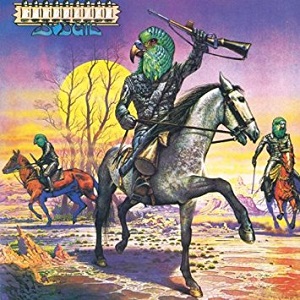
Nothing lasts forever. Even the longest, the most glittering reign must come to an end someday. The downfall of Budgie began with their fifth and last album for MCA, “Bandolier”. The album was produced by Budgie and recorded at Rockfield Studios and Mayfair Studios, London. The album illustration was made by Patrick Woodroffe. Drummer Pete Boot left the band and had been replaced by Steve Williams. The albums opens, as always, with a very strong song “Breaking All The House Rules”. But what happens next? The dreamy “Slipaway” is pure soul music and “Who Do You Want For Your Love” is a funky groove.
The order is restored on the flip side in “I Can’t See My Feelings”. The fierce guitar riffs, bass lines and pounding drums (including cowbells) are all there. The following song is a cover of Andy Fairweather Low’s “I Ain’t No Mountain” from his 1974 album “Spider Jiving”. Budgie ends the album in style with “Napoleon Bona-Part One” and “Napoleon Bona-Part Two”. Very witty and amusing song titles. “Bandolier” marks the end of the band’s golden age.
Since “Bandolier” they have released six further studio albums, four live albums and five compilation albums. Furthermore, they changed the line-up several times, disbanded and re-formed and since 2010 on a long-term hiatus. All resuscitation attempts were in vain after “Bandolier”.
Budgie has primarily been recognized as a hard rock and heavy metal band, yet their music also incorporates elements of progressive rock and funk, often infused with a sense of humour. The band’s unique sound has been described by many as a blend of Black Sabbath’s heavy riffs and Rush’s complex compositions. In particular, Burke Shelley’s high-pitched vocals have drawn comparisons to Rush’s Geddy Lee. Despite their relative obscurity in the early part of their career,

 The Fat Angel Sings