

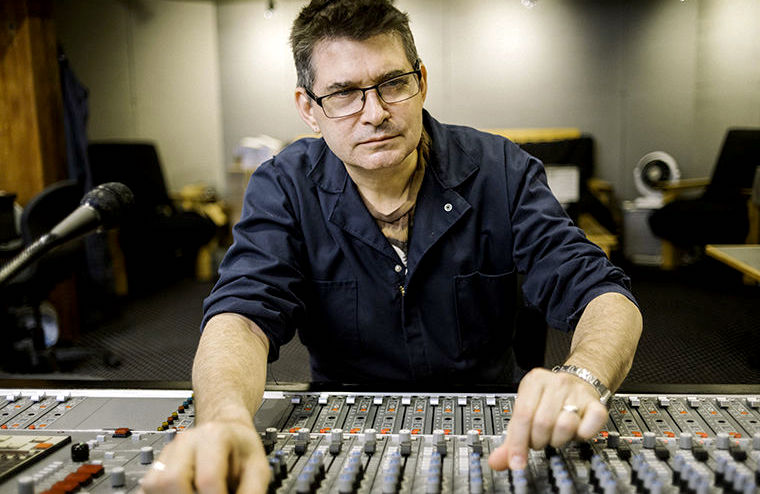
American musician and producer Steve Albini, who was known for his work with acts including Nirvana, The Pixies and PJ Harvey, has died at the age of 61. Albini was an instrumental and uncompromising figure in the US indie scene in the 1980s and 90s, leading bands including Big Black and Shellac.
Along the way, he worked with a succession of acclaimed alt-rock luminaries – Low, Mogwai, Plush, Will Oldham, Nina Nastasia, the Manic Street Preachers, Joanna Newsom – as well as a couple of his formative influences: the reformed Stooges and Cheap Trick,
His influence was also heard on the several thousand albums he produced and engineered. Which included The Pixies’ seminal LP “Surfer Rosa” and Nirvana’s “In Utero”. Kurt Cobain recruited Albini to record the 1993 follow-up to their hugely successful “Nevermind” album after being impressed by his work with Big Black, The Pixies and The Breeders. He reportedly agreed to work with them because he felt sorry for them, believing they were at the mercy of their major record label, and wanted to give them a more abrasive sound.
The album’s resulting raw feel did not impress the Geffen label, which insisted the singles “Heart-Shaped Box” and “All Apologies” were remixed. “In Utero” went on to sell five million copies in the US alone, and Albini remarked: “I like it far more than I thought I was going to.”
A lot of what Albini did “implicitly screamed ‘hate me, please!’” There were the spectacularly abusive columns he wrote for fanzines in his adopted home town of Chicago, the subject matter of the songs by his band Big Black, and even the way their records were packaged (Albini stuffed razor blades and fish-hooks into the sleeve of their debut EP “Lungs”; 1987’s . Whatever Albini thought about their music, his work on “Surfer Rosa” made the Pixies sound awesomely powerful: it feels like the band are playing live, inches away from your face. On PJ Harvey’s “Rid of Me”, his production is the perfect match for Harvey’s shift towards a darker, more visceral tone: it amplifies both the glowering tension in the music and moments of cathartic release.
In general, he disliked the title of producer, telling the media last year he preferred to be credited as an engineer because he saw his role as recording a band and not shaping its sound. He also declined to take royalties, charging only a flat fee because he considered it unethical to make money from an artist’s work indefinitely. The alt-rock producer and music legend leaves behind a legacy of controversial provocation but uniquely daring music
He ran his own studio, Electrical Audio, in Chicago, and had been preparing for the release of Shellac’s “To All Trains”, their first album since 2014, on 17 May.

 The Fat Angel Sings