

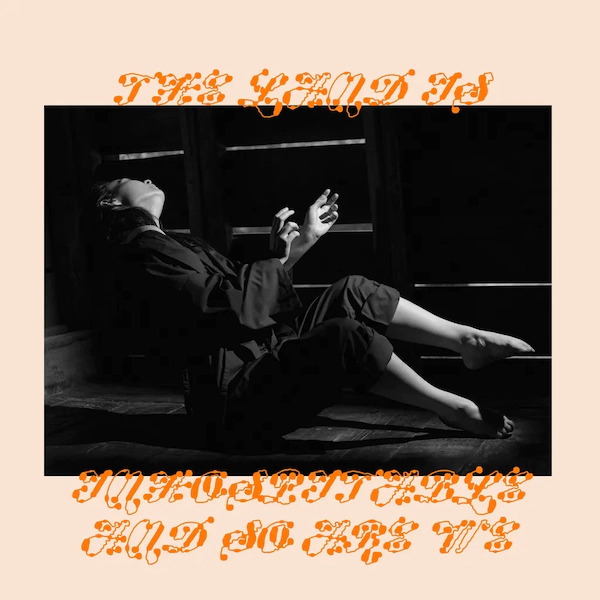
On Mitski’s previous two albums, 2018’s “Be the Cowboy” and 2022’s “Laurel Hell“, the songwriter filled every open space with buzzing effects, disco rhythms, and bright synthesizers—as if to drown out the feelings of loneliness and isolation with the company of flashy sounds. “Bug Like an Angel,” the leadoff track from “The Land Is Inhospitable and So Are We”, opens with nothing more than the spare strum of an acoustic guitar, which until its ascendant chorus backed by a choir, is the barest her music’s ever sounded.
Sometimes, Mitski says, it feels like life would be easier without hope, or a soul, or love. But when she closes her eyes and thinks about what’s truly hers, what can’t be repossessed or demolished, she sees love. “The best thing I ever did in my life was to love people,” Mitski says. “I wish I could leave behind all the love I have, after I die, so that I can shine all this goodness, all this good love that I’ve created onto other people.” She hopes her newest album, “The Land Is Inhospitable and So Are We”, will continue to shine that love long after she’s gone. Listening to it, that’s precisely how it feels: like a love that’s haunting the land.
Love is always radical, which means that it always disrupts, which means that it always takes work to receive it. This land, which already feels inhospitable to so many of its inhabitants, is about to feel hopelessly torn and tossed again – at times, devoid of love. This album offers the anodyne. “This is my most American album,” Mitski says about her seventh record, and the music feels like a profound act of witnessing this country, in all of its private sorrows and painful contradictions. But “maybe it’s beyond witnessing,” she says. At times, it feels like the album is an exercise in negative capability – a fearless embodiment and absorption of the pain of other bodies. When I ask her what the album would look like, if it were a person, she says it would be someone middle-aged and exhausted, perhaps someone having a midlife crisis.
But through the daily indignity and exhaustion, something enormous and ecstatic is calling out. In this album, which is sonically Mitski’s most expansive, epic, and wise, the songs seem to be introducing wounds and then actively healing them. Here, love is time-traveling to bless our tender days, like the light from a distant star.
Mitski wrote these songs in little bursts over the past few years, and they feel informed by moments of noticing – noticing a sound that’s out of place, a building that groans in decay, an opinion that splits a room, a feeling that can’t be contained in a body. It was recorded at both the Bomb Shelter in East Nashville and the Sunset Sound Studios in Los Angeles.
The album incorporates an orchestra arranged and conducted by Drew Erickson, as well as a full choir of 17 people – 12 in LA and 5 in Nashville – arranged by Mitski. And for the first time, it felt important to Mitski to have a band recording live together in the studio, to create this new sublime sound. Working with her longtime producer Patrick Hyland, the album has a wide-range of references, from Ennio Morricone’s bombastic Spaghetti Western scores to Carter Burwell’s tundra-filling Fargo soundtrack, from the breathy intimacy of Arthur Russell to the strident aliveness of Scott Walker or Igor Stravinsky, from the jubilation of Caetano Veloso to the twangy longing of Faron Young.
Mitski has always known how to write music that creates a lush and shimmering atmosphere while simultaneously piercing directly into a listener’s heart. “The Land Is Inhospitable And So Are We” sees the artist in her most boundless state thus far, with dramatic orchestral swells on tracks like “Bug Like An Angel” and “When Memories Snow” paired with searingly intimate lyricism on “My Love Mine All Mine” and “I’m Your Man.” After considering retirement a few years ago, this album is a stunning declaration that Mitski isn’t going anywhere.
 The Fat Angel Sings