


Shane MacGowan, the lead singer and songwriter of trailblazing Celtic punk band the Pogues and one of the all-time great frontmen, has died aged 65 following a long period of ill health. A family statement said he died at 3.30am on 30th November, and was described as “our most beautiful, darling and dearly beloved”.
His wife Victoria Mary Clarke wrote in a statement on social media: “Shane will always be the light that I hold before me and the measure of my dreams and the love of my life … I am blessed beyond words to have met him and to have loved him and to have been so endlessly and unconditionally loved by him.”
In December 2022, MacGowan was hospitalised with viral encephalitis, and as a result spent several months of 2023 in intensive care.
The Irish songwriter was a one-of-a-kind presence onstage with a poet’s flair for lyricism, MacGowan sought to bring the power of Irish folk music to the rock scene, with his writing drawing from literature, mythology and the Bible. “It became obvious that everything that could be done with a standard rock format had been done, usually quite badly,” he told the NME in 1983 as were getting off the ground. “We just wanted to shove music that had roots, and is just generally stronger and has more real anger and emotion, down the throats of a completely pap-orientated pop audience.”
He frequently wrote about Irish culture and nationalism and the experiences of the Irish diaspora, reclaiming the racist “Paddy” stereotype – or reinforcing it, depending on who you asked. Early in his career, he often performed in a union jack suit – but in Julien Temple’s 2020 documentary, Crock of Gold: A Few Rounds With Shane MacGowan.
His dedication to his craft earned him the Ivor Novello songwriting inspiration award in 2018, following five albums with the Pogues and various solo releases. The Pogues’ highest-charting song, “Fairytale of New York”, a duet with Kirsty MacColl, reached No 2 in 1987 and became a yearly Christmas classic.
Irish president Michael Higgins was among those paying tribute, writing: “His words have connected Irish people all over the globe to their culture and history. MacGowan was born on 25 December 1957, near Tunbridge Wells. His parents were Irish immigrants residing in Kent who moved around the south-east of England. His whole family was musical: MacGowan said he learned a song a day from family on his mother’s side and gave his first performance aged three. “They put me up on the kitchen table to sing and the song went down very well,”
The young MacGowan was noted for his literary gifts and received a scholarship to Westminster school but was expelled for possessing drugs in his second year. As a teenager he considered joining the priesthood – but then he found punk. “I was happy during punk. Incredibly happy,” MacGowan told Vox. “You call it chaos. I don’t regard it as chaos. I regard it as natural living.”
He began drinking as a child when his family gave him Guinness to help him sleep, and suffered from the effects of drug and alcohol abuse, but argued in 1990: “Self-abuse, or whatever you wanna call it, is also incredibly creative.”
He first gained recognition in 1976 when a photograph of him with a wounded ear at a gig at the ICA in London was printed in the NME with the headline: “Cannibalism at Clash gig”. Then known as Shane O’Hooligan, MacGowan formed his own punk band, the Nipple Erectors – later the Nips – and made a demo for Polydor produced by Paul Weller.
MacGowan and late-joining Nips member John Hasler, formerly of Madness, would break away from the fracturing group in the early 80s to come together with members of the Millwall Chainsaws to form Pogue Mahone – a corruption of the Gaelic póg mo thóin, or “kiss my arse”. They changed their name to the Pogues partly as a result of BBC censorship, and gained a reputation for their fierce live performances.
The band drew rave reviews for their debut album, 1984’s “Red Roses for Me”, but the group struggled to capitalise on its success owing to its highly combustible line-up – which sometimes saw the Clash’s Joe Strummer fill the absent MacGowan’s shoes. They released two more classic albums in 1985’s “Rum Sodomy & the Lash”, produced by Elvis Costello, and 1988’s “If I Should Fall From Grace With God”.
“Hell’s Ditch”, released in 1990, was the band’s fifth album and the last to feature MacGowan as a member. After collapsing en route to support Bob Dylan in 1988, he was diagnosed with hepatitis and told he would die if he did not stop drinking spirits.
MacGowan moved from Thailand to Tipperary and formed the band Shane MacGowan and the Popes, who recorded two studio albums. He would rejoin a full Pogues reunion in 2001, which lasted until 2014.
In the late 2000s, “Fairytale of New York” began staging a perennial resurgence in the Christmas singles chart thanks to the rise of downloads and later streaming.
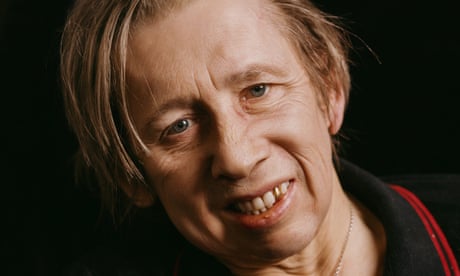
MacGowan’s last album was the Popes’ “The Crock of Gold” in 1997, although since 2015 he had been working on an as yet unreleased album of covers and originals with the Irish band Cronin. Among his final artistic output was The Eternal Buzz and the Crock of Gold, a lavish art book which was praised by critic Waldemar Januszczak for MacGowan’s “demented, wild, fascinating, scabrous kind of energy”. Copies of the book were sold for £1,000 each to raise money for MacGowan’s care.
MacGowan is survived by Clarke, whom he married in 2018. They met when MacGowan was 24 and she was 16. He also once said he fathered a son, born around 1991. “I wouldn’t wish myself on any kid as a father,” he told the Telegraph. He is also survived by sister Siobhan and father Maurice.
In one of his final interviews, with the Guardian’s Simon Hattenstone, MacGowan insisted that despite his reputation for having a death wish, he wanted to live. “Of course I like life,” he exclaimed.
 The Fat Angel Sings