

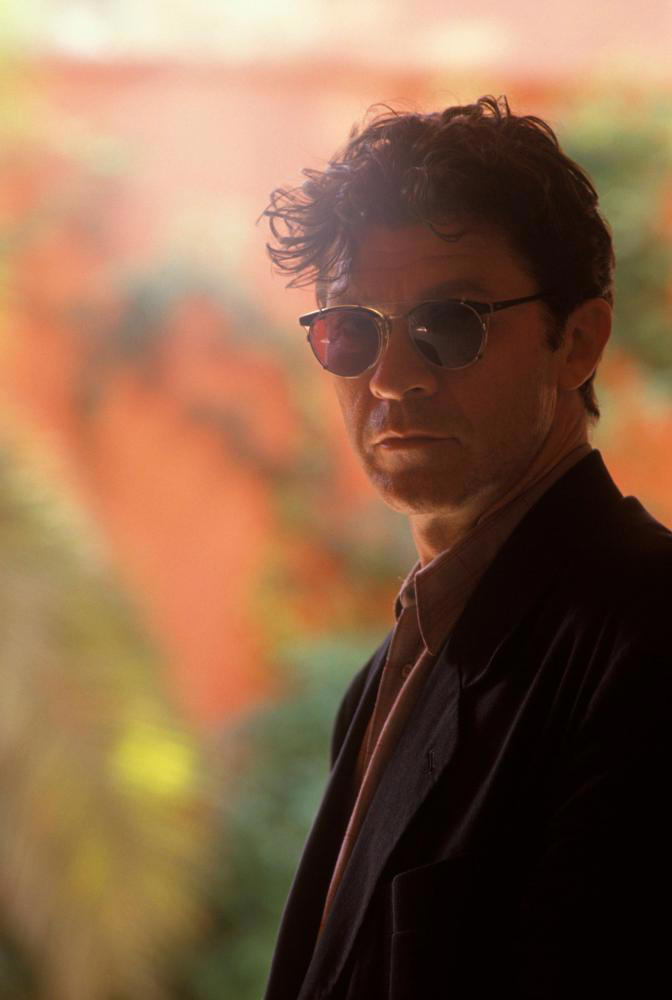
Robertson’s music reflected the journey of his life, from his ancestral roots in the Six Nations of the Grand River, on to the seedy Yonge Street strip of his teenage years, continuing down the Mississippi River, all the while picking up influences and sounds, including country, folk and the blues. When combined with the musicianship of the Band (Robertson, Rick Danka, Levon Helm, Richard Manuel and Garth Hudson, the latter the only surviving member), the resulting sound became what we now know as Americana.
Robbie Robertson’s early career is distinguished by his tenure in the Hawks, the group of musicians that would later evolve into the Band. In the early 1960s, the Hawks backed the Arkansas-born frontman Ronnie Hawkins, touring the US and Canada and cutting a few studio singles.
As a songwriter, Robertson was among the best, pulling inspiration from the road, troubles with addiction and, in many cases, history books. He rarely sang himself, and only released solo music after the Band had disbanded, but when his bandmates sang the words he wrote, they never sounded better.
‘The Night They Drove Ol Dixie Down’
If there’s a greater song about the Civil War written by a Canadian, we haven’t heard it.
Robertson had the tune for this song in his head, but wasn’t sure what it was going to be about. He decided he was going to write about the dying days of the Civil War, told from the point of view of a working-class Southerner. Robertson didn’t write the song with any political undertones, instead focusing deeply on the personal narrative. In many ways, it was an ode to his friend Levon Helm, originally from Arkansas, and was intended as a way to showcase Helm’s powerful voice.
“Robbie and I worked on ‘The Night They Drove Old Dixie Down’ up in Woodstock. I remember taking him to the library so he could research the history and geography of the era,” Helm wrote in his book, This Wheel’s on Fire. From the stream-of-consciousness lyrics worthy of Faulkner, which take you into the head of Virgil Caine, to that climactic rhythm section and the way it offsets, to the drums, to Helm’s inimitable voice, it’s one of the finest songs the Band ever wrote. It’s also worth noting that Helm never performed the song after the Last Waltz concert in 1976.
‘The Weight’
There are few things guaranteed in life, but one of those guarantees is this: if any band, not even just the Band, closes out a concert with “The Weight,” everyone in the audience will be belting out “take a load off Annie” by the time the chorus hits. With Robertson’s textured lyrics and biblical allusions, as well as its mix of folk, country and gospel, it’s become a standard of the American songbook, one of Robertson’s finest compositions that has been covered by everyone from Aretha Franklin to the Black Keys. It’s the Band’s best-known song for a reason.
The live version of “The Weight” from The Last Waltz might be more famous, thanks to vocal contributions from the Staple Singers. But the original studio version of Robertson’s mischievous signature song was a blueprint for much of the Band’s best work. Inspired by Robertson’s viewing of Luis Buñuel movies, the soulful roots-rock tune feels more like a short story: the song muses about life’s vicissitudes through the lens of vibrant characters and the use of biblical imagery. With its swinging grooves, bar-band piano and keening vocals from Levon Helm and Rick Danko, “The Weight” is wistfully nostalgic but spiritually uplifting.
‘It Makes no Difference’
The Band had three of the greatest voices in rock ‘n’ roll in its time, and “It Makes no Difference” may be one of the best displays from Danko. Danko’s tremulous voice perfectly captures the heartache and pain in Robertson’s lyrics, which are about a former love. “I thought about the song in terms of saying that time heals all wounds,” Robertson told Rolling Stone . “Except in some cases, and this was one of those cases.” Also, the way Hudson comes out of nowhere at the end on sax? Doesn’t get any better.
‘Ophelia’
As their career progressed, the Band fell prey to the same foibles that other groups experienced, mainly creative dissension and substance use issues. That didn’t always diminish their creative powers, going by a jaunty Robertson tune like “Ophelia”. Garnished with warm orchestration like horns and woodwinds, the strutting song has a sunny vibe despite downtrodden lyrics: it laments the disappearance of a woman named Ophelia, who seems to have left town for reasons unknown (“Was it something that somebody said? / Mama, I know we broke the rules / Was somebody up against the law?”). Although “Ophelia’s” character is never fleshed out, Robertson’s pleading tone and enigmatic hints make listeners care about her whereabouts – and want to learn more about who she is.
The best song from the Band’s 1975 album, “Northern Lights – Southern Cross”, was inspired by Hamlet’s ill-fated lover, Ophelia. Helm’s vocals on this are so perfect, so essential, that the song will always be associated with him. He continued to perform this song well after the Band’s breakup, right up to the end of his life. Even throat cancer couldn’t keep him from belting this one out.
Gives you chills watching him strain his remaining voice to nail this.
‘The Shape I’m In’
A tragic song in the tragic history of the Band. Robertson wrote “The Shape I’m In” based on what he saw as Manuel’s losing battle with depression, drugs and alcohol. Manual, the lead singer on this song, would eventually take his own life, giving the lines “Out of nine lives I spent seven. Now how in the world do you get to heaven?” an extra sense of poignancy.
‘Up on Cripple Creek’
A song about a trucker, with a tempo and groove perfect to listen to during long, overnight hauls. Robertson, in his continuing attempts to capture the everyday goings on of the everyman, wrote this country-funk romper about a driver who’s headed to see his girl, “Bessie,” in order to drink, gamble and God knows what else. Of note: it’s one of the earliest songs to use the clavinet, which was made a funk standard by Stevie Wonder a few years later.
‘This Wheel’s on Fire’
A highlight of 1975’s The Basement Tapes, “This Wheel’s on Fire” actually surfaced first as a Band song. Freckled with psychedelic flourishes, Danko’s slightly alarmed vocals, and Garth Hudson’s mad-scientist-in-a-lab keyboard effects, “This Wheel’s on Fire” demonstrated the forward-thinking approach of the Band at this stage of their career. Fittingly, “This Wheel’s on Fire” has remained a pop culture staple for decades; Brian Auger and the Trinity with Julie Driscoll, Siouxsie and the Banshees, and Kylie Minogue have all covered the song.
‘Acadian Driftwood’
One Robertson’s historical classics, this one about the expulsion of the Acadians during the North American conflict of the Seven Years’ War. It’s the northern version of Robertson’s Civil War ballad “The Night They Drove Old Dixie Down,” and even if it has been criticized for taking some creative liberty with the facts, it’s earned its place in the Canadian songbook along the likes of Gordon Lightfoot’s “The Wreck of the Edmund Fitzgerald.” One of Robertson’s most evocative compositions.
‘Stage Fright’
One of the greatest songs ever written about the act of performing, full of anxiety, cynicism and a sort of Sisyphean angst. But after going through all that, including some major key changes and an impressive organ solo, “Stage Fright” ends back where it begins — but with a narrator who is ultimately triumphant.
‘King Harvest (Has Surely Come)’
With their 1969 self-titled album, the Band not only avoided a sophomore slump – they perhaps even eclipsed their debut. Robertson certainly exhibited sharp songwriting on the LP, with one highlight being the album-closing “King Harvest (Has Surely Come)”.
Robertson was always obsessed with tales of the working man, and nowhere is this captured so well as on “King Harvest,” which is told from the point of view of a poverty-stricken farmer who is desperately depending on his crop coming in. “There’s a lot of people who think, come autumn, come fall, that’s when life begins, it’s not the springtime, where we think it begins, it’s the fall, because the harvests come in,” Robertson said of the song to author Craig Harris for the book The Band: Pioneers of Americana Music.
‘Fallen Angel’
Robertson didn’t rush into making a solo record after parting ways with the Band. But when he did emerge more than a decade later, he went all-out, teaming up with producer Daniel Lanois and collaborating with artists such as U2, Maria McKee, and Ivan Neville. The resulting self-titled album is ambitious and cinematic, distinguished by the gauzy highlight “Fallen Angel”. Co-written with Martin Page and featuring guest vocals from Peter Gabriel, the single is a heartfelt, aching tribute to Robertson’s one-time bandmate Richard Manuel, who died by suicide in 1986. The lyrics brim with grief, anger and resignation, but maintain a moving emotional tenderness.
‘Breakin’ the Rules’
For his second solo album, Robertson worked with dozens of musicians, including the Rebirth Brass Band and multiple horn sections, to craft a collection of songs indebted to jazz and the music of New Orleans. “Breakin’ the Rules” skews minimalist, for good reason: it’s a gorgeous, crestfallen collaboration with The Blue Nile – Paul Buchanan contributes vocals and guitar, while Robert Bell chimes in with bass and drum programming – that meditates on an unhealthy relationship which needs to end. “Breakin’ the Rules” also appeared in the 1991 Wim Wenders movie Until the End of the World.
Ghost Dance
Robertson weaved references to his Mohawk and Cayuga heritage into his art on his 1994 solo album, which he recorded with a collective of musicians called the Red Road Ensemble for a TV documentary the Native Americans. “Ghost Dance” is particularly stunning. Although sonically an echo of his gorgeous, glacial solo work with Daniel Lanois, thematically the song is a powerful statement on reclaiming – and preserving – identity, tradition and heritage in the face of violent oppression: “They outlawed the Ghost Dance / But we shall live again, we shall live again.
‘Somewhere Down the Crazy River’
Robertson’s primary role in the Band was as a songwriter, not a singer, so after the group broke up, he had something to prove on his self-titled solo album. “Somewhere Down the Crazy River” is the best of that output. In this beautiful, hypnotic and largely spoken-word piece produced by Daniel Lanois, Robertson conjures the image of the river and recounts his days living in Arkansas with Helm, back when “time stood still.” And on the chorus, he proved that he could not only still write a catchy hook, but that he could sing. Martin Scorsese also directed the music video, continuing the director and songwriter’s work together from “The Last Waltz” and kicking off a lifelong collaboration between the two.
“RIP Robbie Robertson. A good friend and a genius. The Band’s music shocked the excess out of the Renaissance and were an essential part of the final back-to-the-roots trend of ‘60s. He was an underrated brilliant guitar player adding greatly to Bob Dylan’s best tour and best album.” – Steve Van Zandt
Robbie Robertson was a titanic figure in my life. The Band was a huge and soulful influence in my world from eleventh grade on, and his songwriting resonated so strongly and will forever. I feel that The Band collectively invented an entire style of music that continues to flower to this day.
Fairport Convention always thought long and hard about the musical style – but we were stopped in our tracks by a new record from Bob Dylan’s backing group. “Music From Big Pink” by The Band had an immediate influence on Fairport when it appeared in July 1968, as well as on the rest of the London underground scene. After a couple of years of acid-fuelled, occasionally pretentious and increasingly predictable output from San Francisco, New York and London, here was something completely refreshing. The Band had short haircuts and dressed like funeral directors. They played a synthesis of American roots styles very unpretentiously. There was rock and roll, country, gospel, Apalachian, soul, jazz, folk and blues in there – and they mastered all of it. Not bad for Canadians. Many British bands started writing in the slow 4/4 time of The Band’s signature tune “The Weight” – but never quite captured the elusive swing and looseness» – Richard Thompson
 The Fat Angel Sings