


Steve McQueen released on 22nd June 1985, . Remastered vinyl versions of Prefab Sprout’s albums are available through Sony.
Paddy’s songwriting skills is so good on this album – ‘how’s your new girlfriend? How’s the wife taking it’. So many good lines. Some just make me laugh – it’s not easy to crack jokes in songs – Jarvis is good at it too but it’s uncommon. Paddy is just a world class songwriter. Put him together with Tomas Dolby and you have a very special partnership.
I have played this album to death over the years, For me, Prefabs best work was with Thomas Dolby. His production is pure class. He added a polished sheen to Paddy’s songs. He buffed them up. They were already brilliant songs as the acoustic albums testifies but Dolby turned then into jewels.
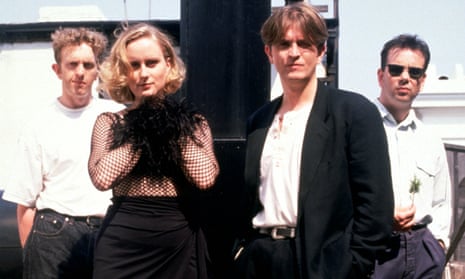
Paddy McAloon, singer, songwriter tells us, I grew up in Witton Gilbert in County Durham and started Prefab Sprout with his brother [Martin, who played bass] and Michael Salmon, who lived down the street. Michael borrowed a drum kit and Martin and I shared an amplifier. We rehearsed in my dad’s run-down wooden-framed petrol station. We were as rough as can be, but we sounded like a band, at least to ourselves.
We didn’t have music lessons but drawn to music that I read about and devoured everything from T Rex to Stravinsky. but we dreamed about influencing the course of pop. I’d been writing songs since I was 13 years old, Loving Bowie who didn’t like country and western, so I wrote “Faron Young” from the world-view of someone who disliked country music.
Bonny was written around the same time. People think it’s about my father’s death, but he wasn’t dead then – I imagined grief. Goodbye Lucille #1 started out as a 50s doo-wop parody – “Ooh, Johnny Johnny Johnny” – in waltz time, but turned into something serious. Most breakup songs were sad or accusatory, but I straddled the viewpoints of both the intense guy and the girl breaking up with him (“She’s a person too”).
I’d always written on an acoustic guitar, but just as we started making records I had a crisis and thought I’d exhausted the guitar and started writing instead on a Roland synthesiser. I was too eccentric or nervous a songwriter to incorporate a big chorus, but when “When Love Breaks Down” came along I didn’t fight it. I wrote that, and “Appetite” – over a hip-hop-type groove on a drum machine – and then Desire As in the same week in June 1984. “I’ve got six things on my mind. You’re no longer one of them” is so cold. I wouldn’t want to say that to anybody. “Desire as a sylph-figured creature who changes her mind.” I’ve no idea where these things come from.
I’d used my most off-kilter ideas on our first album, “Swoon”, and I’d deliberately held back my more commercial songs. The album title – “Steve McQueen” came to me in a dream. It doesn’t mean anything, but I decided to use it and we shot the cover using a motorbike like the one McQueen had in The Great Escape.
The album went gold and has sold steadily ever since. I’m humbled that it’s become a classic and people still discover it, but I still remember driving away from the studio in the snow thinking we’d get a lot of praise for something I felt I didn’t have much to do with. It was us playing the songs in the studio – Thomas Dolby and the team did a marvellous job of making us sound grand and opulent. When we were doing “Johnny Johnny” there was this embarrassing clunk, which was the sound of me hitting the microphone stand while singing. Thomas loved the take and wanted to keep it, so he went to the Fairlight sampler, looked at the wave form of the sound and just took out the clunk. I remember thinking, “Wow, so that’s what pop is going to be like in future.”
Thomas Dolby, producer, I was on Radio 1’s Roundtable programme reviewing records, and the other guests were raving about all these awful Christmas songs. Then Prefab Sprout’s Don’t Sing came on. I’d never heard anything like it. Paddy’s ideas seemed detached from everything except maybe a mid-20th-century American novel. The next thing I knew their manager invited me up to their old rectory in Consett. Paddy’s bedroom was twice the size of a single mattress. He sat with a guitar and played me songs from sheets of paper. I recorded them all, took them home and whittled 40 down to 12.
There was fantastic flair and imagination but the arrangements were hard to listen to, so we restructured the songs in a rehearsal room right down to the exact placement of a crash cymbal – Neil Conti was a tasty drummer. We recorded in a big London studio over three months, which today would only be an option for a platinum-selling band. Paddy’s voice was warm and emotive, Wendy [Smith]’s was pure and pristine – they created a nice aura together.
I played Paddy’s chords on my synthesiser using my own sounds. The Fairlight sampler had just come out so I could make orchestral arrangements. The gunshot on Faron Young came from a BBC sound effects disc played backwards. I did things like sampling Wendy’s voice and “playing” it on a few songs.
I’ve never seen a band eat like Prefab. Wendy would say “Paddy, do you want a bacon sandwich?” and they’d all go off for a fry-up. We recorded “Horsin’ Around” after a pub break. Paddy launched into a swing version à la Frank Sinatra. I laughed my head off, and thought it might make an interesting style for the middle section, so we kept it.
 The Fat Angel Sings