

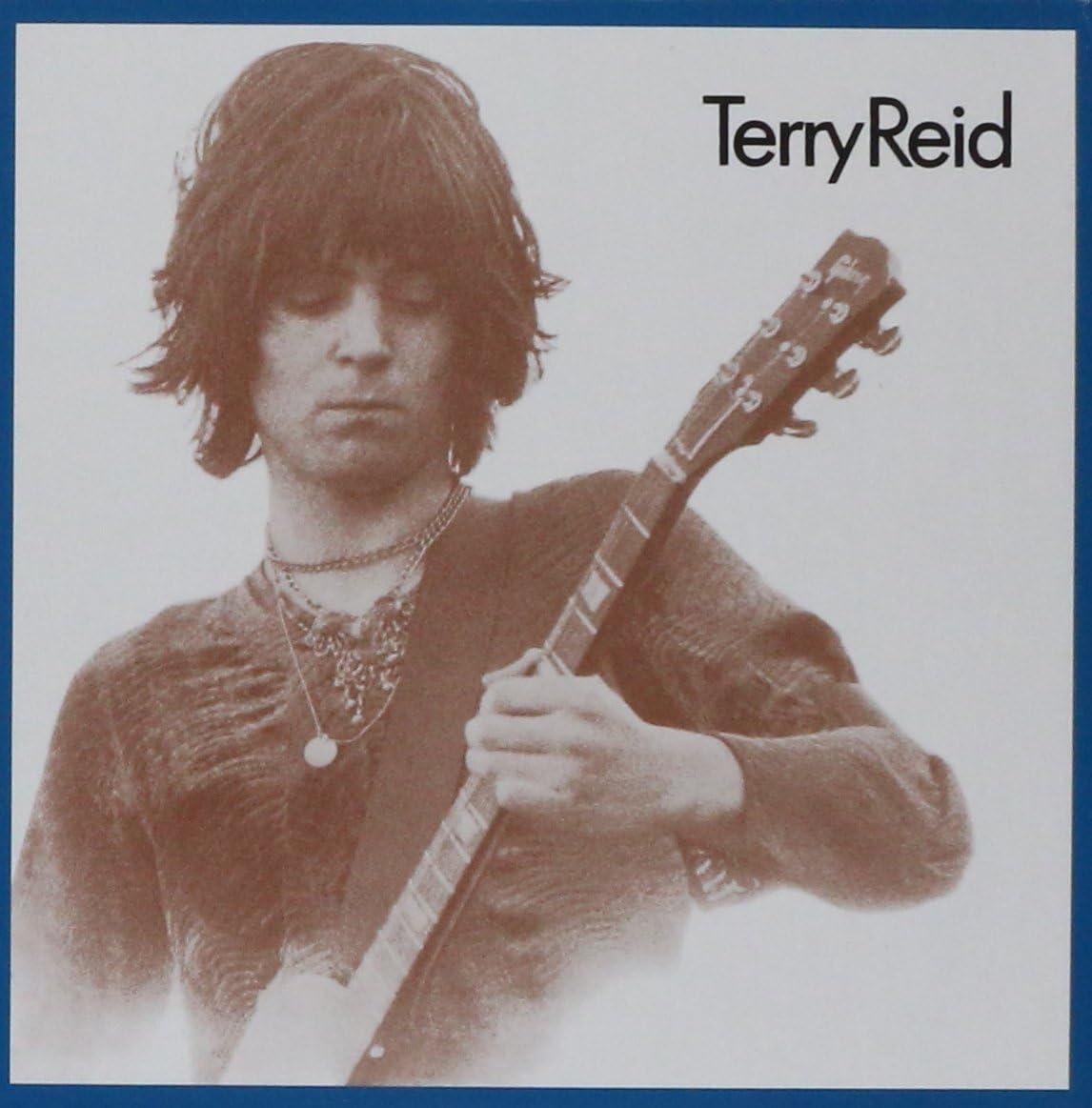
In the waning days of the nineteen-sixties, Terry Reid was England’s most wanted man. Jimmy Page wanted him as the front man of the band that would become Led Zeppelin. Deep Purple wanted him to fill the singing slot that wound up going to Ian Gillan. And both the Rolling Stones and Cream had enough respect for his talents to offer him the coveted role as opening act on several of their most storied tours. Back then, Reid’s stock rose so high, it inspired Aretha Franklin to comment, “there are only three things happening in England: The Rolling Stones, The Beatles and Terry Reid.”.
A frustrating clutch of factors came into play. Reid’s legal commitment to a rigorous solo touring schedule prevented him from forming a band with Page at that time, and the anxious guitarist didn’t want to wait. The offer from Purple held far less appeal for Reid. In an interview years later, he told me he didn’t want to be straight-jacketed into their brand of “cock rock,” as he called it. As for his solo career, a bad contract, a crumbling record company and his own resistance to musical formulas, conspired to make Reid the kind of singer who would end up being greatly admired by his fellow musicians but obscure to the wide swath of listeners who would love him if they could only hear him.
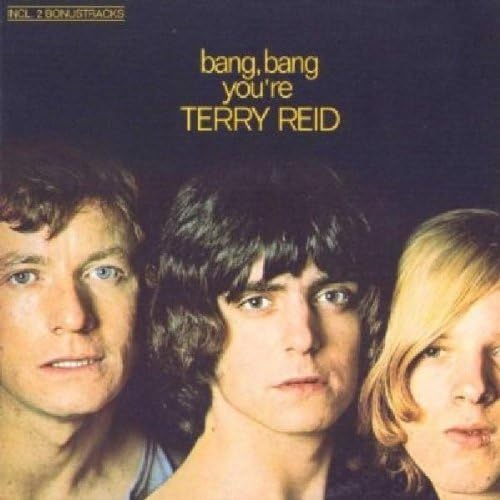
Terry Reid’s first two albums, ‘Bang Bang,You’re Terry Reid” and ‘Move Over for Terry Reid”. Released in 1968 and ’69 respectively, showcased one of the most ferocious, and distinct, soul shouts of the classic-rock era. In both power and emotion, Reid paralleled singers like Janis Joplin and Joe Cocker, while mirroring their go-for-broke brand of blues rock. At the same time, Reid’s early albums featured subtler pieces, something he explored further on albums like ‘River”, ‘Seed of Memory’, and ‘The Driver”.
Over the course of a long career, Reid has walked a labyrinthine path, snaking from the golden era of British blues to the peak of the Laurel Canyon scene, with stops in Brazil, Nashville and Puerto Rico along the way. He has played with artists from Graham Nash and David Lindley to Gilberto Gil and Willie Bobo, while his songs have been covered by The Hollies, Marianne Faithfull, John Mellencamp, Jack White and more. At the center of it all sits a voice commanding and singular enough to have earned him the nickname, “Super Lungs.”.
Born 70 years ago in Huntingdon, England, Reid began his career at age 15 when he dropped out of school to join a band called The Jaywalkers. Led by their drummer, Peter Jay, the group generated enough buzz to open for the Stones at the Royal Albert Hall in 1966. There, Reid met Graham Nash, then with The Hollies, who helped get the band a contract with Columbia Records. The Jaywalkers‘ first single “The Hand Don’t Fit the Glove” (backed with “This Time” became a minor British hit in 1967. “Glove” sounded like a lost single by the Shirelles, while “This Time” had a whiff of the New York Latin-soul you’d hear songs written by Bert Berns or Doc Pomus. The teen Reid delivered both songs with the oomph of maximum R&B. Despite the single’s promise, the Jaywalkers quickly imploded, leaving an opportunity for top UK manager/producer Mickie Most to swoop in and ink Reid to a solo contract.
The first single he released on his own, “Better by Far” sounded like something Dusty Springfield might have belted. At that time, Mickie Most had a working relationship with Peter Grant, manager of Jimmy Page, then the heir to the Yardbirds‘ name. Reid’s potency as a singer inspired Page’s offer for him to front a “New Yardbirds.” When Reid’s commitments to his solo career scotched that, the singer recommended two obscure blokes he knew from up north, Robert Plant and John Bonham. Given what happened next, one hopes Plant wrote Reid the most profound thank you note in history. Yet, at the time, the solo Reid seemed an equally strong bet. His 1968 debut, released on Epic Records, featured a daring range of material, a hot and scrappy band (including Peter Solley’s surging organ and Keith Webb’s wild drums) and, of course, Reid’s show-stopping voice. Recorded mainly live in the studio, ‘Bang Bang, You’re Terry Reid’ was an album of extremes, marked by fidgety arrangements, lengthy songs, and vocals that ranged from the sensitive to the primal. The track list featured four well-selected covers, along with seven equally distinct Reid originals. The singer offered a direct comparison between a classic and an original in a nine-minute suite that linked his hard rock ode “Writing on the Wall” to a chunky take on Eddie Cochran’s “Summertime Blues.”
The Sonny Bono-penned title track had already been recorded twice, by Cher and Vanilla Fudge on their 1967 debut. But Reid’s take outshined both, with an arrangement fired by a chilling organ, stabbing horns, and a keening vocal that built to a series of acapella crescendos. Reid’s run at a song previously cut by Gene Pitney, “Something’s Gotten Hold of My Heart” gave it a haunted quality that suggested what he might have done with an early Zeppelin ballad. Not that all the covers clicked. A ten-minute meander through Donovan’s “Season of the Witch” took the spooky theme a-tad-too-literally. Luckily, Reid more than made up for that with original pieces like “Tinker Tailor” goosed by an irresistible riff, and “Loving Time” whose soaring organ sounded like something from early Traffic. Some songs showed Reid’s eclectic bent towards, including the Latin-laced “Sweater” and “Erica” whose jazzy lilts could have been penned by Burt Bacharach.
But the most enduring track turned out to be “Without Expression” which Reid had written when he was just 14. The song so impressed Graham Nash, he cut it with The Hollies and again with Crosby and Stills in 1969, though the latter version didn’t come out until years later. Despite the album’s many charms, Most decided to hold back its UK release, initially issuing it only in the U.S., where it drew just a cult.

Reid received somewhat wider exposure for his 1969 follow-up, ‘Move Over for Terry Reid’, aided by a gig opening for the Stones‘ on one of their most significant American tours. It didn’t hurt that everything about ‘Move Over’ represented an upgrade over its predecessor, from the material to the vocals to the band’s rapport. Again, they cut it largely live, and, again, it featured some great covers, including the opener, “Superlungs My Supergirl”
Though penned, and previously recorded by Donovan, only Reid had the pipes to turn its title line into a personal tag, as well as the rocking power to shoot its psychedelic guitar riff through the roof. Solly’s organ in “Silver White Light” gave the song a bold glow, while “Speak Now or Forever Hold Your Peace” had a melody worthy of an anthem. Ballads like “July” and “May Fly” proved Reid could make as strong an impact singing sensitively as shouting, while his talents as a writer showed in ‘Rich Kid Blues” a power ballad later cut by artists like Marianne Faithfull and Jack White. Still, the bulk of the radio play centered on his cover of the soulful classic “Stay with Me Baby” Lorraine Ellison first cut the song in 1966. and it’s best known as Bette Midler’s 11-o’clock number in The Rose.
But those blow-outs were whispers compared to Reid’s to-the-rafters reading. In escalating waves, his voice moved from murmurs to screams violent enough to make you think this may be the last song he’ll ever sing. It’s a catharsis worthy of Greek tragedy, an expression of both emotional desperation and physical prowess that never fails to devastate.

Reid could have stuck with that brilliant mix of hard rock blues and soul forever, but for his follow-up album, ‘River’, he charted a very different course. He also made a switch in his management, firing Mickie Most who, in turn, launched a law suit that kept Reid from releasing an album for four long years. In the meantime, he tried out a host of musicians, and recorded in both London and L.A. Finally, in 1973, he cemented a new deal with Ahmet Ertegun, who paired him with Atlantic staff producer Tom Dowd. ‘River’ presented a newly cohesive, and expansive sound for Reid.
It also introduced a striking new band, highlighted by the silvery lilts of slide guitarist David Lindley. Despite the herky-jerky backstory of ‘River’, it had a clear and strong flow, running through American folk and country music. Though somewhat mellower than his previous albums, ‘River’ had its own intensity, amplified by Reid’s vocal belts. The airier parts of the music reminded some of Tim Buckley’s recordings, particularly the quavering “Dream” and the album’s diaphanous finale “Milestones” but if ‘River’ impressed the critics, it baffled radio programmers, stifling its sales. It was another three years lapsed before Reid got another shot in the studio, aided by his old friend Graham Nash.
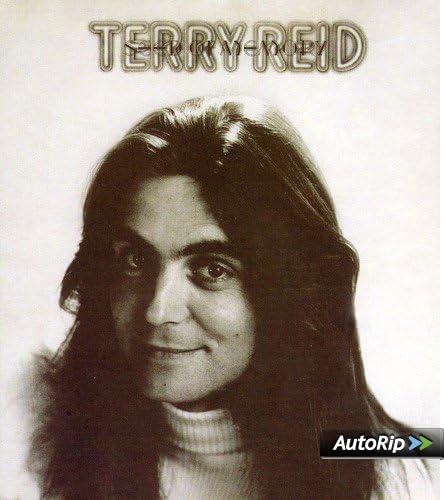
Terry Reid – Seed Of Memory
The CSNY mainstay produced his 1976 set ‘Seed of Memory’, which explains the country-folk vibe of its first half. The highlight came in the probing melody and caring vocal of “Faith to Arise.” Oddly, the album’s second side, which offered a variation on his old hard soul sound, seemed less convincing.
Either way, ‘Seed’ never had a commercial shot, given the weakness of his label, ABC Records, at the time. Three years later, the company folded.

Terry Reid – Rogue Waves


Anyone eager to reconnect to Reid’s rawer side should look to a pair of live albums that surfaced over the last few years. ‘Silver White Light” captured the singer’s full performance at the 1970 Isle of Wight Festival, a fascinating period of transition for Reid. He had just split with his first band, working instead with some of the musicians who would cut ‘River’, including David Lindley. For a drummer, Reid made a one-time-only connection with Michael Giles, who had just left King Crimson. The audio quality of the set may be brittle, but Reid’s vocal power comes through. Another concert set, ‘Live in London” from 2013, is rough too but, again, Reid’s voice sounded strong. An even more potent historical document surfaced in 2016, titled ‘The Other Side of the River’. It gathered eleven lost, or alternative, recordings from the ‘River’ sessions, in the process documenting that album’s evolution.
These versions presented freer takes on songs that, even in their final form, felt loose. Some fascinating guest musicians turned up for the sessions, including The Ikettes, who sang backup on a version of “Avenue,” Gilberto Gil, who played on “Country Brazilian Folk,” and the Latin percussionist Willie Bobo who appeared on a live-in-the-studio take on the title track and a worthy, never-before-released song, “Listen with Eyes.” Altogether, it provided generous evidence of Reid’s fearless commitment to exploration, a creative advantage but a commercial hurdle that only contributed to his role as one of music’s most under-appreciated stars.
 The Fat Angel Sings